July 9, 2012

The Believer is a United States literary magazine that also covers other arts and general culture. Founded and designed in 2003 by the writer and publisher Dave Eggers of McSweeney’s Publishing, it is edited by novelists Vendela Vida and Heidi Julavits, along with’Village Voice’ editor Ed Park. The magazine is published in San Francisco nine times a year. Eggers and his cohorts initially planned to ‘focus on writers and books we like,’ with a nod to ‘the concept of the inherent Good.’
The magazine urges readers and writers to ‘reach beyond their usual notions of what is accessible or possible.’ Illustrations and cartoons are featured throughout the magazine. The cover illustrations are done by Charles Burns, while most of the other portraits and line drawings are by Tony Millionaire (following Gilbert Hernandez from the fifth issue on). Michael Kupperman’s ‘Four-Color Comics’ has appeared in many issues, and in most issues a series of images from a given artist or other source run throughout the articles à la ‘The New Yorker.’
Posted in Art, Language |
Leave a Comment »
July 9, 2012

The Atomic Cafe is a 1982 American documentary film produced and directed by Jayne Loader, Kevin Rafferty, and Pierce Rafferty.
The film covers the beginnings of the era of nuclear warfare, created from a broad range of archival film from the 1940s, 1950s, and early 1960s – including newsreel clips, television news footage, U.S. government-produced films (including military training films), advertisements, television and radio programs. News footage reflected the prevailing understandings of the media and public. Continue reading →
Posted in Humor, Politics, War |
Leave a Comment »
July 9, 2012

Ugly American is a pejorative term used to refer to perceptions of loud, arrogant, demeaning, thoughtless and ethnocentric behavior of American. Although the term is usually associated with or applied to travelers and tourists, it also applies to US corporate businesses in the international arena.
The term has been defined as: ‘Americans traveling or living abroad who remain ignorant of local culture and judge everything by American standards.’
Continue reading →
Posted in Language, Politics, World |
Leave a Comment »
July 9, 2012

Futurism was a modern art and social movement which originated in Italy in the early 20th century. It was largely an Italian phenomenon, though there were parallel movements in Russia, England, and elsewhere.
The Futurists practiced in every medium of art, including painting, sculpture, ceramics, graphic design, industrial design, interior design, theater, cinema, fashion, textiles, literature, music, architecture, and even gastronomy. Continue reading →
Posted in Art, Politics, Technology |
Leave a Comment »
July 9, 2012

‘The Art of Noises‘ (‘L’arte dei Rumori’) is a Futurist manifesto, written by Luigi Russolo in a 1913 letter to friend and Futurist composer Francesco Balilla Pratella. Futurism was an artistic and social movement that originated in Italy in the early 20th century. It emphasized and glorified themes associated with contemporary concepts of the future, including speed, technology, youth, and violence, and objects such as the car, the airplane, and the industrial city.
In his letter, Russolo argues that the human ear has become accustomed to the noise of the bustling urban industrial soundscape; furthermore, this new sonic palette requires a new approach to musical instrumentation and composition. He proposes a number of conclusions about how electronics and other technology will allow futurist musicians to ‘substitute for the limited variety of timbres that the orchestra possesses today the infinite variety of timbres in noises, reproduced with appropriate mechanisms.’ ‘The Art of Noises’ is considered to be one of the most important and influential texts in 20th century musical aesthetics.
Continue reading →
Posted in Art, Language, Technology |
Leave a Comment »
July 9, 2012

The Age of Spiritual Machines is a book by futurist Ray Kurzweil about the future course of humanity, particularly relating to the development of artificial intelligence and its impact on human consciousness. It is also a study on the concept of technological singularity, the hypothetical future emergence of greater-than-human superintelligence through technological means.
Originally published in 1999, the book predicts that machines with human-like intelligence will be available from affordable computing devices within a couple of decades, revolutionizing most aspects of life, and that eventually humanity and its machinery will become one and the same. Continue reading →
Posted in Language, Philosophy, Technology |
Leave a Comment »
July 7, 2012

Behavioral addiction is a form of addiction which does not rely on chemicals (like drugs and alcohol), characterized by a compulsion to repeatedly engage in an action until said action causes serious negative consequences to the person’s physical, mental, social, and/or financial well-being. One sign that a behavior has become addictive is if it persists despite these consequences. Behavioral addictions, which are sometimes referred to as impulse control disorders, are increasingly recognized as treatable forms of addictions. Behaviors which may be addicting include gambling, eating, intercourse, viewing pornography, use of computers, playing video games, working , exercising, spiritual obsession (as opposed to religious devotion), cutting, and shopping.
When analyzing the addiction to food for example, a published study in 2009 from The Scripps Research Institute have shown for the first time that the same molecular mechanisms that drive people into drug addiction are behind the compulsion to overeat, pushing people into obesity. In this study, scientists focused on a particular receptor in the brain known to play an important role in vulnerability to drug addiction — the dopamine D2 receptor. The D2 receptor responds to dopamine, a neurotransmitter that is released in the brain by pleasurable experiences like food or sex or drugs like cocaine.
Continue reading →
Posted in Drugs, Health, Money |
Leave a Comment »
July 7, 2012
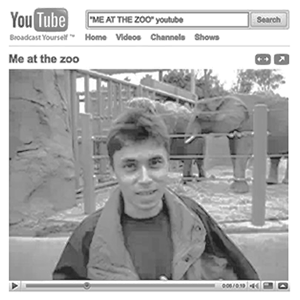
Me at the zoo is the first video ever to be uploaded to YouTube. It was uploaded at 8:27 pm on Saturday, April 23, 2005 by Jawed Karim, one of the co-founders of the site, under the username ‘jawed.’ Described by ‘The Observer’ as ‘poor-quality,’ the video was shot by Yakov Lapitsky at the San Diego Zoo; it features Karim in front of the elephants, explaining how interesting their ‘really, really, really long trunks’ are, and is 19 seconds long.
‘The Los Angeles Times’ states: ‘as the first video uploaded to YouTube, it played a pivotal role in fundamentally altering how people consumed media and helped usher in a golden era of the 60-second video.’
Posted in Technology |
Leave a Comment »
July 7, 2012
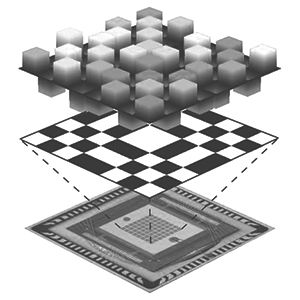
Metamaterials are artificial materials engineered to have properties that may not be found in nature, such as the ability to interact with and control electromagnetic waves. Naturally occurring matter exhibits behavior based on the molecules that make it up — the atomic material that composes the finished product determines what properties the product will have.
For instance, take the relationship between wood and light. Wood, like all natural matter, reflects and refracts light. But just how much light it reflects and refracts depends on how the electromagnetic waves of the light interact with the particles — like electrons — that make up the wood. With metamaterials, the sum of the parts, not the parts themselves, determines how the material behaves. Continue reading →
Posted in Technology |
Leave a Comment »
July 7, 2012

‘Superman: Red Son‘ is a comic book mini-series published by DC Comics that was released under their Elseworlds imprint in 2003. Author Mark Millar created the comic with the premise ‘what if Superman had been raised in the Soviet Union?’ The story mixes alternate versions of DC super-heroes with alternate-reality versions of real political figures such as Joseph Stalin and John F. Kennedy. The series spans approximately 1953-2001, save for a futuristic epilogue.
In ‘Red Son,’ Superman’s rocket ship lands on a Ukrainian collective farm rather than in Kansas, an implied reason being a small time difference (a handful of hours) from the original timeline, meaning Earth’s rotation placed the Ukraine in the ship’s path instead of Kansas. Instead of fighting for ‘…truth, justice, and the American Way,’ Superman is described in Soviet radio broadcasts ‘…as the Champion of the common worker who fights a never-ending battle for Stalin, socialism, and the international expansion of the Warsaw Pact.’ His ‘secret identity’ (i.e. the name his adoptive parents gave him) is a state secret. Continue reading →
Posted in Art, Politics, World |
4 Comments »
July 7, 2012


Prediction markets are speculative markets created for the purpose of making predictions; the current market prices can then be interpreted as predictions of the probability of the event or the expected value of the parameter. For example, a prediction market security might reward a dollar if a particular candidate is elected, such that an individual who thinks the candidate had a 70% chance of being elected should be willing to pay up to 70 cents for such a security.
People who buy low and sell high are rewarded for improving the market prediction, while those who buy high and sell low are punished for degrading the market prediction. Evidence so far suggests that prediction markets are at least as accurate as other institutions predicting the same events with a similar pool of participants. Continue reading →
Posted in Games, Money, Politics |
Leave a Comment »
July 6, 2012
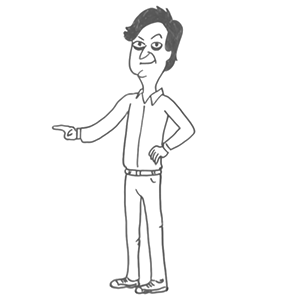
‘Predictably Irrational: The Hidden Forces That Shape Our Decisions’ is a 2008 book by behavioral economist Dan Ariely, in which he challenges readers’ assumptions about making decisions based on rational thought.
Ariely explains, ‘My goal, by the end of this book, is to help you fundamentally rethink what makes you and the people around you tick. I hope to lead you there by presenting a wide range of scientific experiments, findings, and anecdotes that are in many cases quite amusing. Once you see how systematic certain mistakes are–how we repeat them again and again–I think you will begin to learn how to avoid some of them.’
Continue reading →
Posted in Health, Language, Money |
Leave a Comment »



