May 2, 2012
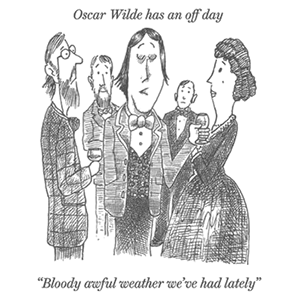
In linguistics, a phatic expression [fat-ik] is one whose only function is to perform a social task, as opposed to conveying information. The term was coined by anthropologist Bronisław Malinowski in the early 1900s from Greek ‘phanein’ (‘to show oneself,’ ‘appear’).
In Russian linguist Roman Jakobson’s work, ‘Phatic’ communication is that which concerns the channel of communication, for instance when one says ‘I can’t hear you, you’re breaking up’ in the middle of a cell phone conversation. In the modern context, this usage appears in online communities and more specifically on micro-blogging. Continue reading →
Posted in Language, World |
Leave a Comment »
May 2, 2012

Aizuchi [eye-zoo-chee] is the Japanese term for frequent interjections during a conversation that indicate the listener is paying attention and understanding the speaker. In linguistic terms, these are a form of phatic expression (one whose only function is to perform a social task, as opposed to conveying information).
Aizuchi are considered reassuring to the speaker, indicating that the listener is active and involved in the discussion. Aizuchi are frequently misinterpreted by non-native speakers as agreement on the part of the listener, because common aizuchi include: ‘hai,’ ‘ee,’, or ‘un’ (‘yes,’ with varying degrees of formality); ‘sō desu ne’ (‘I see’); ‘sō desu ka’ (‘is that so?’); ‘honma’ (‘really’); ‘naruhodo’ (‘I see, that’s right’); and nodding. These can be compared to English ‘yeah, yeah,’ ‘yeah, ok,’ ‘got it,’ ‘yep,’ ‘uhuh,’ or ‘go on,’ but are more pronounced and important in Japanese. Continue reading →
Posted in Language, World |
Leave a Comment »
May 1, 2012
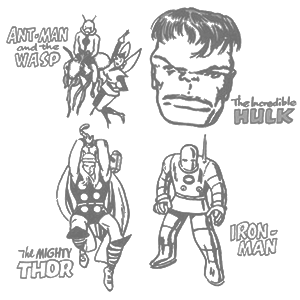
The Avengers is a team of superheroes, appearing in magazines published by Marvel Comics. The team made its debut in 1963 in ‘The Avengers #1,’ and was created by writer-editor Stan Lee and artist/co-plotter Jack Kirby, following the trend of super-hero teams after the success of DC Comics’ Justice League of America. Labeled ‘Earth’s Mightiest Heroes,’ the Avengers originally consisted of Iron Man, Ant-Man, Wasp, Thor, and the Hulk.
The original Captain America was discovered by the team in issue #4, trapped in ice, and he joined the group when they revived him. The rotating roster has become a hallmark of the team, although one theme remains consistent: the Avengers fight ‘the foes no single superhero can withstand.’ The team, famous for its battle cry of ‘Avengers Assemble!,’ has featured humans, mutants, robots, gods, aliens, supernatural beings, and even former villains.
Posted in Art |
Leave a Comment »
May 1, 2012

James Jean is a Taiwanese-American visual artist, known for both his commercial and fine art gallery work. He is also known in the American comics industry as a cover artist for various books published by DC Comics, as well as for his work for Prada, ESPN, and Atlantic Records. His work, which has been collected in numerous volumes, has been compared to Maxfield Parrish (known for his distinctive saturated hues and idealized neo-classical imagery). Jean was born in Taiwan and was raised in Parsippany-Troy Hills, New Jersey. He illustrated covers for the comic book series ‘Fables’ and ‘The Umbrella Academy.’ In 2008, Jean retired from illustration and commercial projects to focus on painting.
In 2007, Jean created a mural for the Prada Epicenter stores in New York and Los Angeles. He also created a backdrop for Prada’s Spring/Summer 2008 show in Milan. Aspects of the Epicenter mural and the Milan wallpaper were transformed into clothing, handbags, shoes, and packaging. Prada undertook a global campaign that featured Jean’s work in advertising environments, animation, and special events. Jean developed an animated short based on the theme titled ‘Trembled Blossoms,’ taken from the poem ‘Ode to Psyche,’ by John Keats (one of his darker and more experimental odes). In 2010, Jean was commissioned by fashion designer Phillip Lim to paint a series of portraits featuring Los Angeles-based actors, musicians, and tastemakers, including Rachel Bilson, Selma Blair, and Devendra Banhart.
Posted in Art, Money |
2 Comments »
May 1, 2012

A displacement activity is the result of two contradicting instincts in a particular situation. Birds, for example, may peck at grass when uncertain whether to attack or flee from an opponent; similarly, a human may scratch his or her head when they do not know which of two options to choose. Displacement activities often involve actions to bring comfort such as scratching, drinking, or feeding.
The first description of a displacement activity (though not the use of the term) is probably by English evolutionary biologist Julian Huxley in 1914. The subsequent development of research on displacement activities was a direct consequence of Austrian zoologist Konrad Lorenz’s works on instincts. However, the first mentions of the phenomenon came in 1940 by the two Dutch zoological researchers Nikolaas Tinbergen and Adriaan Kortlandt.
Posted in Language, Science |
Leave a Comment »
May 1, 2012
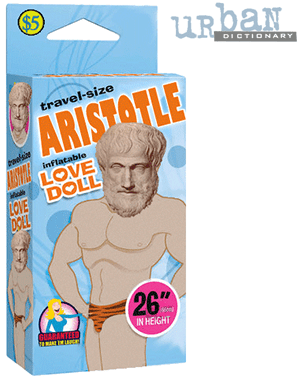
Intellectualization is a defense mechanism where reasoning is used to block confrontation with an unconscious conflict and its associated emotional stress, by ‘using excessive and abstract ideation to avoid difficult feelings.’ It involves removing one’s self, emotionally, from a stressful event.
Intellectualization may accompany, but ‘differs from rationalization, which is justification of irrational behavior through clichés, stories, and pat explanation.’ It is one of Freud’s original defense mechanisms. Freud believed that memories have both conscious and unconscious aspects, and that intellectualization allows for the conscious analysis of an event in a way that does not provoke anxiety.
Continue reading →
Posted in Health |
Leave a Comment »
May 1, 2012
A defense mechanism is the coping technique individuals unconsciously use to protect themselves from getting hurt in unpleasant situations (e.g. conflicts, unhappiness). Without defense mechanism, people may suffer from psychological and mental illness. In Freudian psychoanalytic theory, defense mechanisms are unconscious, psychological strategies brought into play by various entities to cope with reality and to maintain self-image.
Healthy persons normally use different defenses throughout life. An ego defense mechanism becomes pathological only when its persistent use leads to maladaptive behavior such that the physical and/or mental health of the individual is adversely affected. The purpose of ego defense mechanisms is to protect the mind/self/ego from anxiety and/or social sanctions and/or to provide a refuge from a situation with which one cannot currently cope. Continue reading →
Posted in Health |
2 Comments »
April 30, 2012

Jung identified the anima [an-uh-muh] as being the unconscious feminine component of men, and the animus [an-uh-muhs] as the unconscious masculine component in women. However, this is rarely taken as a literal definition: many modern day Jungian practitioners believe that every person has both an anima and an animus. Jung stated that the anima and animus act as guides to the unconscious unified Self, and that forming an awareness and a connection with the anima or animus is one of the most difficult and rewarding steps in psychological growth. Jung reported that he identified his anima as she spoke to him, as an inner voice, unexpectedly one day.
Often, when people ignore the anima or animus the complexes, the anima or animus vies for attention by projecting itself on others. This explains, according to Jung, why we are sometimes immediately attracted to certain strangers: we see our anima or animus in them. Love at first sight is an example of anima and animus projection. Moreover, people who strongly identify with their gender role (e.g. a man who acts aggressively and never cries) have not actively recognized or engaged their anima or animus. Continue reading →
Posted in Health, Philosophy, Sex |
Leave a Comment »
April 30, 2012
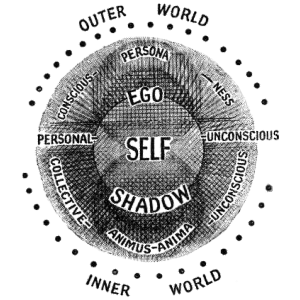
In Jungian psychology, the shadow is a part of the unconscious mind consisting of repressed weaknesses, shortcomings, and instincts. It is one of the three most recognizable archetypes, the others being the ‘anima and animus’ and the ‘persona.’ ‘Everyone carries a shadow,’ Jung wrote, ‘and the less it is embodied in the individual’s conscious life, the blacker and denser it is.’ It may be (in part) one’s link to more primitive animal instincts, which are superseded during early childhood by the conscious mind.
According to Jung, the shadow, in being instinctive and irrational, is prone to projection: turning a personal inferiority into a perceived moral deficiency in someone else. Jung writes that if these projections are unrecognized ‘The projection-making factor (the Shadow archetype) then has a free hand and can realize its object–if it has one–or bring about some other situation characteristic of its power.’ These projections insulate and cripple individuals by forming an ever thicker fog of illusion between the ego and the real world. Continue reading →
Posted in Health, Philosophy |
2 Comments »
April 30, 2012
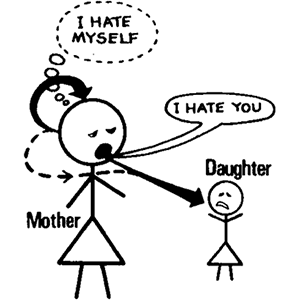
Projection is a psychological defense mechanism where a person subconsciously denies his or her own attributes, thoughts, and emotions, which are then ascribed to the outside world, usually to other people. Thus, projection involves imagining or projecting the belief that others originate those feelings. Projection reduces anxiety by allowing the expression of the unwanted unconscious impulses or desires without letting the conscious mind recognize them.
An example of this behavior might be blaming another for self failure. The mind may avoid the discomfort of consciously admitting personal faults by keeping those feelings unconscious, and by redirecting libidinal satisfaction by attaching, or ‘projecting,’ those same faults onto another person or object. The theory was developed by Sigmund Freud.
Continue reading →
Posted in Health, Philosophy, Politics |
2 Comments »
April 30, 2012

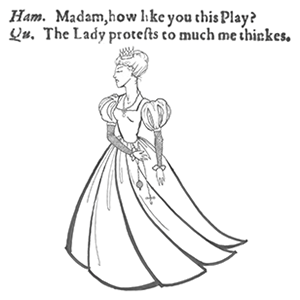
In psychoanalytic theory, reaction formation is a defensive process (defense mechanism) in which anxiety-producing or unacceptable emotions and impulses are mastered by exaggeration (hypertrophy) of the directly opposing tendency. Reaction formation depends on the hypothesis that: ‘[t]he instincts and their derivatives may be arranged as pairs of opposites: life versus death, construction versus destruction, action versus passivity, dominance versus submission, and so forth.
When one of the instincts produces anxiety by exerting pressure on the ego either directly or by way of the superego, the ego may try to sidetrack the offending impulse by concentrating upon its opposite. For example, if feelings of hate towards another person make one anxious, the ego can facilitate the flow of love to conceal the hostility.’ Where reaction-formation takes place, it is usually assumed that the original, rejected impulse does not vanish, but persists, unconscious, in its original infantile form. Thus, where love is experienced as a reaction formation against hate, we cannot say that love is substituted for hate, because the original aggressive feelings still exist underneath the affectionate exterior that merely masks the hate to hide it from awareness.
Continue reading →
Posted in Health, Sex |
Leave a Comment »
April 30, 2012

Ghost Box Music is an English independent record label, established in 2004 by Julian House and Jim Jupp. The concept was hatched by House and Jupp (who attended the same school) in 2003; a manifesto of influences was compiled, which included ‘music for schools, cosmic horror stories, library music, English surrealism, and the dark side of psychedelia.’
Releases on the label (presently encompassing The Focus Group, Eric Zann, Belbury Poly, Roj, and The Advisory Circle, and a rerelease of a Mount Vernon Arts Lab album) tend to share a common design aesthetic – all record covers so far have been by Julian House, with an acknowledged debt to the iconic design of sixties Penguin Books paperbacks. There are shared elements in sound, too; Ghost Box artists tend to draw heavily on influences such as musique concrète, library music, and 1970s soundtracks. Several critics have noticed a melancholic or nostalgic element to the Ghost Box sound as well, prompting comparison to the shorter, ‘interlude’ tracks of Boards of Canada, or similar folk or psychedelia-influenced electronic musicians.
Posted in Art |
Leave a Comment »