April 30, 2012

Belbury Poly is an alias of electronic musician Jim Jupp (along with Eric Zann). Jupp’s releases are on the Ghost Box Music label (which he co-founded). Belbury Poly’s sound is a blend of influences: old library music, sixties-inspired psychedelic rock, soundtracks, folk, and public information films.
Jupp has spoken at length about trying to incorporate the mundanity of life in the seventies and eldritch (foreign) elements simultaneously in his music, as well as acknowledging a debt to Welsh author and mystic Arthur Machen. The name references a fictional institution, created by the author C.S. Lewis.
Posted in Art |
Leave a Comment »
April 30, 2012
Simon Reynolds (b. 1963) is an English music critic who is well known for his writings on electronic dance music and for coining the term ‘post-rock.’ Besides electronic dance music, Reynolds has written about a wide range of artists and musical genres, and has written books on post-punk and rock. He has contributed to ‘Melody Maker’ (where he first made his name), ‘Spin,’ ‘Rolling Stone,’ ‘Mojo,’ and others. He currently resides in the East Village in NY.
Reynolds’ first experience writing about music was with ‘Monitor,’ a fanzine he helped to found in 1984 while he was studying history at Oxford. The publication only lasted for six issues. When it was discontinued in 1986, Reynolds was already making his name writing for ‘Melody Maker,’ one of the three major British music magazines of the time (the other two being the ‘New Musical Express’ (NME) and ‘Sounds’). Continue reading →
Posted in Art, Language, Politics |
Leave a Comment »
April 29, 2012

‘Earache My Eye‘ is a comedy routine and song by Cheech and Chong which features ‘Alice Bowie’ (one of Cheech Marin’s characters). It first appeared on ‘Cheech & Chong’s Wedding Album’ (1974). Cheech And Chong also lip sync to the recording (with Chong behind the drumkit) in their first movie ‘Up in Smoke’ (1978). This piece has been featured repeatedly on the ‘Doctor Demento’ radio show. According to Tommy Chong’s autobiography, the famous guitar riff is played by Gaye Delorme, who also composed the music for the song. Additionally, Chong states that drums on the song are played by famed international percussionist Airto Moreira.
The B-side, ‘Turn That Thing Down’ features the remainder of the musical track, from the point of Marin’s monologue about his wealth, without the actual dialogue, complete to its conclusion. It is possible to assemble the full-length version of the song by editing the two sections together. Several radio stations refused to play the song. Once the song hit its peak on the charts, radio station managers pulled the song out of the format of airplay, due to complaints by parents, teachers, psychologists, principals, and counselors, who stated that this song mostly appealed to junkies, dropouts, drug addicts, and drunks, as well as for students playing hooky from class, giving them a bad example of behavior.
Posted in Art, Drugs, Humor |
Leave a Comment »
April 29, 2012
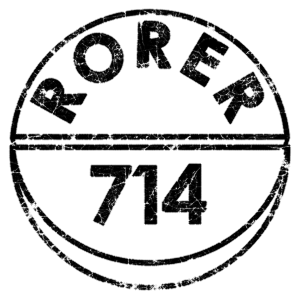
Methaqualone is a sedative-hypnotic drug that is similar in effect to barbiturates, a general central nervous system depressant. The sedative-hypnotic activity was first noted by Indian researchers in the 1950s and in 1962 methaqualone itself was patented in the US by Wallace and Tiernan. Its use peaked in the early 1970s as a hypnotic, for the treatment of insomnia, and as a sedative and muscle relaxant.
It has also been used illegally as a recreational drug, commonly known as Quaaludes [kwey-lood], Sopors, Ludes, or Mandrax (particularly in the 1970s in North America) depending on the manufacturer. At that time ‘luding out’ was a popular college pastime. This is the similar effect of an alcoholic blackout with no recollection of events. Since at least 2001, it has been widely used in South Africa, where it is commonly referred to as ‘smarties’ or ‘geluk-tablette’ (meaning ‘happy tablets’). Clandestinely produced methaqualone is still seized by government agencies and police forces around the world.
Posted in Drugs, Health, Politics |
Leave a Comment »
April 29, 2012

Tehrangeles [te-ran-juh-luhs] is a portmanteau deriving from the combination of Tehran, the capital of Iran, and Los Angeles. It is used when referring to the large number (up to 800,000) of former Iranian nationals and their descendants residing in the Los Angeles metropolitan area; it is the largest such population outside of Iran. In common usage, it usually refers to the proportionally larger Persian-American subset of Iranian immigrants, many of whom are second generation citizens.
This area is now officially recognized by the City of Los Angeles as ‘Persian Square.’ The Persian community in the L.A. area originally centered in the Westwood neighborhood of west Los Angeles, often referred to as Little Persia or Persian Hills/Persian Square. Immigration to the area increased several-fold due to the events surrounding the 1979 Iranian Revolution. Westwood Boulevard became known for its many Persian shops and restaurants; and the Persian expatriate community of Los Angeles entered all forms of media including magazines, newspapers, radio and television stations.
Posted in Language, World |
Leave a Comment »
April 29, 2012

In marketing terminology, a killer application (commonly shortened to killer app) is any computer program that is so necessary or desirable that it proves the core value of some larger technology, such as computer hardware, gaming console, software, or an operating system. One of the first examples of a killer application is generally agreed to be the ‘VisiCalc’ spreadsheet for the Apple II. The machine was purchased in the thousands by finance workers on the strength of this program.
The definition of ‘killer app’ came up during Bill Gates’s questioning in the ‘United States v. Microsoft’ antitrust suit. Gates had written an email in which he described ‘Internet Explorer’ as a killer app. In the questioning, he said that the term meant ‘a very popular application,’ and did not connote an application that would fuel sales of a larger product or one that would supplant its competition.
Posted in Money, Politics, Technology |
2 Comments »
April 28, 2012


A disruptive innovation creates a new market and value network, and eventually goes on to disrupt an existing market and value network (over a few years or decades), displacing an earlier technology. The term is used in business and technology literature to describe innovations that improve a product or service in ways that the market does not expect, typically first by designing for a different set of consumers in the new market and later by lowering prices in the existing market.
By contrast, a ‘sustaining innovation’ does not create new markets or value networks but rather only evolves existing ones with better value, allowing the firms within to compete against each other’s sustaining improvements; they may be either ‘discontinuous’ (i.e. ‘transformational’ or ‘revolutionary’) or ‘continuous’ (i.e. ‘evolutionary’). Continue reading →
Posted in Money, Technology |
Leave a Comment »
April 27, 2012


Planetary Resources, Inc., formerly known as Arkyd Astronautics, is a company formed in 2010, and reorganized and renamed with considerable fanfare in 2012. Their stated goal is to ‘expand Earth’s natural resource base’ by developing and deploying the technologies for asteroid mining. Although the long-term goal of the company is to mine asteroids, its initial plans call for developing a market for small (30–50 kg) cost-reduced space telescopes for both Earth observation and astronomy.
These spacecraft would employ a laser-optical system for ground communications, reducing payload bulk and mass compared to conventional RF antennae. The deployment of such orbital telescopes is envisioned as the first step forward in the company’s asteroid mining ambitions. The same telescope satellite capabilities that Planetary Resources hopes to sell to customers can be used to survey and intensively examine near-earth asteroids.
Posted in Money, Technology |
Leave a Comment »
April 27, 2012

Lisa Frank is an American commercial artist and founder of Lisa Frank Incorporated, headquartered in Tucson, Arizona. The artist’s work appears on various commercial elementary and middle-school products, mostly school supplies. Also common among Lisa Frank-related items are stickers and a variety of other merchandise such as clothing and toys marketed towards young girls. Frank founded the company in 1979 at the age of 24, and her success resulted from her sticker line.
The company’s headquarters is easily visible because of the bright hearts, stars, and music notes decorating the side of the building. There is currently a quarterly magazine also named ‘Lisa Frank.’ Her corporation’s artwork features extremely bright and vibrant colors, and round, smooth, reflective surfaces. A number of characters recur on ‘Lisa Frank’ branded items, such as a Hollywood Bear, and Markie the unicorn. Rainbows and especially the color purple are abundant in Lisa Frank’s art.
Posted in Art, Humor, Money |
2 Comments »
April 26, 2012

Ken Nordine (b. 1920) is an American voiceover and recording artist best known for his series of ‘Word Jazz’ albums. His deep, resonant voice has also been featured in many commercial advertisements and movie trailers. One critic wrote that ‘you may not know Ken Nordine by name or face, but you’ll almost certainly recognize his voice.’ During the 1940s, he was heard on ‘The World’s Great Novels’ and other radio programs broadcast from Chicago. He attracted wider attention when he recorded the aural vignettes on ‘Word Jazz’ (1957), which features Nordine’s narration over cool jazz by the Chico Hamilton jazz group, recording under the alias of Fred Katz, who was then the cellist with Hamilton’s quintet.
Nordine began performing and recording such albums at the peak of the beat era and was associated with the poetry-and-jazz movement. However, some of Nordine’s ‘writings are more akin to Franz Kafka or Edgar Allan Poe’ than to the beats. Many of his word jazz tracks feature critiques of societal norms. Some are lightweight and humorous, while others reveal dark, paranoid undercurrents and bizarre, dream-like scenarios. Nordine was Linda Blair’s vocal coach for her role in ‘The Exorcist.’
Posted in Art, Language |
Leave a Comment »
April 26, 2012

Vocaloid is a singing synthesizer. Its signal processing part was developed through a joint research project led by Kenmochi Hideki at the Pompeu Fabra University in Spain in 2000. Backed by the Yamaha Corporation it was developed into a commercial product, which was first released in 2004. The software enables users to synthesize singing by typing in lyrics and melody. It uses synthesizing technology with specially recorded vocals of voice actors or singers. A piano roll type interface is used to input the melody and the lyrics can be entered on each note. The software can change the stress of the pronunciations, add effects such as vibrato, or change the dynamics and tone of the voice.
Each Vocaloid is sold as ‘a singer in a box’ designed to act as a replacement for an actual singer. The software was originally only available in English and Japanese, but as of Vocaloid 3, Spanish, Chinese, and Korean have been added. The software is intended for professional musicians as well as light computer music users and has so far sold on the idea that the only limits are the users’ own skills. Japanese musical groups Livetune and Supercell have released their songs featuring Vocaloid as vocals. Japanese record label Exit Tunes of Quake Inc. also have released compilation albums featuring Vocaloids. Artists such as Mike Oldfield have also used Vocaloids within their work for back up singer vocals and sound samples.
Continue reading →
Posted in Language, Money, Technology |
Leave a Comment »
April 26, 2012
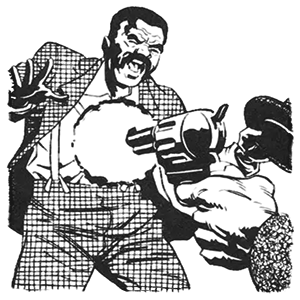
Lee Shelton(1865 – 1912) was a black carriage driver and pimp convicted of murdering William ‘Billy’ Lyons on Christmas night, 1895 in St. Louis. The crime was immortalized in a popular song that has been recorded by numerous artists. Stagger Lee (also ‘Stackalee,’ ‘Stackolee,’ and ‘Stagolee’) ultimately becomes a folk figure of the trickster type as numerous legends accumulated around him.
Lee Shelton was not a common pimp, he belonged to a group of pimps known in St. Louis as the ‘Macks.’ The Macks were not just ‘urban strollers’; they presented themselves as objects to be observed. Shelton died in prison in 1912, of tuberculosis. Stagger Lee has become an archetype, the embodiment of a tough black man;one who is sly, streetwise, cool, lawless, amoral, potentially violent, and who defies white authority. Continue reading →
Posted in Art, Politics |
2 Comments »




