April 2, 2012

The Orange Catholic Bible (abbreviated to O. C. Bible or OCB) is a fictional book from the ‘Dune’ universe created by Frank Herbert. Created in the wake of the crusade against thinking machines known as the Butlerian Jihad, the Orange Catholic Bible is the key religious text in the Dune universe and is described thus in the glossary of the 1965 novel:
‘ORANGE CATHOLIC BIBLE: the ‘Accumulated Book,’ the religious text produced by the Commission of Ecumenical Translators. It contains elements of most ancient religions, including the Maometh Saari, Mahayana Christianity, Zensunni Catholicism, and Buddislamic traditions. Its supreme commandment is considered to be: ‘Thou shalt not disfigure the soul,’ followed by ‘Thou shalt not make a machine in the likeness of a human mind.’ Continue reading →
Posted in Art, Language, Philosophy |
Leave a Comment »
April 2, 2012

Syncretism [sing-kri-tiz-uhm] is the combining of different (often contradictory) beliefs, often while melding practices of various schools of thought. Syncretism may involve the merger and analogizing of several originally discrete traditions, especially in the theology and mythology of religion, thus asserting an underlying unity and allowing for an inclusive approach to other faiths. Syncretism also occurs commonly in expressions of arts and culture (known as eclecticism) as well as politics (syncretic politics).
The word entered the English language in 1618; it derives from Latin ‘syncretismus,’ drawing on Greek (‘synkretismos’), meaning ‘Cretan federation.’ The Greek word occurs in Plutarch’s (1st century) essay on ‘Fraternal Love’ in his ‘Moralia.’ He cites the example of the Cretans, who compromised and reconciled their differences and came together in alliance when faced with external dangers. ‘And that is their so-called Syncretism.’
Continue reading →
Posted in Language, Philosophy, World |
2 Comments »
April 1, 2012
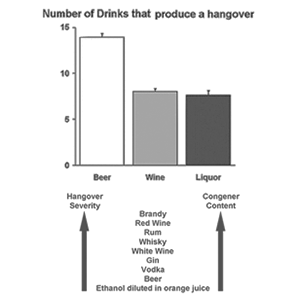
Congener [kon-juh-ner] (from Latin for ‘of the same race or kind’) has several different meanings depending on the field in which it is used. Colloquially, it is used to mean a person or thing like another, in character or action. In biology, congeners are organisms within the same genus. In chemistry, congeners are related chemicals, e.g., elements in the same group of the periodic table, or derivatives thereof. In genetics, congenic organisms are those with very similar genomes, except for a small fraction. For example, recombinant congenic mice strains are produced in laboratories as a tool to study genetic disease.
In the alcoholic beverages industry, congeners, also known as fusel oils, are substances produced during fermentation. These substances include small amounts of chemicals such as acetone, acetaldehyde, and other higher alcohols, esters, and aldehydes (e.g. propanol, glycols, ethyl acetate). Congeners are responsible for most of the taste and aroma of distilled alcoholic beverages, and contribute to the taste of non-distilled drinks. It has been suggested that these substances contribute to the symptoms of a hangover.
Posted in Drugs, Health, Science |
Leave a Comment »
April 1, 2012

A hangover is the experience of various unpleasant physiological effects following heavy consumption of alcoholic beverages. An alcohol hangover is associated with a variety of symptoms that may include dehydration, fatigue, headache, body aches, vomiting, diarrhea, flatulence, weakness, elevated body temperature and heart rate, hypersalivation, difficulty concentrating, sweating, anxiety, dysphoria, irritability, sensitivity to light and noise, erratic motor functions (including tremor), trouble sleeping, severe hunger, halitosis, and lack of depth perception. Many people will also be repulsed by the thought, taste or smell of alcohol during a hangover.
While a hangover can be experienced at any time, generally speaking it is experienced the morning after a night of heavy drinking. Hypoglycemia, dehydration, acetaldehyde intoxication, and glutamine rebound are all theorized causes of hangover symptoms. Hangover symptoms may persist for several days after alcohol was last consumed. Approximately 25-30% of drinkers may be resistant to hangover symptoms. Continue reading →
Posted in Drugs, Health, Science |
Leave a Comment »
March 31, 2012
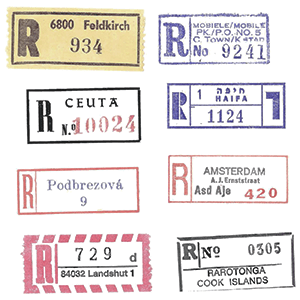
Poor mans copyright is a method of using registered dating by the postal service, a notary public or other highly trusted source to date intellectual property, thereby helping to establish that the material has been in one’s possession since a particular time. The concept is based on the notion that, in the event that such intellectual property were to be misused by a third party, the poor-man’s copyright would at least establish a legally recognized date of possession before any proof which a third party may possess.
The PMC was originally used by authors who sent copies of their own work to themselves through the mail without opening the envelopes in the hope that it would grant them legal protection by establishing a date at which the work was created. Use of this method may not hold up in a court as it is simple for individuals to pre-send envelopes which can then be used later by placing the materials inside.
Posted in Money, Politics, World |
Leave a Comment »
March 30, 2012

Communal reinforcement is a social phenomenon in which a concept or idea is repeatedly asserted in a community, regardless of whether sufficient empirical evidence has been presented to support it. Over time, the concept or idea is reinforced to become a strong belief in many people’s minds, and may be regarded by the members of the community as fact. Often, the concept or idea may be further reinforced by publications in the mass media, books, or other means of communication. The phrase ‘millions of people can’t all be wrong’ is indicative of the common tendency to accept a communally reinforced idea without question, which often aids in the widespread acceptance of urban legends, myths, and rumors.
Communal reinforcement works both for true and false concepts or ideas, making the communal reinforcement of an idea independent of its truth value. Therefore, the statement that many persons in a given communities share in a common belief is not indicative of it being valid or false information’s. An idea can be accepted and spread throughout a community regardless of the validity of the claim.
Continue reading →
Posted in Health, Politics, Science |
Leave a Comment »
March 30, 2012
As a medical term, precocious puberty describes puberty occurring at an unusually early age. In most of these children, the process is normal in every respect except the unusually early age, and simply represents a variation of normal development. In a minority of children, the early development is triggered by a disease such as a tumor or injury of the brain.
Even in instances where there is no disease, unusually early puberty can have adverse effects on social behavior and psychological development, can reduce adult height potential, and may shift some lifelong health risks. Central precocious puberty can be treated by suppressing the pituitary hormones that induce sex steroid production.
Continue reading →
Posted in Health, Sex |
1 Comment »
March 29, 2012


A debate exists within the United States government, and American society at large, over whether the one-cent coin, commonly known as the penny, should be eliminated as a unit of currency in the United States. Two bills introduced in the U.S. Congress would have ceased production of pennies, but neither bill was approved. Such a bill would leave the nickel, at five cents, as the lowest-value coin. The chief argument for its elimination is the fact that pennies are produced at a loss. In 2012, it costs about 2.4 cents to mint a penny. By 2007, even the price of the raw materials it is made of exceeded the face value, so there is a risk that coins are illegally melted down for raw materials.
Additionally, pennies are of limited utility; they are not accepted by all vending machines or many toll booths, and pennies are generally not accepted in bulk. In addition, people often do not use cents to pay at all; they may simply use larger denominations and get pennies in return. Pennies end up sitting in jars or are thrown away and are not in circulation. The purpose of the monetary system is to facilitate exchange, but… the penny no longer serves that purpose. Many countries outside the United States have chosen to remove low-value coins from circulation including Canada, Sweden, New Zealand, and Australia.
Posted in Money, Politics, World |
2 Comments »
March 29, 2012
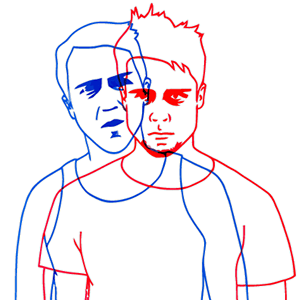
An unreliable narrator is a narrator, whether in literature, film, or theater, whose credibility has been seriously compromised. The term was coined in 1961 by Wayne C. Booth in ‘The Rhetoric of Fiction.’ This narrative mode is one that can be developed by an author for a number of reasons, usually to deceive the reader or audience.
Unreliable narrators are usually first-person narrators, but third-person narrators can also be unreliable. The nature of the narrator is sometimes immediately clear. For instance, a story may open with the narrator making a plainly false or delusional claim or admitting to being severely mentally ill, or the story itself may have a frame in which the narrator appears as a character, with clues to his unreliability.
Continue reading →
Posted in Art, Language |
Leave a Comment »
March 29, 2012
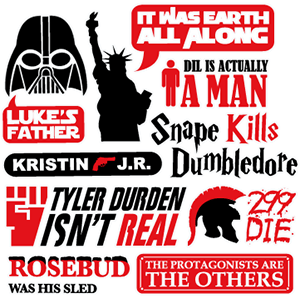
Spoiler is any element of any summary or description of any piece of fiction that reveals any plot element which will give away the outcome of a dramatic episode within the work of fiction, or the conclusion of the entire work. It can also be used to refer to any piece of information regarding any part of a given media. Because enjoyment of fiction sometimes depends upon the dramatic tension and suspense which arises within it, the external revelation of such plot elements can ‘spoil’ the enjoyment that some consumers of the narrative would otherwise have experienced.
The term spoiler was introduced in the early days of the internet, and is often associated with specialist internet sites and in newsgroup postings. Early rules of netiquette insisted that spoilers could and should be normally avoided, but if the posting of “‘spoiling’ information was unavoidable, it be preceded by a warning (‘SPOILER!’), or the spoiler itself has to be masked so that it can not be visible to any but those keen for details and not fazed at the thought of such potentially plot-revealing information.
Continue reading →
Posted in Art, Language |
1 Comment »
March 29, 2012


The tricky slave is a stock character. He is a clever, lower-class person who brings about the happy ending of a comedy for the lovers. He is more clever than the upper-class people about him, both the lovers and the characters who block their love, and typically also looking out for his own interests; in the New Comedy, the tricky slave or ‘dolosus servus’ aimed to get his freedom by assisting his young master in love. Besides the actual slaves of classical theater, he also appears as the scheming valet in Renaissance comedy, called the ‘gracioso’ in Spanish. The ‘zanni’ of Commedia dell’arte are often tricky slaves, as are Puss-in-Boots in Perrault’s fairy tale, Jeeves in P. G. Wodehouse’s work, and Figaro. In fairy tales, the same function is often fulfilled by fairy godmothers, talking animals, and like creatures.
A female version of the tricky slave would be Morgiana, a clever slave girl from ‘Ali Baba and the Forty Thieves’ in the ‘One Thousand and One Nights.’ She is initially in Cassim’s household but on his death she joins his brother Ali Baba and through her quick wittedness she saves Ali’s life many times and eventually kills his worst enemy, the leader of the Forty Thieves. As reward, Ali frees her and Morgiana marries Cassim’s son. In contrast to these positive depictions, the tricky slave is portrayed as the antagonist in another Arabian Nights tale, ‘The Three Apples,’ an early example of a murder mystery. After the murderer reveals himself near the middle of a story, he narrates the events leading up to the murder in a flashback. Within this flashback, a slave convinces him of his wife’s infidelity, thus leading to her murder.
Posted in Art, Language |
Leave a Comment »
March 29, 2012
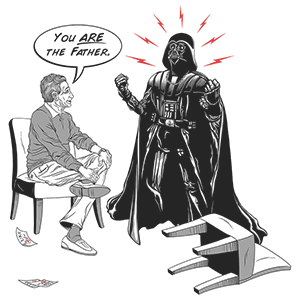
Anagnorisis [an-ag-nawr-uh-sis] is a moment in a play or other work when a character makes a critical discovery. Anagnorisis originally meant recognition in its Greek context, not only of a person but also of what that person stood for. It was the hero’s sudden awareness of a real situation, the realization of things as they stood, and finally, the hero’s insight into a relationship with an often antagonistic character in Aristotelian tragedy.
In the Aristotelian definition of tragedy, it was the discovery of one’s own identity or true character (e.g. Cordelia, Edgar, Edmund, etc. in Shakespeare’s ‘King Lear’) or of someone else’s identity or true nature (e.g. Lear’s children, Gloucester’s children) by the tragic hero. In his ‘Poetics,’ Aristotle defined anagnorisis as ‘a change from ignorance to knowledge, producing love or hate between the persons destined by the poet for good or bad fortune.’ Shakespeare did not base his works on Aristotelian theory of tragedy, including use of hamartia (an injury committed in ignorance), yet his tragic characters still commonly undergo anagnorisis as a result of their struggles.
Continue reading →
Posted in Art, Language, Philosophy |
2 Comments »