March 7, 2012
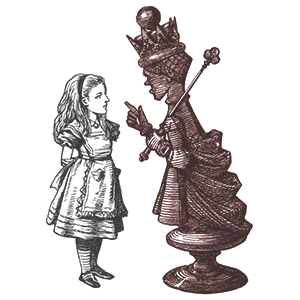
The Red Queen is the name of an evolutionary theory of Leigh Van Valen and, later, a book by Matt Ridley. The term is taken from the Red Queen’s race in Lewis Carroll’s ‘Through the Looking-Glass.’ The Red Queen said, ‘It takes all the running you can do, to keep in the same place.’ The Red Queen principle can be stated as follows: ‘For an evolutionary system, continuing development is needed just to maintain its fitness relative to the systems it is co-evolving with.’
The hypothesis is used to explain two different phenomena: the advantage of sexual reproduction at the level of individuals, and the constant evolutionary arms race between competing species. Ridley’s book takes Van Valen’s idea, which is about co-evolution, and extends it into a discussion about sexual selection in humans. It argues that few aspects of human nature can be understood apart from sex, since human nature is a product of evolution, and evolution in our case is driven by sexual selection. Its counterpart is the Court Jester Hypothesis, which proposes that evolution is driven mostly by abiotic environmental events and forces like climate.
Continue reading →
Posted in Science, Sex |
Leave a Comment »
March 7, 2012
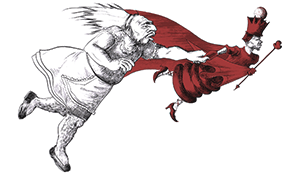

An evolutionary arms race is a struggle between competing sets of co-evolving genes that develop adaptations and counter-adaptations against each other, resembling an arms race, which are also examples of positive feedback (the effects of a small disturbance on a system include an increase in the magnitude of the disturbance). The co-evolving gene sets may be in different species, as in an evolutionary arms race between a predator species and its prey, or a parasite and its host.
Alternatively, the arms race may be between members of the same species, as in the manipulation/sales resistance model of communication or as in runaway evolution or Red Queen effects. One example of an evolutionary arms race is in sexual conflict between the sexes. Thierry Lodé emphasized the role of such antagonist interactions in evolution leading to character displacements and antagonist coevolution. The Escalation hypothesis put forward by Geerat Vermeij speaks of more general conflicts and was originally based on his work with marine gastropod fossils. Continue reading →
Posted in Science, War |
Leave a Comment »
March 7, 2012

Concealed ovulation or hidden estrus is the lack of distinctive signaling that the adult female of a species is ‘in heat’ and near ovulation. These signals may include swelling and redness of the genitalia in baboons and bonobos, pheromone release in the feline family, etc. By comparison, the females of humans and a few other species have few external signs of fecundity, making it difficult to tell, by means of external signs only, whether or not a female is near ovulation.
Several hypotheses regarding human evolution integrate the idea that human females increasingly required supplemental paternal investment in their offspring. This suggests human females concealed ovulation to obtain male aid in rearing offspring. If human females no longer signaled the time of ovulation, males would be unable to detect the exact period in which they were fecund. This led to a change in their mating strategy; rather than seeking multiple female partners and mating with them hoping they were fecund during that period, males instead chose to mate with a particular female multiple times throughout her menstrual cycle. A mating would be successful in resulting in conception when it occurred during ovulation, and thus, frequent matings, necessitated by the effects of concealed ovulation, would be most successful.
Continue reading →
Posted in Science, Sex |
Leave a Comment »
March 7, 2012

Joseph Kony (b.1964) is a Ugandan guerrilla group leader, head of the Lord’s Resistance Army (LRA), a group engaged in a violent campaign to establish theocratic government based on the Ten Commandments throughout Uganda. The LRA say that spirits have been sent to communicate this mission directly to Kony. Directed by Kony, the LRA have also spread to parts of the Democratic Republic of Congo and Sudan. It has abducted and forced an estimated 66,000 children to fight for them, and has also forced the internal displacement of over 2,000,000 people since its rebellion began in 1986.
Kony received a surge of attention in early March 2012 with the release of ‘Kony 2012,’ a thirty minute documentary, was made by filmaker Jason Russell for the campaign group Invisible Children Inc.
Continue reading →
Posted in Philosophy, Politics, War |
Leave a Comment »
March 7, 2012

Selvage denim [sel-vij] is a type of denim which forms a clean natural edge that does not unravel. It is commonly presented in the unwashed or raw state. Typically, the selvage edges will be located along the out-seam of the trousers, making it visible when cuffs are worn. The word ‘selvage’ comes from the phrase ‘self-edge,’ the natural edge of a roll of fabric. As applied to denim, it means that which is made on old-style shuttle looms.These looms weave fabric with one continuous cross thread (the weft) that is passed back and forth all the way down the length of the bolt. As the weft loops back into the edge of the denim it creates this ‘self-edge’ or selvage.
Selvage is desirable because the edge cannot fray like denim made on a projectile loom that has separate wefts, which leave an open edge that must be stitched. This advantage is only realized on one edge of the fabric, however, as the fabric has to be cut to shape and anywhere it is cut the self-edge is lost. Shuttle looms weave a narrower piece of fabric, and thus a longer piece of fabric is required to make a pair of jeans (approximately 3 yards). To maximize yield, traditional jean makers use the fabric all the way to the selvedge edge. When the cuff is turned up, the two selvedge edges (where the denim is sewn together) can be seen.
Posted in Money, Technology |
Leave a Comment »
March 7, 2012


Milton Glaser (b.1929 is an American graphic designer, best known for the ‘I Love New York logo,’ his ‘Bob Dylan’ poster, the ‘DC bullet’ logo used by DC Comics from 1977 to 2005, and the ‘Brooklyn Brewery’ logo. He also founded ‘New York Magazine’ with Clay Felker in 1968. Glaser was born into a Hungarian Jewish family in New York. He was educated at Manhattan’s High School of Music & Art (now Fiorello H. LaGuardia High School of Music & Art and Performing Arts), graduated from the Cooper Union in 1951 and later, via a Fulbright Scholarship, the Academy of Fine Arts in Bologna under Giorgio Morandi. He was greatly inspired by his sister’s partner, who had studied typography in great depth.
In 1954 Glaser was a founder, and president, of Push Pin Studios formed with several of his Cooper Union classmates. Glaser’s work is characterized by directness, simplicity and originality. He uses any medium or style to solve the problem at hand. His style ranges wildly from primitive to avant garde in his countless book jackets, album covers, advertisements and direct mail pieces and magazine illustrations. Milton Glaser, Inc. was established in 1974 in Manhattan, and is still producing work in a wide range of design disciplines, including: corporate identities, environmental and interior design, packaging, and product design.
Posted in Art, Money |
Leave a Comment »
March 6, 2012

Seymour Chwast (b.1931) an American graphic designer, illustrator, and type designer. Chwast was born in the Bronx, and graduated with a Bachelor of Fine Arts from Cooper Union in 1951. With Milton Glaser, Edward Sorel, and Reynold Ruffins, he founded Push Pin Studios in 1954.
The bi-monthly publication ‘The Push Pin Graphic’ was a product of their collaboration. Chwast is famous for his commercial artwork, which includes posters, food packaging, magazine covers, and publicity art. Often referred to as ‘the left-handed designer,’ Chwast’s unique graphic design melded social commentary and a distinctive style of illustration. Today, he continues to work and is principal at The Pushpin Group, Inc. in New York City.
Posted in Art, Money |
Leave a Comment »
March 6, 2012

In political jargon, a self-licking ice cream cone is a self-perpetuating system that has no purpose other than to sustain itself. The phrase appears to have been first used in 1992, in ‘On Self-Licking Ice Cream Cones,’ a paper by Pete Worden about NASA’s bureaucracy.
It has come to be used as a metaphor for any similar system, particularly in contexts such as the War on Terror and the military-industrial complex.
Posted in Money, Politics |
1 Comment »
March 6, 2012


‘Amor fati‘ is a Latin phrase loosely translating to ‘love of fate.’ It is used to describe an attitude in which one sees everything that happens in one’s life, including suffering and loss, as good. Moreover, it is characterized by an acceptance of the events or situations that occur in one’s life. The phrase has been linked to the writings of Marcus Aurelius, who did not himself use the words (he wrote in Greek, not Latin), but was popularized in Friedrich Nietzsche’s writings and is representative of the general outlook on life he articulates:
‘I want to learn more and more to see as beautiful what is necessary in things; then I shall be one of those who make things beautiful. Amor fati: let that be my love henceforth! I do not want to wage war against what is ugly. I do not want to accuse; I do not even want to accuse those who accuse. Looking away shall be my only negation. And all in all and on the whole: some day I wish to be only a Yes-sayer.’ ‘My formula for greatness in a human being is amor fati: that one wants nothing to be different, not forward, not backward, not in all eternity. Not merely bear what is necessary, still less conceal it—all idealism is mendaciousness in the face of what is necessary—but love it.’
Posted in Language, Philosophy |
1 Comment »
March 6, 2012

Eternal return is a concept which posits that the universe has been recurring, and will continue to recur, in a self-similar form an infinite number of times across infinite time or space. The concept, initially inherent in Indian philosophy, was later found in ancient Egypt and was subsequently taken up by the Pythagoreans and Stoics in Greece. With the decline of antiquity and the spread of Christianity, the concept fell into disuse in the western world, though Friedrich Nietzsche resurrected it as a thought experiment to argue for ‘amor fati’ (seeing everything that happens in one’s life, including suffering and loss, as good).
The basic premise proceeds from the assumption that the probability of a world coming into existence exactly like our own is finite. If either time or space are infinite, then mathematics tells us that our existence will recur an infinite number of times. In 1871, Louis Auguste Blanqui, assuming a Newtonian cosmology where time and space are infinite proceeded to show that the eternal recurrence was a mathematical certainty. In the post-Einstein period, there are doubts that time or space is in fact infinite, but many models exist which provide the notion of spatial or temporal infinity required by the eternal return hypothesis.
Continue reading →
Posted in Death, Philosophy, Science |
Leave a Comment »
March 6, 2012

Poetic justice is a literary device in which virtue is ultimately rewarded or vice punished, often in modern literature by an ironic twist of fate intimately related to the character’s own conduct. English drama critic Thomas Rymer coined the phrase in ‘The Tragedies of the Last Age Considere’d’ (1678) to describe how a work should inspire proper moral behavior in its audience by illustrating the triumph of good over evil.
The demand for poetic justice is consistent in Classical authorities and shows up in Horace, Plutarch, and Quintillian, so Rymer’s phrasing is a reflection of a commonplace. Philip Sidney, in ‘Defense of Poetry,’ argued that poetic justice was, in fact, the reason that fiction should be allowed in a civilized nation.
Continue reading →
Posted in Art, Language, Politics |
Leave a Comment »
March 6, 2012

Karma is the universal principle of cause and effect. Our actions, both good and bad, come back to us in the future, helping us to learn from life’s lessons and become better people. In religions that include reincarnation, karma extends through one’s present life and all past and future lives as well. Karma is basically energy. One person throws out energy through thoughts, words and actions, and it comes back, in time, through other people. Karma is the best teacher, forcing people to face the consequences of their actions and thus improve and refine their behavior, or suffer if they do not. Even harsh karma, when faced in wisdom, can be the greatest spark for spiritual growth. The conquest of karma lies in intelligent action and unemotional response.
The concept of cyclical patterns is very prominent in Indian religions. The wheel of life represents an endless cycle of birth, life, and death from which one seeks liberation. In Tantric Buddhism, a wheel of time concept known as the Kalachakra expresses the idea of an endless cycle of existence and knowledge. However it is to be noted that the cycle of life in Buddhism does not involve a soul passing from one body to another, but the karma of the deceased being carrying on to another being born. To get rid of this cycle the person should get rid of its karma through the attainment of enlightenment.
Continue reading →
Posted in Philosophy, World |
1 Comment »