November 23, 2011

Riding shotgun refers to the practice of sitting alongside the driver in a moving vehicle. The expression was apparently not used in the days of actual stagecoach travel. At that time, the position next to the driver was said to be occupied by an ‘express messenger’ or sometimes colloquially a ‘shotgun messenger.’ The phrase ‘riding shotgun’ (not found before 1905) was applied later to print and especially film depiction of stagecoaches and wagons in the Old West in danger of being robbed or attacked by bandits. A special armed employee of the express service using the stage for transportation of bullion or cash would sit beside the driver, carrying a short shotgun, to provide an armed response in case of threat to the cargo, which was usually a strongbox. Absence of an armed person in that position often signaled that the stage was not carrying a strongbox, but only passengers.
More recently, the term has been applied to a game, typically played by groups of friends to determine who rides beside the driver in a car. Typically, this involves claiming the right to ride shotgun by calling out ‘shotgun’ first. There may be elaborate rules involved in the game, such as a requirement that the vehicle be in sight. The phrase also has been used to mean giving actual or figurative support or aid to someone in a situation or project, i.e. to ‘watch their back.’
Posted in Humor, Language |
Leave a Comment »
November 23, 2011

Myachi [mee-ah-chee] is the brand name of a type of hand sack. It is a small rectangular bag approximately 1.5 by 3.5 inches (40 by 90 mm) that players use to perform a variety of tricks using every part of the body except the palm of the hand. Myachi can be played alone or in groups. There are a number of different games played with the Myachi including big air, best trick and MYACH, but it is most commonly used for freestyle.
Myachi is based on a popular college game in which lighters, keys or coins are tossed from person to person using only the back of the hand. Myachi founder Steven Ochs was introduced to this game while studying at Vanderbilt University and saw marketing potential in this simple hobby. Headquartered in Nashville, Tennessee, the company began in 1998 when Ochs quit his job as a Wall Street Broker. Starting in the back of an RV, he hand-stitched the first ten thousand Myachis and traveled the country selling his concept at concerts, festivals and street fairs. Today Myachi is a top selling toy.
Posted in Games, Money |
Leave a Comment »
November 23, 2011
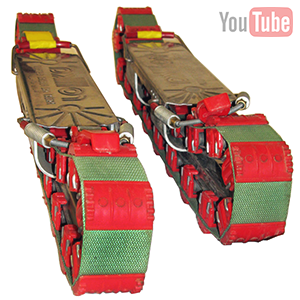
Grass skiing was invented by Richard Martin in Germany in 1966. It was created initially as a training method for skiers before the winter season. Two years later, Martin introduced the new skiing variation to the Vosges region of France. Eventually, it grew in popularity and became wide-known in the country. Short skis that were actually rolling treads, much like those on tanks, or wheels were used.
These skis were attached to the skiers boots and a grassy downhill slope was found. Depending on the skill of the grass skier, high speeds and jumps could be navigated. Many skiers have created their own pistes as an alternative to grass ski centers or grassy mountainous regions. Moreover, aspiring alpine skiers or skiing beginners in general can try this skiing variation to learn skiing moves and techniques even before the onset of snow.
Posted in Games |
1 Comment »
November 23, 2011

Louis Comfort Tiffany (1848 – 1933) was an American artist and designer who worked in the decorative arts and is best known for his work in stained glass in the Art Nouveau and Aesthetic movements.
Tiffany was affiliated with a prestigious collaborative of designers known as the Associated Artists, which included Lockwood de Forest, Candace Wheeler, and Samuel Colman. Tiffany designed stained glass windows and lamps, glass mosaics, blown glass, ceramics, jewelry, enamels and metalwork.
Continue reading →
Posted in Art |
Leave a Comment »
November 23, 2011

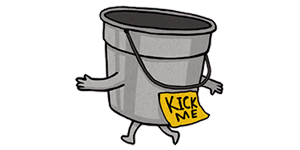
Idiom [id-ee-uhm] (Latin: idioma, ‘special property’) is an expression, word, or phrase that has a figurative meaning that is comprehended in regard to a common use of that expression that is separate from the literal meaning or definition of the words of which it is made. There are estimated to be at least 25,000 idiomatic expressions in the English language.
In linguistics, idioms are usually presumed to be figures of speech contradicting the principle of compositionality; yet the matter remains debated. Linguist John Saeed defines an ‘idiom’ as words collocated that became affixed to each other until metamorphosing into a fossilised term. This collocation—words commonly used in a group—redefines each component word in the word-group and becomes an idiomatic expression. The words develop a specialized meaning as an entity, as an idiom. Continue reading →
Posted in Language, World |
1 Comment »
November 23, 2011
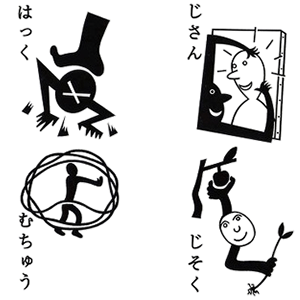
Chengyu are a type of traditional Chinese idiomatic expressions, most of which consist of four characters. Chengyu were widely used in Classical Chinese and are still common in vernacular Chinese writing and in the spoken language today. According to the most stringent definition, there are about 5,000 chengyu in the Chinese language, though some dictionaries list over 20,000. They are often referred to as Chinese idioms or four-character idioms; however, they are not the only idioms in Chinese.
Chengyu are mostly derived from ancient literature. The meaning of a chengyu usually surpasses the sum of the meanings carried by the four characters, as chengyu are often intimately linked with the myth, story or historical fact from which they were derived. As such, chengyu do not follow the usual grammatical structure and syntax of the modern Chinese spoken language, and are instead highly compact and synthetic.
Continue reading →
Posted in Language, World |
Leave a Comment »
November 23, 2011

Savant syndrome, sometimes referred to as savantism [sa-vahnt-iz-uhm], is a rare condition in which people with developmental disorders have one or more areas of expertise, ability, or brilliance that are in contrast with the individual’s overall limitations. Although not a recognized medical diagnosis, researcher Darold Treffert says the condition may be either genetic or acquired. Though it is even rarer than the savant condition itself, some savants have no apparent abnormalities other than their unique abilities. This does not mean that these abilities weren’t triggered by a brain dysfunction of some sort but does temper the theory that all savants are disabled and that some sort of trade-off is required.
According to Treffert, something that almost all savants have in common is a prodigious memory of a special type, a memory that he describes as ‘very deep, but exceedingly narrow.’ It is wide in the sense that they can recall but have a hard time putting it to use. Also, many savants are found to have superior artistic or musical ability. One in ten autistic people have savant skills. 50% of savants are autistic; the other 50% often have psychological disorders or mental illnesses.
Continue reading →
Posted in Health, Science |
1 Comment »
November 23, 2011
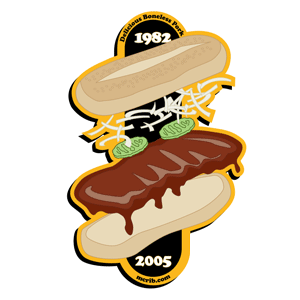
The McRib is a barbecue pork sandwich periodically sold by the international fast-food restaurant chain McDonald’s. It was first introduced to the McDonald’s menu in 1981. After poor sales it was removed from the menu in 1985. It was reintroduced in 1989, staying on the menu until 2005. From 2006 onward, it was made available for a short time each year. The McRib consists of a pork patty, barbecue sauce, onions, and pickles served on a roll. Despite its name, it is primarily composed of pork shoulder meat, according to McDonalds. The patty is also composed of restructured meat products such as tripe, heart, and stomach and blended with salt and water to extract salt-soluble proteins, which act as a ‘glue’ that helps bind the reshaped meat together. The McRib has 70 ingredients, 34 of which are contained in the bun.
It was developed by McDonald’s first Executive Chef Rene Arend, who had fathered Chicken McNuggets in 1979. ‘The McNuggets were so well received that every franchise wanted them,’ said Arend in a 2009 interview. ‘There wasn’t a system to supply enough chicken. We had to come up with something to give the other franchises as a new product. So the McRib came about because of the shortage of chickens.’ It was his inspiration to shape the McRib patty ‘like a slab of ribs,’ despite the fact that a round patty would have been cheaper to manufacture and serve on standard hamburger buns.
Posted in Food, Money |
Leave a Comment »
November 23, 2011
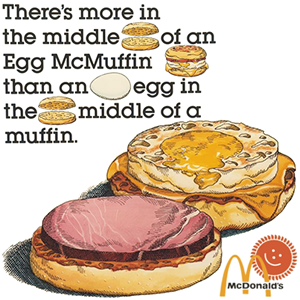
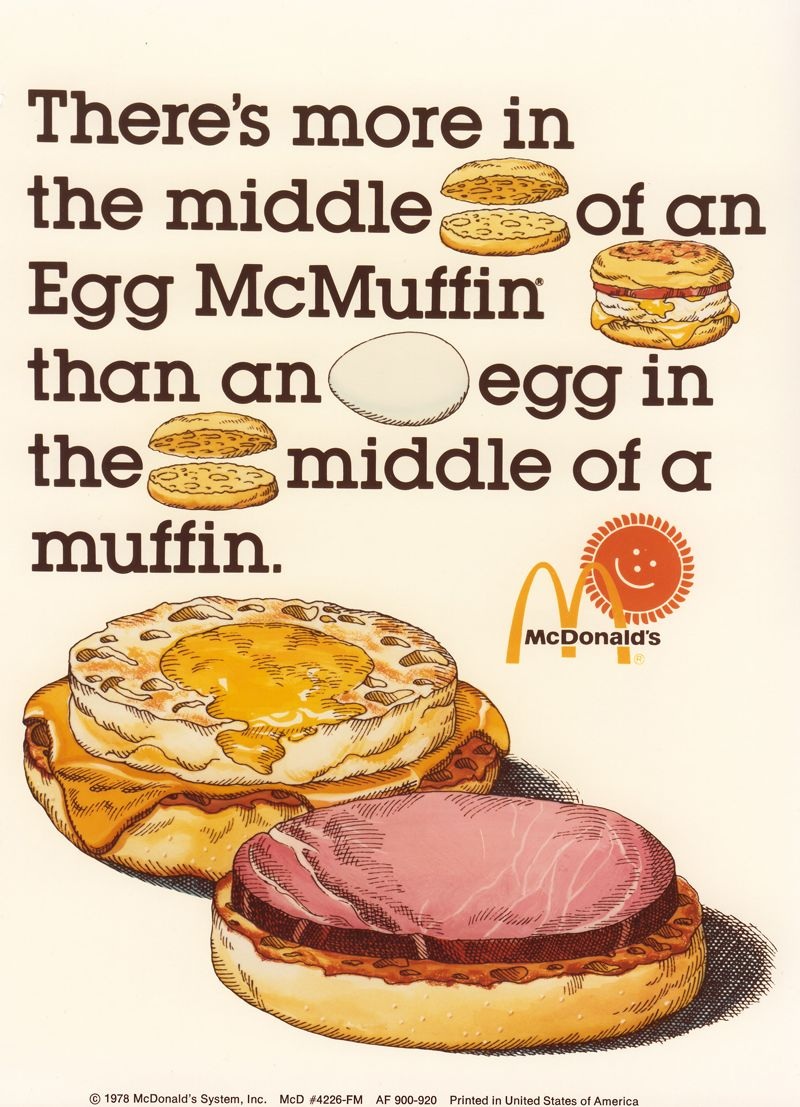
The McMuffin is a family of breakfast sandwiches in various sizes and configurations, sold by the fast-food restaurant chain McDonald’s. It was invented by the late McDonald’s franchisee Herb Peterson in the late 1960s and was introduced nationwide in 1972. In the US and Canada the standard McMuffin consists of a slice of Canadian bacon, a griddle-fried egg, and a slice of American cheese on a toasted and buttered English muffin. The round shape of the egg is made by cooking it in a teflon coated ring. Peterson first presented the Egg McMuffin at a Santa Barbara franchise without the knowledge of McDonald’s Corporate, which at the time served only lunch and dinner at all their locations.
When Corporate discovered Mr. Peterson’s unauthorized breakfast offerings, it initially reprimanded him and threatened him with a number of penalties for breaking the franchise agreement. Today, several countries like Hong Kong serve Egg McMuffins around the clock, due to the prominent use of the egg in meals other than breakfast in those regions. US restaurants usually restrict the item to the breakfast menu. This is due mainly because the grill temperature for the beef patties and the eggs are significantly different from each other.
Posted in Food, Money |
Leave a Comment »
November 23, 2011

No pain, no gain is an exercise motto that promises greater value rewards for the price of hard and even painful work. Under this conception competitive professionals such as athletes and artists are required to endure pain and pressure to achieve professional excellence. It came into prominence after 1982 when actress Jane Fonda began to produce a series of aerobics workout videos. In these videos, Fonda would use ‘No pain, no gain’ and ‘Feel the burn’ as catchphrases for the concept of working out past the point of experiencing muscle aches. It expresses the belief that solid large muscle are the result of training hard and suffering sore muscles repeatedly, implying that those who avoid pain will never reach a professional level as bodybuilders. In terms of the expression used for development, the discomfort caused may be beneficial in some instances while detrimental in others.
American author David B. Morris wrote, ‘No pain, no gain’ is an American modern mini-narrative: it compresses the story of a protagonist who understands that the road to achievement runs only through hardship.’
Posted in Games, Health, Language |
Leave a Comment »
November 22, 2011
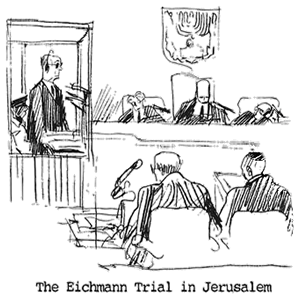
Banality [buh-nal-i-tee] of evil is a phrase coined by Hannah Arendt and incorporated in the title of her 1963 work ‘Eichmann in Jerusalem.’ It describes the thesis that the great evils in history generally, and the Holocaust in particular, were not executed by fanatics or sociopaths, but rather by ordinary people who accepted the premises of their state and therefore participated with the view that their actions were normal.
Explaining this phenomenon, media analyst Edward S. Herman has emphasized the importance of ‘normalizing the unthinkable.’ According to him, ‘doing terrible things in an organized and systematic way rests on ‘normalization.’ This is the process whereby ugly, degrading, murderous, and unspeakable acts become routine and are accepted as ‘the way things are done.’ Continue reading →
Posted in Language, Politics, War |
Leave a Comment »
November 22, 2011
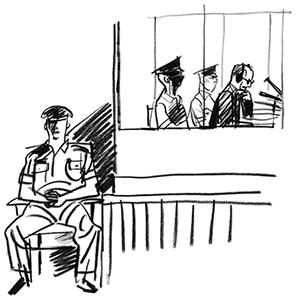
Little Eichmanns [ahyk-muhn] is a phrase used to describe the complicity of those who participate in destructive and immoral systems in a way that, although on an individual scale may seem indirect, when taken collectively would have an effect comparable to Nazi official Adolf Eichmann’s role in The Holocaust. Anarcho-primitivist John Zerzan used the phrase in his essay ‘Whose Unabomber?’ in 1995. The phrase gained prominence in American political culture four years after 9/11, when an essay written by Ward Churchill shortly after the attacks received renewed media scrutiny. In the essay, ‘On the Justice of Roosting Chickens,’ Churchill reiterated the phrase to describe technocrats working at the World Trade Center; his statement caused much controversy.
The use of ‘Eichmann’ as an archetype stems from Hannah Arendt’s 1963 book ‘Eichmann in Jerusalem.’ Arendt wrote that aside from a desire for improving his career, Eichmann showed no trace of anti-Semitism or psychological damage. She called him the embodiment of the ‘banality of evil’ as he appeared at his trial to have an ordinary and common personality and displayed neither guilt nor hatred. She suggested that this most strikingly discredits the idea that the Nazi criminals were manifestly psychopathic and fundamentally different from ordinary people. Lewis Mumford collectively refers to people willing to placidly carry out the extreme goals of megamachines as ‘Eichmanns.’
Posted in Language, Politics, War |
1 Comment »