November 22, 2011
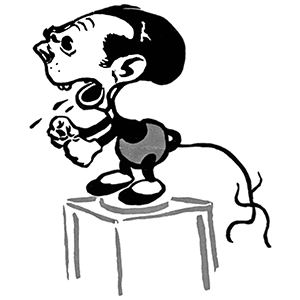
‘Three men make a tiger‘ is a Chinese proverb or chengyu (four-character idiom). Three men make a tiger refers to an individual’s tendency to accept absurd information as long as it is repeated by enough people. It refers to the idea that if an unfounded premise or urban legend is mentioned and repeated by many individuals, the premise will be erroneously accepted as the truth. This concept is analogous to communal reinforcement or the fallacy of argumentum ad populum.
The proverb came from the story of an alleged speech by Pang Cong, an official of the state of Wei in the Warring States Period (475 BCE – 221 BCE) in Chinese History. Before he left on a trip to the state of Zhao, Pang Cong asked the King of Wei whether he would hypothetically believe in one civilian’s report that a tiger was roaming the markets in the capital city, to which the King replied no. Pang Cong asked what the King thought if two people reported the same thing, and the King said he would begin to wonder. Pang Cong then asked, ‘what if three people all claimed to have seen a tiger?’ The King replied that he would believe in it. Pang Cong reminded the King that the notion of a live tiger in a crowded market was absurd, yet when repeated by numerous people, it seemed real. As a high-ranking official, Pang Cong had more than three opponents and critics; naturally, he urged the King to pay no attention to those who would spread rumors about him while he was away. ‘I understand,’ the King replied, and Pang Cong left for Zhao. Yet, slanderous talk took place. When Pang Cong returned to Wei, the King indeed stopped seeing him.
Posted in Language, World |
Leave a Comment »
November 22, 2011

The Asch conformity experiments were a series of studies published in the 1950s that demonstrated the power of conformity in groups. These are also known as the Asch Paradigm.
Experiments led by Solomon Asch of Swarthmore College asked groups of students to participate in a ‘vision test.’ In reality, all but one of the participants were confederates of the experimenter, and the study was really about how the remaining student would react to the confederates’ behavior.
Continue reading →
Posted in Health, Politics, Science |
Leave a Comment »
November 22, 2011

In the field of social psychology, a breaching experiment is an experiment that seeks to examine people’s reactions to violations of commonly accepted social rules or norms. Breaching experiments are most commonly associated with ethnomethodology (the study of the everyday methods people use for the production of social order), and in particular the work of Harold Garfinkel. The conduct of a breaching experiment is sometimes referred to as ‘Garfinkeling.’ A famous breaching experiment was conducted on the New York City subway in the 1970s, when experimenters boarded crowded trains and asked able-bodied but seated riders, with no explanation, to give up their seats. Reportedly, the experimenters themselves were deeply troubled by being involved in such a seemingly minor violation of a social norm. The experiment was supervised by American psychologist Stanley Milgram.
Erving Goffman’s seminal study ‘Behavior in Public Places’ gives some classic examples of behavioral norms, such as ‘it is inconsiderate to litter – put your garbage in the trash can.’ A breaching experiment studies people’s reaction to an experimenter who breaks this kind of small, everyday rule. The strength of the reaction is taken as an indication of the strength of the rule. ‘The inexplicable do-gooder’: Social science researcher Earl R. Babbie writes that ‘it is a social rule that ordinary citizens should not pick up garbage from the street, or mend street signs, or otherwise fix problems.’ Babbie claims that people have negative reactions when they see somebody fixing something that is not his/her ‘job’ to fix; in some cases, altruistic actions are viewed as personal intrusions.
Posted in Humor, Science |
2 Comments »
November 22, 2011
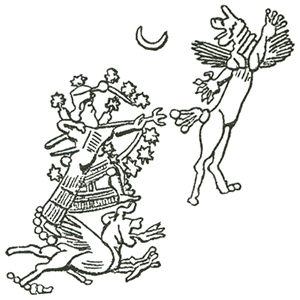
The Enûma Eliš is the Babylonian creation myth (named after its opening words). It was recovered by Austen Henry Layard in 1849 (in fragmentary form) in the ruined Library of Ashurbanipal at Nineveh (Mosul, Iraq), and published by George Smith in 1876. The Enûma Eliš has about a thousand lines and is recorded in Old Babylonian on seven clay tablets, each holding between 115 and 170 lines of text. Most of Tablet V has never been recovered, but aside from this lacuna, the text is almost complete. A duplicate copy of Tablet V has been found in Sultantepe, ancient Huzirina, located near the modern town of Şanlıurfa in Turkey.
This epic is one of the most important sources for understanding the Babylonian worldview, centered on the supremacy of Marduk and the creation of humankind for the service of the gods. Its primary original purpose, however, is not an exposition of theology but the elevation of Marduk, the chief god of Babylon, above other Mesopotamian gods. Continue reading →
Posted in Philosophy |
Leave a Comment »
November 22, 2011

Vampirella is a fictional character, a comic book vampire heroine created by Forrest J Ackerman and costume designer Trina Robbins in Warren Publishing’s black-and-white horror comics magazine ‘Vampirella’ #1 (1969). Writer-editor Archie Goodwin later developed the character from horror-story hostess, in which capacity she remained through issue #8 (1970), to a horror-drama leading character. As comics historian Richard J. Arndt describes, ‘Forrest Ackerman created, or at least had a strong hand in creating, Vampirella and he clearly had a major influence in shaping the lighthearted bad-girl story style of this issue as well.’ Vampirella was originally presented as an inhabitant of the planet Drakulon, a world where people lived on blood and where blood flowed in rivers. Draculon orbits twin suns that were causing droughts across the planet, marking certain doom for Vampirella and her race. The race of which Vampirella was born, the Vampiri, were able to transform themselves into bats at will, sprout wings when required, and drink blood.
The story begins with the inhabitants of Drakulon dying slowly due to the drying up of its blood. The last few lie dying when a spaceship from Earth crashes on the planet. Vampirella, sent to investigate, is attacked; retaliating, she discovers that the astronauts have blood in their veins. In order for her race to survive, she manages to pilot the ship back to Earth where her adventures begin. Vampirella becomes a ‘good’ vampire, and devotes her energy to ridding our world of the homegrown ‘evil’ kind.
Posted in Art, Language |
Leave a Comment »
November 22, 2011

‘Space Jazz: The soundtrack of the book Battlefield Earth’ is a music album and soundtrack companion to the novel ‘Battlefield Earth’ by L. Ron Hubbard, released in 1982. Hubbard composed the music for the album. A 1983 press release put out by the Church of Spiritual Technology subsidiary company Author Services Inc. marketed the concept album as ‘the only original sound track ever produced for a book before it becomes a movie.’
The album includes performances by Chick Corea, Stanley Clarke, Nicky Hopkins and Gayle Moran. The album included music from the Fairlight CMI synthesizer; it was one of the first professional uses of this device. A demonstration of the ‘computer space jazz’ soundtrack was one of the festival displays at the 1982 US Festival rock concert in California.
Posted in Art, Humor |
Leave a Comment »
November 22, 2011

Terry Richardson (b. 1965) is an American fashion photographer. Richardson was born in New York City, the son of Bob Richardson, a fashion photographer who struggled with schizophrenia and drug abuse. Richardson was raised in Hollywood. He was shy as a teenager and at some times deemed ‘completely lacking in social skills.’ He played bass guitar in the punk rock band The Invisible Government for 5 years. Richardson began photography when the band broke up and his mother introduced him to Tony Kent, a photographer who hired him as an assistant.
Richardson’s photographs often contain graphic sexual subject matter. Richardson has shot advertisements for fashion designers and editorial photographs. His alleged attitude towards models has been criticized by Danish model and filmmaker Rie Rasmussen and others, who have accused Richardson of exploiting and sexually abusing the models he photographs.
Posted in Art, Money, Sex |
Leave a Comment »
November 22, 2011

Glamorama is a novel by American writer Bret Easton Ellis, published in 1998. Unlike Ellis’ previous novels, Glamorama is set in and satirizes the 1990s, specifically celebrity culture and consumerism. Ellis wanted to write a Stephen King-style ghost story novel (which would eventually become ‘Lunar Park’); finding it difficult at the time, he began work on the other novel which he had in mind, a Robert Ludlum-style thriller, with the intention of using one of his own vapid characters who lack insight as the narrator. The novel is a satire of modern celebrity culture, featuring models-turned-terrorists.
A character remarks, ‘basically, everyone was a sociopath…and all the girls’ hair was chignoned.’ (A chignon is an arrangement of long hair in a roll or knot at the back of the head). The novel plays upon the conspiracy thriller conceit of someone ‘behind all the awful events,’ to dramatize the revelation of a world of random horror. The lack of resolution contributes to Ellis’ artistic effect. The obsession with beauty is reflected in consistent namedropping; this satirizes Victor’s obsession with looks, and perhaps is indicative of the author’s own attraction to glamor.
Continue reading →
Posted in Art, Language, Money |
Leave a Comment »
November 22, 2011

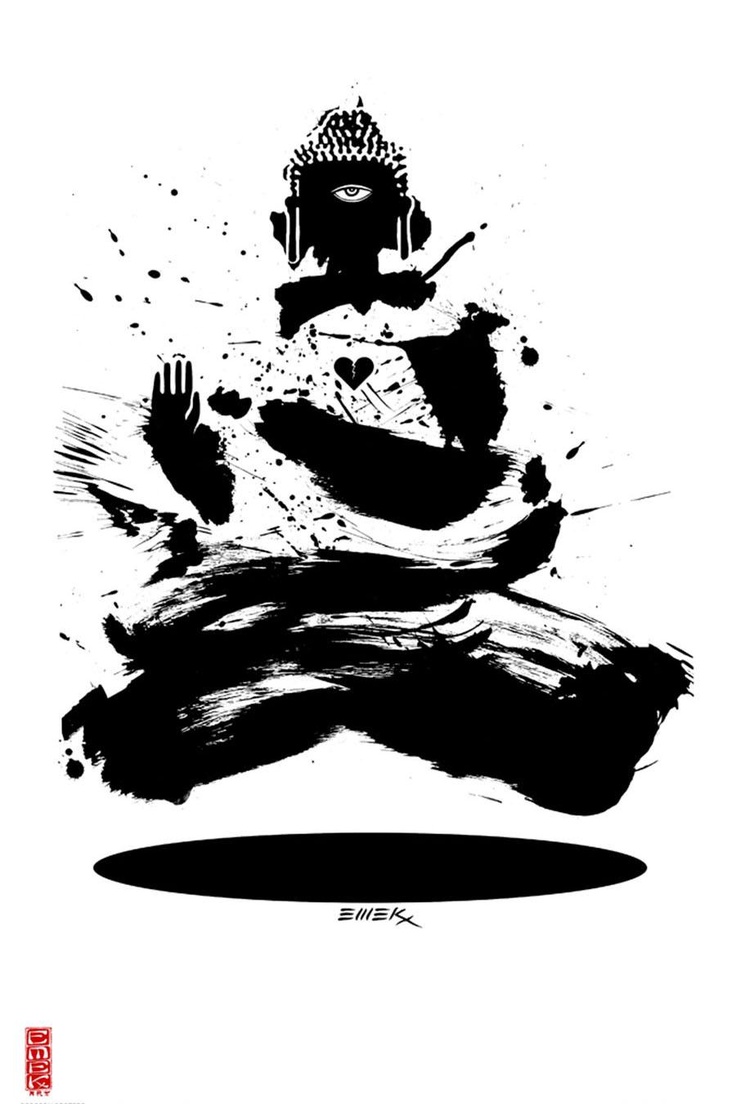
Emek (b. 1970) is a popular graphic designer and concert poster designer since the early 1990s. He is widely credited with helping to revive the rock poster scene. He is the brother of artist and author Gan Golan. His style, known for its attention to detail and layers of meaning, infuses socio-political commentary into pop culture imagery.
In the tradition of psychedelic posters from the 1960s, Emek still draws his posters by hand. He was shaped by both rock art posters from the 1960s, and punk flyers from the 1980s. Emek’s poster-making career accelerated in the 1990s with alternative rock acts from Europe and North America, including Pearl Jam, Radiohead, Queens of the Stone Age, Tool, and Marilyn Manson. Continue reading →
Posted in Art |
Leave a Comment »
November 22, 2011

A motivational poster (or affirmation poster or inspirational poster) is a type of poster commonly designed for use in schools and offices. The intent of motivational posters is to make people achieve more, or to think differently about the things that they may be learning or doing. Motivational posters can have behavioral effects. For example, the University of Glasgow found in one study that their placement of a motivational poster that promotes stair use in front of an escalator and a parallel staircase, in an underground station, doubled the amount of stair use.
This kind of poster has been repeatedly parodied, and parody motivational posters have become an Internet meme. One famous motivational poster features a kitten hanging from a tree branch along with the phrase ‘Hang in There, Baby!’ This has been the target of various reproductions and parodies, such as an appearance on ‘The Simpsons’ episode ‘The Twisted World of Marge Simpson’ where Marge Simpson notices the copyright date (1968) and comments, ‘…determined or not, that cat must be long dead. That’s kind of a downer.’ Despair, Inc. has made a business out of such parody and cynical posters, with ‘demotivational posters’ ranging from a picture of a tree bent over by wind with the caption ‘ADVERSITY: That which does not kill me postpones the inevitable.’ to a picture of a sinking ship with the caption ‘MISTAKES: It could be that the purpose of your life is only to serve as a warning to others.’
Posted in Humor, Language, Money |
Leave a Comment »
November 22, 2011

Beer pong, also known as Beirut [bey-root], is a drinking game in which players throw a ping pong ball across a table with the intent of landing the ball in a cup of beer on the other end. The game typically consists of two two-to-four-player teams and multiple cups set up, in triangle formation, on each side. There are no official rules, and rules may vary widely, though usually there are six or ten plastic cups on each side. Each side then takes turns attempting to shoot ping pong balls into the opponent’s cups. If a ball lands in a cup, then the contents of that cup are consumed, and the cup is either placed aside or reinserted into the triangle. If the cup is reinserted and the other team knocks the cup over, it is removed. If the opposing team throws the ball into an empty cup, they must consume the contents of one of their cups. The first side to eliminate all of the opponent’s cups is the winner.
The order of play varies—both players on one team shoot followed by both players on the other team, or players on opposite teams can alternate back and forth. Beer pong is played at parties, North American colleges and universities, bars, and elsewhere, such as tailgating or other sporting events.
Continue reading →
Posted in Food, Games, Health |
Leave a Comment »
November 22, 2011
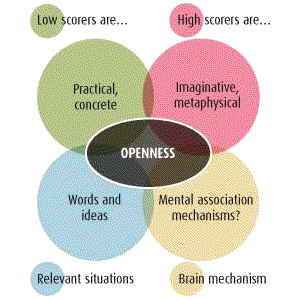
In contemporary psychology, the ‘Big Five’ are five broad domains or dimensions of personality which are used to describe human personality: openness, conscientiousness, extraversion, agreeableness, and neuroticism. Openness involves active imagination, aesthetic sensitivity, attentiveness to inner feelings, preference for variety, and intellectual curiosity.
A great deal of psychometric research has demonstrated that these qualities are statistically correlated. Thus, openness can be viewed as a global personality trait consisting of a set of specific traits, habits, and tendencies that cluster together.
Continue reading →
Posted in Drugs, Health |
Leave a Comment »