November 22, 2011

Dysexecutive [dis-ig-zek-yuh-tiv] syndrome (DES) consists of a group of symptoms, usually resulting from brain damage, that fall into cognitive, behavioral and emotional categories and tend to occur together. The term was introduced by British psychologist Alan Baddeley to describe a common pattern of dysfunction in executive functions, such as planning, abstract thinking, flexibility and behavioral control.
It is thought to be Baddeley’s theory of working memory and the central executive that are the hypothetical systems impaired in DES. The syndrome was once known as frontal lobe syndrome, however dysexecutive syndrome is preferred because it emphasizes the functional pattern of deficits (the symptoms) over the location of the syndrome in the frontal lobe, which is often not the only area affected.
Continue reading →
Posted in Health, Science |
Leave a Comment »
November 22, 2011

Sluggish Cognitive Tempo (SCT) is an unformalized descriptive term which is used to better identify a subgroup within the formal subgroup ‘ADHD-PI predominantly inattentive.’ SCT is not recognized in any standard medical manuals such as the DSM-IV or the ICD-10. In many ways, those who have an SCT profile have the opposite symptoms of those with classic ADHD: instead of being hyperactive, extroverted, obtrusive, and risk takers, those with SCT are drifting, introspective and daydreamy, and feel as if ‘in the fog’ (although in excited states, an SCT patient behaves very similarly to a traditional ADHD patient). They also don’t have the same risk factors and outcomes.
A key behavioral characteristic of those with SCT symptoms is that they are more likely to appear to be lacking motivation. They lack energy to deal with mundane tasks and will consequently seek things that are mentally stimulating because of their underaroused state, an intense craving for emotional and intellectual stimulation. Those with SCT symptoms show a qualitatively different kind of attention deficit that is more typical of a true information input-output problem, such as memory retrieval and active working memory, and display a wavering ‘up and down’ mental pattern with extremely variable levels of intense thought, hyperactivity, failing memory, and sexual appetite. Conversely, those with the other two subtypes of ADHD are characteristically excessively energetic and have no difficulty processing information. Continue reading →
Posted in Education, Health |
1 Comment »
November 21, 2011

Steve Haworth is a body modification artist based in Phoenix, Arizona. He is responsible for the invention and popularization of subdermal and transdermal implants, such as the ‘Metal Mohawk.’ He designed specialized medical instruments called dermal elevators for this process. He has also done pioneering work with surface bars, ear shaping, tongue splitting, magnetic implants, and artistic branding (using electrocautery units). He has worked on individuals noted for their extensive modifications such as The Enigma, Katzen, Stalking Cat and The Lizardman. Many other respected artists in the body modification community cite Haworth as an inspiration. Fellow body modification artist Samppa von Cyborg says that ‘He’s the most important, most respected body modder out there.’ Shawn Porter of body modification blog ‘Scar Wars’ explains, ‘I directly credit Steve’s branding as a main influence on the newer generation of scarification artists; his high detail branding (which caused a stir when it was featured in ‘In the Flesh,’ ‘Body Art,’ and ‘Bizarre’) showed people that you could do more than just dots, chevrons and geometric shapes.’
Haworth’s father was a manufacturer of surgical equipment, and he continued in the family business, eventually branching into piercing jewelry and body modification instruments. Currently he is retired from regular piercing, preferring to concentrate on 3D implants and other types of body modification. He continues to manufacture body jewelry and tools for body modification. He and his business partner Jesse Jarrell create unique silicone jewelry for large-gauge piercing with their company Kaos Softwear. Haworth travels around the country and the world frequently, and conducts seminars on his body modification techniques. He founded the body suspension group ‘Life Suspended’ and performs suspensions with them on regular basis. He is also the co-founder of the production company ‘Horns & Halos,’ which puts on several fetish-themed events every year.
Posted in Art, Health, Technology |
Leave a Comment »
November 21, 2011
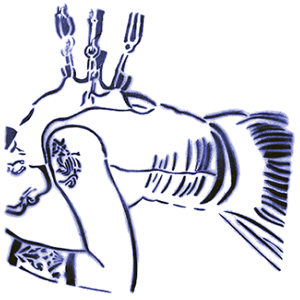
A suspension is the act of suspending a human body from hooks that have been put through body piercings. These piercings are temporary and are performed just prior to the actual suspension.
Multiple hooks are usually located around the shoulders, upper arm, and back, as well as around the knees (depending on the position in which the body is to be suspended). Finding the proper hook placement and number requires an understanding of human anatomy and physiology, as well as the durability of the individual’s skin. If the number of hooks are too few, the suspended individual’s skin will be unable to withstand the body’s weight and will rip.
Continue reading →
Posted in Art, Games, Philosophy |
Leave a Comment »
November 21, 2011
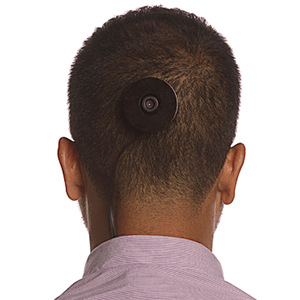
In body modification, an implant is a device placed under the human skin for decorative purposes. Such implants may be subdermal (beneath the skin) or transdermal (partially below and partially above the skin). In the context of body modification, some may consider injections of silicone and other substances a type of implant as well. Some types of implants may be performed by doctors or other medical professionals, while others are performed by body modification artists.
Examples include collarbone piercing, deep chest piercing, eyeball implants, flesh stapling, genital beading, magnetic implants, and scrotal implants. A clavicle or collarbone piercing is a very deep piercing that passes beneath the collarbone, and therefore enters the body cavity. These are highly prone to rejection as the collarbone placement is a high movement area. Continue reading →
Posted in Art, Health, Technology |
Leave a Comment »
November 21, 2011

The Immortality Drive is a small memory device which was taken to the International Space Station in a Soyuz spacecraft in 2008. The Immortality Drive contains digitized DNA sequences of a select group of humans, such as physicist Stephen Hawking, comedian Stephen Colbert, Playboy model Jo Garcia, game designer Richard Garriot, Pro Wrestler Matt Morgan, and athlete Lance Armstrong.
The microchip also contains a copy of ‘George’s Secret Key to the Universe,’ a children’s book authored by Stephen Hawking and his daughter, Lucy. The intent of the Immortality Drive is to preserve human DNA in a time capsule, in case some global cataclysm should occur on Earth.
Posted in Science, Technology |
Leave a Comment »
November 21, 2011
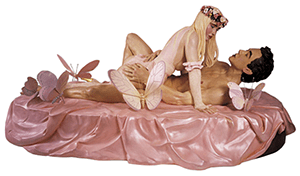

Ilona Staller (b. 1951), also known by her stage name la Cicciolina, is a Hungarian-born Italian porn star, politician, and singer. She continued to make hardcore pornographic films while in office. She is famous for delivering political speeches with one breast exposed. In 1964 she began working for a Hungarian modeling agency; in her memoirs she claimed that she had provided Hungarian authorities with information on American diplomats staying at a Budapest luxury hotel where she worked as a maid in the late 1960s.
Staller married American sculptor Jeff Koons in 1991. Koons produced a series of sculptures and photographs of them having sex in many positions, settings and costumes, which were exhibited under the title ‘Made In Heaven.’ The marriage broke up in 1992, and their son Ludwig Maximillian was born shortly afterwards. Staller left the US with the child, and a lengthy custody battle ensued. Koons won custody in 1998 but Ludwig remains with Staller in Italy.
Continue reading →
Posted in Politics, Sex, World |
Leave a Comment »
November 21, 2011

Let’s trim our hair in accordance with the socialist lifestyle was part of a North Korean government propaganda campaign promulgating grooming and dress standards in 2004. It was broadcast on state-run Korean Central Television in the capital of Pyongyang and clips from the program were later rebroadcast on the BBC. The television program claimed that hair length can affect human intelligence, in part because of the deprivation to the rest of the body of nutrients required for hair to grow. It was one part of longstanding North Korean government restrictions on haircuts and fashions deemed at odds with ‘Socialist values.’
Such dress and hair standards have long been a fixture of North Korean society. Kim Jong-Il was known for his so called ‘Speed Battle Cut’ crew cut when he first came to prominence in the early 1980s, though he later reverted to the short sided bouffant favored by his father. After Kim Jong-Il succeeded his father, some of the state’s restrictions on Western fashion were relaxed. Women were allowed permanent waves, men could grow slightly longer hair, and even public dancing was allowed. Despite such slight concessions during the early years of Kim Jong-Il’s rule, obvious emblems of Western fashion such as jeans continued to be entirely banned, and long hair on men could lead to arrest and forced haircuts.
Continue reading →
Posted in Humor, Politics, World |
Leave a Comment »
November 21, 2011
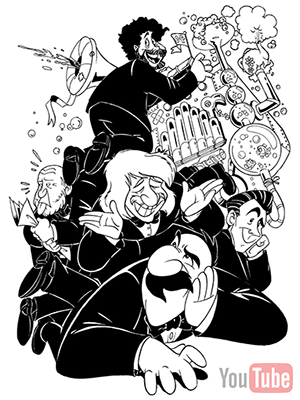
Les Luthiers [loo-tee-ers] is an Argentine comedy-musical group, very popular also in several other Spanish-speaking countries. They were formed in 1967 by Gerardo Masana, during the height of a period of very intense Choral Music activity in Argentina’s state universities.
Their outstanding characteristic is the home-made musical instruments (hence the name luthiers, French for ‘musical instrument maker’), some of them extremely sophisticated, which they skillfully employ in their recitals to produce music and texts full of high class and refined humor. Continue reading →
Posted in Art, Humor, World |
1 Comment »
November 21, 2011
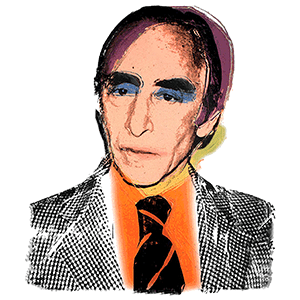
Leo Castelli (1907 – 1999), born Leo Krausz, was an American art dealer whose gallery showcased cutting edge Contemporary art for five decades. Castelli showed Surrealism, Abstract Expressionism, Neo-Dada, Pop Art, Op Art, Color field painting, Hard-edge painting, Lyrical Abstraction, Minimal Art, Conceptual Art, and Neo-expressionism, among other movements. Leo Castelli was born at Trieste, of Italian and Austro-Hungarian Jewish origin. Castelli’s first American curatorial effort was the famous Ninth Street Show of 1951, a seminal event of Abstract Expressionism.
In 1957, he opened the Leo Castelli Gallery in a townhouse on 77th Street between Madison and Fifth Avenues. Initially the gallery showcased European Surrealism, Wassily Kandinsky, and other European artists. However the gallery also exhibited American Abstract Expressionism. Jackson Pollock and Willem de Kooning were some artists who were included in group shows. In 1958, Robert Rauschenberg and Jasper Johns joined the gallery, signaling a turning away from Abstract Expressionism, towards Pop Art, Minimalism and Conceptual Art. From the early 1960s through the late 70s, Frank Stella, Roy Lichtenstein, Andy Warhol, and Ed Ruscha joined the stable of Castelli artists.
Posted in Art, Money |
Leave a Comment »
November 20, 2011

Famous for being famous, in popular culture terminology, refers to someone who attains celebrity status for no particular identifiable reason, or who achieves fame through association with a celebrity. The term is a pejorative, suggesting that the individual has no particular talents or abilities. Even when their fame arises from a particular talent or action on their part, the term will sometimes still apply if their fame is perceived as disproportionate to what they earned through their own talent or work.
The term originates from an analysis of the media dominated world called ‘The Image: A Guide to Pseudo-events in America’ (1961), by historian and social theorist Daniel J. Boorstin. In it, he defined the celebrity as ‘a person who is known for his well-knownness.’ He further argued that the graphic revolution in journalism and other forms of communication had severed fame from greatness, and that this severance hastened the decay of fame into mere notoriety. Over the years, the phrase has been glossed as ‘a celebrity is someone who is famous for being famous’.
Continue reading →
Posted in Humor, Language, Money |
1 Comment »
November 20, 2011
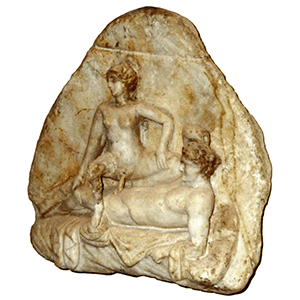
The term Secret Museum (Gabinetto Segreto) principally refers to the collection of erotic or sexually explicit finds from Pompeii, held in separate galleries in the Naples National Archaeological Museum, the former Museo Borbonico. The British Museum also contained secret rooms containing erotica. Throughout ancient Pompeii, erotic frescoes, depictions of the god Priapus, sexually explicit symbols, inscriptions, and even household items (such as phallic oil lamps) were found.
Ancient Roman culture had a different sense of shame for sexuality, and viewed sexually explicit material very differently to most present-day cultures. Ideas about obscenity developed from the 18th century to the present day into a modern concept of pornography. Continue reading →
Posted in Art, Sex, World |
Leave a Comment »