September 9, 2019
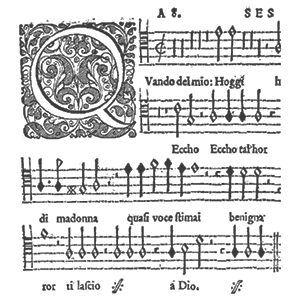
Word painting (also known as ‘tone painting’) is the musical technique of composing music that reflects the literal meaning of a song’s lyrics.
For example, ascending scales would accompany lyrics about going up; slow, dark music would accompany lyrics about death. Continue reading →
Posted in Art, Philosophy |
Leave a Comment »
September 6, 2019

Joie de vivre (‘joy of living’) is a French phrase often used in English to express a cheerful enjoyment of life; an exultation of spirit.
It ‘can be a joy of conversation, joy of eating, joy of anything one might do… And joie de vivre may be seen as a joy of everything, a comprehensive joy, a philosophy of life, a Weltanschauung [worldview]. Robert’s Dictionnaire says ‘joie’ is ‘sentiment exaltant ressenti par toute la conscience,’ that is, involves one’s whole being.’ Continue reading →
Posted in Language, Philosophy, World |
Leave a Comment »
September 5, 2019

The third eye (also called the mind’s eye, or inner eye) is a mystical and esoteric concept of a speculative invisible eye, usually depicted as located on the forehead, which provides perception beyond ordinary sight.
In Dharmic spiritual traditions from India, the third eye refers to the ‘ajna’ (or brow) chakra (supposed ‘life force’ energy centers in the human body). The third eye refers to the gate that leads to inner realms and spaces of higher consciousness. In New Age spirituality, the third eye often symbolizes a state of enlightenment or the evocation of mental images having deeply personal spiritual or psychological significance. Continue reading →
Posted in Philosophy |
Leave a Comment »
August 29, 2019

QAnon is a far-right conspiracy theory detailing a supposed secret plot by an alleged ‘deep state’ against U.S. President Donald Trump and his supporters. The theory began with an October 2017 post on the anonymous imageboard 4chan by someone using the name Q, a presumably American individual that may have later grown to include multiple people, claiming to have access to classified information involving the Trump administration and its opponents in the United States.
Q has falsely accused numerous liberal Hollywood actors, Democratic politicians, and high-ranking officials of engaging in an international child sex trafficking ring, and has claimed that Donald Trump feigned collusion with Russians in order to enlist Robert Mueller to join him in exposing the ring and preventing a coup d’état by Barack Obama, Hillary Clinton, and George Soros. Continue reading →
Posted in Health, Politics |
Leave a Comment »
August 12, 2019
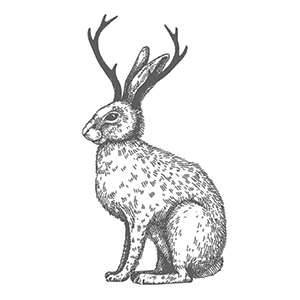
In early lumberjack folklore, fearsome critters are fantastical beasts that were said to inhabit the frontier wilderness of North America, such as the jackalope, a rabbit with the antlers of an antelope. Fearsome critters were an integral part of oral tradition in North America lumber camps during the turn of the 20th century, principally as a means to pass time (such as in tall tales) or as a jest for hazing newcomers.
In a typical fearsome critter gag, a person would casually remark about a strange noise or sight they encountered in the wild; subsequently, another accomplice would join in. Meanwhile, an eavesdropper would begin to investigate. Continue reading →
Posted in Humor |
Leave a Comment »
August 8, 2019
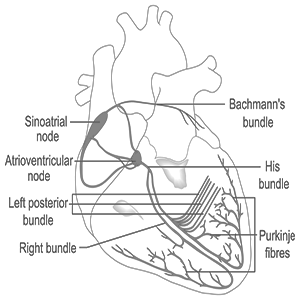
Autorhythmicity [aw-toh-rith-miss-uh-tee], or automaticity, refers to the heart’s ability to spontaneously generate an electric charge without outside help. Cardiac electrical activity originates in the sinoatrial node (SAN) and is propagated via the ‘His-Purkinje’ network, the fastest conduction pathway within the heart. This pathway is known as the electrical conduction system of the heart.
The electrical signal travels from the SAN, which stimulates the atria to contract, to the atrioventricular node (AVN), which slows down conduction of the action potential from the atria to the ventricles. This delay allows the ventricles to fully fill with blood before contraction. The signal then passes down through a bundle of fibers called the ‘bundle of His,’ located between the ventricles, and then to the ‘purkinje’ fibers at the bottom (apex) of the heart, causing ventricular contraction. Continue reading →
Posted in Health, Science |
Leave a Comment »
August 2, 2019
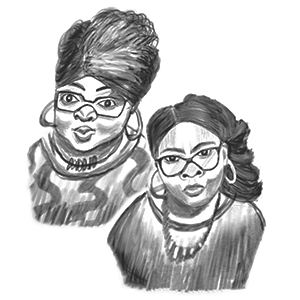
Lynnette Hardaway and Rochelle Richardson, popularly known as Diamond and Silk, are American live-stream video bloggers, social media personalities, political activists and Fox Nation hosts.
They are known for their commentary in support of United States President Donald Trump. Since 2018, Diamond and Silk have traveled the country on their Chit Chat Tour. Hardaway is notably more talkative, while Richardson often just expresses agreement. Continue reading →
Posted in Money, Politics |
Leave a Comment »
August 1, 2019
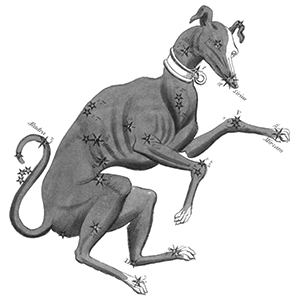
The dog days or dog days of summer are the hot, sultry days of summer. They were historically the period following the heliacal rising of the star system Sirius, which Greek and Roman astrology connected with heat, drought, sudden thunderstorms, lethargy, fever, mad dogs, and bad luck. They are now taken to be the hottest, most uncomfortable part of summer in the Northern Hemisphere.
In addition to following Orion into the night sky, the Dog Star Sirius can be easily located in the heavens by following the line created by the prominent asterism (a popularly-known group of stars) Orion’s Belt. Continue reading →
Posted in Language, Philosophy |
Leave a Comment »
July 29, 2019
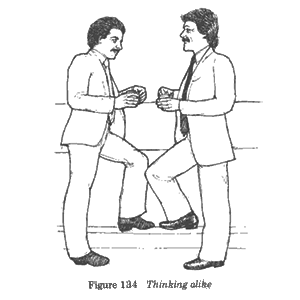
Rapport [ra-pawr] is a close and harmonious relationship in which the people or groups concerned are ‘in sync’ with each other, understand each other’s feelings or ideas, and communicate smoothly. Methods for increasing interpersonal rapport in domains like education, medicine, or sales include coordination (or ‘mirroring’), showing your attentiveness to the other, building commonality, and managing the other’s self-perception (also called ‘face’ management).
The word stems from the old French verb ‘rapporter’ which means literally to carry something back; and, in the sense of how people relate to each other means that what one person sends out the other sends back. For example, they may realize that they share similar values, beliefs, knowledge, or behaviors around politics, music or sports. This may also mean that the participants engage in reciprocal behaviors such as posture mirroring or in increased coordination in their verbal and nonverbal interactions. Continue reading →
Posted in Health, Money |
Leave a Comment »
July 28, 2019
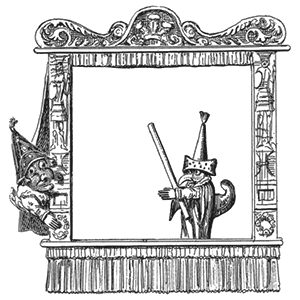
Slapstick is a style of humor involving exaggerated physical activity. The term arises from a device developed during the broad, physical comedy style known as commedia dell’arte in 16th-century Italy.
The ‘batacchio’ or ‘bataccio’ (lit. ‘slap stick’) consists of two thin slats of wood, which make a ‘slap’ when striking another actor, with little force needed to make a loud—and comical—sound. The physical slap stick remains a key component of the plot in the traditional and popular ‘Punch and Judy’ puppet show. Along with the inflatable bladder (of which the whoopee cushion is a modern variant), it was among the earliest special effects. Continue reading →
Posted in Art, Humor |
Leave a Comment »
July 26, 2019
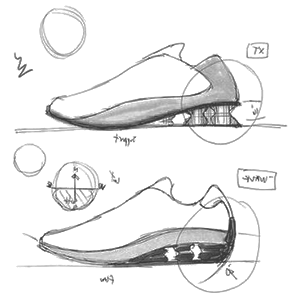
Shox is a shoe feature first released by Nike in 2000 that is incorporated in several of their flagship athletic sports shoes. The shoe design includes a support system feature, which is an arrangement of small hollow columns in the midsole supporting the shoe’s heel, which are made primarily with polyurethane.
There are different formations of the shox technology, but most models include four circular columns in a square formation to provide cushioning. Later variations in shox models added one or two additional shox, 25 mm high, though they may vary in height; as well as triangular and rectangular shox that Nike claims provide better stability. Some shoes have midsoles made entirely of Shox, like the TL series. Continue reading →
Posted in Games, Technology |
Leave a Comment »
July 21, 2019
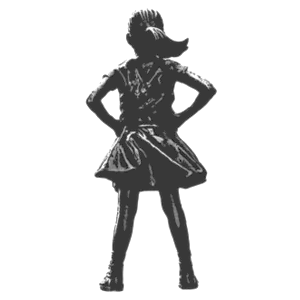
Fearless Girl is a bronze sculpture by American sculptor Kristen Visbal, commissioned by State Street Global Advisors (SSGA), a large asset management company. The statue was installed on March 7, 2017, in anticipation of International Women’s Day the following day.
The statue was originally installed in Bowling Green, a park in lower Manhattan, facing down the ‘Charging Bull’ (also known as ‘Wall Street Bull,’ a large bronze statue illegally placed there in 1989 by Sicilian artist Arturo Di Modica), but following complaints from Di Modica, ‘Fearless Girl’ was removed in November 2018 and relocated to a nearby spot across from the New York Stock Exchange. A plaque with footprints was placed on the original site. Continue reading →
Posted in Art, Money, Politics |
1 Comment »


 The Daily Omnivore