November 17, 2011
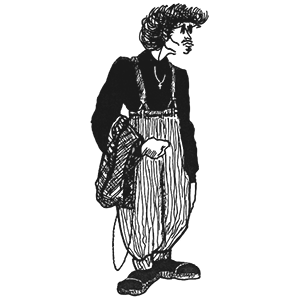
The Zoot Suit Riots were a series of riots in 1943 during World War II that erupted in Los Angeles between white sailors and Marines stationed throughout the city and Latino youths, who were recognizable by the zoot suits they favored. While Mexican Americans and military servicemen were the main parties in the riots, African American and Filipino/Filipino American youth were also involved.
The Zoot Suit Riots were in part the effect of the infamous Sleepy Lagoon murder which involved the death of a young Latino man in a barrio near Los Angeles. The incident triggered similar attacks against Latinos in Beaumont, Chicago, San Diego, Detroit, Evansville, Philadelphia, and New York. Continue reading →
Posted in Politics, War |
Leave a Comment »
November 17, 2011

A zoot suit is a suit with high-waisted, wide-legged, tight-cuffed, pegged trousers, and a long coat with wide lapels and wide padded shoulders. This style of clothing was popularized by African, Mexican, and Italian Americans during the late 1930s and the 1940s. It started during the Jazz Age in Harlem and slowly spread throughout other ethnic-neighborhoods across America. Malcolm X was known to have loved zoot suits in his early days as Detroit Red, a Harlem drug dealer, racketeer, and pimp. In Britain the bright-colored suits with velvet lapels worn by Teddy Boys (young men wearing clothes inspired by dandies) bore a slight resemblance to zoot suits in the length of the jacket. Often zoot suiters wear a felt hat with a long feather and pointy, French-style shoes. A young Malcolm X described the zoot suit as: ‘a killer-diller coat with a drape shape, reet pleats and shoulders padded like a lunatic’s cell.’ Zoot suits usually featured a watch chain dangling from the belt to the knee or below, then back to a side pocket.
The amount of material and tailoring required made them luxury items, so much so that the U.S. War Production Board said that they wasted materials that should be devoted to the World War II war effort. This extravagance, which many considered unpatriotic in wartime, was a factor in the Zoot Suit Riots, a series of riots in 1943 that erupted in Los Angeles between white sailors and Marines stationed throughout the city and Latino youths, who were recognizable by the zoot suits they favored. Wearing the oversized suit was a declaration of freedom and self-determination, even rebelliousness. The word zoot probably comes from a reduplication of suit. The creation and naming of the zoot suit have been variously attributed to Harold C. Fox, a Chicago clothier and big-band trumpeter; Louis Lettes, a Memphis tailor; and Nathan (Toddy) Elkus, a Detroit retailer. Zoot suits were initially called drapes.
Posted in Art, Money, Politics |
Leave a Comment »
November 17, 2011

Skweee is a musical style, with origin in Sweden and Finland. Skweee combines simple synth leads and basslines with funk, r’n’b or soul-like rhythms, overall rendering a stripped-down funky sound. The tracks are mostly entirely instrumental, though there are exceptions. The name Skweee was coined by Daniel Savio, one of the originators of the emerging sound. The name refers to the use of vintage synthesizers in the production process, where the aim is to ‘squeeze out’ the most interesting sounds possible.
The major outlets of skweee music are the Swedish record label Flogsta Danshall and Finnish record label Harmönia. The preferred media format of skweee enthusiasts is the 7″ vinyl record. Early releases were exclusively released in this format. More recently, however, a series 12″ vinyl records, digital releases and CD compilations have been released through these outlets as well. Skweee has during late 2008 and early 2009 started to influence the sound of dubstep. Producers such as Rusko, Gemmy, Joker, Zomby, Rustie, and Jamie Vex’d, among others, have given their take on the sound resulting in several interesting releases on the boundary between skweee and dubstep.
Posted in Art |
Leave a Comment »
November 17, 2011
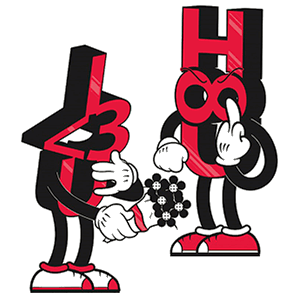
SMS language or textese is a term for the abbreviations and slang most commonly used due to the necessary brevity of mobile phone text messaging, in particular the widespread SMS (short message service) communication protocol. SMS language is also common on the Internet, including in email and instant messaging. It can be likened to a rebus, an allusional device that uses pictures to represent words or parts of words (e.g. ‘i <3 u’ which uses the pictogram of a heart for ‘love,’ and the letter ‘u’ replaces ‘you’).
The objective of SMS language is to use the least number of characters needed to convey a comprehensible message, also as many telecommunication companies have an SMS character limit, another benefit of SMS language is to reduce the character count of a message, hence, punctuation, grammar, and capitalization are largely ignored. Continue reading →
Posted in Language, Technology |
Leave a Comment »
November 17, 2011

A euphemism is the substitution of an uncontroversial phrase for a more frank expression that might offend or otherwise suggest something unpleasant to the audience. Euphemisms often evolve over time into taboo words, through a process described by American philosopher W.V.O. Quine, and more recently dubbed the ‘euphemism treadmill‘ by cognitive scientist Steven Pinker, and discussed in his books ‘The Blank Slate’ (2003) and ‘The Stuff of Thought’ (2007).
This is the well-known linguistic process known as ‘pejoration’ or ‘semantic change.’ Words originally intended as euphemisms may lose their euphemistic value, acquiring the negative connotations of their referents. In some cases, they may be used mockingly and become the opposite of euphemisms, ‘dysphemisms.’ Euphemisms related to disabilities have been prone to this. In his remarks on the ever-changing London slang, made in ‘Down and Out’ in Paris and London, George Orwell mentioned both the euphemism treadmill and the dysphemism treadmill. He did not use these now-established terms, but observed and commented on the respective processes as early as in 1933.
Posted in Humor, Language, Politics |
Leave a Comment »
November 17, 2011

Reappropriation [ree-uh-proh-pree-eyt] is the cultural process by which a group reclaims terms or artifacts that were previously used in a way disparaging of that group. For example, since the early 1970s, much terminology referring to homosexuality—such as gay, queer, and (to a lesser extent) faggot—has been reappropriated. Another example of reappropriation would be an African American collecting lawn jockeys or other artifacts of darky iconography. The term reappropriation can also extend to counter-hegemonic re-purposing, such as citizens with no formal authority seizing unused public or private land for community use.
The term reappropriation is an extension of the term appropriation or cultural appropriation used in anthropology, sociology and cultural studies to describe the hegemonic action of reabsorbing subcultural styles and forms, or those from other cultures, into mass culture through a process of commodification: the mass-marketing of alternate lifestyles, practices, and artifacts.
Continue reading →
Posted in Language, Politics, Sex |
Leave a Comment »
November 17, 2011

Allophilia [al-oh-fil-ee-u] is having a positive attitude for a group that is not one’s own. The term derived from Greek words meaning ‘liking or love of the other.’ It is a framework for understanding effective intergroup leadership and is conceptualized as a measurable state of mind with tangible consequences. The term was coined by Harvard sociologist Todd L. Pittinsky in 2006, after he was unable to find an antonym for prejudice in any dictionary. Studied by social scientists, allophilia is the antonym of negative prejudices and the antonym of a host of ‘–isms’ (e.g. ageism, sexism, racism), ‘-phobias’ (e.g. homophobia, islamophobia, xenophobia), and ‘anti-s’ (e.g. anti-communism, anti-intellectualism).
Allophilia has five statistical factors: affection, comfort, engagement, enthusiasm, kinship. The Allophilia Scale measures each of these factors. The typical remedy for prejudice is to bring conflicting groups into a state of tolerance. However, tolerance is not the logical antithesis of prejudice, but rather is the midpoint between negative feelings and positive feelings toward others. Allophilia enhancement should serve as complement to prejudice reduction. In one study, symhedonia (empathic joy) has been shown to be more closely associated with allophilia, while sympathy (empathic sorrow) has been shown to be more strongly associated with prejudice.
Posted in Philosophy, Politics, World |
Leave a Comment »
November 16, 2011
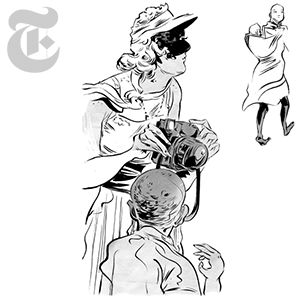
Slum tourism is a type of tourism that involves visiting impoverished areas, which has become increasingly prominent in several developing countries like India, Brazil, Kenya, and Indonesia. The Oxford English Dictionary found the first use of the word ‘slumming’ in 1884. In London, people visited neighborhoods such as Whitechapel or Shoreditch to see how the poor lived. In 1884 the concept moved to New York City to the Bowery and the Five Points area of the Lower East Side were visited to see ‘how the other half lives.’ In the 1980s in South Africa ‘township tours’ were organized to educate local governments on how the black population lived. It then attracted international tourists that wanted to support and learn more about apartheid. Prior to the release of ‘Slumdog Millionaire’ in 2008, Mumbai was a slum tourist destination.
Critics say slum tourism, like poorism, is likened to a kind of voyeurism, exploiting people less fortunate, snapping pictures and leaving nothing in return. Some tours do use portions of the profits to help out however. They have also courted controversy because of disputes about their safety, and fears that they misrepresent local culture.
Posted in Money, Politics, World |
Leave a Comment »
November 16, 2011
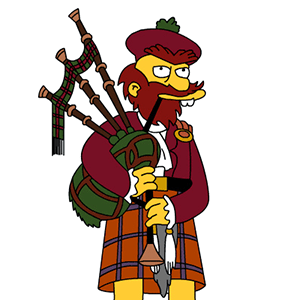
No true Scotsman is an informal logical fallacy, an ad hoc attempt to retain an unreasoned assertion. When faced with a counterexample to a universal claim, rather than denying the counterexample or rejecting the original universal claim, this fallacy modifies the subject of the assertion to exclude the specific case or others like it by rhetoric, without reference to any specific objective rule. The term was advanced by philosopher Antony Flew in his 1975 book ‘Thinking About Thinking: Do I sincerely want to be right?’ Imagine Hamish McDonald, a Scotsman, sitting down with his ‘Glasgow Morning Herald’ and seeing an article about how the ‘Brighton Sex Maniac Strikes Again.’ Hamish is shocked and declares that ‘No Scotsman would do such a thing.’ The next day he sits down to read his paper again and this time finds an article about an Aberdeen man whose brutal actions make the Brighton sex maniac seem almost gentlemanly. This fact shows that Hamish was wrong in his opinion but is he going to admit this? Not likely. This time he says, ‘No true Scotsman would do such a thing.’
An example of a political application of the fallacy could be in asserting that ‘no democracy starts a war,’ then distinguishing between mature or ‘true’ democracies, which never start wars, and ’emerging democracies,’ which may start them. At issue is whether or not something labeled as an ’emerging democracy’ is actually a democracy or something in a different conceptual category.
Posted in Language, Philosophy, World |
1 Comment »
November 16, 2011
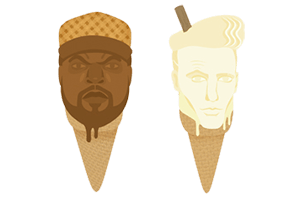

Wigger [wig-er] is a pejorative slang term for a white person who emulates mannerisms, language, and fashions associated with African-American culture, particularly hip hop in the United States or the Grime/Garage scene in Britain. The term is a portmanteau of either wannabe or white and n****r. The term is considered derogatory, reflecting stereotypes of African-American or Black British culture, and can be used pejoratively, because of its connotations of cultural appropriation. It is also often used in a racist manner, not only belittling the person perceived as acting black, but also demeaning black people and culture by proxy. Some, however, use the term neutrally, or as a light joke, without any racism intended.
The phenomenon of white people adopting stereotypical black mannerisms, speech, and apparel – which in the general case is called allophilia – has appeared in several generations since slavery was abolished in the western world. The concept has been documented in the United States, Canada, United Kingdom, Australia and other white-majority countries. An early form of this was the ‘white negro’ in the jazz and swing music scenes of the 1920s and 1930s; as examined in the 1957 Norman Mailer essay, ‘The White Negro.’ It was later seen in the Zoot suiter of the 1930s and 1940s; the hipster of the 1940s; and the beatnik and rock and roller of the 1950s.
Posted in Language, Politics, World |
1 Comment »
November 16, 2011

Plastic Paddy is a slang term used to describe some members of the Irish diaspora, or those with no ancestral connection to Ireland, who appropriate (often stereotypical) Irish customs and identity. A Plastic Paddy may know little of actual Irish culture, but nevertheless assert an Irish identity. The term is pejoratively used to refer to people on the basis of their perceived lack of authenticity as Irish.
People who were not born in Ireland, and who did not grow up in Ireland, but nonetheless possess Irish citizenship and an Irish passport are often labelled as Plastic Paddies. The term came into common use in the 1980s when it was frequently employed as a term of abuse by recently-arrived middle class Irish migrants to London. It ‘became a means of distancing themselves from established Irish communities.’ And the use was a part of the process by which the second-generation Irish are positioned as inauthentic within the two identities, of Englishness and Irishness.
Continue reading →
Posted in Language, Politics, World |
Leave a Comment »
November 16, 2011
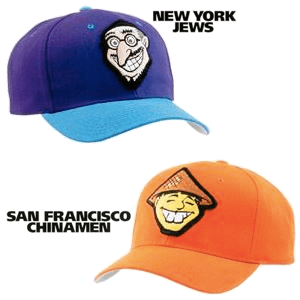
Cultural appropriation is the adoption of some specific elements of one culture by a different cultural group. It describes acculturation, the exchange of cultural features that results when different cultures come into continuous first hand contact; or assimilation, the process of integration where members of an ethno-cultural group, typically immigrants, or other minority groups, are ‘absorbed’ into an established, generally larger community.
It can include the introduction of forms of dress or personal adornment, music and art, religion, language, or social behavior. These elements, once removed from their indigenous cultural contexts, can take on meanings that are significantly divergent from, or merely less nuanced than, those they originally held.
Continue reading →
Posted in Language, Politics, World |
Leave a Comment »



