November 16, 2011

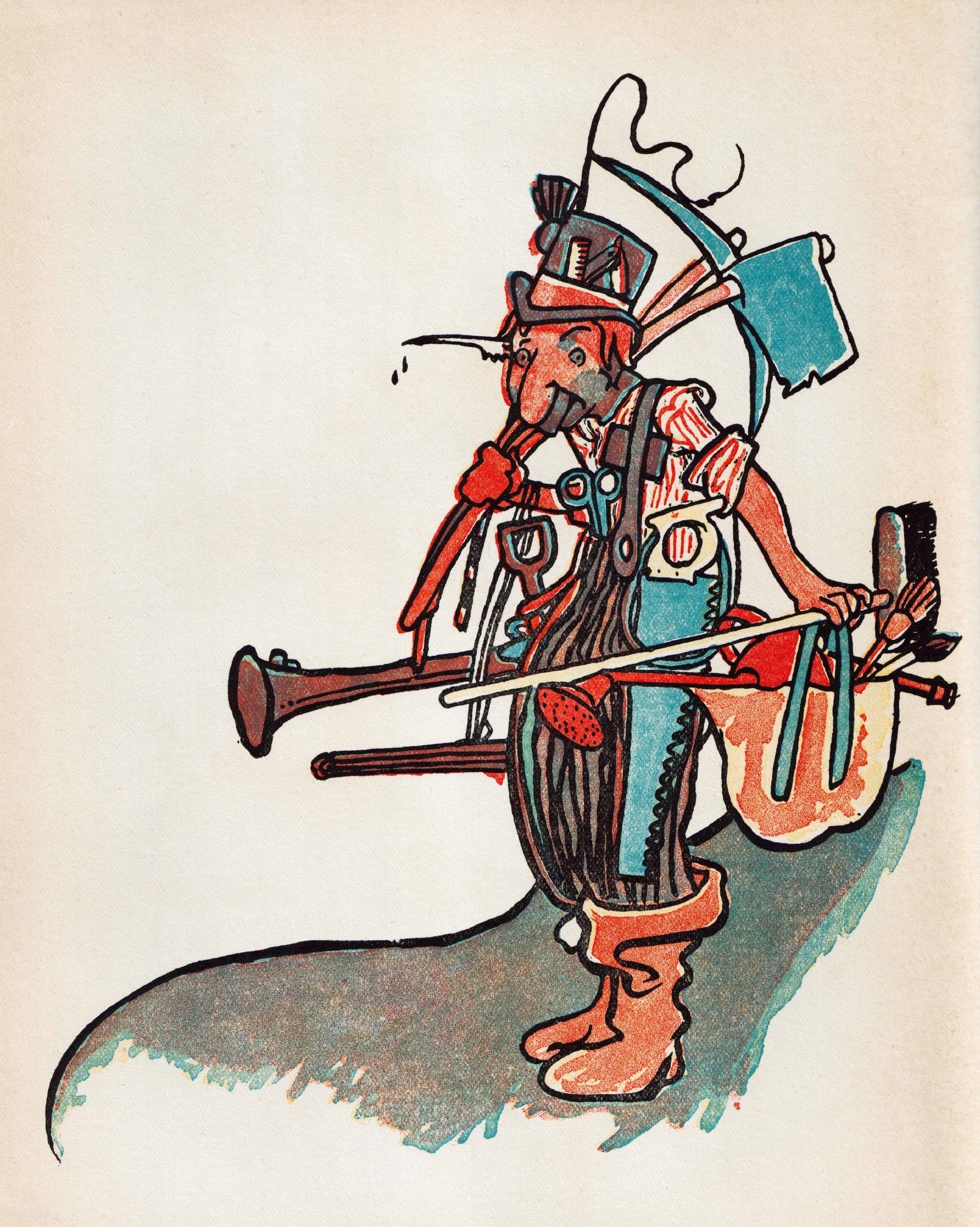
Plastic shaman [shey-muhn] is a pejorative colloquialism applied to individuals who are attempting to pass themselves off as shamans, holy people, or other traditional spiritual leaders, but who have no genuine connection to the traditions or cultures they claim to represent. In some cases, the ‘plastic shaman’ may have some genuine cultural connection, but is seen to be exploiting that knowledge for ego, power or money.
They are believed by their critics to use the mystique of these cultural traditions, and the legitimate curiosity of sincere seekers, for personal gain. In some cases, exploitation of students and traditional culture may involve the selling of fake ‘traditional’ spiritual ceremonies, fake artifacts, fictional accounts in books, illegitimate tours of sacred sites, and often the chance to buy spiritual titles. In Nepal, the term ‘Chicken Shaman’ is used.
Continue reading →
Posted in Money, Philosophy, Sex |
Leave a Comment »
November 16, 2011
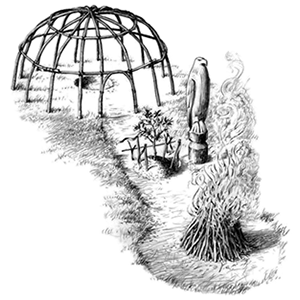
The sweat lodge is a ceremonial sauna and is an important event in some Native American cultures. There are several styles of sweat lodges that include a domed or oblong hut similar to a wigwam, or even a simple hole dug into the ground and covered with planks or tree trunks. Stones are typically heated in an exterior fire and then placed in a central pit in the ground. Early occurrences can be found in the fifth century BCE, when Scythians constructed pole and woolen cloth sweat baths.
Vapor baths were in use among the Celtic tribes, and the sweat-house was in general use in Ireland down to the 18th, and even survived into the 19th century. It was of beehive shape and was covered with clay. It was especially resorted to as a cure for rheumatism. Rituals and traditions vary from region to region and from tribe to tribe. They often include prayers, drumming, and offerings to the spirit world. In some cultures a sweat-lodge ceremony may be a part of another, longer ceremony such as a Sun Dance.
Continue reading →
Posted in Drugs, Health, Philosophy |
Leave a Comment »
November 13, 2011
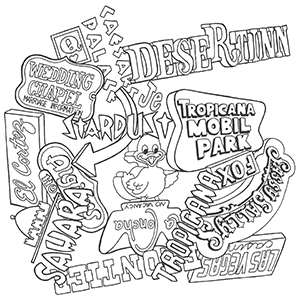
The Neon Museum in Las Vegas features signs from old casinos and other businesses displayed outdoors on over 6 acres. The museum is restoring the La Concha Motel lobby as its visitor center. For many years, the Young Electric Sign Company stored many of these old signs in their ‘boneyard.’ The signs were slowly being destroyed by exposure to the elements. The museum is restoring the signs and placing them around the Fremont Street Experience. The Neon Museum maintains twelve restored signs throughout Downtown Las Vegas. Some can be seen on a self-guided visitors walk through the Fremont Street Experience. Three others have been added in recent years to the median of Las Vegas Boulevard in front of the eventual site for the Neon Museum itself.
The Neon Museum is located on Las Vegas Boulevard and Bonanza, across the street from Cashman Center and along the Las Vegas downtown museum corridor. The boneyard preserves over 150 neon signs from the Nevada area. While the core of the collection is from the old Yesco Boneyard, private donations and loans have expanded the collection to the current size. Important historical pieces in the boneyard include the signage from the Moulin Rouge Hotel, the Stardust, Desert Inn and Caesar’s Palace as well as many others. Not just neon signage, the museum also houses fiberglass sculptures including a giant skull from the Treasure Island among others.
Posted in Art, Money, Technology |
Leave a Comment »
November 13, 2011
Young Electric Sign Company (YESCO) is a privately owned manufacturer of electric signs based in Salt Lake City. The company was founded by Thomas Young in 1920 and today has divisions and branches in 10 western states, as well as in Louisiana, Mississippi and Texas. YESCO offers a comprehensive range of services for electronic signs, including design, fabrication, installation and ongoing maintenance.
Many notable sign projects have been produced by YESCO. These include the NBC Experience globe in New York City, the historic El Capitan Theatre and Wax Museum marquees in Hollywood, the most recent incarnation of the Reno Arch and numerous icons in Las Vegas, such as Vegas Vic, the Fremont Street Experience, the Astrolabe in The Venetian and the recent Wynn Las Vegas resort sign.
Continue reading →
Posted in Art, Money, Technology |
Leave a Comment »
November 13, 2011

The Stardust was a casino resort located on the Las Vegas Strip, which opened in 1958, although most of the modern casino complex (including the main 32-story tower) was built in 1991. The Stardust officially closed in 2006, after operating continuously for 48 years. It was imploded a year later, and was the youngest undamaged high-rise building to ever be demolished at the time. Construction started immediately for Echelon Place, which was planned to replace The Stardust, but development was suspended in 2008, and remains suspended as 2011.
The famed Stardust sign became a symbol of Las Vegas. Young Electric Sign Company was hired to fabricate the sign. Kermit Wayne’s design was selected for both the façade and the roadside signs. Although Moe Dalitz (bootlegger, racketeer, and philanthropist who was one of the major figures who helped shape Las Vegas), who took over from original developer Tony Cornero upon his death, said it was from his original plans, the sign was really part of Cornero’s original concept.
Continue reading →
Posted in Games, Money, Politics |
1 Comment »
November 12, 2011
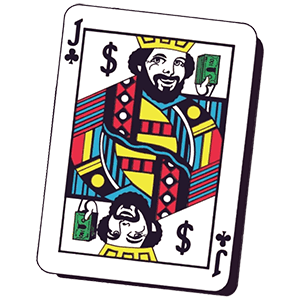
Hole carding refers to obtaining knowledge of cards that are supposed to be hidden from view in card games. The term is usually applied to blackjack but can apply to other games with hidden hole cards, like three card poker and Caribbean stud poker.
So long as it does not involve the use of a device like a mirror or actions like touching the dealer’s cards, in most jurisdictions hole carding is a legal form of advantage gambling. In other games, like stud poker, casinos normally have rules against ‘rubbernecking’ (having a confederate stand behind an opponent to signal hole cards). Continue reading →
Posted in Games, Money |
Leave a Comment »
November 12, 2011

In poker, a hole cam (or pocket cam) is a camera that displays a player’s face-down cards (known as ‘hole cards’) to television viewers. The hole cam became popular in 1999 when it was first used by the BBC. In some cases, the camera is placed under a glass panel in the table and players are instructed to place their cards over the glass. In other cases, the rail of the table is elevated and a small camera placed within the rail, and players are instructed to examine their cards in the usual manner, but while they’re in front of the camera.
The goal in both cases is to allow for the filming and broadcast of the player’s hole cards to the spectators without exposing them to the other players. This has led to the audience garnering a greater understanding of what is going on at the table and an increased interest in the thought processes of the players. Continue reading →
Posted in Games, Money, Technology |
1 Comment »
November 10, 2011

Slow playing (also called sandbagging or trapping) is deceptive play in poker that is roughly the opposite of bluffing: betting weakly or passively with a strong holding rather than betting aggressively with a weak one. The flat call is one such play. The objective of the passive slow play is to lure opponents into a pot who might fold to a raise, or to cause them to bet more strongly than they would if the player had played aggressively (bet or raised). Slow playing sacrifices protection against hands that may improve and risks losing the pot-building value of a bet if the opponent also checks.
Against observant opponents, the frequency of bluffing affects the effectiveness of slow playing, and vice versa. If a player’s table image is that of an aggressive bluffer, slow playing is less important because his opponents will be more willing to call his usual bets and raises. Similarly, if a player is perceived as a ‘trappy’ player (uses frequent slow plays), his bluffs are less likely to be respected (i.e., more likely to be called) because his opponents expect him to slow play his strong hands. Fishing for the overcall occurs when the last card a player is dealt makes him a very strong hand, an opponent in front of him bets, and there are more opponents yet to act behind him. While the player might normally raise with his hand, just calling may encourage the opponents behind him to overcall when they would have folded to a raise.
Posted in Games, Money |
Leave a Comment »
November 10, 2011
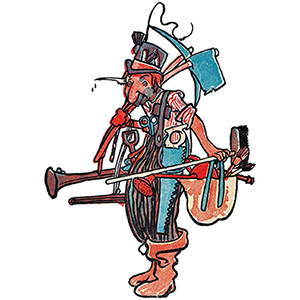
‘Jack of all trades, master of none’ refers to a person that is competent in many skills but not outstanding in any particular one. The earliest recorded versions of the phrase do not contain the second part (indeed they are broadly positive in tone).
A Jack of all trades may be a master of integration, as such an individual knows enough from many learned trades and skills to be able to bring their disciplines together in a practical manner. This person is a generalist rather than a specialist. A person who is exceptional in many disciplines is known as a polymath or a ‘Renaissance man’; a typical example is Leonardo da Vinci. The phrase became increasingly cynical in connotation during the 20th century.
Continue reading →
Posted in Language, Money |
1 Comment »
November 10, 2011

Short messages on services such as Twitter or identi.ca may be tagged by including one or more hashtags: words or phrases prefixed with the symbol ‘#,’ with multiple words concatenated, such as those in: ‘#Wikipedia is my favorite kind of #encyclopedia.’ Then, a person can search for the string ‘#Wikipedia’ and this tagged word will appear in the search engine results. These hashtags also show up in a number of trending topics websites, including Twitter’s own front page. Such tags are case-insensitive. Hashtags were invented on Twitter by Chris Messina. One phenomenon specific to the Twitter ecosystem are micro-memes, which are emergent topics for which a hashtag is created, used widely for a few days, then disappears. Other sites, such as Hashable, have adopted the hashtag to use for other reasons.
The feature has been added to other, non-short-message-oriented services, such as the user comment systems on YouTube and Gawker Media; in the case of the latter, hashtags for blog comments and directly-submitted comments are used to maintain a more constant rate of user activity even when paid employees are not logged into the website. Real-time search aggregators such as Google Real-Time Search also support hashtags in syndicated posts, meaning that hashtags inserted into Twitter posts can be hyperlinked to incoming posts falling under that same hashtag; this has further enabled a view of the ‘river’ of Twitter posts which can result from search terms or hashtags.
Posted in Language, Technology |
Leave a Comment »
November 10, 2011

Microblogging is a broadcast medium in the form of blogging. A microblog differs from a traditional blog in that its content is typically smaller in both actual and aggregate file size. Microblogs ‘allow users to exchange small elements of content such as short sentences, individual images, or video links.’ As with traditional blogging, microbloggers post about topics ranging from the simple, such as ‘what I’m doing right now,’ to the thematic, such as ‘sports cars.’ Commercial microblogs also exist, to promote websites, services and/or products, and to promote collaboration within an organization. Some microblogging services offer features such as privacy settings, which allow users to control who can read their microblogs, or alternative ways of publishing entries besides the web-based interface. These may include text messaging, instant messaging, E-mail, or digital audio.
The first microblogs were known as tumblelogs. The term was coined by ‘why the lucky stiff’ in a blog post in 2005, while describing Christian Neukirchen’s Anarchaia: ‘Blogging has mutated into simpler forms (specifically, link- and mob- and aud- and vid- variant), but I don’t think I’ve seen a blog like Chris Neukirchen’s Anarchaia, which fudges together a bunch of disparate forms of citation (links, quotes, flickrings) into a very long and narrow and distracted tumblelog.’
Continue reading →
Posted in Money, Politics, Technology |
1 Comment »
November 10, 2011

Weibo is the Chinese word for ‘microblog.’ It usually refers to one or all of the Twitter-like, China-based microblogging services, or one’s account at these services. Among the weibo services, Sina Weibo is the most visited one. Sina has used the domain name weibo.com for the service since 2011. Sometimes, the own published news of Sina.com and some other media use directly ‘Weibo’ to refer to Sina Weibo. However generally, when mentioning ‘Weibo,’ it may refer to one or all of the China-based microblogging services. After the 2009 Urumqi riots, China shut down most of the domestic weibo services, and many popular non China-based microblogging services like Twitter, Facebook, and Plurk have been blocked since then.
This led to the creation of services like Sina Weibo, operated by large Chinese Internet companies under the government’s control. Due to the Internet censorship in China, all of the China-based weibo services today is now controlled by various self-censorship policies and methods. They usually have blacklisted keywords list to be automatically checked, sometimes administrators check manually. Posts on sensitive topics forbidden in China (e.g. Human right, Liu Xiaobo) will be deleted and the user’s account may be blocked. However, compared to other Chinese media formats, weibo services are considered freer. Weibos are thought as influential tools that impact and change China. Some scandals and controversies such as Li Gang incident are made known to the public through weibos.
Posted in Politics, Technology, World |
Leave a Comment »