October 19, 2011

After Dark is a series of computer screensaver software introduced in 1989 by Berkeley Systems for the Macintosh, and later for Windows. Following the original, new editions were introduced including ‘More After Dark’ and ‘Before Dark,’ as well as editions themed around licensed properties such as ‘Star Trek,’ ‘The Simpsons,’ and Disney. The screensaver modules were often noted for their intertextuality, such as the flying toasters appearing in the Fish screensaver, and the cat from Boris screensaver appearing in the Bad Dog screensaver.
Of the screensaver modules included, the most famous is the iconic Flying Toasters which featured 1940s-style chrome toasters sporting bird-like wings, flying across the screen with pieces of toast. A slider enabled users to adjust the toast’s darkness and an updated Flying Toasters Pro module added a choice of music: Richard Wagner’s ‘Ride of the Valkyries’ or a flying toaster anthem with optional karaoke lyrics. Yet another version called ‘Flying Toasters!’ added bagels and pastries, baby toasters, and more elaborate toaster animation.
Posted in Humor, Technology |
1 Comment »
October 19, 2011

Birth control glasses, officially called GI glasses, are eyeglasses issued by the American military to its service members. At one time they were officially designated as ‘Regulation Prescription Glasses,’ or RPGs. This was commonly said to mean ‘Rape Prevention Glasses’ due to their unstylish appearance. The glasses are relatively thick frames made of brown translucent plastic, with a thin metal wire extending down the center of each of the earpieces.
The shape of the corrective lenses is nearly rectangular, with rounded edges, and a slight diagonal angle adjacent to the integrated nose pieces. This design reflects a specification for durability at the lowest possible cost. There are two designs available for female and male soldiers who require prescription eye wear. Continue reading →
Posted in Humor, Sex, War |
Leave a Comment »
October 19, 2011
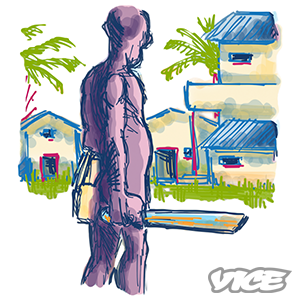
Joshua Milton Blahyi (b. 1971), better known by his nom de guerre General Butt Naked, is a former leader for the Liberian warlord Roosevelt Johnson in the First Liberian Civil War known for his fierce, violent and eccentric measures in the first half of the 1990s. He was originally a tribal priest, and has returned to preaching after the war. Blahyi’s nom de guerre was appropriated for comical effect by the creators of the Broadway musical ‘The Book of Mormon’ as their fictional Ugandan warlord ‘General Butt Fucking Naked.’
Blahyi got his nickname, ‘General Butt Naked,’ from his nakedness which was supposedly demanded by the Devil. In his account of a typical battle Blahyi claimed, ‘So, before leading my troops into battle, we would get drunk and drugged up, sacrifice a local teenager, drink their blood, then strip down to our shoes and go into battle wearing colorful wigs and carrying dainty purses we’d looted from civilians. We’d slaughter anyone we saw, chop their heads off and use them as soccer balls. We were nude, fearless, drunk and homicidal. We killed hundreds of people – so many I lost count.’ Blahyi also purported that during that period he had ‘magical powers that made him invisible’ and a ‘special power’ to capture a town singlehandedly, then call in his troops afterwards to ‘clean up.’
Continue reading →
Posted in Death, War, World |
1 Comment »
October 19, 2011

The Rapture is a dance-punk band based in New York City. The band mixes influences from many genres including post-punk, acid house, disco, electronic music, and rock, pioneering the post-punk revival genre. The Rapture formed in 1998 by keyboardist Chris Relyea, drummer Vito Roccoforte and guitarist/vocalist Luke Jenner. In 1999 the band released its debut ‘mini-album’, ‘Mirror.’ Following this release, the band relocated to New York. They were finally joined by Matt Safer having gone through five keyboard players and two bassists in an eighteen-month period. After touring extensively for two years, the band released the six-song EP ‘Out of the Races and Onto the Tracks’ on the Sub Pop label, with the lead track featuring in the film adaptation of the Bret Easton Ellis novel ‘The Rules Of Attraction.’
The Rapture were forerunners of the post-punk revival of the early 2000s, as they mixed their early post-punk sound with electronic and dance elements via their collaboration with the celebrated New York production team DFA. Multi-instrumentalist Gabriel Andruzzi joined the band in 2002. Their first full-length record, ‘Echoes,’ was released to critical acclaim in 2003. The Rapture released their second full-length album, ‘Pieces of the People We Love,’ on Universal Motown Records in 2006. Paul Epworth, Ewan Pearson and Danger Mouse produced the album.
Posted in Art |
Leave a Comment »
October 19, 2011

Little Dragon is a Swedish electronic band, formed in Gothenburg in 1996. It consists of Swedish-Japanese singer Yukimi Nagano (vocals, percussion) and her close high school friends Erik Bodin (drums), Fredrik Källgren Wallin (bass) and Håkan Wirenstrand (keyboards). Little Dragon’s first release was the single ‘Twice/Test’ in 2006. The following year, the band signed with the larger British indie label Peacefrog Records and released their self-titled debut album. Their second album, ‘Machine Dreams,’ was released in 2009, followed by their third album, ‘Ritual Union,’ in 2011.
The band’s name was inspired by the ‘Little Dragon’ nickname Nagano earned due to the ‘fuming tantrums’ she used to throw while recording in the studio. ‘It’s a little exaggerated but there is some truth in it,’ Nagano said. ‘But we’ve grown up a bit and I realized you can’t have a fit every day because otherwise you won’t be able to stand each other.’
Posted in Art |
Leave a Comment »
October 18, 2011
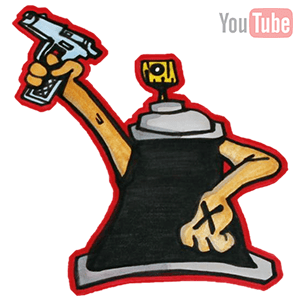
Cool “Disco” Dan is the pseudonym of graffiti artist Dan Hogg (b. 1969). His standard mark, a particularly styled rendering of his name, has proliferated in the Washington metropolitan area, notably on surfaces along the route of the Washington Metro Red Line.
He has been spraying his tag since 1984. Part of the Go-Go scene of the 80’s in Washington; he managed to avoid being jailed or killed unlike a lot of his contemporaries by devoting himself to graffiti rather than becoming involved with drugs or gangs. The pervasiveness of his mark was reported frequently in the local press.
Posted in Art, Politics |
Leave a Comment »
October 18, 2011


Borf was a graffiti campaign seen in and around Washington, D.C. during 2004 and 2005, carried out by John Tsombikos while studying at the Corcoran College of Art and Design. This four letter word was ubiquitous around the Northwest quadrant of Washington, and ranged from simple tagging to complete sentences to two-color stencils to the massive defacement on an overhead exit sign from the Theodore Roosevelt Bridge to Constitution Avenue. Tsombikos was arrested after tips led police to his latest tag.
The campaign attracted widespread attention without first explaining its motivations. According to Tsombikos and subsequent Borf communiqués, both the nickname ‘Borf’ and the Borf face belonged to Bobby Fisher, a close friend of Tsombikos’ who had committed suicide. In a video shown in 2006, the Borf Brigade – the group claiming responsibility for the graffiti spree – asserted that capitalism and the culture of aesthetics created alienation and feelings of worthlessness that contributed to the 16-year-old’s suicide. The group said that they used other peoples’ property to commemorate and pay homage to their deceased friend. The graffiti usually had overtones of anti-authority sentiments and youth liberation.
Continue reading →
Posted in Art, Politics |
Leave a Comment »
October 18, 2011
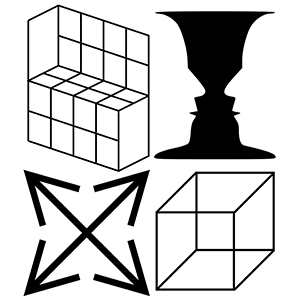
Multistable perceptual phenomena are a form of perceptual phenomena in which there are unpredictable sequences of spontaneous subjective changes. While usually associated with visual perception, such phenomena can be found for auditory and olfactory percepts. Perceptual multistability can be evoked by visual patterns that are too ambiguous for the human visual system to recognise with one unique interpretation.
Famous examples include the ‘Necker cube,’ ‘structure from motion,’ ‘monocular rivalry’ (two different images, optically superimposed), and ‘binocular rivalry’ (perception alternates between different images presented to each eye), but many more visually ambiguous patterns are known. Since most of these images lead to an alternation between two mutually exclusive perceptual states, they are sometimes also referred to as bistable perception. Continue reading →
Posted in Art, Language, Science |
Leave a Comment »
October 18, 2011

Pseudorealism is an artistic and a dramatic technique in which an apparently unreal matter is presented in a fashion that makes it appear real. Though use of pseudorealism has been in practice for sometime in theater, film, fashion, textiles and literature, as an art genre, it was initiated in Indian art in early 21st century by Devajyoti Ray.
The idea that something unreal can still give the impression of the real has a parallel in mathematical field of representation theory. The idea has also often been used to describe certain set of movies, TV programs, and video games where special effects, computer generated imagery and 3D animation are used to create a fantasy but which has the impact of a reality based image. However in this context the word has a negative connotation.
Posted in Art, Language, Technology |
Leave a Comment »
October 18, 2011
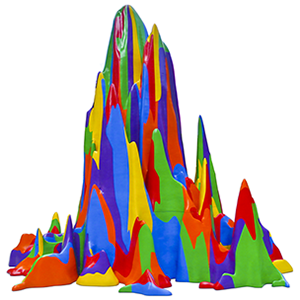
Plop art (or Plonk art) is a pejorative slang term for public art (usually large, abstract, modernist or contemporary sculpture) made for government or corporate plazas, spaces in front of office buildings, skyscraper atriums, parks, and other public venues. The term connotes that the work is unattractive or inappropriate to its surroundings – that is, it has been thoughtlessly ‘plopped’ where it lies.
The very word ‘plop’ suggested something falling wetly and heavily in the manner of excrement — extruded, as it were, from the fundament of the art world, and often at public expense. Plop art is a play on the term pop art. The term was coined by architect James Wines in 1969. Wines was critical of the failure of much public art to take an environmentally-oriented approach to the relationship between public art and architecture.
Posted in Art, Humor, Language |
Leave a Comment »
October 18, 2011
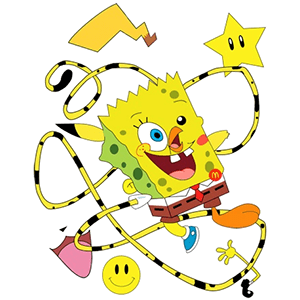
A digital mashup refers to digital media content (e.g. text, graphics, audio, video, animation) drawn from pre-existing sources, to create a new derivative work. Digital media have made it easier for potential mashup creators to create derivative works than was the case in the past, when significant technical equipment and knowledge was required to manipulate analog content. Mashups raise significant questions of intellectual property and copyright. While questioning the law, mashups are also questioning the very act of creation. Are the artists creating when they use other individuals’ work? How will artists prove their creative input?
A major contributing factor to the spread of digital mashups is the World Wide Web, which provides channels both for acquiring source material and for distributing derivative works, both often at negligible cost. Web or cloud computing based applications are a combination of separate parts brought together with the use of the open architecture of public Application Programming Interfaces (API). For example, a mashup between Google Maps and Weather.com could be made available as an iphone application, where the content and context of that content are drawn from outside sources through the published API.
Posted in Art, Money, Technology |
1 Comment »
October 17, 2011
Shabazz Palaces are a Seattle-based hip-hop collective, led by Ishmael Butler aka ‘Palaceer Lazaro’ (once ‘Butterfly’ of jazz-rap group Digable Planets) and multi-instrumentalist Tendai Maraire, son of Mbira master Dumisani Maraire.
The group anonymously self-released two EPs, ‘Eagles Soar, Oil Flows’ and ‘The Seven New’ (often referred to simply as ‘Shabazz Palaces and Of Light’) in 2009 before becoming the first hip-hop act to be signed to the Sub Pop label and releasing their debut full-length album, ‘Black Up,’ in 2011.
Posted in Art |
Leave a Comment »



