October 13, 2011
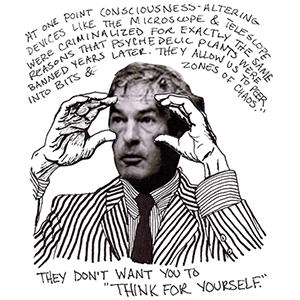
Psychonautics [sahy-kuh-naw-tiks] (Greek: psyche ‘soul/spirit/mind’ and naut ‘sailor/navigator’) refers both to a methodology for describing and explaining the subjective effects of altered states of consciousness, including those induced by mind altering substances, and to a research framework for voluntarily immersing oneself into an altered state by means of such techniques, to explore human experience and existence.
The term has been applied diversely, to cover all activities by which altered states are induced and utilized for spiritual purposes or the exploration of the human condition, including shamanism, lamas of the Tibetan Buddhist tradition, sensory deprivation, and archaic/modern drug users who use entheogenic substances in order to gain deeper insights and spiritual experiences.
Continue reading →
Posted in Drugs, Philosophy, Science |
Leave a Comment »
October 11, 2011

A Friendly Artificial Intelligence or FAI is an artificial intelligence (AI) that has a positive rather than negative effect on humanity. Friendly AI also refers to the field of knowledge required to build such an AI. This term particularly applies to AIs which have the potential to significantly impact humanity, such as those with intelligence comparable to or exceeding that of humans (e.g. superintelligence, strong AI, technological singularity).
This specific term was coined by Eliezer Yudkowsky of the Singularity Institute for Artificial Intelligence as a technical term distinct from the everyday meaning of the word ‘friendly,’ however, the concern is much older.
Continue reading →
Posted in Politics, Technology |
Leave a Comment »
October 11, 2011

Humans United Against Robots (often abbreviated as HUAR) is a semi-tongue-in-cheek organization designed to unify the human race and prepare them for a futuristic robotic uprising. HUAR was created by humorist Keith Malley.
‘HUAR was designed to educate and awaken the citizenry of the world to the impending attack that computers and robots will put into effect against humans. It is a collection of human beings that spread the word of this impending doom as well as doing what they can to help minimize the threat. Between computer programs that can identify human speech and match that up with their computerized dictionaries in order to understand our weaknesses to jokester scientists building robots specifically made to breathe fire from their mouths and shoot lasers from their eyes, it is evident that a task force had to be formed of members that take being at the top of the food chain seriously. Robots will uprise. HUAR will be there.’
Posted in Humor, Technology, War |
Leave a Comment »
October 11, 2011
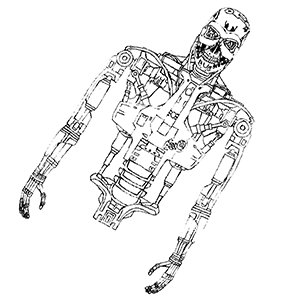
Cybernetic revolt is a scenario in which an artificial intelligence (either a single supercomputer, a computer network, or sometimes a ‘race’ of intelligent machines) decide that humans (and/or organic non-humans) are a threat (either to the machines or to themselves), are inferior, or are oppressors and try to destroy or to enslave them potentially leading to machine rule. In this fictional scenario, humans are often depicted to prevail using ‘human’ qualities, for example using emotions, illogic, inefficiency, duplicity, unpredictability, or exploiting the supposedly rigid, rules-based thinking and lack of innovation of the computer’s black/white mind.
Fear of humanity being made obsolete by technology taps into some of modern humans’ deepest fears. This can be shown to have been the case even before the computer became prominent, as in Karel Capek’s 1921 play ‘R.U.R.’ (Rossum’s Universal Robots). However, even as they were slowly being displaced from most physical tasks, humans have always prided themselves on their brains, taking the mechanistic ‘thoughts’ of early computers as proof that they would not be overtaken by their ‘Frankenstein’ creations.
Continue reading →
Posted in Technology, War |
Leave a Comment »
October 11, 2011
‘Why the future doesn’t need us‘ is an article written by Bill Joy (then Chief Scientist at Sun Microsystems) in the April 2000 issue of ‘Wired’ magazine. In the article, he argues (quoting the sub title) that ‘Our most powerful 21st-century technologies — robotics, genetic engineering, and nanotech — are threatening to make humans an endangered species.’ Joy warns: ‘The experiences of the atomic scientists clearly show the need to take personal responsibility, the danger that things will move too fast, and the way in which a process can take on a life of its own. We can, as they did, create insurmountable problems in almost no time flat. We must do more thinking up front if we are not to be similarly surprised and shocked by the consequences of our inventions.’
While some critics have characterized Joy’s stance as obscurantism (the practice of deliberately preventing the facts or the full details of some matter from becoming known) or neo-Luddism, others share his concerns about the consequences of rapidly expanding technology.
Continue reading →
Posted in Money, Politics, Technology |
Leave a Comment »
October 11, 2011

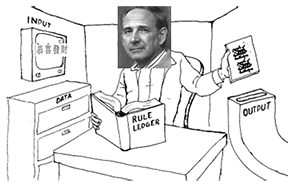
Strong AI is artificial intelligence that matches or exceeds human intelligence — the intelligence of a machine that can successfully perform any intellectual task that a human being can. It is a primary goal of artificial intelligence research and an important topic for science fiction writers and futurists.
Strong AI is also referred to as ‘artificial general intelligence’ or as the ability to perform ‘general intelligent action.’ Science fiction associates strong AI with such human traits as consciousness (subjective experience and thought), sentience (subjective feelings and emotion), sapience (wisdom) and self-awareness (identification of oneself as a separate individual, especially to be aware of one’s own thoughts). Some references emphasize a distinction between strong AI and ‘applied AI’ (also called ‘narrow AI’ or ‘weak AI’): the use of software to study or accomplish specific problem solving or reasoning tasks that do not encompass (or in some cases are completely outside of) the full range of human cognitive abilities. Continue reading →
Posted in Language, Philosophy, Technology |
1 Comment »
October 10, 2011

A beer koozie [koe-zie] is a fabric or foam device that is designed to insulate a beverage can or bottle. It began as a marketing tool. The primary use of a beer koozie is to keep one’s hand warm while keeping the beer cold.
A secondary use of a beer koozie is to easily identify one’s beverage from another. Many different companies have used the koozie as a promotional giveaway because it is not only inexpensive to manufacture, but its frequent use is more likely to bring the company’s name to a household presence. Originally this logo or image was screen-printed on a round foam cylinder with a foam base (generally a hole is provided in the base to alleviate creation of a vacuum). A koozie can be made from many materials like neoprene, polyester or open cell foam.
Posted in Food, Language, Money |
1 Comment »
October 10, 2011

The Scorpion and the Frog is a fable about a scorpion asking a frog to carry him across a river. The frog is afraid of being stung during the trip, but the scorpion argues that if it stung the frog, the frog would sink and the scorpion would drown. The frog agrees and begins carrying the scorpion, but midway across the river the scorpion does indeed sting the frog, dooming them both. When asked why, the scorpion points out that this is its nature. The fable is used to illustrate the position that the behaviour of some creatures is irrepressible, no matter how they are treated and no matter what the consequences.
Variations commonly include a farmer, youth, turtle, or fox in place of the frog, and a snake in place of the scorpion. The Farmer and the Viper is a specific variant that can be attributed to Aesop. There is also a variation in which the final words of the scorpion are ‘It is better we should both perish than that my enemy should live.’ The origin and author are unknown. Variations of the fable appear in West African and European folktales. A study published in a German journal in 2011 points out a connection between the genesis of the fable and the tradition of the Panchatantra, a collection of animal fables dating back to India in the 3rd century BCE.
Posted in Death, Language, Philosophy |
Leave a Comment »
October 10, 2011

‘Drive‘ is a 2011 film directed by Nicolas Winding Refn, and starring Ryan Gosling as the eponymous driver, with Carey Mulligan, Ron Perlman, Bryan Cranston, Christina Hendricks, and Albert Brooks. Although ‘Drive’ shares several characteristics with the similarly-named 1978 Walter Hill car-chase film, ‘The Driver,’ it is actually adapted from the 2005 James Sallis novel of the same name, with a screenplay by Hossein Amini.
Like the book, the movie is about a Hollywood stunt performer who moonlights as a getaway driver. The director has said influences came from ‘Bullitt’ (1968) and ‘The Day of the Locust’ (1975); and that ‘Drive’ was a tribute to cult film legend Alejandro Jodorowsky and shares some of his existentialist themes.
Continue reading →
Posted in Art |
1 Comment »
October 9, 2011


In the late 1960s, the term supergroup was coined to describe ‘a rock music group whose performers are already famous from having performed individually or in other groups.’ In some cases, an act will later be referred to as a supergroup when multiple members from said group end up securing individual fame later on.
Supergroups are often short-lived, lasting only for an album or two, although this is not always the case. They are sometimes formed as side projects that are not intended to be permanent, while other times can become the primary project of the band members’ careers. Continue reading →
Posted in Art, Language |
Leave a Comment »
October 9, 2011


‘Gangsta Lean‘ is an urban slang phrase denoting a style of automobile driving in which the driver sits slung low and tilted toward the passenger seat. The phrase first appeared in popular music in William De Vaughn’s 1972 song ‘Be Thankful for What You Got’:
‘Though you may not drive a great big Cadillac / Gangsta whitewalls, TV antennas in the back / You may not have a car at all / But remember brothers and sisters / You can still stand tall / Just be thankful for what you got / Diamond in the back, sunroof top / Diggin’ the scene with a gangsta lean.’
Posted in Language |
Leave a Comment »
October 7, 2011

Name-dropping is the practice of mentioning important people or institutions within a conversation, story, song, online identity, or other communication. The term often connotes an attempt to impress others; it is usually regarded negatively, and under certain circumstances may constitute a breach of professional ethics. When used as part of a logical argument it can be an example of the false authority fallacy. A shout-out is a type of name-dropping where a list of names is spoken out expressly to direct attention at these groups or individuals, often as a means of expressing kudos or making a referral.
Name-dropping is used to position oneself within a social hierarchy. It is often used to create a sense of superiority by raising one’s status. By implying (or directly asserting) a connection to people of high status, the name-dropper hopes to raise his or her own social status to a level closer to that of those whose names he or she has dropped, and thus elevate himself or herself above, or into, present company. Name-dropping can also be used to identify people with a common bond. By indicating the names of people one knows, one makes known his or her social circle, providing an opportunity for others with similar connections to relate. As a form of appeal to authority, name-dropping can be an important form of informal argumentation, as long as the name being dropped is of someone expert on the subject of the argument and that person’s views are accurately represented.
Posted in Language |
Leave a Comment »



