October 7, 2011

Hysterical strength describes displays of extreme strength by humans, beyond what is believed to be normal. It is a speculative term that is not recognized in medical academia; the concept has only a small body of anecdotal evidence to support it.
The most common anecdotal examples are of mothers lifting automobiles to rescue their children, and when people are in life and death situations. Hysterical strength can result in torn muscles and damaged joints. This is why, in addition to high lactic acid production, the body limits the number of muscle fibers the human body uses.
Posted in Health, Language |
Leave a Comment »
October 7, 2011
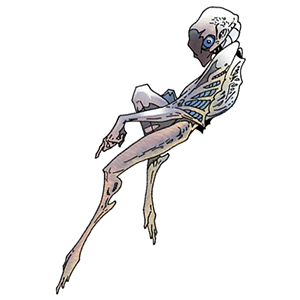
The Spacing Guild is an organization in Frank Herbert’s science fiction ‘Dune’ universe. With its monopoly on interstellar travel and banking, the Guild is a balance of power against the Padishah Emperor and the assembled noble Houses of the Landsraad. Mutated Guild Navigators use the spice drug melange to successfully navigate ‘folded space’ and safely guide enormous heighliner starships from planet to planet instantaneously. Essentially apolitical, the Guild is primarily concerned with the flow of commerce and preservation of the economy that supports them; though their ability to dictate the terms of and fees for all transport gives them influence in the political arena, they do not pursue political goals beyond their economic ones.
It is noted in ‘Dune’ (1965) that Houses of the Imperium may contract with the Guild to be removed ‘to a place of safety outside the System;’ in the past some Houses in danger of ruin or defeat have ‘become renegade Houses, taking family atomics and shields and fleeing beyond the Imperium.’ The Guild controls a ‘sanctuary planet’ (or planets) known as Tupile intended for such ‘defeated Houses of the Imperium … Location(s) known only to the Guild and maintained inviolate under the Guild Peace.’
Continue reading →
Posted in Art, Language |
1 Comment »
October 7, 2011

A Mentat is a profession or discipline in Frank Herbert’s fictional ‘Dune’ universe. Mentats are humans trained to mimic computers: human minds developed to staggering heights of cognitive and analytical ability. In Herbert’s fiction, following the defeat of the thinking machines by humanity in the Butlerian Jihad, it is forbidden to create sentient machines. The Mentat discipline is developed as a replacement for computerized calculation, just as the Bene Gesserit and the Spacing Guild take on functions previously performed by thinking machines. For thousands of years, society considers Mentats the embodiment of logic and reason.
Unlike computers, however, Mentats are not simply calculators. Instead, the exceptional cognitive abilities of memory and perception are the foundations for supra-logical hypothesizing. Mentats are able to sift large volumes of data and devise concise analyses in a process that goes far beyond logical deduction: Mentats cultivate ‘the naïve mind,’ the mind without preconception or prejudice, so as to extract essential patterns or logic from data and deliver useful conclusions with varying degrees of certainty. They are not limited to formulating syllogisms; they are the supreme counselors of the Dune universe, filling roles as menial as archivist and clerk, or as grand as advisor to the Emperor.
Continue reading →
Posted in Art, Language |
2 Comments »
October 7, 2011
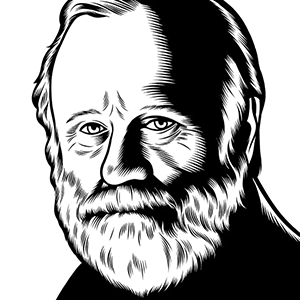
The political, scientific, and social fictional setting of Frank Herbert’s novels and derivative works is known as the Dune universe, or Duniverse. Set tens of thousands of years in the future, the saga chronicles a civilization which has banned computers but has also developed advanced technology and mental and physical abilities. Vital to this empire is the harsh desert planet Arrakis, only known source of the spice melange, the most valuable substance in the universe.
Creative works set in the Dune universe can be said to fall into five general time periods: The Butlerian Jihad; The Corrino-led Imperium; The ascension of the Atreides; The reign and fall of the God Emperor; and The return from the Scattering. Continue reading →
Posted in Art, Language |
1 Comment »
October 7, 2011

‘Dune‘ is a science fiction novel written by Frank Herbert, published in 1965. It won the Hugo Award in 1966, and the inaugural Nebula Award for Best Novel, the highest honors bestowed in science fiction and fantasy writing.
‘Dune’ is frequently cited as the world’s best-selling science fiction novel. Set in the far future amidst a sprawling feudal interstellar empire where planetary fiefdoms are controlled by noble houses that owe an allegiance to the Imperial House Corrino, Dune tells the story of young Paul Atreides (heir of House Atreides) as he and his family accept control of the desert planet Arrakis, the only source of the ‘spice’ melange, the most important and valuable substance in the universe. The story explores the complex and multi-layered interactions of politics, religion, ecology, technology, and human emotion, as the forces of the Empire confront each other for control of Arrakis and its ‘spice.’ Continue reading →
Posted in Art, Language |
1 Comment »
October 7, 2011

In Internet culture, a lurker is a person who reads discussions on a message board, newsgroup, chatroom, file sharing or other interactive system, but rarely or never participates actively.
Research indicates that lurkers make up over 90% of online groups. Lack of trust represents one of the reasons explaining lurking behavior.
Continue reading →
Posted in Language, Technology |
Leave a Comment »
October 7, 2011

The Meal, Ready-to-Eat — commonly known as the MRE — is a self-contained, individual field ration in lightweight packaging bought by the United States military for its service members for use in combat or other field conditions where organized food facilities are not available.
General contents may include: entree, side dish, dessert or snack (often commercial candy, fortified pastry, or HOOAH! Bar), crackers or bread, spread of cheese, peanut butter, or jelly, powdered beverage mix (fruit flavored drink, cocoa, instant coffee or tea, sport drink, or dairy shake), utensils (usually just a plastic spoon), flameless ration heater, deverage mixing bag, sugarless chewing gum, water-resistant matchbook, napkin and moist towelette, and seasonings (salt, pepper, sugar, creamer, and/or Tabasco sauce). Continue reading →
Posted in Food, War |
Leave a Comment »
October 7, 2011
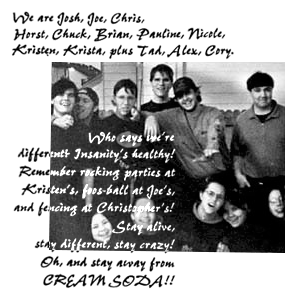
Eric Harris and Dylan Klebold were American high school seniors who committed the Columbine High School massacre. They killed 13 people and injured 24 others, before committing suicide. According to early accounts of the shooting, Harris and Klebold were very unpopular students and frequent targets of bullying at their high school. They eventually began to bully other students; writing journal entries about how they themselves had bullied younger students and ‘fags.’ Initially, the shooters were believed to be members of a clique that called themselves the Trenchcoat Mafia, a small group of Columbine’s self-styled outcasts who wore heavy black trench coats.
The Trenchcoat Mafia was originally a group of gamers who hung out together and started wearing trenchcoats after one of the members received a cowboy duster as a Christmas Gift. They adopted the name Trenchcoat Mafia after jocks began to call them that. Investigation revealed that Harris and Klebold were only friends with one member of the group, and that most of the primary members of the Trenchcoat Mafia had left the school by the time that Harris and Klebold committed the massacre. Most did not know the shooters and none were considered suspects in the shootings or were charged with any involvement in the incident.
Posted in Death, Education, Politics |
Leave a Comment »
September 30, 2011


A metal umlaut [oom-lout] (also known as röck döts) is a trema (in Germanic languages called Umlaut) that is sometimes used gratuitously or decoratively over letters in the names of hard rock or heavy metal bands—for example those of Mötley Crüe and Motörhead. Amongst English speakers, the use of umlaut marks and other diacritics with a blackletter style typeface is a form of foreign branding intended to give a band’s logo a Teutonic quality—denoting stereotypes of boldness and strength commonly attributed to ancient northern European peoples, such as the Vikings and Goths. Its use has been attributed to a desire for a ‘Gothic horror’ feel. The metal umlaut is not generally intended to affect the pronunciation of the band’s name.
These decorative umlauts have been parodied in film and fiction; in the mockumentary film ‘This Is Spinal Tap’ (spelled with an umlaut mark over the n and a dotless i), fictional rocker David St. Hubbins (Michael McKean) says, ‘It’s like a pair of eyes. You’re looking at the umlaut, and it’s looking at you.’ Continue reading →
Posted in Art, Humor, Language |
1 Comment »
September 29, 2011


Technophobia is the fear or dislike of advanced technology or complex devices, especially computers. The term is generally used in the sense of an irrational fear, but others contend fears are justified. It is the opposite of technophilia. First receiving widespread notice during the Industrial Revolution, technophobia has been observed to affect various societies and communities throughout the world. This has caused some groups to take stances against some modern technological developments in order to preserve their ideologies. In some of these cases, the new technologies conflict with established beliefs, such as the personal values of simplicity and modest lifestyles.
A number of examples of technophobic ideas can be found in multiple forms of art, ranging from literary works such as ‘Frankenstein’ to films like ‘Metropolis.’ Many of these works portray the darker side of technology as seen by the technophobic. As technologies become increasingly complex and difficult to understand, people are more likely to harbor anxieties relating to their use of modern technologies.
Continue reading →
Posted in Health, Language, Technology |
Leave a Comment »
September 29, 2011

‘Original Soundtracks 1’ is a 1995 album recorded by U2 and Brian Eno, as a side project, under the pseudonym Passengers. It is a collection of songs written for mostly imaginary movies (the exclusions being songs for ‘Ghost in the Shell,’ ‘Miss Sarajevo,’ and ‘Beyond the Clouds’). U2 and Eno formed Passengers as a side-project during the preliminary recording sessions for U2’s 1997 album, ‘Pop.’
Their intention was to record a soundtrack for Peter Greenaway’s 1996 film ‘The Pillow Book’ as a warm up before the main ‘Pop’ sessions. Though the plan did not come to fruition, Eno suggested they continue recording for imaginary films. U2 were unsure of the idea at first, but agreed after Eno told them that producing radio hits was not the goal of the collaboration Continue reading →
Posted in Art |
Leave a Comment »
September 29, 2011

The sleeping position is the body configuration assumed by a person during or prior to sleeping. It has been shown to have health implications, particularly for babies. In the 1958 edition of his best-selling book ‘The Common Sense Book of Baby and Child Care,’ pediatrician Dr. Benjamin Spock warned against placing a baby on its back, writing, ‘if [an infant] vomits, he’s more likely to choke on the vomitus.’ However, later studies have shown that placing a young baby in a prone position increases the risk of sudden infant death syndrome (SIDS).
Pregnancy.org champions ‘SOS’ (sleep on side), particularly the left side, for pregnant women, claiming this ‘will increase the amount of blood and nutrients that reach the placenta and your baby.’ It is recommended that people at risk of obstructive sleep apnea sleep on their side and with a 30° or higher elevation of the upper body. Snoring, which may be (but is not necessarily) an indicator of obstructive sleep apnea, may also be alleviated by sleeping on one’s side. Continue reading →
Posted in Health, Science, Sex |
Leave a Comment »




