September 11, 2011

Jeju Loveland is an outdoor sculpture park which opened in 2004 on Jeju Island in South Korea. The park is focused on a theme of sex, running sex education films, and featuring 140 sculptures representing humans in various sexual positions. It also has other elements such as large phallus statues, stone labia, and hands-on exhibits such as a ‘masturbation-cycle.’ The park’s website describes the location as ‘a place where love oriented art and eroticism meet.’ In 2002, graduates of Seoul’s Hongik University began creating sculptures for the park. Encompassing an area the size of two soccer fields, all of the sculptures can be viewed in approximately one hour, and there is an additional monthly rotating exhibit featuring works by different Korean artists. Visitors are required to be at least 18 years old, and a separate play area is available for minors while adults visit.
After the Korean War, the island became a popular honeymoon destination for Korean couples, due to the island’s warm climate. Many of the couples had wed because of arranged marriages, and the island also became known for being a center of sex education. According to an article in Germany’s ‘Der Spiegel’ magazine, in the late 1980s journalist and travel writer Simon Winchester reported that some hotel employees on the island performed as ‘professional icebreakers.’ In the evenings, the hotel would offer an entertainment program featuring erotic elements, to help newlyweds relax.
Posted in Art, Sex, World |
Leave a Comment »
September 11, 2011

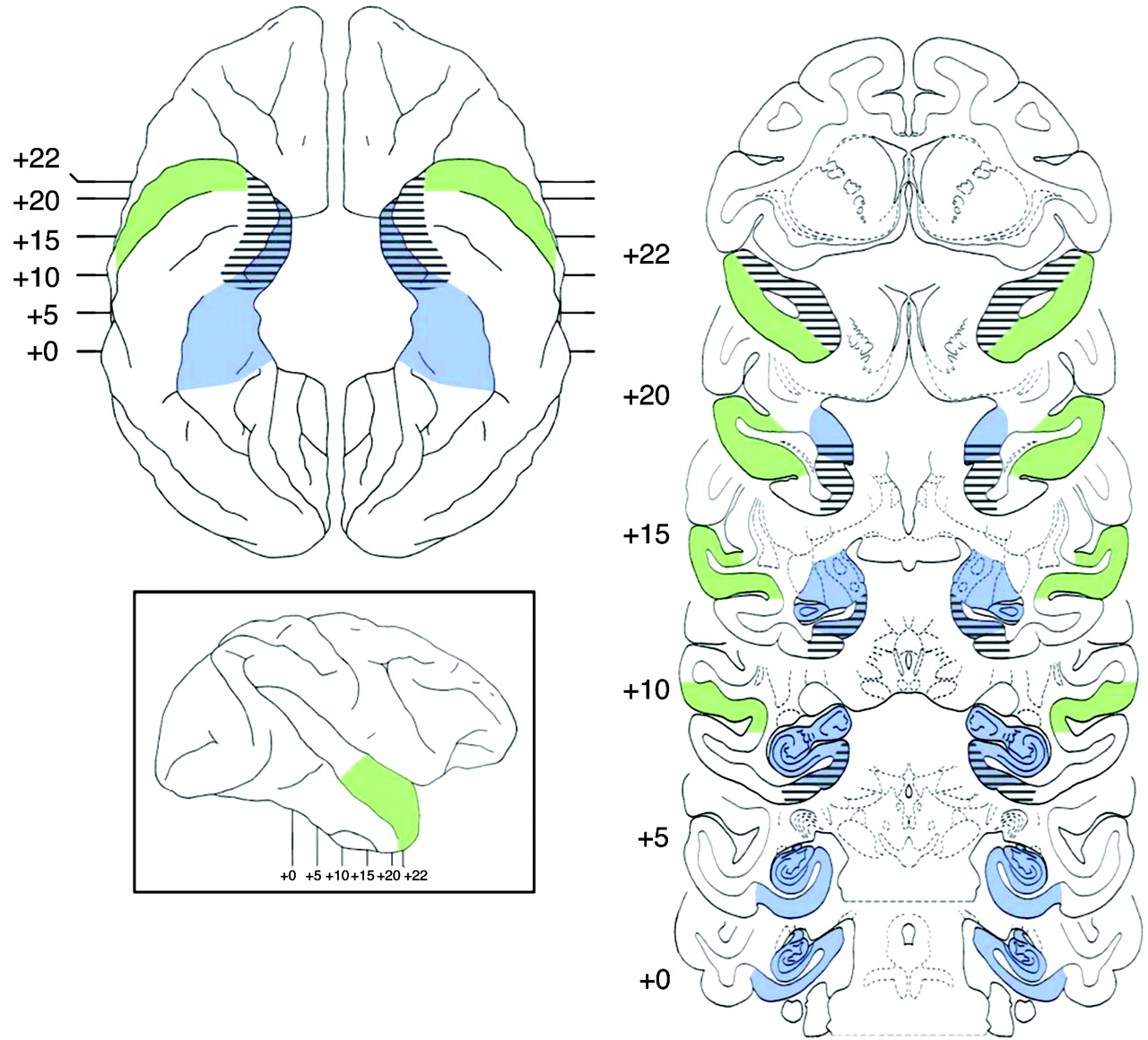
Engrams [en-gram] are a hypothetical means by which memory traces are stored as biophysical or biochemical changes in the brain (and other neural tissue) in response to external stimuli. They are also sometimes thought of as a neural network or fragment of memory, sometimes using a hologram analogy to describe its action in light of results showing that memory appears not to be localized in the brain. The existence of engrams is posited by some scientific theories to explain the persistence of memory and how memories are stored in the brain. The existence of neurologically defined engrams is not significantly disputed, though their exact mechanism and location has been a focus of persistent research for many decades.
The term was coined by the little-known but influential German evolutionary biologist Richard Semon. Overall, the mechanisms of memory are poorly understood. Such brain parts as the cerebellum, striatum, cerebral cortex, hippocampus, and amygdala are thought to play an important role in memory. For example, the hippocampus is believed to be involved in spatial and declarative learning, as well as consolidating short-term into long-term memory.
Continue reading →
Posted in Health, Language, Science |
Leave a Comment »
September 11, 2011

The US government, led by the CIA’s Special Activities Division, has made a series of attacks on targets in northwest Pakistan since 2004 using drones (unmanned aerial vehicles). These attacks are part of the US’ War on Terrorism campaign, seeking to defeat Taliban and Al-Qaeda militants in Pakistan. Most of these attacks are on targets in the Federally Administered Tribal Areas along the Afghan border in Northwest Pakistan. These strikes have increased substantially under the Presidency of Barack Obama. Generally the UAVs used are MQ-1 Predator and more recently MQ-9 Reaper firing AGM-114 Hellfire missiles. The drones have become a weapon of choice for the United States in the fight against al-Qaeda. Some media refer to the series of attacks as a ‘drone war.’ The US defence budget for 2011 asked for a 75% increase in funds to enhance the drone operations.
There is tremendous debate over the civilian casualty ratio of drone strikes. The CIA claims very few civilians are killed in relation to militants. Pakistan’s government, on the other hand publicly condemns these attacks; its Interior Minister has said ‘Drone missiles cause collateral damage. A few militants are killed, but the majority of victims are innocent citizens.’ The strikes are often linked to Anti-American sentiment in Pakistan and the growing unease with the scope of CIA activity there. However, in secret cables leaked by Wikileaks, Pakistan’s Army Chief not only tacitly agreed to the drone flights but in 2008 requested Americans to increase them.
Continue reading →
Posted in Politics, Technology, War |
Leave a Comment »
September 11, 2011

In armed conflicts, the civilian casualty ratio is the ratio of civilian casualties to combatant casualties, or total casualties. The measurement can apply either to casualties inflicted by a particular belligerent, or to casualties in the conflict as a whole.
According to a 2001 Red Cross study, the civilian-to-soldier death ratio in wars fought since the mid-20th century has been 10:1, meaning ten civilian deaths for every soldier death. In 2007, Israel achieved a ratio of 1:30, or one civilian casualty for every thirty combatant casualties, in its targeted killings campaign on militants in the Gaza Strip. According to Alan Dershowitz of Harvard Law School, ‘No army in history has ever had a better ratio of combatants to civilians killed in a comparable setting.’ Richard Kemp, former Commander of British Forces in Afghanistan, made a similar assessment of Israeli operations during the Gaza War, saying this civilian causalty ratio ‘was by far the lowest in any asymmetric conflict in the history of warfare.’
Continue reading →
Posted in Death, Politics, War |
Leave a Comment »
September 10, 2011

Tsundere [tsoon-dey-ray] is a Japanese character development process that describes a person who is cold and even hostile before gradually showing their warm side. The word is derived from the terms ‘Tsun Tsun,’ meaning to turn away in disgust, and ‘Dere Dere’ meaning to become ‘lovey dovey.’
Originally found in Japanese bishōjo games (or ‘gal games,’ a type of Japanese video game centered on interactions with attractive anime-style girls; a subset of dating simulators), the word is now part of the otaku moe phenomenon (a rarefied pseudo-love for fictional characters). Continue reading →
Posted in Games, Love, Sex |
Leave a Comment »
September 9, 2011

Experiential avoidance (EA) has been broadly defined as attempts to avoid thoughts, feelings, memories, physical sensations, and other internal experiences—even when doing so creates harm in the long-run. The process of EA is thought to be maintained through negative reinforcement—that is, short-term relief of discomfort is achieved through avoidance, thereby increasing the likelihood that the behavior will persist.
Importantly, the current conceptualization of EA suggests that it is not negative thoughts, emotions, and sensations that are problematic, but how one responds to them that can cause difficulties. In particular, a habitual and persistent unwillingness to experience uncomfortable thoughts and feelings (and the associated avoidance and inhibition of these experiences) is thought to be linked to a wide range of problems.
Continue reading →
Posted in Health, Language, Science |
Leave a Comment »
September 9, 2011

Malingering [muh-ling-ger-ing] is a medical term that refers to fabricating or exaggerating the symptoms of mental or physical disorders for a variety of ‘secondary gain’ motives, which may include financial compensation (often tied to fraud); avoiding school, work or military service; obtaining drugs; getting lighter criminal sentences; or simply to attract attention or sympathy. A common form of malingering in legal procedure prosecution is sometimes referred to as fabricated mental illness or feigned madness.
Malingering remains separate from somatization disorders and factitious disorders in which primary and secondary gain, such as the relief of anxiety or the assumption of the ‘patient role,’ is the goal. The symptoms most commonly feigned include those associated with mild head injury, fibromyalgia, chronic fatigue syndrome, and chronic pain. Failure to detect actual cases of malingering imposes a substantial economic burden on the health care system, and false attribution of malingering imposes a substantial burden of suffering on a significant proportion of the patient population.
Continue reading →
Posted in Health, Politics, War |
1 Comment »
September 9, 2011


Freeter is a Japanese expression for people between the ages of 15 and 34 who lack full time employment or are unemployed, excluding housewives and students. The term originally included young people who deliberately chose not to become salary-men, even though jobs were available at the time. Freeters may also be described as underemployed or freelance workers.
These people do not start a career after high school or university, but instead earn money from low skilled and low paid jobs. The low income makes it difficult for freeters to start a family, and the lack of qualifications makes it difficult to start a career at a later point in life. Freeters have sometimes been glamorized as people pursuing their dreams and trying to live life to the fullest. Continue reading →
Posted in Language, Money, World |
1 Comment »
September 9, 2011
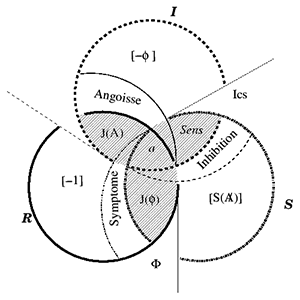
In Freudian psychology, the pleasure principle is the psychoanalytic concept describing people seeking pleasure and avoiding suffering (pain) in order to satisfy their biological and psychological needs. Furthermore, the counterpart concept, the ‘reality principle,’ describes people choosing to defer gratification of a desire when circumstantial reality disallows its immediate gratification. In infancy and early childhood, the Id (one of the three components of Freud’s model of the psyche) rules behavior by obeying only the pleasure principle. Maturity is learning to endure the pain of deferred gratification, when reality requires it; thus, the psychoanalitic Sigmund Freud proposes that ‘an ego thus educated has become ‘reasonable’; it no longer lets itself be governed by the pleasure principle, but obeys the reality principle, which also, at bottom, seeks to obtain pleasure, but pleasure which is assured through taking account of reality, even though it is pleasure postponed and diminished.’
Sigmund Freud discusses this idea, pleasure principle, and its limits in more details in his book, ‘Beyond the Pleasure Principle,’ published in 1921. In his discussion of the opposition between Eros, the life instinct, and the Thanatos, the death instinct, he examines the role of the repetition compulsion caused by the pleasure principle and of the sexual instincts.
Posted in Health, Language, Science |
Leave a Comment »
September 9, 2011

Laziness (also called indolence) is a disinclination to activity or exertion despite having the ability to do so. It is often used as a pejorative; related terms for a person seen to be lazy include couch potato, slacker, and in Australian slang, bludger.
Despite Sigmund Freud’s discussion of the pleasure principle, American psychologist Leonard Carmichael notes that ‘laziness is not a word that appears in the table of contents of most technical books on psychology… It is a guilty secret of modern psychology that more is understood about the motivation of thirsty rats and hungry pecking pigeons as they press levers or hit targets than is known about the way in which poets make themselves write poems or scientists force themselves into the laboratory when the good golfing days of spring arrive.’
Continue reading →
Posted in Health, Language, Money |
Leave a Comment »
September 9, 2011

Acedia [uh-see-dee-uh] (Greek: ‘negligence’) describes a state of listlessness or torpor, of not caring or not being concerned with one’s position or condition in the world. It can lead to a state of being unable to perform one’s duties in life. Its spiritual overtones make it related to but distinct from depression. Acedia was originally noted as a problem among monks and other ascetics who maintained a solitary life. In the medieval Latin tradition of the seven deadly sins, acedia has generally been folded into the sin of sloth.
Moral theologians, intellectual historians and cultural critics have variously construed acedia as the ancient depiction of a variety of psychological states, behaviors or existential conditions: primarily laziness, ennui or boredom. The demon of acedia manifests itself in a range of psychological and somatic symptoms that is far broader and more complex than the familiar tradition in the West. Continue reading →
Posted in Health, Language, Philosophy |
Leave a Comment »
September 8, 2011

PFFR (or Pre-natal Fighting Frightening Remembrances Forever Ltd.) is a Brooklyn based production company/art collective/electro-rock band consisting of Alyson Levy, Vernon Chatman, Jim Tozzi, and John Lee. The group has been active since 2000. The group’s portfolio of work includes albums, live performances, various art exhibits such as ‘An Attack On All Americans Or The Tyranny Of Weed’ shown at the LFL Galley in New York, and the script for the film ‘Final Flesh.’
PFFR are also active in television comedy. They wrote, directed, produced and starred in the MTV2 variety program ‘Wonder Showzen’ (2005–2006) and the Adult Swim CGI series ‘Xavier: Renegade Angel.’ For both these shows, Chatman and Lee are the directors and main voice talent, whilst Tozzi and Levy are the animation/character designer and art director, respectively. Levy provides additional voices for both shows whilst Tozzi does only for ‘Xavier.’ PFFR are also responsible for producing, directing and co-writing Jon Glaser’s Adult Swim show ‘Delocated.’
Continue reading →
Posted in Art, Humor |
Leave a Comment »