June 3, 2011
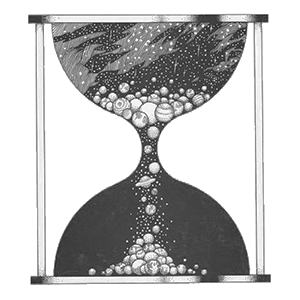
The Forever War is a 1974 science fiction novel by American author Joe Haldeman, telling the contemplative story of soldiers fighting an interstellar war between humanity and the enigmatic Tauran species.
The pithy, insightful explorations of the inhumanity of war and of bureaucracy, and of the psychological effects resulting from time dilation space travel (a soldier returns home after centuries away), won acclaim immediately.
Continue reading →
Posted in Art, Technology, War |
Leave a Comment »
June 3, 2011

Stella is a comedy trio consisting of Michael Showalter, Michael Ian Black, and David Wain (all three of whom are alumni of the comedy troupe, The State). The group formed in 1997 as a weekly nightclub comedy attraction, performing at a New York City nightclub from 1997 until 2005. Stella soon gained a wider cult following after a series of self-produced shorts were released in limited quantities on DVD. Now known for their unique blend of potently mainstream comedy and surrealist humor, Stella has garnered a small but dedicated fanbase.
A noted aspect of Stella’s stand-up routine involved the members arguing with each other on stage. Michael Ian Black once referred to it as, ‘professional bickering,’ which some have compared to a ‘postmodern Smothers Brothers.’ Michael Showalter once said of their onstage bickering, ‘When people aren’t sure if what they’re watching is real or not, it kind of creates a tension. We have a certain amount of tension that’s very ripe comedically.’ Continue reading →
Posted in Art, Humor |
Leave a Comment »
June 3, 2011
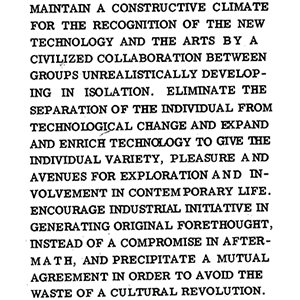
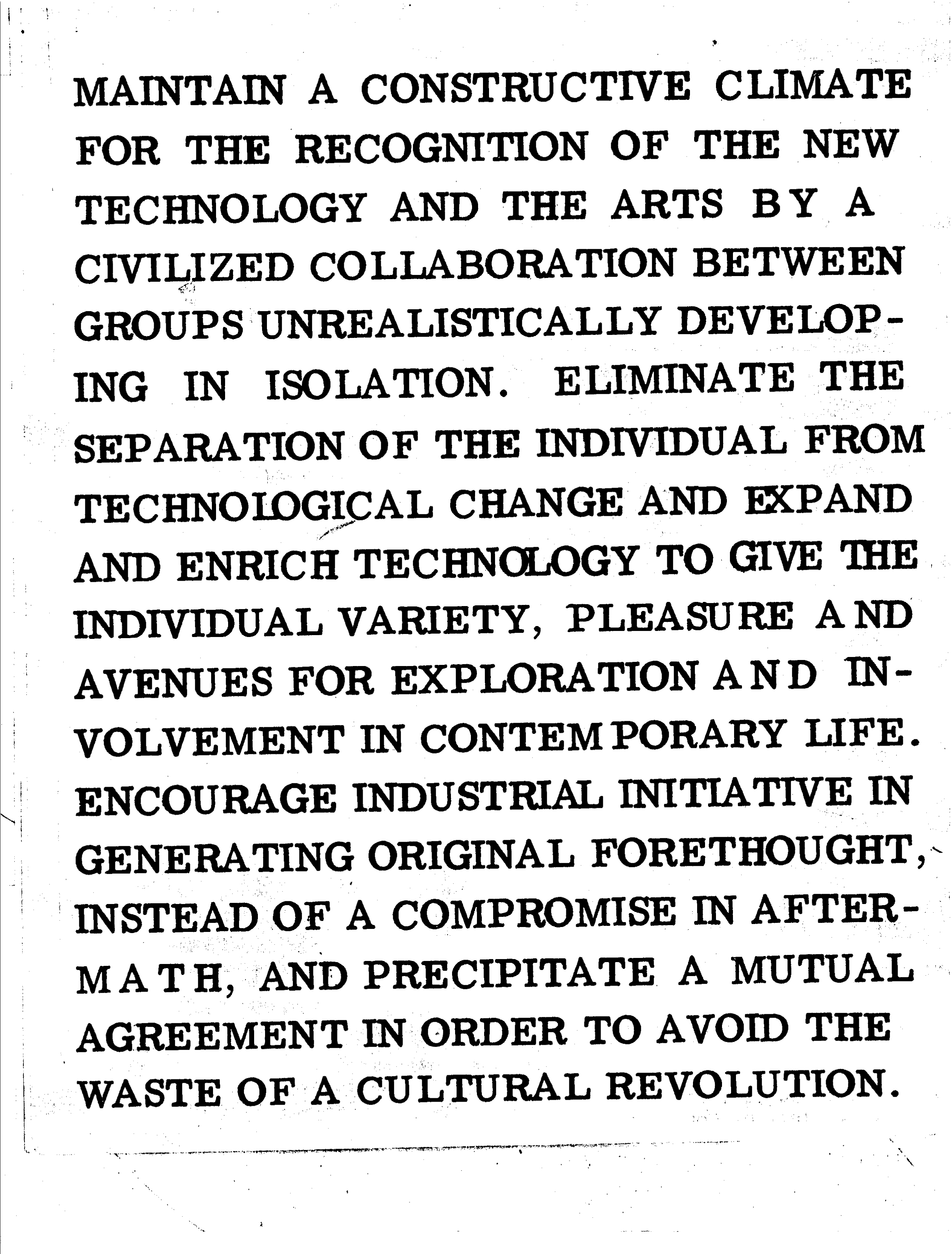
Experiments in Art and Technology (E.A.T.) was a non-profit established in 1967 to develop collaborations between artists and engineers by the engineers Billy Klüver and Fred Waldhauer and the artists Robert Rauschenberg and Robert Whitman. They had previously collaborated, most notably in 1966 for ‘9 Evenings: Theatre and Engineering,’ a series of performance art presentations that united artists and engineers. Also in 1966, 10 New York artists worked with 30 engineers and scientists from the world renowned Bell Telephone Laboratories to create groundbreaking performances that incorporated new technology. Video projection, wireless sound transmission, and Doppler sonar had never been seen in art.
The installation gathered the vast and insightful but also often undecipherable shards, artifacts, apparatus, photographs, drawings, diagrams, correspondence, and documentary film footage that provides information, but little if any comprehensive understanding of a series of ten individual works that, although wildly uneven on every level from aesthetic to technical, have entered the canon of performance art, experimental music and theater, bridging the gap from the eras of Dada, Fluxus and the Happenings/Actions of the 1960s, through the current generation of arts for whom multimedia and technology are the norm. The pinnacle of E.A.T. activity is generally considered to be the Pepsi Pavilion at Expo ’70 at Osaka Japan where E.A.T. artists and engineers collaborated to design and program an immersive dome that included a fog sculpture by Fujiko Nakaya.
Posted in Art, Technology |
Leave a Comment »
June 3, 2011
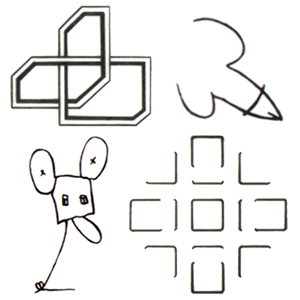
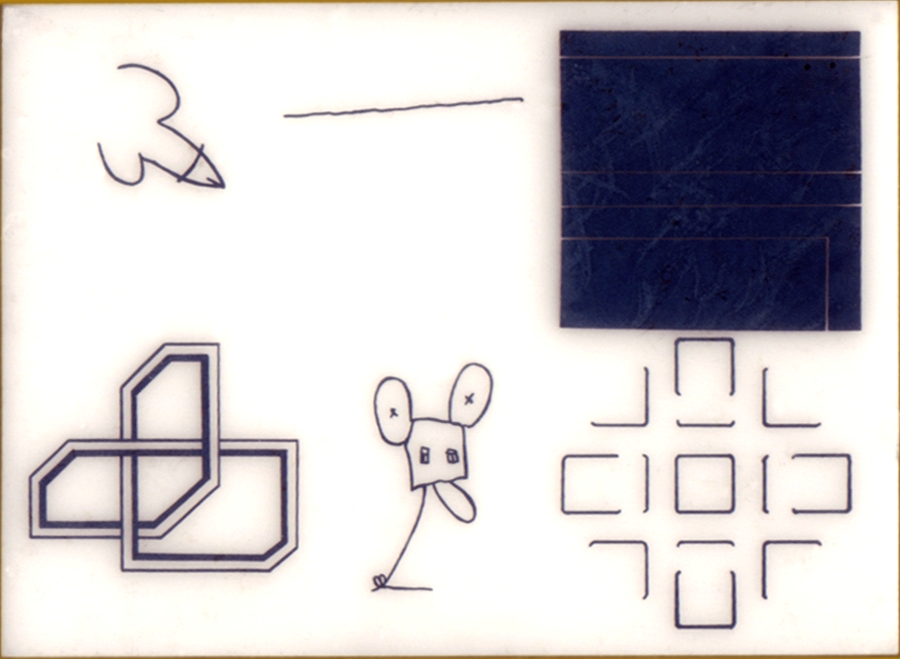
The Moon Museum is a small ceramic wafer three-quarters of an inch by half an inch in size, containing artworks by six prominent artists from the late 1960s. The artists with works in the ‘museum’ are Robert Rauschenberg, David Novros, John Chamberlain, Claes Oldenburg, Forrest Myers, and Andy Warhol.
This wafer was supposedly covertly attached to a leg of the Intrepid landing module, and subsequently left on the moon during Apollo 12. The moon museum is considered the first Space Art object. While it is impossible to tell if the Moon Museum is actually on the moon without sending another mission to look, many other personal effects were smuggled onto the Apollo 12 lander and hidden in the layers of gold blankets that wrapped parts of the spacecraft.
Continue reading →
Posted in Art, Humor, Technology |
Leave a Comment »
June 3, 2011

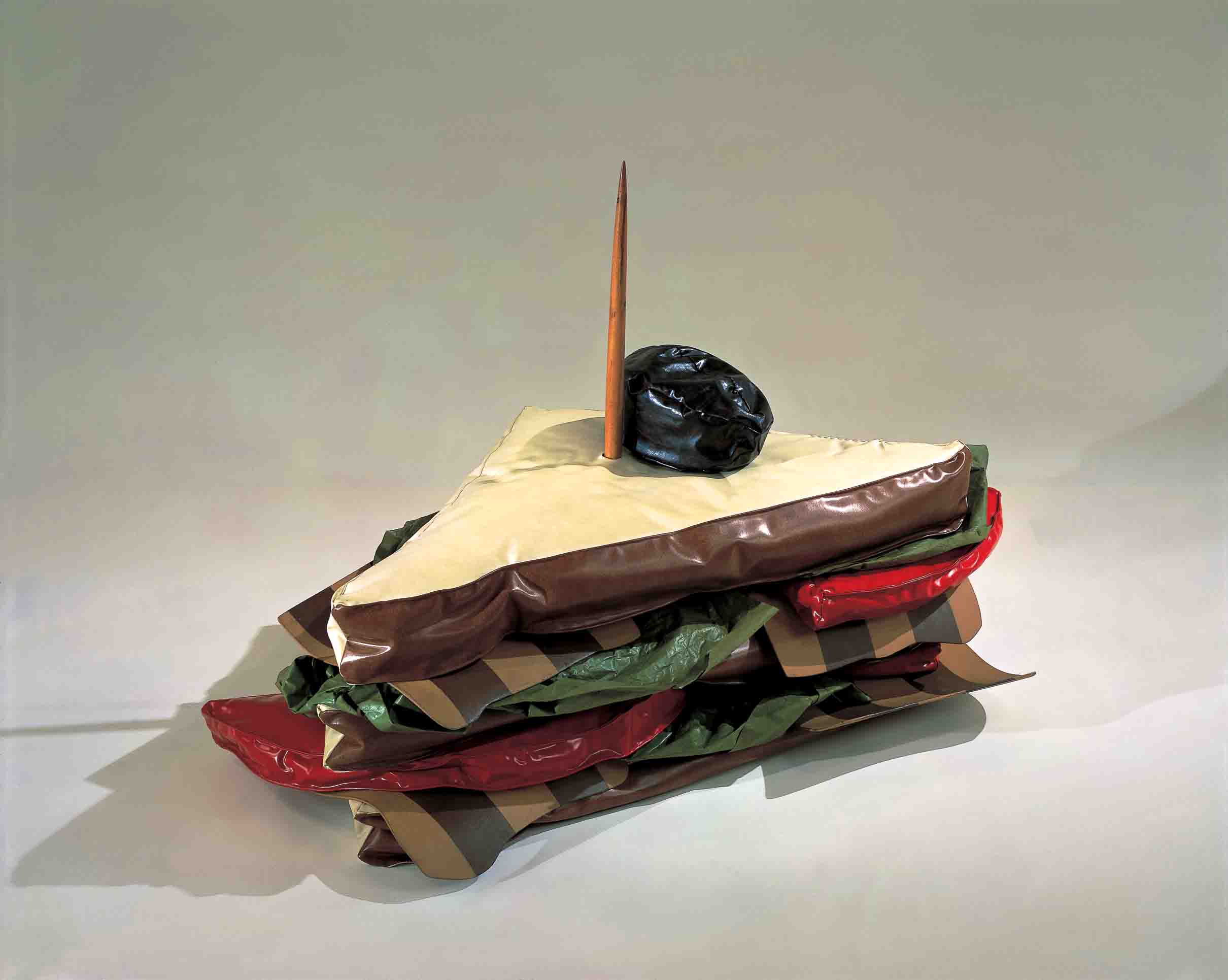
Claes Oldenburg (b. 1929) is a Swedish sculptor, best known for his public art installations typically featuring very large replicas of everyday objects. Another theme in his work is soft sculpture versions of everyday objects. He first opened his own studio in 1953, and became a naturalized citizen of the United States that year as well.
Many of Oldenburg’s large-scale sculptures of mundane objects elicited public ridicule before being embraced as whimsical, insightful, and fun additions to public outdoor art. In the 1960s he became associated with the Pop Art movement and created many so-called happenings, which were performance art related productions of that time. The name he gave to his own productions was ‘Ray Gun Theater.’ Continue reading →
Posted in Art, Humor |
Leave a Comment »
June 3, 2011

The BLT (Bacon, Lettuce, and Tomato) is a type of sandwich. The standard BLT is made up of five ingredients: bacon, lettuce, tomato, mayonnaise, and bread. The five ingredients can be altered according to preference; for example, the bread can be toasted and the mayonnaise home-made or replaced with ranch dressing. The BLT evolved from the tea sandwiches served before 1900 at a similar time to the club sandwich, although it is unclear when the name BLT became the norm.
The sandwich’s popularity has led to a number of oversized reproductions (the current record for the ‘world’s largest BLT’ is over 209 ft/64 m) and a pop art sculpture by Claes Oldenburg. Continue reading →
Posted in Food |
Leave a Comment »
June 3, 2011

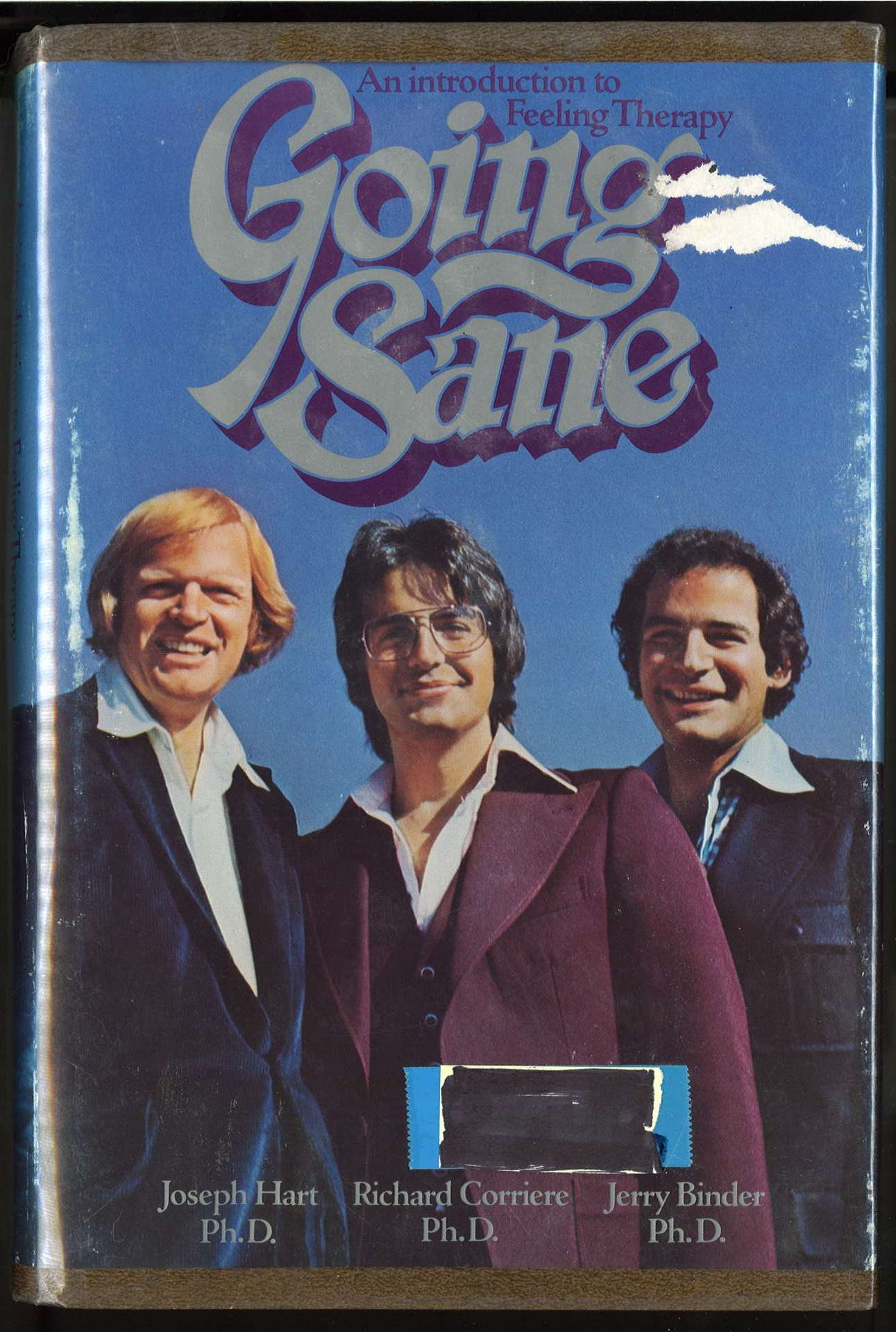
The Center for Feeling Therapy was an abusive, cult-like psychotherapy group founded in 1971 in Los Angeles. The Center was founded by former members of Arthur Janov’s Primal Institute who were dissatisfied with what they felt were shortcomings in primal therapy (a psychotherapy based on the theory that neurosis is caused by the repressed pain of childhood trauma).
The Center started as an offshoot of primal therapy, but quickly abandoned primal therapy and subsequently went through many theoretical shifts, including an emphasis on dream analysis. At its peak it had 350 resident patients and 2,000 members including various branches.
Continue reading →
Posted in Health |
Leave a Comment »
June 3, 2011

Primal therapy is a trauma-based psychotherapy created by an American psychologist, Arthur Janov, who argues that neurosis is caused by the repressed pain of childhood trauma. Janov argues that repressed pain can be sequentially brought to conscious awareness and resolved through re-experiencing the incident and fully expressing the resulting pain during therapy. Primal therapy was developed as a means of eliciting the repressed pain; the term Pain is capitalized in discussions of primal therapy when referring to any repressed emotional distress and its purported long-lasting psychological effects. Janov criticizes the talking therapies as they deal primarily with the cerebral cortex and higher-reasoning areas and do not access the source of Pain within the more basic parts of the central nervous system.
Primal therapy became very influential during a brief period in the early 1970s, after the publication of Janov’s first book, ‘The Primal Scream.’ It inspired hundreds of spin-off clinics worldwide and served as an inspiration for many popular cultural icons. John Lennon, actor James Earl Jones and pianist Roger Williams were prominent advocates of primal therapy. Primal therapy has since declined in popularity, partly because Janov has not produced the outcomes necessary to convince research-oriented psychotherapists of its effectiveness. Janov and others continue to advocate and practice the therapy or various developments of it.
Posted in Health |
Leave a Comment »
June 3, 2011

Dagen H (H day), today mostly called ‘Högertrafikomläggningen’ (‘The right-hand traffic diversion’), was the day in 1967 on which traffic in Sweden switched from driving on the left-hand side of the road to the right. There were more major arguments for the change: All Sweden’s immediate neighbors drove on the right (including Norway, with which Sweden has a long land border). Most Swedes drove left-hand drive (LHD) vehicles. This led to many head-on collisions when passing on two-lane highways, which were common in Sweden because of its low population density and traffic levels.
Nonetheless, the change was widely unpopular, and had repeatedly been voted down over the previous forty years. In a 1955 referendum, 83 percent voted to keep driving on the left. In 1963, the Riksdag (the Swedish parliament) approved the change. It also began implementing a four-year education program, with the advice of psychologists. The campaign included displaying the Dagen H logo on various commemorative items, including milk cartons, men’s shorts, and women’s underwear. Continue reading →
Posted in Politics, Technology, World |
Leave a Comment »
June 3, 2011
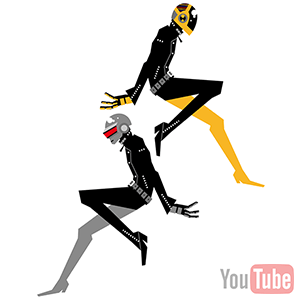
Daft Punk’s Electroma is a 2007 film by French duo Daft Punk. The plot revolves around the quest of two robots (the band members, played by Peter Hurteau and Michael Reich) to become human. The music featured in this film is not by Daft Punk, which is a first for the duo after their previous film and home video releases, ‘D.A.F.T.’ and ‘Interstella 5555.’
The two lead characters appear as the robotic forms of Daft Punk; one wears a silver helmet and the other wears a gold one. An opening scene shows the duo driving in a 1987 Ferrari 412 with its license plate displaying ‘HUMAN.’ After passing through a Southwestern United States landscape, the duo arrives at a town in Inyo County, California. The town’s denizens are robots physically identical to the two main characters, but at different ages, with different clothing and alternating gender. Continue reading →
Posted in Art |
2 Comments »
June 1, 2011


The Ad Council is an American non-profit organization that distributes public service announcements on behalf of various sponsors, including non-profit organizations and agencies of the United States government. The Advertising Council generally does not produce public service advertisements itself, rather, it acts as a coordinator and distributor.
The Advertising Council accepts requests from sponsor organizations for advertising campaigns that focus on particular social issues. To qualify, an issue must be non-partisan (though not necessarily unbiased) and have national relevance. The Advertising Council then assigns each campaign to a volunteer advertising agency that produces the actual advertisements. Finally, the Advertising Council distributes the finished advertisements to media outlets.
Continue reading →
Posted in Money, Politics, War |
Leave a Comment »
June 1, 2011
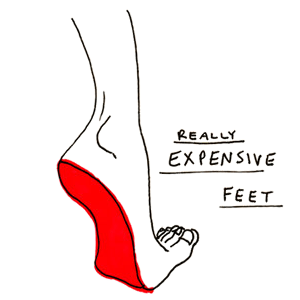
In economics, Veblen [veb-luhn] goods are a group of commodities for which people’s preference for buying them increases as a direct function of their price, as greater price confers greater status, instead of decreasing according to the law of demand. A Veblen good is often also a positional good. The Veblen effect is named after economist Thorstein Veblen, who first pointed out the concepts of conspicuous consumption and status-seeking.
Some types of high-status goods, such as high-end wines, designer handbags and luxury cars are Veblen goods, in that decreasing their prices decreases people’s preference for buying them because they are no longer perceived as exclusive or high status products. Similarly, a price increase may increase that high status and perception of exclusivity, thereby making the good even more preferable. Often such goods are no better or even worse than their lower priced counterparts. Continue reading →
Posted in Money, Science |
Leave a Comment »