May 26, 2011
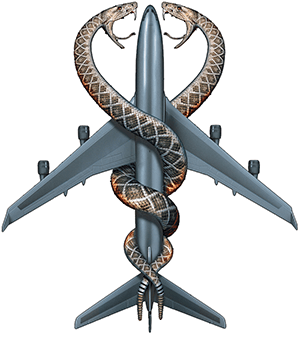
Snakes on a Plane is a 2006 American action and horror film starring Samuel L. Jackson, which follows the events of hundreds of snakes being released on a passenger plane in an attempt to kill a trial witness. During filming, Jackson did not come into contact with any live snakes, due to a contract clause preventing snakes from being within 25 feet (8 m) of the actor. The story is credited to David Dalessandro, a first-time Hollywood writer. He developed the concept in 1992 after reading a nature magazine article about tree snakes climbing onto planes in cargo during World War II.
Taking advantage of the Internet buzz for what had been a minor film in their 2006 line-up, New Line Cinema ordered five days of additional shooting. While re-shoots normally imply problems with a film, the producers opted to add new scenes to the film to change the PG-13 rating to R and bring it in line with growing fan expectations. The most notable addition was a revision of a catchphrase from the film that was parodied on the Internet by fans of the film, capitalizing on Jackson’s typically foul-mouthed and violent film persona: ‘Enough is enough! I have had it with these motherfucking snakes on this motherfucking plane!’
Posted in Art, Humor |
Leave a Comment »
May 25, 2011
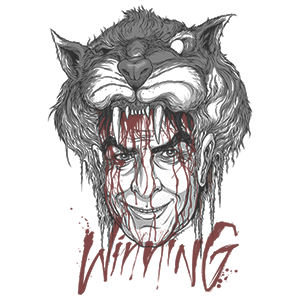
Alex Pardee (b. 1976) is a freelance artist and writer born in California. He runs the website EyeSuck Ink. Through his art he has admitted to overcoming depression and anxiety disorders along with emotional struggles.
He uses pens, ink, watercolors, dye, acrylics, oils, and latex. Pardee’s influences include 1980s horror movies, pop art, graffiti and gangster rap.
Posted in Art, Humor |
Leave a Comment »
May 25, 2011

Leica is a German optics company. The first Leica prototypes were built by Oskar Barnack in Wetzlar in 1913. Intended as a compact camera for landscape photography, particularly during mountain trips, the Leica was the first practical 35 mm camera, using standard cinema 35 mm film. Leica is particularly associated with street photography, especially in the mid-to-late 20th century, being used by such noted photographers as Henri Cartier-Bresson.
Leica cameras, lenses, accessories and sales literature are collectibles. Early or rare cameras and accessories can reach very high prices on the market. Notably, Leica cameras sporting military markings carry very high premiums; this started a market for refurbished Soviet copies with fake markings.
Posted in Money, Technology |
1 Comment »
May 25, 2011

Carl Zeiss is a German manufacturer of optical systems, founded in 1846. There are currently two parts of the company, Carl Zeiss AG located in Oberkochen with important subsidiaries in Aalen, Göttingen and Munich, and Carl Zeiss GmbH located in Jena.
The organization is named after a founder, the German optician Carl Zeiss (1816–1888), and is one of the oldest existing optics manufacturers in the world. The history of the company begins in the city of Jena before World War I, then the world’s largest location of camera production. Zeiss Ikon represented a significant part of the production along with dozens of other brands and factories, and also had major works at Dresden. Continue reading →
Posted in Money, Technology |
Leave a Comment »
May 25, 2011

The Shining is a 1980 psychological horror film directed by Stanley Kubrick, co-written with novelist Diane Johnson, and starring Jack Nicholson and Shelley Duvall. The film is based on the novel of the same name, by Stephen King, about a writer with a wife and young son who accepts the job of an off-season caretaker at an isolated hotel.
The son, who possesses psychic abilities, is able to see things in the future and past, such as the ghosts in the hotel. Soon after moving in, and after a paralyzing winter storm that leaves the family snowed in, the father becomes influenced by the supernatural presence in the haunted hotel; he descends into madness and attempts to murder his wife and son.
Continue reading →
Posted in Art |
Leave a Comment »
May 25, 2011

The Shining is a 1977 horror novel by Stephen King. The title was inspired by the John Lennon song ‘Instant Karma!,’ which contained the line ‘We all shine on…’ It was King’s third published novel, and the success of the book firmly established him as a preeminent author in the horror genre. A film based upon the book, directed by Stanley Kubrick, was released in 1980.
After writing ‘Carrie’ and ‘Salem’s Lot,’ both of which are set in small towns in King’s home state of Maine, King was looking for a change of pace for the next book. He opened an atlas of the US on the kitchen table and randomly pointed to a location, which turned out to be Boulder, Colorado. So in early 1974, King and his wife, Tabitha, and their two children, Naomi and Joe, moved across the country to Colorado. Continue reading →
Posted in Art, Language |
Leave a Comment »
May 25, 2011

Randy Marsh is a character on the US TV show, ‘South Park.’ His name is derived from series co-creator Trey Parker’s father, and Parker describes Randy as ‘the biggest dingbat in the entire show.’ Randy is voiced by Parker.
The show established Randy and his wife Sharon as being a couple as young adults during the flower power era. Their marriage has not been without its frequent arguments, which are usually instigated when Sharon is annoyed, ashamed, or disgusted by Randy’s eccentricities. The two even once went through a brief divorce. After quickly entering a new relationship, Sharon realized how much she was still in love with Randy, and the two promptly reconciled. Randy and Sharon tend to showcase liberal viewpoints, having protested the 2003 invasion of Iraq and supported Barack Obama during the 2008 presidential race.
Continue reading →
Posted in Art, Humor |
Leave a Comment »
May 25, 2011

Creed Bratton (b. 1943) is an American actor and musician best known for playing a fictional version of himself on the American adaptation of ‘The Office.’ Born William Charles Schneider, he grew up in a small California town near Yosemite National Park.
His grandparents, mother, and father were musicians, and he took a liking to music at a very early age. He became a professional musician during his high school and college years. He decided to try life as a traveling musician and made his way on a global excursion, during which he changed his name to Creed Bratton. He traveled through Europe, Africa and the Middle East. Appearing with his group the ‘Young Californians,’ he played guitar at a large folk festival in Israel.
Continue reading →
Posted in Art, Humor |
Leave a Comment »
May 25, 2011

Richard Frank Oznowicz (b. 1944) , better known as Frank Oz is an American film director and puppeteer who is known for creating and performing the characters Miss Piggy, Fozzie Bear, and Animal in ‘The Muppet Show’ and for directing films, including the 1986 ‘Little Shop Of Horrors’ remake and ‘Dirty Rotten Scoundrels.’ He is also the operator and voice of Yoda in the Star Wars series, as well as Grover, Cookie Monster, Sam Eagle, and Bert on Sesame Street.
In addition to performing a variety of characters, Oz has been one of the primary collaborators responsible for the development of the Muppets over the last 30 years. His puppetry work spans from 1963 to the present, though he has retired from the Muppets. His Muppets were taken over by Eric Jacobson, though Oz still performs his characters on occasion. He also worked with the puppets on the movie Labyrinth, starring David Bowie.
Posted in Art, Humor |
Leave a Comment »
May 25, 2011

A tornado is a tube of violently spinning air that touches the ground. They are often referred to as a twister or a cyclone, although the word cyclone is used in meteorology in a narrower sense, only to name hurricanes or typhoons. Most tornadoes have wind speeds less than 110 miles per hour, are approximately 250 feet across, and travel a few miles before dissipating. The most extreme can attain wind speeds of more than 300 mph, stretch more than two miles across, and stay on the ground for dozens of miles.
Tornadoes often develop from a class of thunderstorms known as supercells. Other tornado-like phenomena that exist in nature include the gustnado (short-lived, low-level rotating cloud), dust devil, fire whirls, and steam devil. Tornadoes have been observed on every continent except Antarctica. However, the vast majority of tornadoes in the world occur in the Tornado Alley region of the United States (the area between the Rocky and Appalachian Mountains). Continue reading →
Posted in Science |
Leave a Comment »
May 24, 2011

A progress trap is the condition human societies experience when, in pursuing progress through human ingenuity, they inadvertently introduce problems they do not have the resources or political will to solve, for fear of short-term losses in status, stability or quality of life. This prevents further progress and sometimes leads to collapse.
The central problem one of scale and political will. The error is often to extrapolate from what appears to work well on a small scale to a larger scale, which depletes natural resources and causes environmental degradation. Large-scale implementation also tends to be subject to diminishing returns. As overpopulation, erosion, greenhouse gas emissions or other consequences become apparent, society is destabilized. Continue reading →
Posted in Money, Politics, Technology |
Leave a Comment »
May 24, 2011

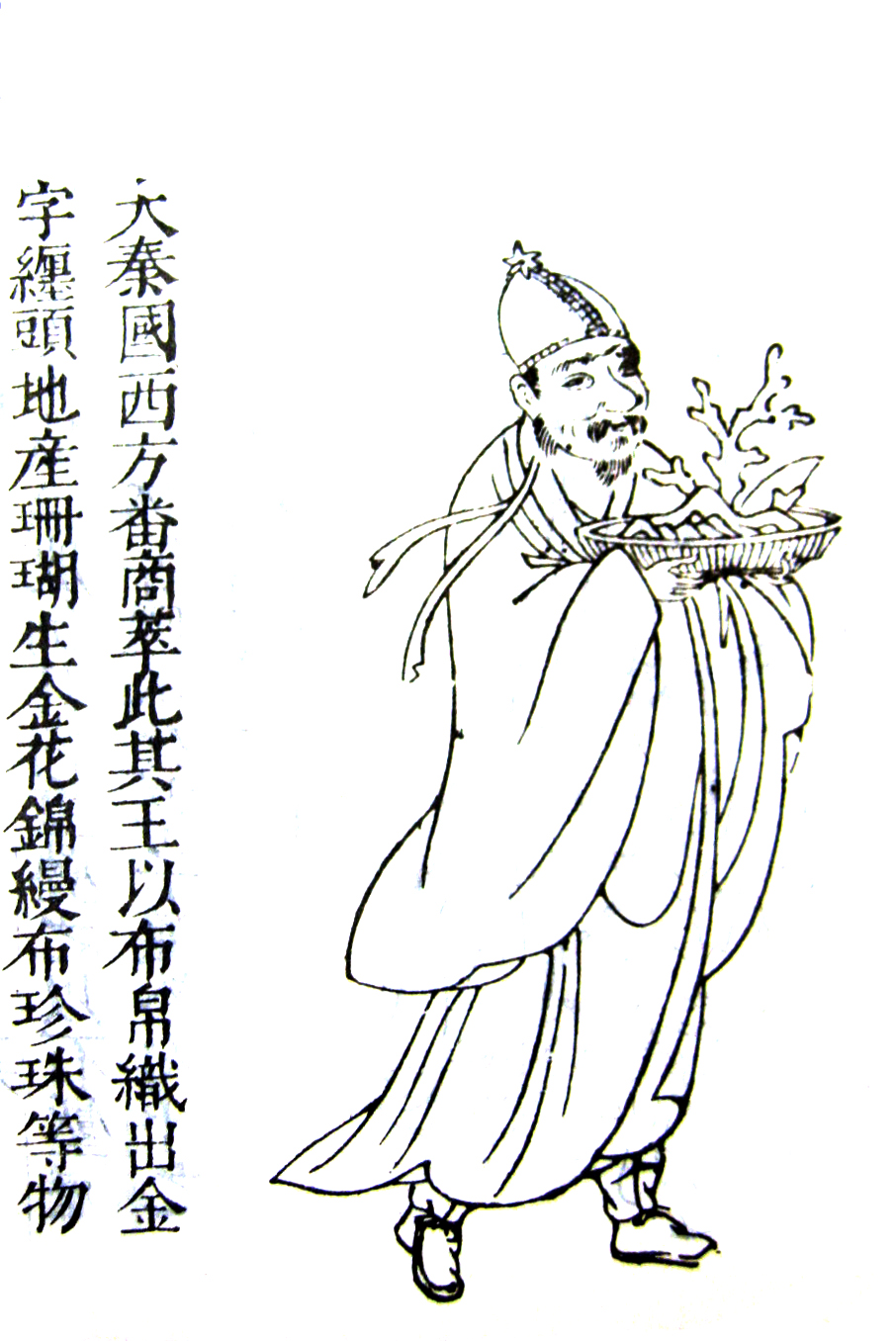
Daqin [da-chin] is the ancient Chinese name for the Roman Empire and, depending on context, the Near East, especially Syria. It literally means ‘Great Qin,’ Qin being the name of the founding dynasty of the Chinese Empire. Following the opening of the Silk Road in the 2nd century BCE, the Chinese thought of the Roman Empire as a civilized pendant to their own empire. The Romans occupied one extreme position on the trade route, with the Chinese located on the other. China never managed to reach the Roman Empire directly in antiquity, although general Ban Chao sent an envoy, Gan Ying, who left a detailed account of the Romans, but it is generally considered to have been based on second hand information:
‘Their kings are not permanent. They select and appoint the most worthy man. If there are unexpected calamities in the kingdom, such as frequent extraordinary winds or rains, he is unceremoniously rejected and replaced. The one who has been dismissed quietly accepts his demotion, and is not angry. The people of this country are all tall and honest. They resemble the people of the Middle Kingdom and that is why this kingdom is called Da Qin [literally, ‘Great China’]. This country produces plenty of gold [and] silver, [and of] rare and precious [things] they have luminous jade, ‘bright moon pearls,’ Haiji rhinoceroses, coral, yellow amber, opaque glass, whitish chalcedony, red cinnabar, green gemstones, gold-thread embroideries, woven gold-threaded net, delicate polychrome silks painted with gold, and asbestos cloth.’
Posted in Language, World |
Leave a Comment »