May 21, 2011

The Dragons of Eden: Speculations on the Evolution of Human Intelligence is a Pulitzer Prize winning 1977 book by Carl Sagan. In it, he combines the fields of anthropology, evolutionary biology, psychology, and computer science to give a perspective of how human intelligence evolved.
The opening quote is by Greek philosopher Plotinus: ‘Mankind is poised midway between the Gods and the Beasts.’
Continue reading →
Posted in Language, Science |
Leave a Comment »
May 21, 2011

The triune brain is a model of the evolution of the vertebrate forebrain and behavior proposed by the American physician and neuroscientist Paul D. MacLean. MacLean originally formulated his model in the 1960s and propounded it at length in his 1990 book ‘The Triune Brain in Evolution.’ The triune brain consists of the reptilian complex, the paleomammalian complex (limbic system), and the neomammalian complex (neocortex), viewed as structures sequentially added to the forebrain in the course of evolution.
The triune brain hypothesis became familiar to a broad popular audience through Carl Sagan’s Pulitzer prize winning 1977 book ‘The Dragons of Eden.’ Though embraced by some psychiatrists and at least one leading affective neuroscience researcher, the model never won wide acceptance among comparative neurobiologists. Comparative evolutionary neuroanatomists currently regard its claims about brain evolution to be outdated.
Continue reading →
Posted in Health, Science |
Leave a Comment »
May 20, 2011

Wallace Wood (1927 – 1981) was an American comic book writer, artist and independent publisher, best known for his work in EC Comics and Mad. He was one of Mad’s founding cartoonists in 1952. Although much of his early professional artwork is signed Wallace Wood, he became known as Wally Wood, a name he claimed to dislike.
EC publisher William Gaines once stated, ‘Wally may have been our most troubled artist… I’m not suggesting any connection, but he may have been our most brilliant.’ Continue reading →
Posted in Art, Money, Sex |
Leave a Comment »
May 20, 2011

Lawrence Lessig (b. 1961) is an American academic and political activist. He is best known as a proponent of reduced legal restrictions on copyright, trademark, and radio frequency spectrum, particularly in technology applications. He is a professor of law at Harvard Law School. Lessig is a founding board member of Creative Commons, a board member of the Software Freedom Law Center, an advisory board member of the Sunlight Foundation, and a former board member of the Electronic Frontier Foundation.
After graduating from law school, he clerked for a year for Judge Richard Posner, at the 7th Circuit Court of Appeals in Chicago, Illinois and another year for Justice Antonin Scalia at the Supreme Court. Lessig has emphasized in interviews that his philosophy experience at Cambridge radically changed his values and career path. Previously, he had held strong conservative or libertarian political views, desired a career in business, was a highly active Teenage Republican, and in 1978 and almost pursued a Republican political career.
Posted in Money, Politics |
Leave a Comment »
May 20, 2011

RiP!: A Remix Manifesto is a 2008 open source documentary film about the changing concept of copyright directed by Brett Gaylor.
Created over a period of six years, the documentary film features the collaborative remix work of hundreds of people who have contributed to the Open Source Cinema website, helping to create the ‘world’s first open source documentary.’ Gaylor encourages people to create their own remixes from this movie, using media available from the Open Source Cinema website, or other websites like YouTube, Flickr, Hulu, or MySpace.
Posted in Art, Money, Politics |
1 Comment »
May 20, 2011

RTMark is an activist collective that attempts to subverts the ‘Corporate Shield’ protecting US corporations.
The name is derived from ‘Registered Trademark.’ RTMark claimed as its first prank the ‘Barbie Liberation Organization,’ in which the voiceboxes of talking Barbie and G.I. Joe toys were swapped, and the toys then returned to the store (1993).
Posted in Humor, Money, Politics |
Leave a Comment »
May 20, 2011


TrustoCorp is an artist or a group of artists based in New York City.
They are known for their humorous street signs and product labels, which can be found in New York City, San Francisco, San Diego, and Miami.
Posted in Art, Money, Politics |
Leave a Comment »
May 20, 2011

Illegal Art is a sampling label that was started by a person using the name Philo T. Farnsworth in 1998. Its first release was ‘Deconstructing Beck,’ a compilation made exclusively from sampling Beck’s music. This was followed by two other theme-based compilations, ‘Extracted Celluloid’ and ‘Commercial Ad Hoc.’
All three were co-released on Seeland Records, an independent record label created by experimental music band Negativland in 1979 to release their own recordings. The releases were also sponsored by RTMark, an activist collective formed to fight the unchecked growth of corporate interests. After these theme based compilations, Illegal Art focused on artist releases. One of the most popular artists on Illegal Art is Girl Talk (aka Gregg Gillis), who in 2006 released his third album, Night Ripper, to critical acclaim on the label. Illegal Art also released the Steinski Retrospective, spanning his work from 1983-2006.
Posted in Art, Money, Politics |
Leave a Comment »
May 20, 2011


Gregg Michael Gillis (b. 1981), better known by his stage name Girl Talk, is an American musician specializing in mashups and digital sampling. Gillis has released five LPs on the record label Illegal Art. He ended his career in biomedical engineering in 2007 to focus solely on music. He uses often a dozen or more unauthorized samples from different songs to create a new song. He cites fair use as a legal backbone for his sampling practices. After the success of his album Feed the Animals, for which listeners were asked to pay a price of their choosing, Gillis made all of his other albums similarly available via the Illegal Art website.
Regarding his stage name, Gillis has said, ‘the name Girl Talk is a reference to many things, products, magazines, books. It’s a pop culture phrase. The whole point of choosing the name early on was basically to just stir things up a little within the small scene I was operating from. I came from a more experimental background and there were some very overly serious, borderline academic type electronic musicians. I wanted to pick a name that they would be embarrassed to play with. You know Girl Talk sounded exactly the opposite of a man playing a laptop, so that’s what I chose.’
Posted in Art, Money, Politics |
Leave a Comment »
May 20, 2011
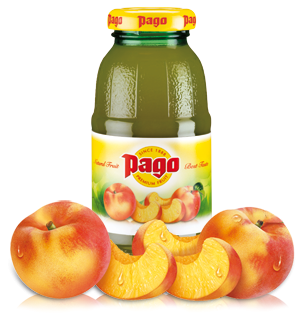
Nectars are a type of non-carbonated soft drink made with fruit juice. In some countries, the beverage industry distinguishes nectars from drinks labeled as juice. In the United States and the United Kingdom, the term ‘fruit juice’ is restricted to beverages that are 100% pure juice.
Nectar is generally accepted in the U.S. and in international trade for a diluted juice to denote a beverage that contains fruit juice and fruit puree. A juice or nectar including concentrate must state that it does. A blend of fruit juice(s) with other ingredients, such as high-fructose corn syrup, is called a juice cocktail or juice drink.
Posted in Food, Language, World |
Leave a Comment »
May 20, 2011

Squash (also called ‘cordial’) is a concentrated fruit-based syrup made from fruit juice, water, and sugar (or other sweetener). Modern squashes may also contain flavoring and coloring. Some traditional cordials also contain herbal extracts, most notably elderflower. Squash must be mixed with a certain amount of water or club soda before drinking.
Citrus fruits (particularly orange and lemon) or a blend of fruits and berries are commonly used as the base of squash. Popular blends are apple with blackcurrant, raspberry with pomegranate, and orange or peach with mango. Less popular single-fruit squashes are also produced, such as lime, pineapple, pomegranate, raspberry, and strawberry. Continue reading →
Posted in Food, World |
Leave a Comment »
May 20, 2011

Ultra Music Festival is an annual outdoor electronic music festival that occurs in March in the city of Miami usually during the annual Winter Music Conference.
It is held in Downtown Miami in Bicentennial Park. It was a 1-day festival from 1999-2006, a 2-day festival from 2007-2010, and was a 3-day festival in 2011. Ultra celebrated its 10th anniversary in 2008 with performances by Tiesto, Underworld, Justice, Deadmau5, Moby, The Crystal Method, and David Guetta.
Posted in Art, Technology |
1 Comment »





