May 20, 2011

Olafur Eliasson (b. 1967) is a Danish-Icelandic artist known for sculptures and large-scale installation art employing elemental materials such as light, water, and air temperature to enhance the viewer’s experience.
In 1996, Eliasson started working with Einar Thorsteinn, an architect and geometry expert 25 years his senior as well as a former friend of Buckminster Fuller’s. Thorsteinn’s knowledge of geometry and space has been integrated into Eliasson’s artistic production, often seen in his geometric lamp works as well as his pavilions, tunnels and camera obscura projects.
Continue reading →
Posted in Art |
Leave a Comment »
May 20, 2011

An adult prom is a social event that is almost perfectly similar to a high school prom in terms of themes and attire, except that adult proms usually serve alcohol, and most require those attending to be at least 21 years of age to attend. They have become increasingly common, especially in the United States, and usually are hosted as fundraisers for charities.
A slightly different take on the adult prom is that of the disabilities prom, dedicated to providing a prom experience to disabled adults at no charge to the attendees. These events are most often organized by non-profit organizations focusing on the disabled, or large churches.
Posted in Education, Games, Humor |
Leave a Comment »
May 20, 2011

Wear Sunscreen is the common name of an essay titled ‘Advice, like youth, probably just wasted on the young’ written by Chicago Tribune columnist Mary Schmich, and published in 1997, but often erroneously attributed to a commencement speech by author Kurt Vonnegut.
Both its subject and tone are similar to the 1927 poem ‘Desiderata.’ The most popular and well-known form of the essay is the music single ‘Everybody’s Free (To Wear Sunscreen),’ released in 1998, by Baz Luhrmann.
Posted in Education, Humor, Philosophy |
Leave a Comment »
May 20, 2011

Desiderata [dih-sid-uh-rey-tuh] (Latin: ‘desired things’) is a 1927 poem by American writer Max Ehrmann (1872-1945).
The text was largely unknown in the author’s lifetime and became widely known after its use in a devotional in 1959 by a church in Baltimore. When Adlai Stevenson died in 1965, a guest in his home found the Desiderata near his bedside and discovered that Stevenson had planned to use it in his Christmas cards.
Continue reading →
Posted in Art, Language, Philosophy |
Leave a Comment »
May 19, 2011

Malicious compliance is the behavior of a person who intentionally inflicts harm by strictly following the orders of management or following legal compulsions, knowing that compliance with the orders will cause a loss of some form resulting in damage to the manager’s business or reputation, or a loss to an employee or subordinate. In effect, it is a form of sabotage used to harm leadership or used by leadership to harm subordinates.
Work-to-rule is the expression of malicious compliance as an industrial action, in which rules are deliberately followed to the letter in an attempt to reduce employee productivity.
Posted in Humor, Language, Money |
Leave a Comment »
May 19, 2011


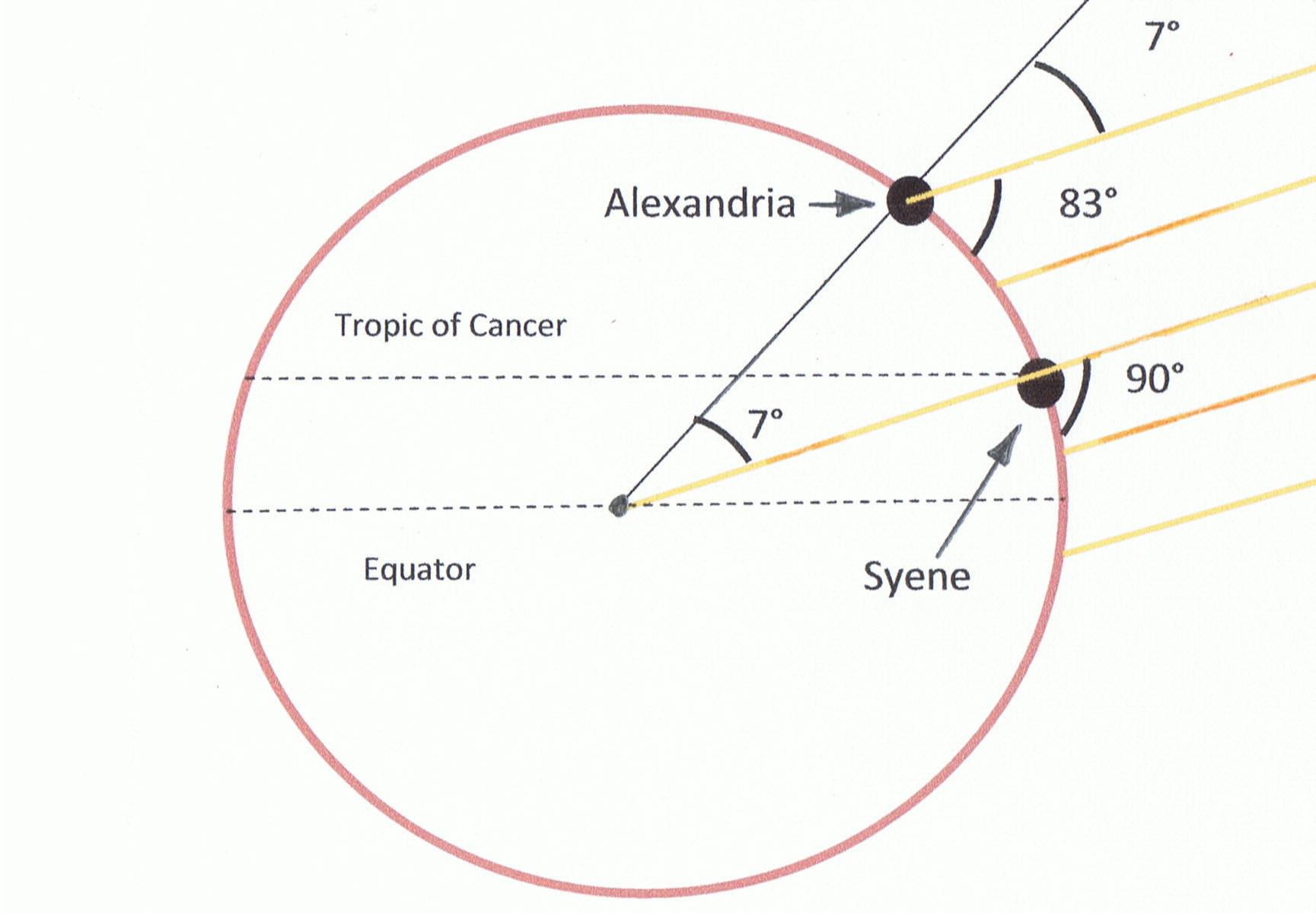
Eratosthenes [er-uh-tos-thuh-neez] of Cyrene (276BCE–194BCE) was a Greek mathematician, geographer and astronomer. He was head of the Library of Alexandria from 240BC until his death: this was the most important library of the ancient world.
According to the Suda (a 10th century Byzantine encyclopedia) his contemporaries nicknamed him Beta, (the second letter of the Greek alphabet), because he was the second best in the world in almost any field. Eratosthenes was a friend of Archimedes, who also lived and worked in Alexandria. Archimedes was the greatest mathematician and inventor of the age, so perhaps the Beta nickname was not unjust.
Continue reading →
Posted in Philosophy, Science |
Leave a Comment »
May 19, 2011
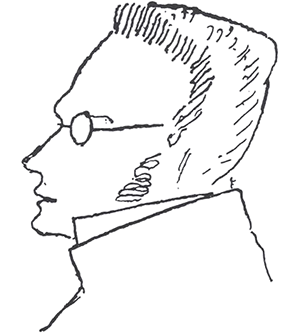
Johann Kaspar Schmidt (1806 – 1856), better known as Max Stirner (the nom de plume he adopted from a schoolyard nickname he had acquired as a child because of his high brow, in German ‘Stirn’), was a German philosopher, who ranks as one of the literary fathers of nihilism, existentialism, post-modernism and anarchism.
Stirner’s main work is ‘The Ego and Its Own’ (‘Der Einzige und sein Eigentum’), published in 1844 in Leipzig. It is a a radical anti-authoritarian and individualist critique of contemporary Prussian society, and modern western society.
Continue reading →
Posted in Philosophy, Politics |
Leave a Comment »
May 18, 2011

Bitcoin is a digital currency created in 2009 by Satoshi Nakamoto. It is also the name of the open source software he designed that uses it, and the peer-to-peer network that it forms. Unlike most currencies, bitcoin does not rely on a central issuer, like a bank or government.Bitcoin uses a distributed database across a peer-to-peer computer network to record transactions, and uses cryptography to provide basic security functions, such as ensuring that bitcoins can only be spent once, and only by the person who owns them.
Bitcoin’s design allows for anonymous ownership and transfers of value. Bitcoins can be saved on a personal computer in the form of a wallet file or kept with a third party wallet service, and in either case Bitcoins can be sent over the Internet to anyone with a Bitcoin address. Bitcoin’s peer-to-peer topology and lack of central administration make it impossible for any government or other authority to change the value of bitcoins or induce inflation by producing more of them.
Continue reading →
Posted in Money, Politics, Technology |
1 Comment »
May 18, 2011

The North American Currency Union is a theoretical economic and monetary union of three North American countries: Canada, the United States and Mexico. The hypothetical currency for the union is most often referred to as the amero. Conspiracy theorists contend that the governments of the United States, Canada, and Mexico are already taking steps to implement such a currency, as part of a ‘North American Union (NAU).’
In 2007, rumors and conspiracy theories began circulating across the Internet regarding alleged United States Treasury-issued amero coins. The inspiration behind these rumors may have been the posting of images of medallions created by coin designer Daniel Carr. Carr, who designed the New York and Rhode Island 2001 statehood quarters, sells medals and tokens of his own design on his commercial website, ‘Designs Computed.’ Among his designs are a series of gold, silver and copper fantasy issues of amero coins ranging in denomination from one to one thousand.
Posted in Money, Politics, World |
Leave a Comment »
May 18, 2011

In the field of law and economics, the American rule is a rule controlling assessment of attorneys’ fees arising out of litigation. The American rule provides that each party is responsible for paying its own attorney’s fees, unless specified otherwise by statute or contract. It contrasts with the English rule, under which the losing party pays the prevailing party’s attorneys’ fees. The rationale for the American rule is that people should not be discouraged from seeking redress for perceived wrongs in court or from trying to extend coverage of the law. The rationale continues that society would suffer if a person was unwilling to pursue a meritorious claim merely because that person would have to pay the defendant’s expenses if they lost.
The American rule is merely a default rule, not the blanket rule in the United States. Numerous statutes at both the federal and state levels allow the winner to recover reasonable attorney’s fees, and there are two major exceptions in federal case law as well. Many states also have exceptions to the American rule in both statutes and case law. For example, in California, the Consumers Legal Remedies Act allows plaintiffs to recover attorney’s fees, and in insurance bad faith cases, a policyholder may be able to recover attorney’s fees as a separate component of damages.
Posted in Money, Politics, World |
Leave a Comment »
May 18, 2011

Blue Velvet is a 1986 American mystery film written and directed by David Lynch. The movie exhibits elements of both film noir and surrealism. The film features Kyle MacLachlan, Isabella Rossellini, Dennis Hopper, and Laura Dern. The title is taken from the 1963 Bobby Vinton song of the same name.
Although initially detested by some mainstream critics, the film is now widely acclaimed, and earned Lynch his second Academy Award nomination for Best Director. As an example of a director casting against the norm, Blue Velvet is also noted for re-launching Hopper’s career and for providing Rossellini with a dramatic outlet beyond the work as a fashion model and a cosmetics spokeswoman for which she had until then been known.
Continue reading →
Posted in Art |
Leave a Comment »
May 18, 2011

The Golden Age of Porn or porno chic refers to a period in the history of pornography, approximately from the late-1960s to the early-to-mid-1980s that is idealized as a time where difficult to treat STDs had not achieved wide public notice. This freedom was ostensibly reflected in the pornography industry, with adult movies and adult magazines approaching the mainstream and becoming increasingly visible.
The golden age was also typified by interactions with the contemporaneous second wave of feminism. These were radical and cultural feminists which, along with the Christian right, attacked pornography, while other feminists were more concerned with ideas of sexual liberation and freedom from government intrusion into the growing industry. Continue reading →
Posted in Art, Money, Sex |
Leave a Comment »