May 11, 2011

The Stanford 3D Scanning Repository is a collection of freely usable 3d models scanned from real objects. The models tend to have very high polygon counts (the largest has almost 30 million). According to the repository, ‘In recent years, the number of range scanners and surface reconstruction algorithms has been growing rapidly. Many researchers, however, do not have access to scanning facilities or dense polygonal models. The purpose of this repository is to make some range data and detailed reconstructions available to the public.
The models in this archive are commonly used in the graphics, visualization, and vision communities. Things people have done with these models include simplification, multi-resolution representation, curved surface fitting, compression, texture mapping, modeling, deformation, animation, physically-based simulation, texture synthesis, and rendering. The Stanford Bunny is particularly widely used.
Posted in Art, Technology |
Leave a Comment »
May 11, 2011


The Rosetta Project is a global collaboration of language specialists and native speakers working to develop a contemporary version of the historic Rosetta Stone to last from 2000 to 12,000 CE; it is run by the Long Now Foundation. Its goal is a meaningful survey and near permanent archive of 1,500 languages. Some of these languages have fewer than one thousand speakers left in the world. Others are considered to be dying out because government centralization and globalization are increasing the prevalence of English and other major languages. The intention is to create a unique platform for comparative linguistic research and education, as well as a functional linguistic tool that might help in the recovery or revitalisation of lost languages in the future.
The Project is creating this broad language archive through an open contribution, open review process similar to the strategy that created the original Oxford English Dictionary. The resulting archive will be publicly available in three different media: a micro-etched nickel alloy disc three inches (7.62 cm) across with 2,000 year life expectancy; a single volume monumental reference book; and a growing online archive.
Posted in Language, Technology |
Leave a Comment »
May 11, 2011
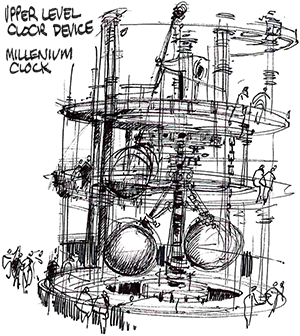

The Long Now Foundation, established in 1996, is a private organization that seeks to become the seed of a very long-term cultural institution. It aims to provide a counterpoint to what it views as today’s ‘faster/cheaper’ mindset and to promote ‘slower/better’ thinking. The Long Now Foundation hopes to ‘creatively foster responsibility’ in the framework of the next 10,000 years, and so uses 5-digit dates to address the Year 10,000 problem (e.g. by writing 02011 rather than 2011).
The Foundation has several ongoing projects, including a 10,000-year clock known as the ‘Clock of the Long Now,’ the Rosetta Project, the Long Bet Project, the open source Timeline Tool (also known as Longviewer), the Long Server and a monthly seminar series. Continue reading →
Posted in Philosophy, Technology |
Leave a Comment »
May 11, 2011

Stephen Hawking (b. 1942) is an English theoretical physicist and cosmologist, whose scientific books and public appearances have made him an academic celebrity. He is known for his contributions to the fields of cosmology and quantum gravity, especially in the context of black holes (he first predicted that black holes emit radiation, which is today known as Hawking radiation).
He has also achieved success with works of popular science in which he discusses his own theories and cosmology in general. Hawking has a motor neurone disease that is related to ALS (Lou Gehrig’s disease), a condition that has progressed over the years and has left him almost completely paralyzed. Continue reading →
Posted in Language, Science |
Leave a Comment »
May 10, 2011

‘A Briefer History of Time‘ is a popular-science book published in 2005 from the English physicist Stephen Hawking and the American physicist Leonard Mlodinow. It is an update and rewrite of Hawking’s 1988 ‘A Brief History of Time.’
In this book Hawking and Mlodinow present quantum mechanics, string theory, the big bang theory, and other topics in a more accessible fashion to the general public. The book is updated with newly discovered topics, and informs of recurring subjects throughout the book in greater detail.
Posted in Education, Language, Science |
Leave a Comment »
May 10, 2011
‘A Brief History of Time: From the Big Bang to Black Holes’ is a 1988 popular science book written by English theoretical physicist Stephen Hawking, which attempts to explain a range of subjects in cosmology (e.g. the Big Bang, black holes, and light cones) to the nonspecialist reader.
Its main goal is to give an overview of the subject but, unusual for a popular science book, it also attempts to explain some complex mathematics. The author notes that an editor warned him that for every equation in the book the readership would be halved, hence it includes only a single equation: E=mc2. Continue reading →
Posted in Education, Language, Science |
Leave a Comment »
May 10, 2011
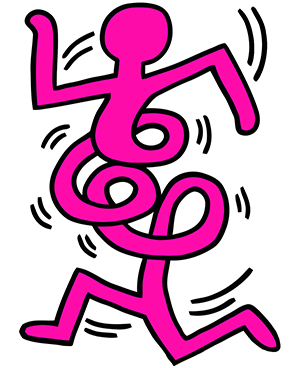
The Montreux Jazz Festival is the best-known music festival in Switzerland and one of the most prestigious in Europe; it is held annually in early July in Montreux on the shores of Lake Geneva. It is the second largest annual music festival in the world after Canada’s Montreal International Jazz Festival. The festival was founded in 1967 by Claude Nobs (who still organizes the event); the first one lasted for three days and featured almost exclusively jazz artists.
The highlights of this era were Keith Jarrett, Jack DeJohnette, Bill Evans, Soft Machine, Weather Report, Nina Simone, Jan Garbarek, and Ella Fitzgerald. Originally a pure jazz festival, it opened up in the 1970s and today presents artists of nearly every imaginable style, though jazz remains an important component. Today’s festival lasts about two weeks and attracts an audience of more than 200,000 people. Continue reading →
Posted in Art, World |
Leave a Comment »
May 10, 2011


The New Orleans Jazz & Heritage Festival, often known as Jazz Fest, is a celebration of the music and culture of New Orleans and Louisiana held yearly since 1970. Use of the term ‘Jazz Fest’ can also include the days surrounding the Festival and the many shows at unaffiliated New Orleans nightclubs scheduled during the Festival event weekends. The festival celebrates the indigenous music and culture of New Orleans and Louisiana, so the music encompasses every style associated with the city and the state: blues, R&B, gospel, Cajun music, zydeco, Afro-Caribbean, folk, Latin, rock, rap, country, bluegrass and everything in between. And of course there is lots of jazz, both contemporary and traditional.
Jazz Fest is currently held during the day, between the hours of 11am and 7pm at the Fair Grounds Race Course, a horse track, on the last weekend in April (from Friday through Sunday) and the first weekend in May (Thursday through Sunday). The Festival also features a wide variety of vendors with local foods and crafts. The official food policy of the Festival is ‘no carnival food.’ Indeed, there are more than seventy food booths, all with unique food items, including but not limited to: crawfish beignets, cochon de lait (suckling pig) sandwiches, alligator sausage po’ boys, boiled crawfish, softshell crabs, crawfish Monica and many other dishes. All food vendors are locally owned small businesses.
Posted in Art, Food |
1 Comment »
May 9, 2011

The clustering illusion refers to the tendency to erroneously perceive small samples from random distributions as having significant ‘streaks’ or ‘clusters,’ caused by a human tendency to underpredict the amount of variability likely to appear in a small sample of random or semi-random data due to chance. Illusionary clusters were found in the locations of impact of V-1 flying bombs on London during World War II and as streaks in stock market price fluctuations over time.
The clustering illusion was central to a widely reported study by Gilovich, Robert Vallone and Amos Tversky. They found that the idea that basketball players shoot successfully in ‘streaks,’ sometimes called by sportcasters as having a ‘hot hand’ and widely believed by Gilovich et al.’s subjects, was false. In the data they collected, if anything the success of a previous throw very slightly predicted a subsequent miss rather than another success. Using this cognitive bias in causal reasoning may result in the Texas sharpshooter fallacy. It may also have a relationship with gambler’s fallacy. More general forms of erroneous pattern recognition are pareidolia and apophenia.
Posted in Games, Language, Science |
Leave a Comment »
May 9, 2011

The Texas sharpshooter fallacy is a logical fallacy in which information that has no relationship is interpreted or manipulated until it appears to have meaning. The name comes from a joke about a Texan who fires some shots at the side of a barn, then paints a target centered on the biggest cluster of hits and claims to be a sharpshooter.
The fallacy does not apply if one had a prior expectation of the particular relationship in question before examining the data. It is related to the clustering illusion, which refers to the tendency in human cognition to interpret patterns in randomness where none actually exist.
Continue reading →
Posted in Humor, Language, Science |
Leave a Comment »
May 9, 2011

The Firesign Theatre is an American comedy troupe consisting of Phil Austin, Peter Bergman, David Ossman and Philip Proctor. Their brand of surrealistic humor is best known through their record albums, which acquired a cult following in the late 1960s and early ’70s. The troupe began as live radio performers in LA; the name stems in part from astrology, because the membership encompasses all three ‘fire signs’: Aries, Leo, and Sagittarius. The name also refers to Fireside Theatre, an early television series that ran on NBC from 1949 to 1955, followed by ‘Jane Wyman Presents the Fireside Theatre’ (1955–58); it may also refer to the Fireside Chats radio broadcasts made by President Franklin Delano Roosevelt, a parody of which can be heard in one of the Theatre’s ‘Nick Danger’ adventures.
The Firesign Theatre employs a stream of consciousness style that includes direct references to movies, radio, TV, political figures, and other cultural sources, intermingled with sound effects and bits of music. The resulting stories — including the theft of a high school, a fair of clowns and holograms and aliens who use hemp smoking to turn people into crows — border on psychedelia, an effect intensified by the frequent appearance of mock ‘advertisements’ satirizing real products. The Firesign approach to comedy was strongly influenced by ‘The Goon Show,’ a British radio comedy program. While their style has the feel of improvisational comedy, most of the material is tightly scripted and memorized. The group’s writing method demands the consent of all four members before a line can be included. Much of their work has been copyrighted under the name ‘4 or 5 Crazee Guys.’
Posted in Art, Humor |
Leave a Comment »
May 9, 2011


An executive toy is a novelty item that is usually a small mechanical gadget placed on the desk of a corporate executive or other office workers. They have no work-related function but are usually interesting to look at and entertaining. The first executive toy may have been a gadget designed by the great mathematician and engineer Philo of Byzantium (c.280 BCE), an octagon-shaped ink pot with openings on each side. One could turn the pot so that any face is on top and dip the pen in the opening, but the ink never ran out through the holes on other sides. The inkwell was suspended in the center on a series of gimbals and remained stationary in spite of any rotation.
Examples of executive toys include: EcoSphere (closed Aquarium), Etch A Sketch, Hoberman sphere (a folding and opening geodesic dome), oil and water liquid motion toys, Drinking bird, Magic 8-Ball, mechanical puzzles, music boxes, Nanoblocks (plastic building blocks similar to Lego but about half the linear dimensions), Newton’s cradle (where a set of metal balls are suspended from above, one is pulled from the rest and kicks them, transferring the kinetic energy to the last one), Perpetual pendulum (which doesn’t stop due to an electric magnet in the base of the toy), Pin Art (a box with thousands of small pins of equal length inserted into a board, that can be pressed from one side with any object so that the other ends of the pins form a three-dimensional image of the object on the other side of the board), Rubik’s Cubes, Tops, Yo-yos, Snow globes, Lava lamps, magnet toys, and stress balls.
Posted in Games, Money |
Leave a Comment »