May 17, 2011

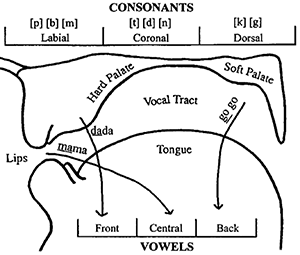
The International Phonetic Alphabet (IPA) is an alphabetic system of phonetic notation based primarily on the Latin alphabet. It was devised as a standardized representation of the sounds of all spoken languages. The IPA is designed to represent only those qualities of speech that are distinctive in spoken language: phonemes (‘a sound uttered,’ the smallest segmental unit of sound – e.g. the ‘k’ sound in ‘kite’), intonation (variation of pitch while speaking which is not used to distinguish words, unlike tone, which is), and the separation of words and syllables.
To represent additional qualities of speech such as tooth gnashing, lisping, and sounds made with a cleft palate, an extended set of symbols called the Extensions to the IPA may be used. The IPA currently contains 107 letters derived from thousands of languages.
Posted in Language, Science |
Leave a Comment »
May 16, 2011
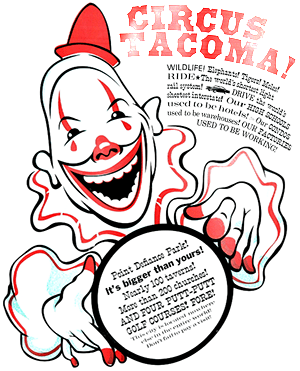
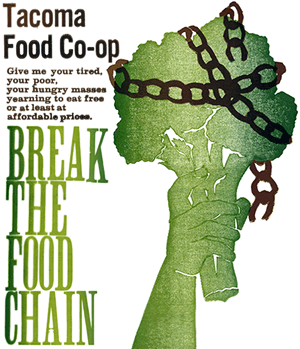
Beautiful Angle is a guerrilla arts poster project in Tacoma, Washington. Approximately once per month, graphic designer Lance Kagey and writer Tom Llewellyn create hand-crafted, letterpress posters and then distribute them around the city’s downtown core via wheat paste and staples.
The first poster, Swirl, was distributed on May 23, 2010. Beautiful Angle has a ‘strange, contradictory relationship with the city’; even though the posters are posted perhaps illegally, the group has won a Chamber of Commerce award of merit.
Posted in Art, Money, Politics |
2 Comments »
May 16, 2011

FAILE is a Brooklyn-based artistic collaboration between Patrick McNeil (b. 1975) and Patrick Miller (b. 1976). Since its inception in 1999, FAILE has been recognized for their pioneering use of wheatpasting and stenciling in the increasingly established arena of street art, and for their explorations of duality through a fragmented style of appropriation and collage.
During this time, FAILE adapted its signature mass culture-driven iconography to a wide array of media, from wooden boxes and window pallets to more traditional canvas, prints, sculptures, stencils, multimedia installation, and prayer wheels. While FAILE’s work is constructed from found visual imagery, and blurs the line between ‘high’ and ‘low’ culture, recent exhibitions demonstrate an emphasis on audience participation, a critique of consumerism, and the incorporation of religious media and architecture into their work.
Posted in Art, Money, Politics |
Leave a Comment »
May 16, 2011

Street poster art is a kind of graffiti, more specifically categorized as ‘street art.’ Posters are usually hand-made or printed graphics on thin paper.
Wallpaper glue or wheatpaste (an adhesive made from wheat flour or starch and water) are commonly used to adhere poster art to a surface. It can be understood as an art piece that is installed on the streets as opposed to in a gallery or museum, but by some it is not comprehended as a form of contemporary art.
Posted in Art, Politics |
Leave a Comment »
May 16, 2011

Flyposting is the act of placing advertising posters or flyers in illegal places. In the U.S., these posters are known as bandit signs, snipe signs, or street spam. In most areas, it is illegal to place such posters on private property without the consent of the property owner, or to post on public property without a sign permit from the local government. Some areas, however, have public bulletin boards where notices may be posted. It is an advertising tactic mostly used by small businesses promoting concerts and political activist groups, but there have been occasions where international companies subcontracted local advertising agencies for flyposting jobs as a form of guerrilla marketing.
Flyposting is commonly seen as a nuisance due to issues with property rights, visual appearance and littering and is a misdemeanor in many countries. A particularly noteworthy incident of this type occurred in Boston, Massachusetts. In the case of the 2007 Boston Mooninite Scare, advertisers had placed electronic signboards without notifying local authorities, prompting a costly reaction by the Boston Police Bomb Squad when the signs were mistaken for bombs.
Posted in Art, Money, Politics |
Leave a Comment »
May 16, 2011

Wheatpaste (also known as Marxist glue) is a liquid adhesive made from vegetable starch and water. It has been used since ancient times for various arts and crafts such as bookbinding and papier mache. It is also made for the purpose of adhering paper posters to walls and other surfaces (often in graffiti). Closely resembling wallpaper paste, it is often made by mixing roughly equal portions of flour and water and heating it until it thickens, or by smearing cooked rice into a paste.
The words paste, pasta, and pastry have a common heritage, deriving from the Late Latin pasta (dough or pastry cake), itself deriving from the ancient Greek pasta, meaning ‘barley porridge.’ In English, paste is used as would be ‘dough’ in the 12th century, or ‘glue’ in the 15th century. Continue reading →
Posted in Art, Language, Money |
Leave a Comment »
May 16, 2011
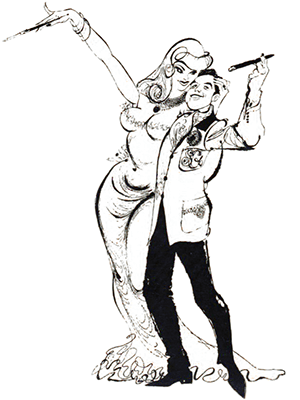
‘What Makes Sammy Run?‘ is a 1941 novel by Budd Schulberg. It is a rags to riches story chronicling the rise and fall of Sammy Glick, a Jewish boy born in New York’s Lower East Side who very early in his life makes up his mind to escape the ghetto and climb the ladder of success.
Reputedly, film mogul Samuel Goldwyn offered Schulberg money to not have the novel published, because Goldwyn felt that the author was perpetuating an anti-Semitic stereotype by making Glick so venal. It was later made into a long-running Broadway musical. Continue reading →
Posted in Art, Money |
Leave a Comment »
May 16, 2011
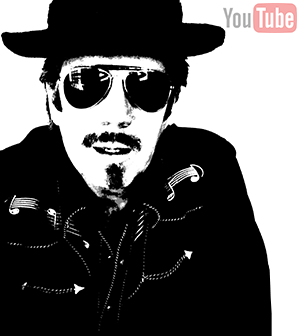
Dan Hicks (b. 1941) is an American singer-songwriter working at the intersection of cowboy folk, jazz, country, swing, bluegrass, pop, and gypsy music. His songs are frequently infused with humor, as evidenced by the title of his tune, ‘How Can I Miss You When You Won’t Go Away?’ Taking up the guitar in 1959, he became part of the San Francisco folk music scene, performing at local coffeehouses. Hicks joined the San Francisco band The Charlatans in 1965 as drummer.
In 1968, Hicks formed Dan Hicks and His Hot Licks, whose fourth album, 1973’s Last Train to Hicksville, gained the group critical and popular acclaim. Thus, it was a great surprise to many when he chose that moment to disband the Hot Licks. Asked why in 1974, he said, ‘I’m basically a loner… I like singing and stuff, but I didn’t necessarily want to be a bandleader. The thing had turned into a collective sort of thing — democracy, vote on this, do that. I conceived the thing. They wouldn’t be there if it wasn’t for me. My role as leader started diminishing, but it was my fault because I let it happen; I cared less as the thing went on.’
Posted in Art, Humor |
Leave a Comment »
May 12, 2011

‘Maggot Brain‘ is a song by the band Funkadelic. It appears as the lead track on their 1971 album of the same name. The original recording of the song, over ten minutes long, features little more than a spoken introduction and a much-praised extended guitar solo by Eddie Hazel. Reportedly, ‘Maggot Brain’ was Hazel’s nickname. Other sources say the title is a reference to band leader George Clinton finding his brother’s ‘decomposed dead body, skull cracked, in a Chicago apartment.
According to legend, George Clinton, under the influence of LSD, told Eddie Hazel during the recording session to imagine he had been told his mother was dead, but then learned that it was not true. The result was the 10-minute guitar solo for which Hazel is most fondly remembered by many music critics and fans. Though several other musicians began the track playing, Clinton soon realized the power of Hazel’s solo and faded them out so that the focus would be on Hazel’s guitar. The entire track was recorded in one take. The solo is mostly played in a pentatonic minor scale in the key of E over another guitar track of a simple arpeggio. Hazel’s solo was played through a fuzzbox (distortion pedal) and a Crybaby Wah wah pedal; some sections of the song utilize a delay effect.
Posted in Art, Drugs |
Leave a Comment »
May 12, 2011

Congo Square is an open space within Louis Armstrong Park, which is located in the Tremé neighborhood of New Orleans, just across Rampart Street north of the French Quarter. The Tremé neighborhood is famous for its history of African American music. In Louisiana’s French and Spanish colonial era of the 18th century, slaves were commonly allowed Sundays off from their work. They were allowed to gather in the ‘Place de Negres,’ or informally ‘Place Congo’ at the back of town (across Rampart Street from the French Quarter), where the slaves would set up a market, sing, dance, and play music.
The tradition continued after the city became part of the United States with the Louisiana Purchase. As African music had been suppressed in the Protestant colonies and states, the weekly gatherings at Congo Square became a famous site for visitors from elsewhere in the U.S. In addition, because of the immigration of refugees (some bringing slaves) from the Haitian Revolution, New Orleans received thousands of additional Africans and Creoles in the early years of 19th century. They reinforced African traditions in the city, in music as in other areas. Many visitors were amazed at the African-style dancing and music. Continue reading →
Posted in Art, World |
1 Comment »
May 11, 2011
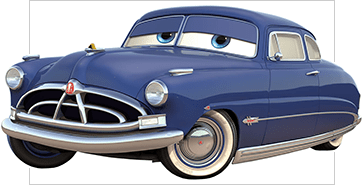

A sleeper (called a Q-car in the UK) is a car that has high performance and an unassuming exterior. Sleeper cars are termed such because their exterior looks little or no different from a standard or economy-class car. In some cases the car appears worse due to seeming neglect on the owner’s part, typically referred to as ‘all go and no show.’ While appearing to be a standard or neglected car, internally they are modified to perform at higher performance levels. The American nomenclature comes from the term sleeper agent, while the British term derives from the Q-ships used by the Royal Navy.
American actor Paul Newman famously drove a 1963 VW Beetle convertible with a 300-horsepower engine, racing suspension and five-speed gearbox. The back seats were removed to make room for the 351-cubic-inch Ford engine. Continue reading →
Posted in Games, Language, Technology |
Leave a Comment »
May 11, 2011
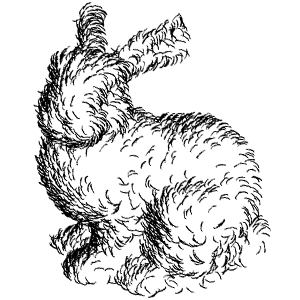
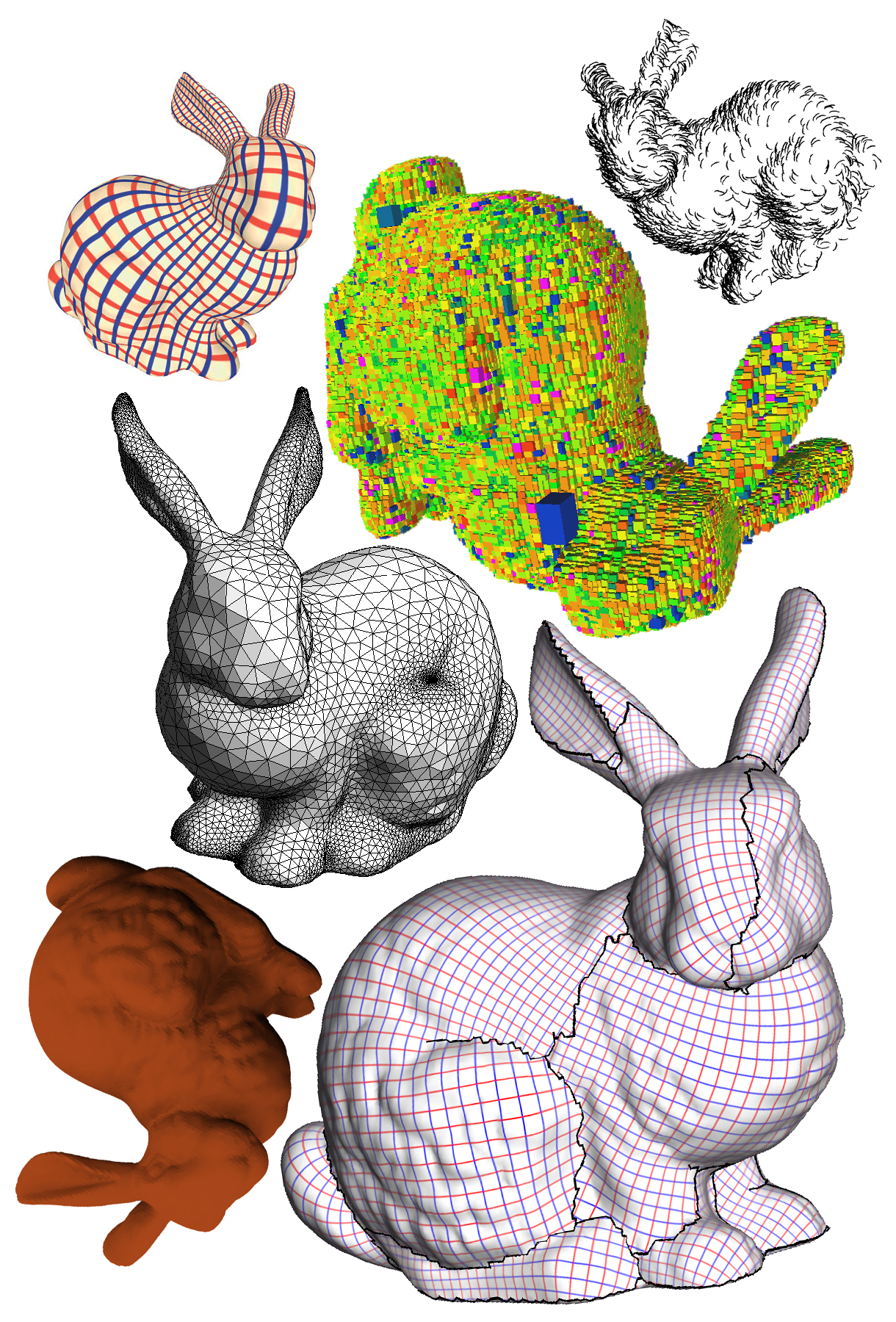
The Stanford Bunny is a computer graphics test model developed in 1994 at Stanford University. The Bunny consists of data describing 69,451 triangles determined by 3D scanning a ceramic figurine of a rabbit.
The data can be used to test various graphics algorithms; including polygonal simplification, compression, and surface smoothing. By today’s standards in terms of geometric complexity and triangle count, it is considered a simple model.
Posted in Art, Technology |
Leave a Comment »