April 26, 2011

Ringolevio [ring-uh-lee-vee-oh] is a children’s game which may be played anywhere but which originates in the streets of Depression era New York City. In some quarters this game is known as Manhunt which is really another game with different rules. Both are among the many variations of tag. Ringolevio requires close team work and near-military strategy.
There are two teams, each has its own ‘jail,’ perhaps a park bench or other defensible turf. Anyone on the pursuing side can catch anyone on the pursued side by grabbing hold of them and chanting ‘Chain chain double chain, no break away’ or (‘Ringolevio, 1-2-3, 1-2-3, 1-2-3’) If the person pursued breaks free at any point during this brief recitation, the person is not caught. If caught, the pursuer takes the prisoner to jail. The game ends when one team catches all the members of the opposing team.
Continue reading →
Posted in Games, Language |
Leave a Comment »
April 26, 2011


A location-based service (LBS) is an information or entertainment service, accessible with mobile devices through the mobile network and utilizing the ability to make use of the geographical position of the mobile device. LBS include services to identify a location of a person or object, such as discovering the nearest ATM or the whereabouts of a friend or employee.
It also include parcel tracking and vehicle tracking services, and can include mobile commerce when taking the form of coupons or advertising directed at customers based on their current location. They include personalized weather services and even location-based games. They are an example of telecommunication convergence.
Posted in Language, Money, Technology |
Leave a Comment »
April 26, 2011
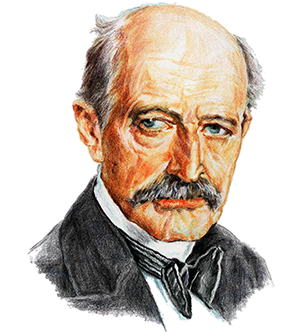
Absolute hot is the hottest temperature that anything can reach. It is theorized at around 1032 kelvins. This temperature is also known as the Planck temperature, in honor of German physicist Max Planck who first proposed it. It is the opposite of ‘Absolute Zero’ which is −273.15°C on the Celsius scale or 0°K on the Kelvin scale. Absolute hot is a concept of temperature that postulates the existence of a highest attainable temperature of matter.
The Planck temperature is assumed to be the highest temperature in conventional physics because conventional physics breaks down at that temperature. Above 1032K, particle energies become so large that the gravitational forces between them become as strong as any other force (like electromagnetism). Some forms of string theory, however, allow a temperature of 1030K, known as Hagedorn temperature.
Posted in Language, Science |
Leave a Comment »
April 26, 2011

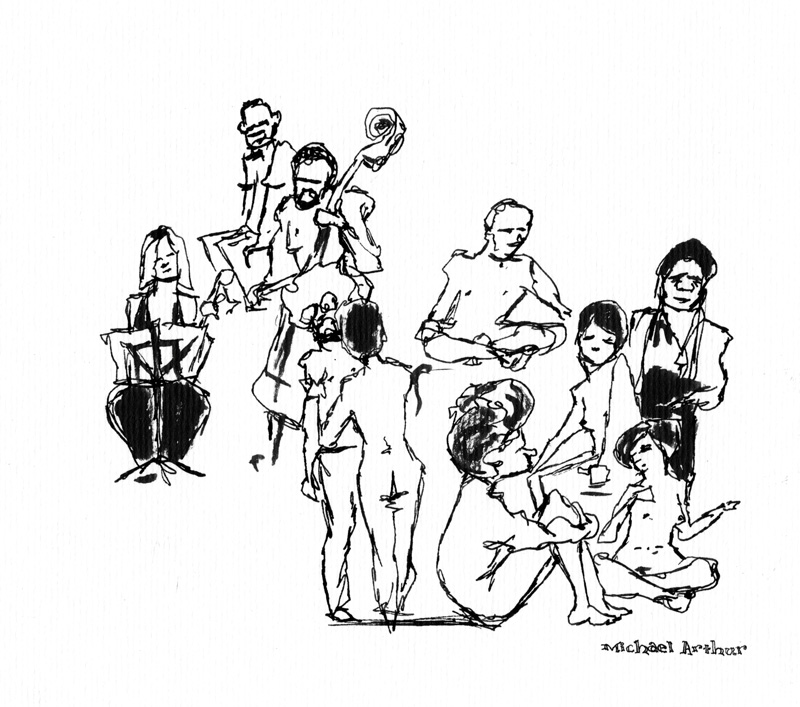
Music Under New York (MUNY) is part of the New York Metropolitan Transportation Authority’s ‘Arts for Transit Office’ that increases the attractiveness of transit facilities for customers.
At present more than 350 individual performers and music ensembles participate in over 7,000 annual performances in approximately 25 locations throughout the transit system.
Continue reading →
Posted in Art, Money |
1 Comment »
April 26, 2011
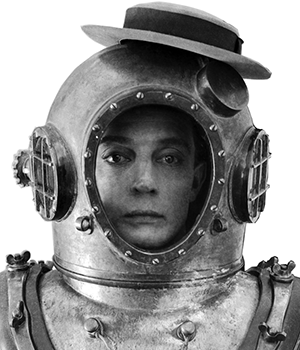
Deadpan is a form of comic delivery in which humor is presented without a change in emotion or body language, usually speaking in a casual, monotone, solemn, blunt, disgusted or matter-of-fact voice and expressing an unflappably calm, archly insincere or artificially grave demeanor.
This delivery is also called dry wit when the intent, but not the presentation, is humorous, oblique, sarcastic, or apparently unintentional. The term ‘deadpan’ first emerged as an adjective or adverb in the 1920s, as a compound word (‘pan’ was a slang term for ‘face’).
Continue reading →
Posted in Art, Humor, Language |
Leave a Comment »
April 25, 2011

The magic lantern or Laterna Magica is an early type of image projector developed in the 17th century. It has a concave mirror in front of a light source that gathers light and projects it through a slide with an image printed on it.
The lens throws an enlarged picture of the original image from the slide onto a screen. The main light sources used during the time it was invented were candles or oil lamps. These light sources were quite inefficient and produced weak projections.
Continue reading →
Posted in Art, Technology |
Leave a Comment »
April 25, 2011
Tableau [ta-bloh] vivant [vee-vahn] (French for ‘living picture’) is a group of suitably costumed actors or artist’s models, carefully posed and often theatrically lit. Throughout the duration of the display, the people shown do not speak or move. The approach thus marries the art forms of the stage with those of painting/photography, and as such it has been of interest to modern photographers.
In the 19th century, virtually nude tableaux vivants or ‘poses plastiques’ provided a form of erotic entertainment.
Continue reading →
Posted in Art, Sex |
Leave a Comment »
April 25, 2011

Spencer Tunick (b. 1967) is an American artist. He is best known for his installations that feature large numbers of nude people posed in artistic formations. In his own words, ‘A body is a living entity. It represents life, freedom, sensuality, and it is a mechanism to carry out our thoughts. A body is always beautiful to me.’ These installations are often situated in urban locations throughout the world, although he has also done some woodland and beach installations and still does individuals and small groups occasionally. His models are unpaid volunteers who receive a limited edition photo as compensation.
In May 2007, approximately 18,000 people posed for Tunick in Mexico City’s principal square, the Zócalo, setting a new record, and more than doubling his previous high, 7,000 in Barcelona in 2003. Male and female volunteers of different ages stood and saluted, laid down on the ground, crouched in the fetal position, and otherwise posed for Tunick’s lens in the city’s massive central plaza, the Plaza de la Constitución.
Posted in Art, Sex |
7 Comments »
April 25, 2011

Island gigantism is a biological phenomenon in which the size of animals isolated on an island increases dramatically in comparison to their mainland relatives. Large mammalian carnivores are often absent on islands, due to their large range requirements and/or difficulties in over-water dispersal.
In their absence, the ecological niches for large predators may be occupied by birds or reptiles, which can then grow to larger-than-normal size. Since small size usually makes it easier for herbivores to escape or hide from predators, the decreased predation pressure on islands can allow them to grow larger.
Posted in Science |
Leave a Comment »
April 25, 2011
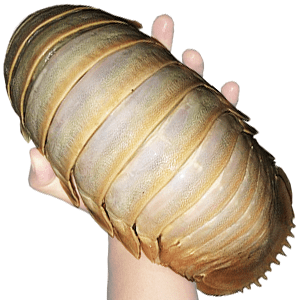
In zoology, deep-sea gigantism, also known as abyssal gigantism, is the tendency for species of crustaceans, invertebrates and other deep-sea-dwelling animals to display a larger size than their shallow-water counterparts. Examples of this phenomenon include the giant isopod, the Japanese spider crab, the king of herrings (an oarfish of up to 12 m), the Seven-arm Octopus, and a number of squid species, including the Colossal Squid (up to 14 m in length).
It is not known whether this effect comes about as a result of adaptation for scarcer food resources (therefore delaying sexual maturity and resulting in greater size), greater pressure, or for other reasons. The Blue Planet series posited that larger specimens do well in the abyssal environment due to the advantages in body temperature regulation and a diminished need for constant activity, both inherent in organisms with a lower surface area to mass ratio.
Posted in Science |
Leave a Comment »
April 25, 2011
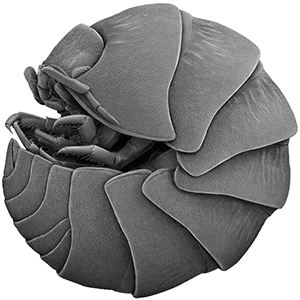
Often mistaken for insects, armadillidiidae is a family of woodlice, a terrestrial crustacean group in the order Isopoda. Unlike members of other woodlouse families, members of this family can roll into a ball, an ability they share with the outwardly similar but unrelated pill millipedes and other animals.
It is this ability which gives woodlice in this family their common name of pill bugs or roly polies. Because of their unusual yet non-threatening appearance, certain types of armadillidiids are kept as pets in areas such as the American South, typically among children. Owners of pet tarantulas sometimes keep pill bugs as cage cleaners in the same habitat. The pill bugs eat feces, mold, and leftovers.
Posted in Language, Science |
Leave a Comment »
April 25, 2011

A podstakannik (Russian: ‘thing under the glass’) is a tea glass holder. The primary purpose of podstakanniks is to be able to hold a very hot glass of tea, which is usually consumed right after it is brewed. It is a traditional way of serving and drinking tea in Russia, Ukraine, Belarus, and other post-Soviet states.
Podstakanniks appeared in Russian tea culture in the late 18th century, when drinking tea became common in Russia. Very soon podstakanniks became not just practical utensils, but also works of art, just like samovars (urns) that were used for boiling water. Expensive podstakanniks for the rich and the elite were made of silver, however they were not very practical, since they would get quite hot very quickly due to the high thermal conductivity of silver.
Posted in Food, Money, World |
Leave a Comment »