March 31, 2011

An aura [awr-uh] is a perceptual disturbance experienced by some migraine sufferers and epileptics before a migraine or seizure. It often manifests as the perception of a strange light, an unpleasant smell, or confusing thoughts or experiences. Some people experience aura without a subsequent migraine or seizure, which is called a silent migraine.
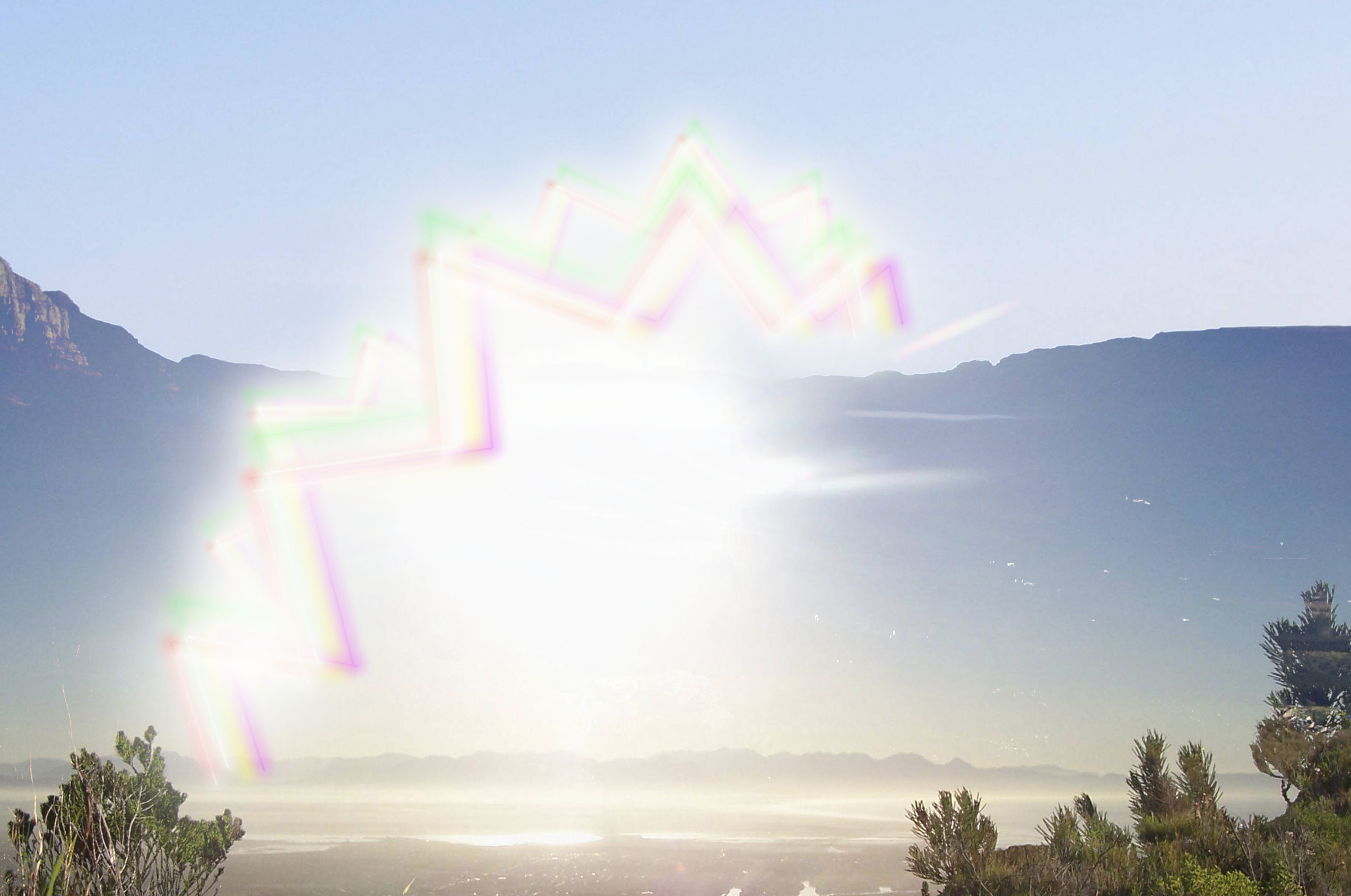
Auras allow epileptics time to prevent injury to themselves or others. The time between the appearance of the aura and the migraine lasts from a few seconds up to an hour. Most people who have auras have the same type every time. Visual changes can include bright lights and blobs, zigzag lines, distortions in the size or shape of objects, a vibrating visual field, pulsating patches, tunnel vision, blind or dark spots in the field of vision, kaleidoscope effects on the visual field, or temporary blindness. Continue reading →
Posted in Health, Science |
Leave a Comment »
March 31, 2011

A Migraine (Greek: ‘half skull’) is a neurological syndrome which often presents itself as a severe headache. There are different types of migraines, most give the sufferer a headache, and might make them dizzy or want to stay away from bright lights (photophobia) or loud noises (hyperacusis). They can also include visual disturbances (such as seeing funny patterns or lights/colors) and other disturbances of senses (funny smells or tastes). Migraines can last from 4 to 72 hours, but in most cases only last about 4 hours. The cause of migraines is unknown, but it is often believed to be linked to family medical history. It is about three times more common in women than in men.
The typical migraine headache is unilateral pain (affecting one half of the head) and pulsating in nature. Approximately one-third of people who suffer from migraine headaches perceive an aura—unusual visual, olfactory, or other sensory experiences that are a sign that the migraine will soon occur. Initial treatment is with analgesics for the headache, an antiemetic for the nausea, and the avoidance of triggering conditions. The cause of migraine headache is unknown; the most common theory is a disorder of the serotonergic control system.
Posted in Health, Science |
Leave a Comment »
March 31, 2011

A headache or cephalgia is pain anywhere in the region of the head or neck. The brain tissue itself is not sensitive to pain because it lacks pain receptors. Rather, the pain is caused by disturbance of the pain-sensitive structures around the brain. Several areas of the head and neck have these pain-sensitive structures, which are divided in two categories: within the cranium (blood vessels, meninges, and the cranial nerves) and outside the cranium (the periosteum of the skull, muscles, nerves, arteries and veins, subcutaneous tissues, eyes, ears, sinuses and mucous membranes). There are over 200 types of headache, and the causes range from harmless to life-threatening.
Posted in Health, Science |
Leave a Comment »
March 30, 2011

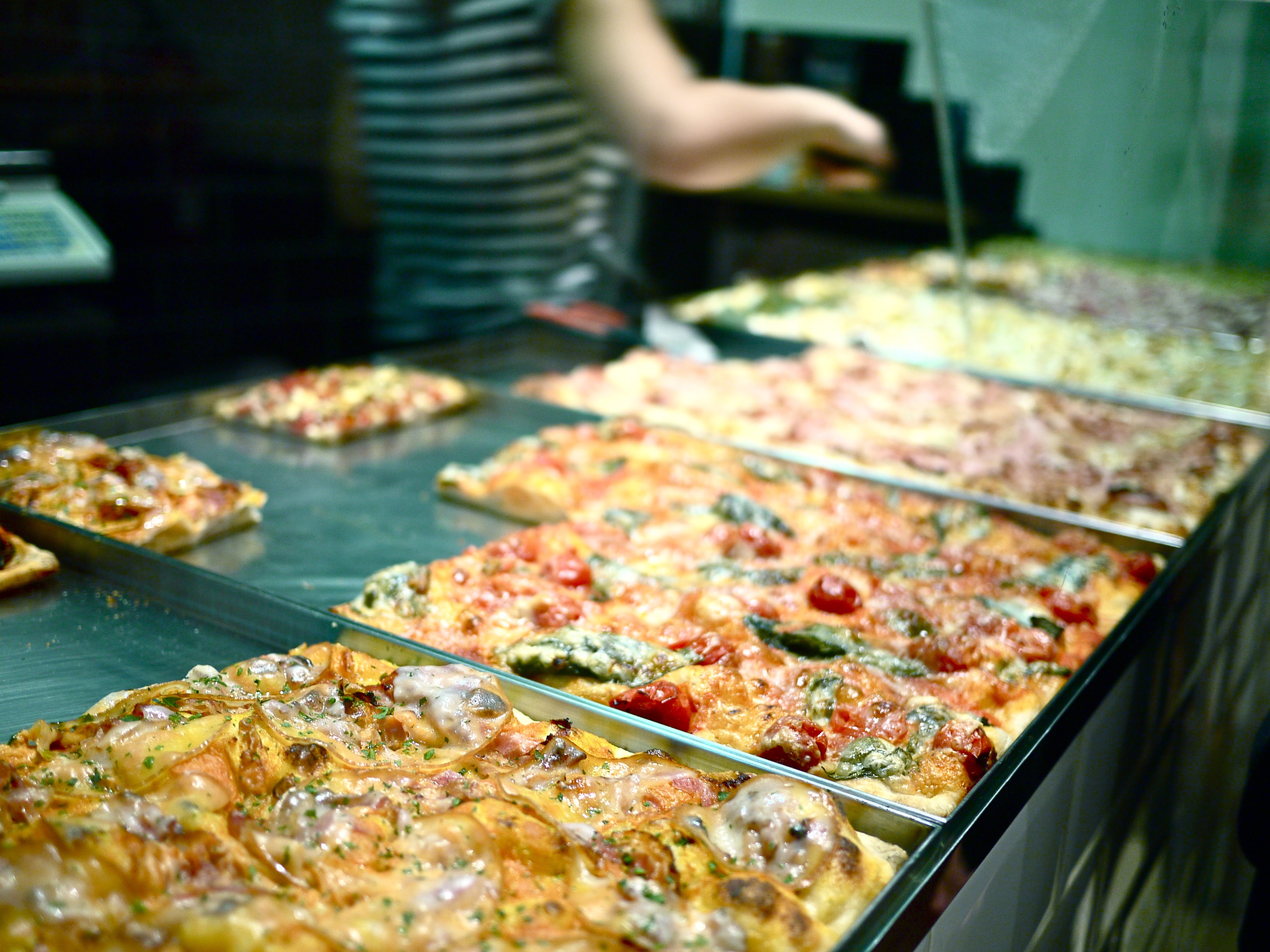
In Italy, pizza al taglio (‘by the cut’) is a variety of pizza baked in large rectangular trays, and generally sold in rectangular slices by weight, with prices marked per kilogram. The simplest varieties include Pizza Margherita (tomato sauce and cheese), Pizza bianca (olive oil & salt), and Pizza rossa (tomato sauce only). Other typical toppings include artichokes, asparagus, eggplant, ground meat and onions, potatoes, prosciutto, salami, sausage, ground truffles, zucchini, olive oil sundried tomatoes, rocket, gorgonzola, anchovies, and black olives.
Posted in Food, Money, World |
Leave a Comment »
March 30, 2011

Velotype is the old trademark for a type of keyboard for typing text known as a syllabic chord keyboard, an invention of the Dutchmen Nico Berkelmans and Marius den Outer. The current tradename is Veyboard. Contrary to traditional QWERTY type keyboards, on which a typist usually presses one key at a time to create one character at a time, a Veyboard requires the user to press several keys simultaneously, producing syllables rather than letters.
A practiced ‘veyboarder’ can produce more text than on a traditional keyboard, as much as 200 words per minute, double the rate of a fast traditional typist. Because of this, Veyboards are often used for live applications, such as subtitling for television and for the hearing impaired. The keyboard is an orthographic chord keyboard, very different from chorded phonetic keyboards used for verbatim transcription, like the Stenotype.
Posted in Money, Technology, World |
Leave a Comment »
March 30, 2011

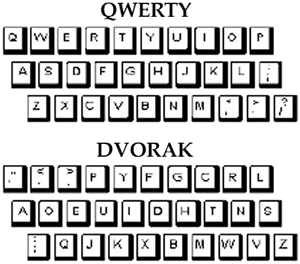
QWERTY is the most common modern-day keyboard layout. The name comes from the first six letters (keys) appearing in the top letter row of the keyboard, read left to right: Q-W-E-R-T-Y. The QWERTY design is based on a layout created by Christopher Latham Sholes in 1873 in Milwaukee, Wisconsin for the Sholes and Glidden typewriter and sold to Remington in the same year. The first model constructed by Sholes used a piano-like keyboard with two rows of characters arranged alphabetically.
The machine jammed at high typing speeds, so Sholes moved the keys he believed were most away from each other, to slow typists down. Several alternatives to QWERTY have been developed over the years, claimed by their designers and users to be more efficient, intuitive and ergonomic. Nevertheless, none has seen widespread adoption, due partly to the sheer dominance of available keyboards and training. The most widely used such alternative is the Dvorak Simplified Keyboard.
Posted in Language, Money, Technology |
Leave a Comment »
March 30, 2011
Liquid light shows or psychedelic light shows surfaced in the mid 1960s and early 1970s in America and Europe. They were an integral part of the Progressive music scene well into the seventies. Shows could be as simple as a single operator and two or three modified slide or overhead projectors and a couple of color wheels or as complex as shows with ten or more operators, 70 plus projectors (including liquid slide, liquid overhead, movie and still image models plus a vast array of highly advanced (for the time) special effects equipment).
Continue reading →
Posted in Art, Drugs, Technology |
Leave a Comment »
March 30, 2011

Mark Mothersbaugh (b. 1950) is an American musician; he is the co-founder of the new wave band Devo and has been its lead singer since 1972. Mothersbaugh attended Kent State as an art student, where he met Devo co-founders Jerry Casale and Bob Lewis. In early 1970, Lewis and Casale formed the idea of the ‘devolution’ of the human race; Mothersbaugh, intrigued by the concept, joined them, building upon it with elements of early poststructuralist ideas and oddball arcana, most notably unearthing the infamous ‘Jocko-Homo Heavenbound’ pamphlet (the basis for the song).
Since Devo, Mothersbaugh developed a successful career writing musical scores for film and television. In film, he has worked frequently with filmmaker Wes Anderson, and scored many of his feature films (‘Bottle Rocket,’ ‘Rushmore,’ ‘The Royal Tenenbaums,’ and ‘The Life Aquatic with Steve Zissou’). His music has been a staple of the children’s television shows ‘Rugrats,’ ‘Beakman’s World,’ and ‘Clifford the Big Red Dog.’ He also wrote some music for ‘Pee-Wee’s Playhouse’ in 1990. His commercial work is often performed with Mutato Muzika, the music production company he formed with several other former members of Devo including his brother, Bob Mothersbaugh.
Posted in Art, Humor, Money |
1 Comment »
March 29, 2011

AKIRA is a manga series by Katsuhiro Otomo. Set in a post-apocalyptic Neo-Tokyo, the work uses conventions of the cyberpunk genre to detail a saga of turmoil. Initially serialized in the pages of Young Magazine from 1982 until 1990, the work was collected in six volumes by Japanese publisher Kodansha. Otomo’s art on the series is considered outstanding, and the work is a breakthrough for both Otomo and the manga form.
An identically titled anime film adaptation was released in 1988, shortening the plot, but with its structure and scenes heavily informed by the manga and its serial origins. The manga takes place in a vastly larger time frame than the film and involves a far wider array of characters and subplots. Through the breadth of the work, Otomo explicates themes of social isolation, corruption and power.
Continue reading →
Posted in Art, Technology, World |
Leave a Comment »
March 29, 2011
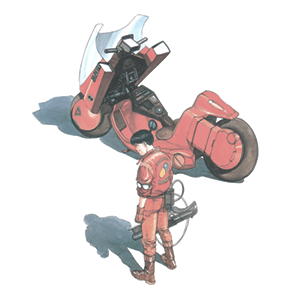
Akira is a 1988 Japanese animated science fiction film set in a futuristic and post-war city, Neo-Tokyo, in 2019. It was written and directed by Katsuhiro Otomo, who based it on his manga of the same name. The film explores a number of psychological and philosophical themes, such as the nature of corruption, the will to power, and the growth from childhood to maturity both in individuals and the human race itself. Elements of Buddhist and Christian symbolism are also present in the film. Other notable themes include youth culture, cyberpunk, delinquency, psychic awareness, social unrest and revolution, the world’s reaction toward a nuclear holocaust and Japan’s post-war economic revival.
The film’s plot focuses on Shotaro Kaneda, a biker gang member, as he tries to stop Tetsuo Shima from releasing Akira, the eponymous, principal subject of the story, a young boy who developed transcendent psionic, god-like abilities when serving as a test subject for secret government ESP experiments in the 1980s. He subsequently lost control of this power and the ensuing blast completely annihilated Tokyo in a horrifying explosion in 1988. After the apocalyptic event, Akira was recovered and sealed within a cryonic chamber underneath the Neo-Tokyo Olympic Stadium.
Posted in Art, Technology, World |
Leave a Comment »
March 29, 2011

Schadenfreude [shahd-n-froi-duh] is a German loanword meaning ‘pleasure derived from the misfortunes of others.’ The corresponding German adjective is ‘schadenfroh.’ The word derives from ‘Schaden’ (‘adversity,’ ‘harm’) and ‘Freude’ (‘joy’). An English expression with a similar meaning is ‘Roman holiday,’ a metaphor taken from the poem ‘Childe Harold’s Pilgrimage’ by Lord Byron, where a gladiator in Ancient Rome expects to be ‘butcher’d to make a Roman holiday’ while the audience would take pleasure from watching his suffering. The term suggests debauchery and disorder in addition to sadistic enjoyment.
Another phrase with a meaning is ‘morose delectation’ (‘delectatio morosa’ in Latin), meaning ‘the habit of dwelling with enjoyment on evil thoughts.’ ‘Gloating’ is a related English word where ‘gloat’ is defined as ‘to observe or think about something with triumphant and often malicious satisfaction, gratification, or delight’ (‘gloat over an enemy’s misfortune’). The Buddhist concept of ‘mudita,’ ‘sympathetic joy’ or ‘happiness in another’s good fortune,’ is cited as an example of the opposite of schadenfreude. Alternatively, envy, which is unhappiness in another’s good fortune, could be considered the counterpart of schadenfreude. Completing the quartet is unhappiness at another’s misfortune, which may be termed empathy, pity, or compassion.
Posted in Language, Philosophy, World |
1 Comment »
March 29, 2011

Affluenza [af-loo-en-zuh], a portmanteau of the words affluence and influenza, is a term used by critics of capitalism and consumerism, defined as: a painful, contagious, socially transmitted condition of overload, debt, anxiety and waste resulting from the dogged pursuit of more. Proponents of the term consider that the prizing of endless increases in material wealth may lead to feelings of worthlessness and dissatisfaction rather than experiences of a ‘better life,’ and that these symptoms may be usefully captured with the metaphor of a disease.
They claim some or even many of those who become wealthy will find the economic success leaving them unfulfilled and hungry only for more wealth, finding that they are unable to get pleasure from the things they buy and that increasingly material things may come to dominate their time and thoughts to the detriment of personal relationships and to feelings of happiness. The condition is considered particularly acute amongst those with inherited wealth, who are often said to experience guilt, lack of purpose and dissolute behavior, as well as obsession with holding on to the wealth.
Posted in Health, Money, Philosophy |
Leave a Comment »