March 15, 2011

Phong Nha – Ke Bang is a national park in north-central Vietnam, about 500 km south of the nation’s capital, Hanoi. The park was created to protect one of the world’s two largest karst regions (landscapes shaped by the dissolution of a layer soluble bedrock) with 300 caves and grottoes and also protects the ecosystem of limestone forest of the Annamite Range region in north central coast of Vietnam.
Phong Nha-Ke Bang area is noted for its cave and grotto systems as it is composed of 300 caves and grottos with a total length of about 126 km, of which only 20 have been surveyed by Vietnamese and British scientists; 17 of these are in located in the Phong Nha area and three in the Ke Bang area. Before discovery of the nearby, Son Doong Cave in 2009, Phong Nha was the largest cave in the world.
Posted in Science, World |
Leave a Comment »
March 15, 2011

David Goggins is a Navy SEAL, who served in Afghanistan, and an ultramarathon runner. After several of his friends died in the war, Goggins began long-distance running to raise money. In 2005, Goggins entered the 24 hour race in San Diego and was able to run 100 miles in under 19 hours, despite never having run a marathon before. Since then, Goggins competed in many different long distance running events such as the Las Vegas Marathon and the Badwater 135 miler, where he placed highly.
Posted in Games, Health, War |
Leave a Comment »
March 15, 2011
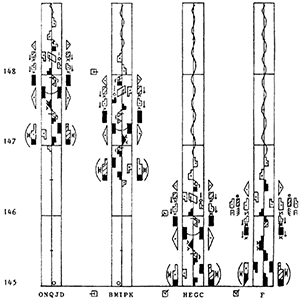

Laban [ley-buhn] Movement Analysis is a way and language for interpreting, describing, visualizing and notating all ways of human movement. Created by Rudolf Laban, LMA draws on his theories of effort and shape to describe, interpret and document human movement. Used as a tool by dancers, athletes, physical and occupational therapists, it is one of the most widely used systems of human movement analysis.
Rudolf Laban (1879–1958) was a dance artist and theorist whose work laid the foundations for dance notation. He is considered to be one of the most important figures in the history of dance and fencing.
Posted in Art, Education, Games |
Leave a Comment »
March 15, 2011

Love Jihad (also known as Romeo Jihad) is an alleged activity under which some young Muslim boys in Southern India reportedly targeted college girls belonging to non-Muslim communities for conversion to Islam by feigning love. A Love Jihad was alleged to be conducted in Kerala and Mangalore in the coastal Karnataka region. According to Kerala Catholic Bishops Council, up to 4,500 girls in Kerala have been targeted, whereas Hindu Janajagruthi Samiti claimed that 30,000 girls have been converted in Karnataka alone.
The practice is said to be popular on college campuses, and it was on one such that in early September 2009 two girls — one Hindu and one Christian — indicated that they had been forced to convert by two Muslim youths. The young men, both of whom were members of the Muslim Popular Front of India’s student organisation Campus Front were subsequently arrested and held without bail.
Posted in Love, Philosophy, War |
Leave a Comment »
March 15, 2011

Cassini–Huygens is a joint NASA/ European Space Agency (ESA) spacecraft mission currently studying the planet Saturn and its many natural satellites. The spacecraft consists of two main elements: the NASA-designed and -constructed Cassini orbiter, named for the Italian-French astronomer Giovanni Domenico Cassini, and the ESA-developed Huygens probe, named for the Dutch astronomer, mathematician and physicist Christiaan Huygens. Cassini is the fourth space probe to visit Saturn and the first to enter orbit.
The complete spacecraft was launched in 1997 and entered into orbit around Saturn in 2004. Shortly after arrival, the Huygens probe separated from the orbiter and headed for Saturn’s moon Titan. In 2005, it descended into Titan’s atmosphere, and downward to the surface, radioing scientific information back to the Earth by telemetry. This was the first landing in the outer solar system.
Posted in Science, Technology |
Leave a Comment »
March 14, 2011

A placebo is a sham or simulated medical intervention. Sometimes patients given a placebo treatment will have a perceived or actual improvement in a medical condition, a phenomenon commonly called the placebo effect. In medical research, placebos are given as control treatments and depend on the use of measured deception. Common placebos are inert tablets, sham surgery, and other procedures based on false information. Since the publication of Henry K. Beecher’s ‘The Powerful Placebo’ in 1955 the phenomenon has been considered to have clinically important effects.
The word ‘placebo,’ Latin for ‘I will please,’ dates back to a Latin translation of the Bible. In 1785 it was defined as a ‘commonplace method or medicine’ and in 1811 it was defined as ‘any medicine adapted more to please than to benefit the patient,’ sometimes with a derogatory implication but not with the implication of no effect. Placebos were widespread in medicine until the 20th century, and they were sometimes endorsed as necessary deceptions.
Continue reading →
Posted in Drugs, Health, Science |
Leave a Comment »
March 14, 2011
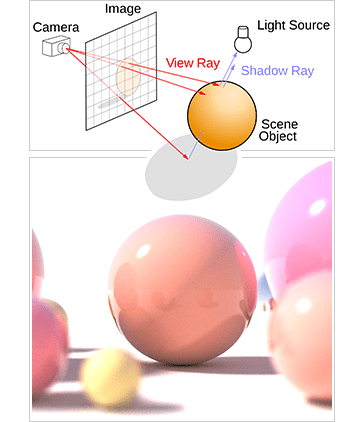
In computer graphics, ray tracing is a technique for generating an image by tracing the path of light through pixels in an image plane and simulating the effects of its encounters with virtual objects. The technique is capable of producing a very high degree of visual realism, usually higher than that of typical scanline rendering methods, but at a greater computational cost.
This makes ray tracing best suited for applications where the image can be rendered slowly ahead of time, such as in still images and film and television special effects, and more poorly suited for real-time applications like video games where speed is critical.Ray tracing is capable of simulating a wide variety of optical effects, such as reflection and refraction, scattering, and chromatic aberration.
Posted in Art, Technology |
Leave a Comment »
March 14, 2011
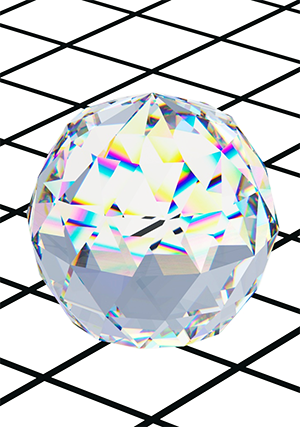
Rendering is the process of generating an image from a model by means of computer programs. Renders contain geometry, viewpoint, texture, lighting, and shading information as a description of a virtual scene. The term ‘rendering’ may be by analogy with an ‘artist’s rendering’ of a scene. Rendering is one of the major sub-topics of 3D computer graphics, and in practice always connected to the others. In the graphics pipeline, it is the last major step, giving the final appearance to the models and animation.
Rendering may be done slowly, as in pre-rendering, or in real time. Pre-rendering is a computationally intensive process that is typically used for movie creation, while real-time rendering is often done for 3D video games which rely on the use of graphics cards with 3D hardware accelerators.
Posted in Art, Language, Technology |
Leave a Comment »
March 14, 2011

The Wave (North American) or the Mexican wave (British) is an example of metachronal rhythm achieved in a packed stadium when successive groups of spectators briefly stand and raise their arms. A metachronal rhythm refers to wavy movements produced by the sequential action (as opposed to synchronized) of structures such as cilia, segments of worms or legs.
In The Wave, each spectator is required to rise at the same time as those straight in front and behind, and slightly after the person immediately to either the right (for a clockwise wave) or the left (for a counterclockwise wave). Immediately upon stretching to full height, the spectator returns to the usual seated position.
Continue reading →
Posted in Games |
Leave a Comment »
March 14, 2011

An excitable medium is a mathematic concept in dynamics (the study of the behavior of complex systems). An excitable medium has the capacity to propagate a wave of some description, and cannot support the passing of another wave until a certain amount of time has passed (known as the refractory time).
A forest is an example of an excitable medium: if a wildfire burns through the forest, no fire can return to a burnt spot until the vegetation has gone through its refractory period and regrown. In Chemistry, oscillating reactions are excitable media, for example the Belousov-Zhabotinsky reaction and the Briggs-Rauscher reaction. Pathological activities in the heart and brain can be modelled as excitable media. A group of spectators at a sporting event are an excitable medium, as can be observed in a Mexican wave (so-called from its initial appearance in the 1986 World Cup in Mexico).
Posted in Science |
Leave a Comment »
March 14, 2011

The Blue Brain Project is an attempt to create a synthetic brain by reverse-engineering the mammalian brain down to the molecular level. The aim of the project, founded in 2005 by the Brain and Mind Institute of the École Polytechnique in Lausanne, Switzerland, is to study the brain’s architectural and functional principles, and is headed by the Institute’s director, Henry Markram. Using an IBM Blue Gene supercomputer running Michael Hines’s NEURON software, the simulation does not consist simply of an artificial neural network, but involves a biologically realistic model of neurons.
It is hoped that it will eventually shed light on the nature of consciousness. A longer term goal is to build a detailed, functional simulation of the physiological processes in the human brain: ‘It is not impossible to build a human brain and we can do it in 10 years,” Markram said at the 2009 TED conference in Oxford. In a BBC World Service interview he said: ‘If we build it correctly it should speak and have an intelligence and behave very much as a human does.’
Posted in Philosophy, Science, Technology |
Leave a Comment »
March 14, 2011

20Q is a computerized game of twenty questions that began as an experiment in artificial intelligence. It was invented by Robin Burgener. The game is based on the spoken parlor game known as twenty questions. 20Q asks the player to think of something and will then try to guess what they are thinking of with twenty yes-or-no questions.
If it fails to guess in 20 questions, it will ask an additional 5 questions. If it fails to guess even with 25 questions, the player is declared the winner.
Continue reading →
Posted in Games, Technology |
Leave a Comment »





