March 7, 2011
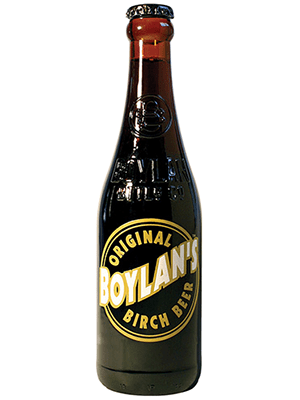
Birch beer is a carbonated soft drink made from herbal extracts, usually from birch bark. It has a taste similar to root beer. Various types of birch beer are available, distinguished by color. The color depends on the species of birch tree from which the sap is extracted (though enhancements via artificial coloring are not uncommon). Popular colors include brown, red, purple and clear (often called white birch beer), though others are possible.
After the sap is collected, it is distilled to make birch oil. The oil is added to the carbonated drink to give it the distinctive flavor. Black birch is the most common source of extract. In the dairy country of southeastern and central Pennsylvania, an ice cream soda made with vanilla ice cream and birch beer is called a Hot chocolate, while chocolate ice cream and root beer makes a Black Cow. Alcoholic birch beer, in which the birch sap is fermented rather than reduced to an oil, has been known in the region from at least the mid-nineteenth century.
Posted in Food |
Leave a Comment »
March 7, 2011

Brain lateralization [lat-er-uh-luh-zey-shuhn] is the distribution of function into right and left hemispheres. In most brains the left hemisphere is the center of language, logic, and rationality and controls the right side of the body, and the right hemisphere is the focus of creativity, intuition, holistic thought, and controls the left side of the body. In common speech lateralization is referred to as handedness, the preference for using either the left or the right side of the body for certain things.
Lateralization occurs in animals when one side of the brain is stronger (more dominant) than the other. Until fairly recently it was thought humans preferred the left or right sides of their body was because they could speak. However, it was later discovered that many nonverbal species display lateralization. For example, elephants often have preferences for whether they swing their trunks to the left or the right. Honeybees have right antennas that are more sensitive to smells. Parrots can be left- or right-footed, and some are ambidextrous. Chickens and minnows like to look for food with one eye and look out for predators with the other.
Posted in Health, Language, Science |
Leave a Comment »
March 6, 2011

Louis’ Lunch in New Haven, Connecticut, advertises itself as the first restaurant to serve hamburgers and as being the oldest hamburger restaurant still operating. Opened as a small lunch wagon in 1895, it was also one of the first places in the US to serve steak sandwiches. Louis Lassen, a butter dealer, operated a lunch wagon where he served steak and ground steak hamburger sandwiches, made from scrap trimmings, to local factory workers. According to family legend, one day in 1900 a local businessman dashed into the small New Haven lunch wagon and pleaded for a lunch to go. Lassen hurriedly sandwiched a broiled hamburger between two slices of bread and sent the customer on his way, so the story goes, with America’s first hamburger being served.
The fourth generation of Lassens own and operate Louis’ Lunch today. The restaurant flame broils the hamburgers, the original way, in antique 1898 vertical cast iron gas stove with hinged steel wire gridirons to hold the hamburgers in place while they cook simultaneously on both sides. The patties are hand formed from ground steak made from a secret blend of five different cuts of beef. The hamburgers are prepared with cheese, tomato or onion as the only condiments or garnish; never any mustard, ketchup or mayonnaise on two square pieces of toasted white bread.
Posted in Food, Money |
1 Comment »
March 6, 2011

Bette Nesmith (1924 – 1980) was an American typist, the inventor of Liquid Paper, and mother of musician and producer Michael Nesmith of The Monkees.
It was very difficult to erase mistakes made by early electric typewriters, which caused problems for her. She put tempera water-based paint in a bottle to correct her mistakes, and secretly used her white correction paint for five years, making some improvements with help from her son’s high school chemistry teacher. Some superiors admonished her against using it, but coworkers frequently sought her ‘paint out.’ She eventually began marketing her typewriter correction fluid as ‘Mistake Out’ in 1956, and later as ‘Liquid Paper.’
Posted in Money, Technology |
Leave a Comment »
March 6, 2011

The Snurfer was the first marketed snowboard. It uses a noboard type of snowboard binding alternative. It was created in 1965 by Sherman Poppen in Muskegon, Michigan.
Poppen was outside his house one day sledding with his daughters, when his 11 year old was going down the hill, standing on her old sled. Poppen then ran inside his shop and bound two skis together. Poppen used a string and tied it to the nose of the board so the rider could have control of the board. Poppen’s wife called it the Snurfer. He licensed the concept to Brunswick Corporation to manufacture the Snurfer. Brunswick sold about a million Snurfers for $10 to $30.
Posted in Games, Money, Technology |
Leave a Comment »
March 6, 2011

Skimboarding is a boardsport in which a skimboard (a smaller counterpart to a surfboard) is used to glide across the water’s surface. Unlike surfing, skimboarding begins on the beach, it starts with the dropping of the board onto the thin wash of previous waves. They may use their momentum to ‘skim’ out to breaking waves, which they then catch back into shore in a manner similar to surfing.
Another aspect of skimboarding is ‘flatland’ which involves performing tricks derived from skateboarding such as ollies and shove-its on the wash of waves without catching shore breaks. Skimboarding originated in Southern california when lifeguards wanted an easy way to get across the beaches of Laguna.
Posted in Games |
Leave a Comment »
March 6, 2011

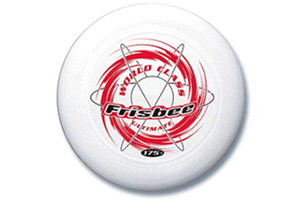
Ultimate is a sport similar to football or rugby, played with a 175 gram flying disc (otherwise known as a Frisbee). The object of the game is to score points by passing the disc to a player in the opposing end zone, similar to an end zone in football or rugby.
Players may not run with the disc, and may only move one foot while holding the disc (pivoting). While originally called Ultimate Frisbee, it is now officially called Ultimate because Frisbee is the trademark, albeit genericized, for the line of discs made by the Wham-O toy company.
Continue reading →
Posted in Games |
Leave a Comment »
March 6, 2011
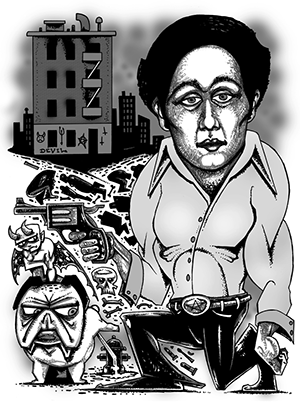
A Son of Sam Law is a law designed to keep criminals from profiting from their crimes, such as by selling their stories to publishers. These laws authorize the state to seize money earned from such a deal and use it to compensate the criminal’s victims. In certain cases a Son of Sam law can be extended beyond the criminals themselves to include friends, neighbors, and family members of the lawbreaker who seek to profit by telling publishers and filmmakers of their relation to the criminal. In other cases, a person may be barred from financially benefiting from the sale of a story or any other mementos pertaining to the crime—if the criminal was convicted after the date lawmakers passed the law in the states where the crime was committed.
The first such law was created in New York after the Son of Sam murders committed by serial killer David Berkowitz. It was enacted after rampant speculation about publishers offering large amounts of money for Berkowitz’s story. The law was invoked in New York 11 times between 1977 and 1990, including once against Mark David Chapman, murderer of musician John Lennon. Critics disputed the law on First Amendment grounds. It was argued that “Son of Sam” laws take away the financial incentive for many criminals to tell their stories, some of which (such as the Watergate scandal) were of vital interest to the general public.
Posted in Art, Money, Politics |
Leave a Comment »
March 6, 2011

Murderabilia is a term identifying collectibles related to murders, murderers, or other violent crimes. ‘Serial killer art’ is defined as artwork created by serial killers while in prison. Often, this process is used as a therapy device, or for further understanding a particularly disturbed psyche. The artists usually vary dramatically in skill and themes covered. John Wayne Gacy, Richard Ramirez, and Henry Lee Lucas are a few of the better known American serial killer artists. Perry Smith, the mass murderer known from Truman Capote’s famous nonfiction work ‘In Cold Blood,’ was also a prolific artist.
Collectors typically must have direct contact to obtain and authenticate this art. The actual pieces can sell for large sums of money depending on the individual artist, and their notoriety through serial killing. Murderabilia is a controversial area of the collecting world, as evidenced by the public backlash to the idea of selling or profiting from violent crimes. In 2005, a serial killer’s artwork was sold online in Massachusetts. State lawmakers proposed to block the activity, setting off a debate on free speech rights of prisoners.
Posted in Death, Money, Politics |
Leave a Comment »
March 6, 2011

Warchalking is the drawing of symbols in public places to advertise an open Wi-Fi wireless network. Inspired by hobo symbols, the warchalking marks were conceived by a group of friends in June 2002 and publicized by Matt Jones who designed the set of icons and produced a downloadable document containing them. Having found a Wi-Fi node, the warchalker draws a special symbol on a nearby object, such as a wall, the pavement, or a lamp post. Those offering Wi-Fi service might also draw such a symbol to advertise the availability of their Wi-Fi location, whether commercial or personal.
The word is formed by analogy to wardriving, the practice of driving around an area in a car to detect open Wi-Fi nodes. That term in turn is based on wardialing, the practice of dialing many phone numbers hoping to find a modem.
Posted in Language, Technology |
Leave a Comment »
March 6, 2011

Wardriving is the act of searching for Wi-Fi wireless networks by a person in a moving vehicle. The term originated from wardialing, a technique popularized by a character played by Matthew Broderick in the film WarGames, and named after that film. Wardialing in this context refers to the practice of using a computer to dial many phone numbers in the hopes of finding an active modem.
Warbiking is essentially the same as wardriving, but it involves searching for wireless networks while on a moving bicycle or motorcycle. This activity is sometimes facilitated by the mounting of a Wi-Fi capable device on the vehicle itself. Warwalking (sometimes warjogging) is done on foot rather than conducted from a moving vehicle. Warkitting is a combination of wardriving and rootkitting (installation of software that enables privileged access to a computer while actively hiding its presence from administrators). In a warkitting attack, a hacker replaces the firmware of an attacked router.
Posted in Money, Politics, Technology |
Leave a Comment »
March 6, 2011

Wardialing is a technique of using a modem to automatically scan a list of telephone numbers, usually dialing every number in a local area code to search for computers, Bulletin board systems and fax machines. Hackers use the resulting lists for various purposes, hobbyists for exploration, and crackers – hackers that specialize in computer security – for password guessing.
The popular name for this technique originated in the 1983 film WarGames. In the film, the protagonist programmed his computer to dial every telephone number in Sunnyvale, California to find other computer systems. Prior to the movie’s release, this technique was known as ‘hammer dialing’ or ‘demon dialing.’
Posted in Language, Money, Technology |
Leave a Comment »




