March 8, 2011
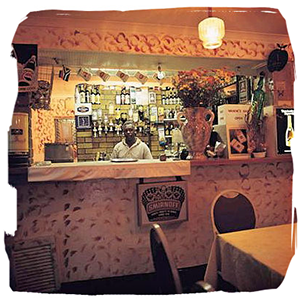
A shebeen [shuh-been] was originally an illicit bar or club where alcoholic beverages were sold without a licence. The term has spread far from its origins in Ireland, to Scotland, Canada, the US, England, Zimbabwe, the Caribbean, Namibia, and South Africa. In South Africa and Zimbabwe, shebeens are most often located in black townships as an alternative to pubs and bars, where under apartheid and the Rhodesian era, black Africans could not enter a pub or bar reserved for whites. Originally, shebeens were operated illegally, selling homebrewed and home-distilled alcohol and providing patrons with a place to meet and discuss political and social issues.
Often, patrons and owners were arrested by the police, though the shebeens were frequently reopened because of their importance in unifying the community and providing a safe place for discussion. During the apartheid era shebeens became a crucial place for activists to meet. They also provided music and dancing, allowing patrons to express themselves culturally, giving rise to the musical genre kwaito. Currently, shebeens are legal in South Africa and have become an integral part of urban culture, serving commercial beers as well as umqombothi, a traditional African beer made from maize and sorghum
Posted in Drugs, Food, World |
Leave a Comment »
March 8, 2011

Jerk is a style of cooking native to Jamaica in which meat is dry-rubbed or wet marinated with a very hot spice mixture called Jamaican jerk spice. Jerk seasoning is traditionally applied to pork and chicken. Modern recipes also apply jerk spice mixes to fish, shrimp, shellfish, beef, sausage, lamb, and tofu. Jerk seasoning principally relies upon two items: allspice (called ‘pimento’ in Jamaica) and Scotch bonnet peppers (similar in heat to the habanero pepper). Other ingredients include cloves, cinnamon, scallions, nutmeg, thyme, garlic, and salt.
The term jerk is said to come from the word ‘charqui,’ a Spanish term of Quechua origin for jerked or dried meat, which eventually became jerky in English. The term jerk spice (also often commonly known as Jamaican jerk spice) refers to a spice rub. The word jerk refers to both the spice rub and to the particular cooking technique.
Continue reading →
Posted in Food, World |
Leave a Comment »
March 8, 2011
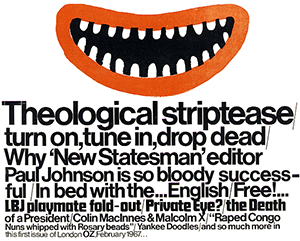
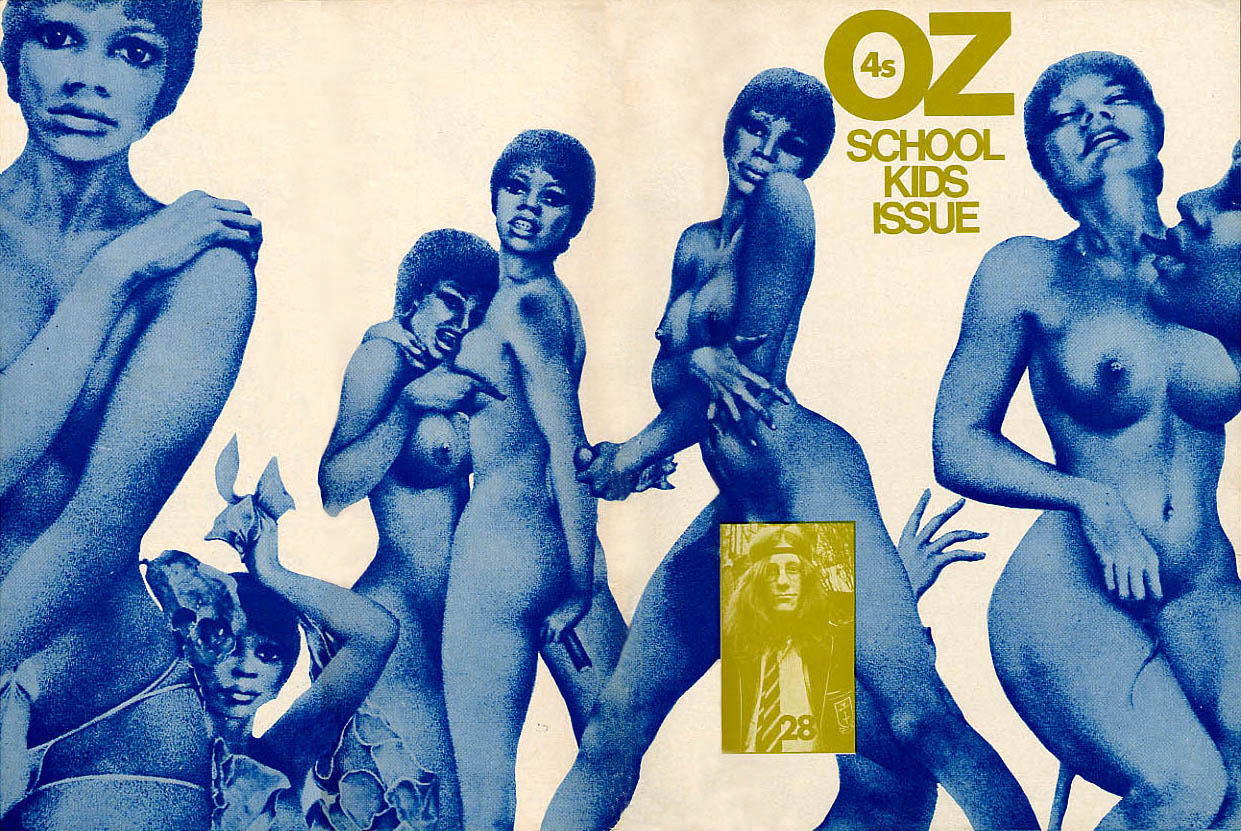
Oz was first published as a satirical humor magazine between 1963 and 1969 in Sydney, Australia and, in its second and better known incarnation, became a ‘psychedelic hippy’ magazine from 1967 to 1973 in London.
Strongly identified as part of the underground press, it was the subject of two celebrated obscenity trials, one in Australia in 1964 and the other in the UK in 1971. On both occasions the magazine’s editors were acquitted on appeal after initially being found guilty and sentenced to harsh jail terms. The central editor throughout the magazine’s life was Richard Neville.
Posted in Art, Drugs, Humor |
Leave a Comment »
March 7, 2011


Hapshash and the Coloured Coat is the name of an influential British graphic design and avant-garde musical partnership between Michael English and Nigel Waymouth, producing psychedelic posters and two albums of underground music. The silkscreen printed posters they created, advertising underground ‘happenings,’ clubs and concerts in London, became so popular at the time that they helped launch the commercial sale of posters as art, initially in fashionable stores such as the Indica Bookshop and Carnaby Street boutiques.
Their posters remain highly sought after: a poster advertising Jimi Hendrix’s 1967 concert at the Fillmore Auditorium in San Francisco, depicting the guitarist as a psychedelic Native American chief with a hunting bow in one hand and a peace pipe in the other, was valued in 2008 at $125,000. Their first album of psychedelic music, produced by a collective in early 1967 and including many famous names, is now seen as being influential on the early works of Amon Düül and other pioneers of German Krautrock, as well as inspiring sections of the Rolling Stones’ Their Satanic Majesties Request album.
Posted in Art, Drugs, Money |
Leave a Comment »
March 7, 2011

Alfons Mucha [moo-kah] (1860 – 1939) was a Czech Art Nouveau painter and decorative artist, best known for his distinct style and his images of women. He produced many paintings, illustrations, advertisements, and postcards. At the time of his death, Mucha’s style was considered outdated. Only recently has a Mucha museum appeared in Prague, run by his grandson, John Mucha.
Mucha’s work has continued to experience periodic revivals of interest for illustrators and artists. Interest in Mucha’s distinctive style experienced a strong revival in the 1960s (with a general interest in Art Nouveau) and is particularly evident in the psychedelic posters of ‘Hapshash and the Coloured Coat,’ the collective name for two British artists, Michael English and Nigel Waymouth.
Posted in Art |
5 Comments »
March 7, 2011

Twin Peaks is an American TV drama created by David Lynch and Mark Frost. The series follows the investigation of the brutal murder of a popular teenager and homecoming queen, Laura Palmer, by FBI Special Agent Dale Cooper. The pilot episode was broadcast in April 1990 on ABC, which led to another seven episodes being produced and a second season, which aired until June 1991.
As with much of Lynch’s other work (notably ‘Blue Velvet’), ‘Twin Peaks’ explores the gulf between the veneer of small-town respectability and the seedier layers of life lurking beneath it. Each character from the town leads a double life that is slowly uncovered as the series progresses.
Continue reading →
Posted in Art, Philosophy |
Leave a Comment »
March 7, 2011

Hungry ghost is a Western translation of an Eastern phrase representing beings who are driven by intense emotional needs in an animalistic way. In Buddhism, they are ghosts only in the sense of not being fully alive; not fully capable of living and appreciating what the moment has to offer. They are phantomlike creatures with withered limbs, grossly bloated bellies, and long thin necks.
They represent a fusion of rage and desire. Tormented by unfulfilled cravings and insatiably demanding of impossible satisfactions, the Hungry Ghosts are searching for gratification for old unfulfilled needs whose time has passed. They are beings who have uncovered a terrible emptiness within themselves, who cannot see the impossibility of correcting something that has already happened. Their ghostlike state represents their attachment to the past.
Posted in Language, Philosophy, World |
Leave a Comment »
March 7, 2011

Arzell ‘Z. Z.’ Hill (1935 – 1984) was an American blues singer, in the soul blues tradition, known for his 1970s and 1980s recordings for Malaco. His 1982 album, Down Home, stayed on the Billboard soul album chart for nearly two years. The track ‘Down Home Blues’ has been called the best-known blues song of the 1980s. This track plus the songs ‘Taxi,’ ‘Someone Else Is Steppin’ In,’ and ‘Open House’ have become R&B/Southern soul standards
Posted in Art |
Leave a Comment »
March 7, 2011

ZZ Top is an American rock band, sometimes referred to as ‘That Little Ol’ Band from Texas.’ Their style, which is rooted in the blues, has come to incorporate elements of arena, Southern, and boogie rock. The band is from Houston, Texas, formed in 1969. Musician Billy Gibbons and drummer Dan Mitchell, originally in a band called the ‘Moving Sidewalks,’ got together with bassist Lanier Greig, forming ZZ Top. In 1969, Greig and Mitchell were replaced by Dusty Hill and Frank Beard from the band ‘American Blues.’
They were signed to London Records in 1970 and released several albums. After years of touring, the band went on a two-year break in 1977, which resulted in Gibbons and Hill growing chest-length beards. The band’s name was rumored to have derived from Zig-Zag and TOP rolling papers. Gibbons, however it actually refers to an apartment Gibbons lived in, with a row of flyers on a wall, including Z. Z. Hill and B.B. King posters. Coming to the conclusion that B.B. King was on the ‘top,’ Gibbons settled with the name ‘ZZ Top.’
Posted in Art, Money |
Leave a Comment »
March 7, 2011

A psychic vampire is a mythological creature said to feed off the ‘life force’ of other living creatures. Psychic vampires are represented in the occult beliefs of various cultures and in fiction.
Terms used to describe the substance or essence that psychic vampires take or receive from others include: energy, qi (or ch’i), life force, prana, and vitality. There is no scientific or medical evidence supporting the existence of the bodily or psychic energy they allegedly drain. Continue reading →
Posted in Uncategorized |
Leave a Comment »
March 7, 2011
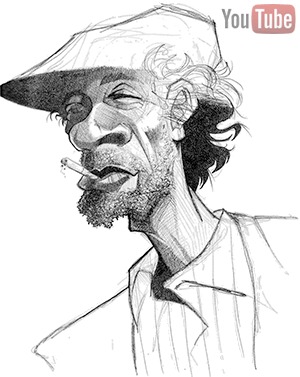
Gil Scott-Heron (b. 1949) is an American poet, musician, and author known primarily for his late 1970s and early 1980s work as a spoken word performer and his collaborative soul works with musician Brian Jackson, which featured a musical fusion of jazz, blues and soul music, as well as lyrical content concerning social and political issues of the time, delivered in both rapping and melismatic vocal styles by Scott-Heron.
The music of these albums, most notably ‘Pieces of a Man’ and ‘Winter in America’ in the early 1970s, influenced and helped engender later African-American music genres such as hip hop and neo soul. Scott-Heron’s recording work is often associated with black militant activism and has received much critical acclaim for one of his most well-known compositions ‘The Revolution Will Not Be Televised.’
Posted in Art, Money, Politics |
Leave a Comment »
March 7, 2011

Sarsaparilla [sas-puh-ril-uh] is a soft drink, originally made from the Smilax regelii plant, but now often made with artificial flavors. It was popular in the US in the 19th century. According to advertisements for patent medicines of the period, it was considered to be a remedy for skin and blood problems.
In Hollywood westerns from the 1930s to the 1950s, ordering sarsaparilla in a saloon (instead of whiskey) is often met with mockery by the manly cowboys nearby. Sarsaparilla drinks feature widely in American popular culture, particularly in works related to the American West. In the 1957-1961 ABC western television series, ‘Sugarfoot,’ the title character, Tom Brewster, played by Will Hutchins, is a teetotaler who orders sarsaparilla ‘with a dash of cherry’ whenever he enters a saloon.
Continue reading →
Posted in Drugs, Food, Health |
Leave a Comment »