June 26, 2017
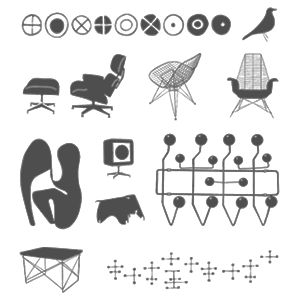
Charles (1907–1978) and Ray Eames (1912–1988) were husband and wife American designers who made significant historical contributions to the development of modern architecture and furniture. Among their most well-known designs is the ‘Eames Lounge Chair.’ They also worked in the fields of industrial and graphic design, fine art, and film.
Charles was an American designer, architect and filmmaker. He and his second wife Ray Kaiser are responsible for groundbreaking contributions in the field of architecture, furniture design, industrial design, manufacturing and the photographic arts. Continue reading →
Posted in Art, Money |
Leave a Comment »
June 21, 2017

Bourbon [boor-buhn] whiskey is a type of American whiskey, a barrel-aged distilled spirit made primarily from corn. The name is ultimately derived from the French Bourbon dynasty, although it is unclear precisely what inspired the whiskey’s name (contenders include Bourbon County in Kentucky and Bourbon Street in New Orleans).
Bourbon has been distilled since the 18th century. The use of the term ‘bourbon’ for the whiskey has been traced to the 1820s, and the term began to be used consistently in Kentucky in the 1870s. While bourbon may be made anywhere in the United States, it is strongly associated with the American South, and with Kentucky in particular. Continue reading →
Posted in Drugs, Food |
2 Comments »
June 20, 2017
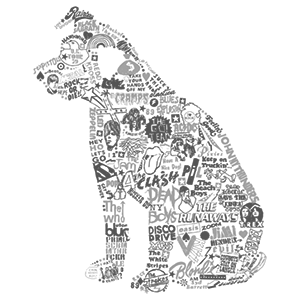
His Master’s Voice (HMV) is a famous trademark in the music and recording industry and was for many years the unofficial name of a large British record label. The name was coined in the 1890s as the title of a painting by English artist Francis Barraud of a dog named ‘Nipper,’ listening to a wind-up gramophone. In the original painting, the dog was listening to a cylinder phonograph. In the 1970s, a bronze statue of the dog and gramophone was awarded by the record company (EMI) to artists and or music producers and or composers as a Music Award and often only after selling more than 100,000 LP’s.
The original painting was acquired from the original artist in 1899 by the newly formed Gramophone Company and adopted by the Victor Talking Machine Company in the United States. According to contemporary Gramophone Company publicity material, the dog, a terrier, had originally belonged to Francis Barraud’s brother, Mark. When Mark Barraud died, Francis inherited Nipper, with a cylinder phonograph and recordings of Mark’s voice. Francis noted the peculiar interest that the dog took in the recorded voice of his late master emanating from the horn, and conceived the idea of committing the scene to canvas. Continue reading →
Posted in Art, Money |
Leave a Comment »
June 8, 2017

Schedule chicken is a concept described in project management and software development circles where when two or more parties working towards a common goal all claim to be holding to their original schedules for delivering their part of the work, while knowing those schedules are impossible to meet. Each party hopes the other will be the first to have their failure exposed and thus take all of the blame for the larger project being delayed. This pretense continually moves forward past one project checkpoint to the next, possibly continuing right up until the functionality is actually due.
The practice of schedule chicken often results in contagious schedule slips due to the inter team dependencies and is difficult to identify and resolve, as it is in the best interest of each team not to be the first bearer of bad news. The psychological drivers underlining the ‘Schedule Chicken’ behavior are related to the ‘Hawk-Dove’ or ‘Snowdrift’ model of conflict used by players in game theory. The term derives from the game of chicken played between drivers, as depicted in the movie ‘Rebel Without a Cause,’ in which two drivers race their hot-rods towards a cliff edge. The first driver to jump out of the car is labeled a ‘chicken,’ while the one closest to the edge wins bragging rights.
Posted in Games, Humor, Technology |
1 Comment »
June 7, 2017

Woke is a slang word from African American vernacular which refers to a perceived awareness of issues concerning social and racial justice. The related phrase ‘stay woke’ refers to a continuing awareness of these issues. Its widespread use since 2014 is a result of the ‘Black Lives Matter’ movement, a decentralized campaign against violence and systemic racism toward black people.
‘Oxford Dictionaries’ records early politically conscious usage in 1962 in the article ‘If You’re Woke You Dig It’ by William Melvin Kelley in ‘The New York Times’ and in the 1971 play ‘Garvey Lives!’ by Barry Beckham (‘I been sleeping all my life. And now that Mr. Garvey done woke me up, I’m gon stay woke. And I’m gon help him wake up other black folk.’) Continue reading →
Posted in Language, Politics |
Leave a Comment »
May 31, 2017

Pop-up retail, also known as pop-up stores or shops or flash retailing, is a trend of opening short-term sales spaces that started in Los Angeles and are now found all over the United States, Canada, China, Japan, Mexico, France, Germany, the United Kingdom, and Australia.
Temporary retail establishments date at least to the Vienna December market in 1298 and the European Christmas markets that followed. Seasonal farmer’s markets, holiday fireworks stands, Halloween costume shops, and consumer expos are other examples of temporary retailing. Continue reading →
Posted in Money |
Leave a Comment »
May 30, 2017
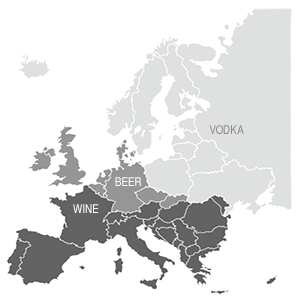
The alcohol belts of Europe are regions in Europe which are considered to be divided by association with either beer, wine, or hard liquor.
The alcohol belts refer to the traditional beverages of countries rather than what is most commonly drunk by the populace today, as in terms of drinking habits beer has become the most popular alcoholic drink in the whole world – including various parts of the wine and vodka belts. Continue reading →
Posted in Drugs, Food, World |
2 Comments »
May 24, 2017

Product naming is the discipline of deciding what a product will be called, and is very similar in concept and approach to the process of deciding on a name for a company or organization. Product naming is considered a critical part of the branding process, which includes all of the marketing activities that affect the brand image, such as positioning (the place that a brand occupies in the mind of the customer) and the design of logos, packaging, and the product itself.
The process involved in product naming can take months or years to complete. Some key steps include specifying the objectives of the branding, developing the product name itself, evaluating names through target market testing and focus groups, choosing a final product name, and finally identifying it as a trademark for protection. Continue reading →
Posted in Language, Money |
Leave a Comment »
May 22, 2017

The phenakistiscope [fen-uh-kiss-tuh-skohp] was the first widespread animation device that created a fluent illusion of motion. The phenakistiscope is regarded as one of the first forms of moving media entertainment that paved the way for the future motion picture and film industry. It is sometimes compared to GIF animation since both show a short continuous loop.
A phenakisticope usually comes in the form of a spinning cardboard disc attached vertically to a handle. Arrayed radially around the disc’s center are a series of pictures showing sequential phases of the animation. Small rectangular apertures are spaced evenly around the rim of the disc. The user would spin the disc and look through the moving slits at the images reflected in a mirror. The scanning of the slits across the reflected images keeps them from simply blurring together, so that the user can see a rapid succession of images that appear to be a single moving picture. Continue reading →
Posted in Art, Science, Technology |
Leave a Comment »
May 5, 2017

The McCollough effect is a phenomenon of human visual perception discovered by American psychologist Celeste McCollough in 1965 in which colorless gratings appear colored contingent on the orientation of the gratings. It is an aftereffect requiring a period of induction to produce it. For example, if someone alternately looks at a red horizontal grating and a green vertical grating for a few minutes, a black-and-white horizontal grating will then look greenish and a black-and-white vertical grating will then look pinkish.
The effect is remarkable because it is very long-lasting. McCollough originally reported that aftereffects may last for an hour or more, but they can persist much longer. A 1975 study found that 15 minutes of induction can lead to an effect lasting three and a half months. Continue reading →
Posted in Science |
Leave a Comment »
April 24, 2017


Gary Anderson (b. 1947) is an influential graphic designer and architect. He is most well known as the designer of the ‘recycling symbol,’ one of the most readily recognizable logos in the world. His contribution to modern graphic design has been compared to those of early pioneering modernists such as Herbert Bayer. His design for a symbol to embody the concept of recycling has been compared to iconic trademarks such as those for Coca-Cola and Nike.
It has been called one of America’s ‘most important design icons’ and has helped to encourage global recycling. In some countries, such as the UK, the symbol carries such implicit meaning that it requires government permission to be used. Although the symbol is the most widely known of his accomplishments, Anderson has also made important contributions in the areas of urban planning and urban development. Continue reading →
Posted in Art, Politics, World |
Leave a Comment »
April 20, 2017
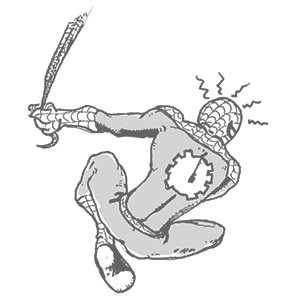
Spider-Man’s ‘spider-sense‘ manifests in a tingling feeling at the base of his skull, alerting him to personal danger in proportion to the severity of that danger. For instance, a little tingling such as a happenstance passing by of an enemy would prompt Peter to be alert, while a strong tingling, sometimes to the point of being painful, is interpreted as a need to take immediate evasive action.
Spider-Man can choose to ignore his spider-sense, and distraction or fatigue can cause decreased unawareness. Spider-sense is depicted in most comics as wavy lines appearing around Spider-Man’s head; when he is unmasked, this effect is sometimes accompanied by a symbolic half-mask appearing on his face. In the 90’s cartoon, negative colored shapes appeared around him. Continue reading →
Posted in Art |
Leave a Comment »



