November 7, 2010

Progressivism [pruh-gres-uh-viz-uhm] is a political attitude advocating changes or reform through governmental action. Progressivism is often viewed in opposition to conservative or reactionary ideologies. The Progressive Movement began in cities with settlement workers and reformers who were interested in regulating tenement housing and child labor.
Continue reading →
Posted in Language, Politics |
Leave a Comment »
November 7, 2010

Secular Humanism is a philosophy that espouses reason, ethics, and the search for human fulfillment, and specifically rejects supernatural and religious dogma as the basis of morality and decision-making. Secular Humanism is a life stance that focuses on the way human beings can lead happy and functional lives. The term was coined in the 20th century by British worker’s rights advocate George Holyoake.
Fundamental to the concept is the strongly held belief that ideology—be it religious or political—must be examined by each individual and not simply accepted or rejected on faith. Along with this belief, an essential part of Secular Humanism is a continually adapting search for truth, primarily through science and philosophy. The humanist stance emphasises the unique responsibility facing humanity and the ethical consequences of human decisions.
Posted in Language, Philosophy, Politics |
Leave a Comment »
November 7, 2010

An orrery [awr-uh-ree] is a mechanical device that illustrates the relative positions and motions of the planets and moons in the solar system in a heliocentric model. They are typically driven by a clockwork mechanism with a globe representing the Sun at the centre, and with a planet at the end of each of the arms. The first modern orrery was built circa 1704 by George Graham and Thomas Tompion. Eisinga’s ‘Planetarium’ (actually, an orrery) was built from 1774 to 1781 by Eise Eisinga in his home in Franeker, in the Netherlands. It displays the planets across the width of a room’s ceiling, and has been in operation almost continually since it was created.
According to Cicero, the Greek philosopher Posidonius constructed an orrery that exhibited the diurnal motions of the sun, moon, and the five known planets. Cicero’s account was written in the first century BCE. The Antikythera mechanism is one of the first orreries. It is an ancient mechanical calculator designed to calculate astronomical positions. It was discovered in an ancient shipwreck off the Greek island of Antikythera, between Kythera and Crete, and has been dated to about 150-100 BC. Technological artifacts of similar complexity would not be common for a thousand years.
Posted in Technology |
Leave a Comment »
November 5, 2010

The problem of other minds is an epistemological challenge raised by skeptics. It is often expressed as follows: given that I can only observe the behavior of others, how can I know that others have minds? The thought behind the question is that no matter how sophisticated someone’s behavior is, behavior on its own is not sufficient to guarantee the presence of mentality. It remains possible, for example, that other people are actually nothing more than meaty automata (or ‘Philosophical zombies’).
Bertrand Russel argued to the contrary that the idea was a logical fallacy, specifically, argument from analogy: ‘where we take two things which are similar in some observed ways and infer from this similarity that they are similar in other unobserved ways. If the observed similarity is not relevant to the posited unobserved similarity then this is a form of fallacy.’
Posted in Philosophy |
Leave a Comment »
November 5, 2010

To get around captchas spammers hire companies employing human solvers in Bangladesh, China and India at about $0.80 to $1.20 for each 1,000 solved captchas. Another approach involves copying the captcha images and using them on another site, often one offering free pornography in exchange for filling out a captcha.
With enough traffic, the attacker can get the solutions in time to relay it back to the target site. These methods have been used by spammers to set up thousands of accounts on free email services such as Gmail and Yahoo!. Since Gmail and Yahoo! are unlikely to be blacklisted by anti-spam systems, spam sent through these compromised accounts is less likely to be blocked.
Posted in Money, Sex, Technology |
Leave a Comment »
November 5, 2010
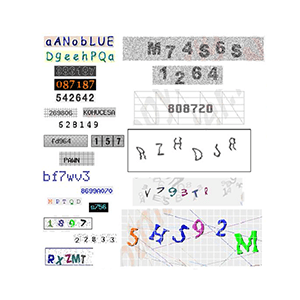
A CAPTCHA is a program that protects websites against bots (applications that run automated tasks over the Internet) by generating and grading tests that humans can pass but current computer programs cannot. For example, humans can read distorted text but current computer programs can’t.
CAPTCHA is an acronym for Completely Automated Public Turing test to tell Computers and Humans Apart). A Turing test, named for British mathematician Alan Turing, is a test of a machine’s ability to demonstrate intelligence. A Captcha is sometimes described as a reverse Turing test, because it is administered by a machine and targeted to a human and not vice versa.
Posted in Technology |
Leave a Comment »
November 4, 2010

A blivet [bliv-it], also known as a poiuyt, devil’s fork or widget, is an undecipherable figure, an optical illusion and an impossible object. It appears to have three cylindrical prongs at one end which then mysteriously transform into two rectangular prongs at the other end.
In traditional U.S. Army slang dating back to the Second World War, a blivet was defined as ‘ten pounds of manure in a five pound bag’ (a proverbial description of anything egregiously ugly or unmanageable); it was applied to an unmanageable situation, a crucial but substandard or damaged tool, or a self-important person. In some areas of the U.S., it refers to a juvenile prank, clearly connected with the original military usage: a sack full of excrement is ignited on the victim’s porch, while the pranksters ring the doorbell and run. The victim attempts to put the flames out by stamping on the bag.
Posted in Humor, Language, Science |
Leave a Comment »
November 4, 2010

The 2010 Duke University sex thesis (also known as the ‘Duke Fuck List’) controversy arose from a private document written by senior, Karen Owen, in the format of a thesis about her sexual experiences during her time attending the university. Owen wrote and distributed the document to three friends shortly after graduating from the university, in May 2010. By mid-September it was widely available on the internet. In the satirical thesis, titled ‘An education beyond the classroom: excelling in the realm of horizontal academics,’ Owen ranked her partners based on her criteria for performance.
The bulk of the controversy surrounded whether she invaded her partners’ rights to privacy, and whether the subjects of Owen’s paper have a right to sue, as in the case of Jessica Cutler when Cutler published details of her sex life on a blog. It also raised questions as to whether double standards exist if the reaction would have been the same had the document been written by a male. The paper attracted additional attention because some of the men which Owen ranked were from the lacrosse team, and there was an unrelated sex controversy surrounding the team a few years prior.
Posted in Education, Humor, Sex |
Leave a Comment »
November 4, 2010

The Roland TR-808 Rhythm Composer was one of the first programmable drum machines. Introduced by the Roland Corporation in early 1980, it was originally manufactured for use as a tool for studio musicians to create demos. Like earlier Roland drum machines, it does not sound very much like a real drum kit.
One of the machine’s earliest mainstream hits in the United States was on Marvin Gaye’s ‘Sexual Healing.’ A TR-808 was also David Byrne’s sole accompaniment (apart from his acoustic guitar) at the beginning of ‘Stop Making Sense.’
Continue reading →
Posted in Art, Technology |
Leave a Comment »
November 4, 2010

Reason is a music software program developed by Swedish software developers Propellerhead Software. It emulates a rack of hardware synthesizers, samplers, signal processors, sequencers and mixers, all of which can be freely interconnected in an arbitrary manner. Reason can be used either as a complete virtual music studio, or as a collection of virtual instruments to be played live or used with other sequencing software. As of August 2010 Reason was at version 5.0, version 1.0 was released in November 2000.
Posted in Art, Technology |
Leave a Comment »
November 4, 2010

Cindy Jackson (b. 1959) is listed in the Guinness World record book for having had more cosmetic surgery procedures than anyone else in the world. She set the record in 2000 and is still the official record holder to date.
Since 1988 she has had 52 cosmetic procedures, including several facelifts, two nose operations, two eye lifts, knee, waist, abdomen and thigh liposuction, jaw surgery, lip and cheek implants, chemical peels, chin bone reduction. Others were non-surgical, including Radiesse injections, hand rejuvenation, Voluma treatments and permanent make-up.
Posted in Health, Money, Technology |
Leave a Comment »
November 4, 2010
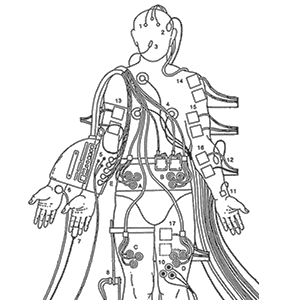
Stelarc (Stelios Arkadiou) is a Greek-Australian performance artist whose works focuses heavily on extending the capabilities of the human body. As such, most of his pieces are centred around his concept that the human body is obsolete. He is currently a visiting Professor in the School of Arts at Brunel University, West London.
In 2007, Stelarc had a cell-cultivated ear surgically attached to his left arm. In 2005, MIT Press published ‘Stelarc: The Monograph’ which is the first extensive study of his prolific work.
Posted in Art, Science, Technology |
Leave a Comment »



