October 18, 2010

Robert Crumb (b. 1943) is an American artist, illustrator and musician recognized for the distinctive style of his drawings and his critical, satirical, subversive view of the American mainstream. Crumb was a founder of the underground comix movement and is regarded as its most prominent figure.
Though one of the most celebrated of comic book artists, Crumb’s entire career has unfolded outside the mainstream comic book publishing industry. One of his most recognized works is the ‘Keep on Truckin” comic, which became a widely distributed fixture of pop culture in the 1970s. Others are the characters Devil Girl, Fritz the Cat, and Mr. Natural.
Continue reading →
Posted in Art, Humor |
Leave a Comment »
October 18, 2010
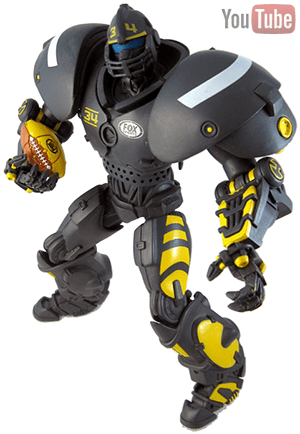
‘Cleatus the Robot,’ is the official mascot of Fox NFL Sunday, named by a viewer during a contest in the winter of 2007 in which fans were able to submit entries as to what they thought the robot’s name should be. Cleatus made his first appearance during the 2005-2006 NFL season, but was not used regularly until the following season. Cleatus mainly appears during the intro sequence of the show as well as brief commercials for movies and TV shows.
In commercials he commonly gets attacked by a CGI character from whatever the advertisement is about. He has thus far been attacked by Iron Man, a dragon, and a Terminator robot. Cleatus is also known to hop on two feet, play the electric guitar, shake out his limbs, and do dance moves such as the swim and the electric slide. In response to Cleatus, NASCAR on Fox created ‘Digger,’ an animated gopher mascot.
Posted in Games, Humor, Money |
Leave a Comment »
October 16, 2010

When used in reference to consumer electronics, ‘brick’ describes a device that cannot function in any capacity (such as a device with damaged firmware). This usage derives from the fact that some electronic devices (and their detachable power supplies) are vaguely brick-shaped, and so those which do not function are useful only as actual bricks. The term can also be used as a verb. For example, I bricked my MP3 player when I tried to modify its firmware.’ Some devices which are ‘bricked’ because the contents of their nonvolatile memory are incorrect can be ‘unbricked‘ using separate hardware (a debug board) that accesses this memory directly.
Bricking a device is usually an unwanted consequence of an attempt to update the device. Many devices have an update procedure which must not be interrupted; if interrupted by a power failure, user intervention, or any other reason the existing firmware may be partially overwritten and unusable. Installing incorrect firmware can also brick a device, e.g., installing firmware for a different revision of the hardware, or installing firmware incompetently patched by third parties to get around restrictions imposed by official firmware, such as DVD firmware which only plays DVDs sold in a particular region. Devices can also be bricked by malware (malicious software), and sometimes by running software not intentionally harmful but with errors which cause damage.
Posted in Language, Technology |
Leave a Comment »
October 14, 2010


Zorbing is the recreation of rolling downhill in an orb, generally made of transparent plastic. Zorbing is generally performed on a gentle slope, but can also be done on a level surface, permitting more rider control. There are two types of orbs, harnessed and non-harnessed. Non-harness orbs carry up to three riders, while the harness orbs are constructed for one to two riders. The longer runs are approximately half a mile. The first zorbing site was established in Rotorua, New Zealand, by David Akers and Andrew Akers in 1994.
The zorb is double-sectioned, with one ball inside the other with an air layer between. This acts as a shock absorber for the rider, damping bumps while traveling. A typical orb is about 3 metres (9.8 ft) in diameter, with an inner orb size of about 2 metres (6 ft 6.7 in). The inner and outer orb are connected by numerous (often hundreds) small ropes. Orbs have one or two tunnel-like entrances.
Posted in Games, Money |
Leave a Comment »
October 14, 2010
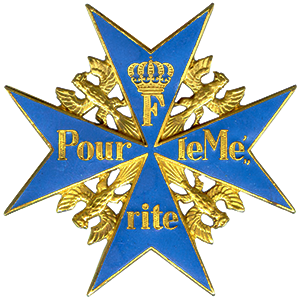
The Pour le Mérite, known informally during World War I as the Blue Max, was the Kingdom of Prussia’s highest military order for German soldiers until the end of World War I. The award was a blue-enameled Maltese Cross with eagles between the arms based on the symbol of the Johanniter Order, the Prussian royal cypher, and the French legend Pour le Mérite (‘for Merit’) arranged on the arms of the cross. A civil version of the order, for accomplishments in the arts and sciences, still exists in the Federal Republic of Germany.
Posted in Politics, War, World |
Leave a Comment »
October 13, 2010

Syringe Tide refers to a period during 1987-88 in New Jersey, where significant amounts of medical waste and raw garbage washed up onto a 50-mile (80 km) stretch of Atlantic Ocean beaches in Jersey Shore communities in Monmouth and Ocean counties. This forced the closing of all the beaches in the two counties. Officials traced the source of the waste to the Fresh Kills Landfill in Staten Island. New York City was required to pay $1 million for past pollution damages as well as pay for the clean up. Reparations were denied business owners on the Jersey Shore for revenues lost during the months of inactivity.
In response to syringe tides of 1987 and 1988, the participants in the New Jersey Harbor Estuary Program (HEP) implemented an extremely successful effort, known as the Short-term Floatables Action Plan. The plan has been implemented since 1989. It curtails floatable debris wash-ups by intercepting slicks within the Harbor. With this plan, the extent of beach closures declined from over 70 miles (110 km) in 1988 to fewer than 4 miles (6.4 km) in 1989, and closures have remained at a low level since.
Posted in Health |
Leave a Comment »
October 13, 2010

A sizable number of Indian immigrants to the United States came in the 1960s and 1970s, when the motel and hotel industry was booming. Many of them bought up undervalued and dilapidated properties and turned them into businesses, including motels and hotels. It was estimated in 2007 that 60% of the mid-sized motels and hotels in the United States were owned by Indians. Nearly one-third of those Indians were called Patel (and came from Gujarat), with the result that, apparently, many people believe Patel is an Indian word meaning ‘hotel.’
Patel, originally meaning ‘headman’ or ‘village chief” derives from Patlikh, the record keeper named by princely rulers in Gujarat to keep track of the crops, pat being a parcel of land. Traditionally, the Patels or Patils assist the Talati or Kulkarni in collection or revenue in rural areas. Patels in northern Gujarat were very prominent farmers as well. Within the United Kingdom, it is the twenty-fourth most common surname nationally, and the third most common in the Greater London region. In the US, the surname ‘Patel’ ranks 174 among the top 500 list of most common last names.
Posted in Language, Money, World |
Leave a Comment »
October 13, 2010

A meme [meem] is a unit of cultural ideas, symbols or practices, which can be transmitted from one mind to another through writing, speech, gestures, rituals or other imitable phenomena. Supporters of the concept regard memes as cultural analogues to genes, in that they self-replicate and respond to selective pressures. The British scientist Richard Dawkins coined the word in ‘The Selfish Gene’ (1976) as a concept for discussion of evolutionary principles in explaining the spread of ideas and cultural phenomena.
Examples of memes given in the book included melodies, catch-phrases, beliefs (notably religious beliefs), clothing fashion, and the technology of building arches. Meme-theorists contend that memes evolve by natural selection (in a manner analogous to that of biological evolution) through the processes of variation, mutation, competition, and inheritance influencing an individual meme’s reproductive success. Memes spread through the behaviors that they generate in their hosts. Memes that propagate less prolifically may become extinct, while others may survive, spread, and (for better or for worse) mutate.
Posted in Humor, Language, Philosophy |
Leave a Comment »
October 13, 2010

Big Wave Surfing is a discipline within surfing in which experienced surfers paddle into or are towed onto waves which are at least 20 feet (6.2 m) high, on surf boards known as ‘guns’ or ‘rhino chasers.’ Sizes of the board needed to successfully surf these waves vary by the size of the wave as well as the technique the surfer uses to reach the wave. A larger, longer board allows a rider to paddle fast enough to catch the wave and has the advantage of being more stable, but it also limits maneuverability and surfing speed.
Continue reading →
Posted in Games |
Leave a Comment »
October 13, 2010

Controllerism is the art and practice of using musical software controllers (e.g. MIDI) to build upon, mix, scratch, remix, effect, modify, or otherwise create music, usually by a DJ or ‘Controllerist.’ Often on the side of Virtuoso performance art, Controllerism is also a nod to traditional musicianship and instrumental-ism paired with modern computer sequencing software such as Ableton Live and Native Instruments Traktor.
However a working knowledge of Scale and Chords is not necessarily required as the performers typically focus their efforts more on sequencing events, software effect and instrument manipulations using buttons, knobs, faders, keys, foot switches and pedals than on instrumental notes played in real time. The term was coined by musician Matt Moldover in 2007 and popularized by DJ Ean Golden to describe the process while paying homage to and giving respect to the art of turntablism.
Posted in Art, Technology |
Leave a Comment »
October 13, 2010
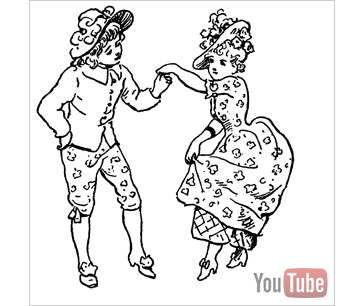
A minuet [min-yoo-et] is a social dance of French origin for two people, usually in 3/4 time. The word was adapted from Italian minuetto and French menuet, meaning small, pretty, delicate, a diminutive of menu, from the Latin minutus. At the period when it was most fashionable it was slow, soft, ceremonious, and graceful. The name is also given to a musical composition written in the same time and rhythm, but when not accompanying an actual dance the pace was quicker. As the other dances that made up a Baroque suite dropped out of use, the minuet retained its popularity.
Posted in Art, Language, World |
Leave a Comment »
October 12, 2010
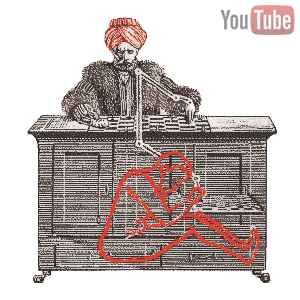
The Turk was a fake chess-playing machine constructed in the late 18th century. From 1770 until its destruction by fire in 1854, it was exhibited by various owners as an automaton. Constructed and unveiled in 1770 by Wolfgang von Kempelen (1734–1804) to impress the Empress Maria Theresa, the mechanism appeared to be able to play a strong game of chess against a human opponent. The Turk was in fact a mechanical illusion that allowed a human chess master hiding inside to operate the machine.
With a skilled operator, the Turk won most of the games played during its demonstrations around Europe and the Americas for nearly 84 years, playing and defeating many challengers including statesmen such as Napoleon Bonaparte and Benjamin Franklin. Although many had suspected the hidden human operator, the hoax was initially revealed only in the 1820s by the Londoner Robert Willis.
Posted in Games, Humor, Technology |
1 Comment »




 The Daily Omnivore