September 11, 2010

In shopping mall design, the Gruen transfer refers to the moment when consumers respond to ‘scripted disorientation’ cues in the environment. It is named for Austrian architect Victor Gruen (who disavowed such manipulative techniques). Shopping mall entrances have intentionally confusing layouts, intended to cause shoppers to lose track of their original intentions. Spatial awareness of their surroundings plays a key role, as does the surrounding sound and music. The effect of the transfer is marked by a slower walking pace and glazed eyes.
Posted in Money, Science |
Leave a Comment »
September 11, 2010

Strawberry Generation is a Chinese language neologism for Taiwanese people born between 1981 and 1991 who ‘bruise easily’ like strawberries — meaning they can’t withstand social pressure or work hard like their parents’ generation; the term refers to people who are insubordinate, spoiled, selfish, arrogant, and sluggish in work. Persons from this generation have grown up being overprotected by their parents and in an environment of economic prosperity, in a similar manner to how strawberries are grown in protected greenhouses and command a higher price compared to other fruits.
Posted in Philosophy, Politics, World |
Leave a Comment »
September 11, 2010

The 386 Generation is a generation of South Koreans born in the 1960s who were very active politically as young adults, and instrumental in the democracy movement of the 1980s. The term refers to the Intel i386 CPU, released in 1985, and used in Korean universities in that era. This was the first generation of South Koreans to grow up free from the poverty that had marked Korea in the recent past.
The broad political mood of the generation was far more left-leaning than that of their parents, or their eventual children. They played a pivotal role in the democratic protests which forced President Chun Doo-hwan to call democratic elections in 1987, marking the transition from military rule to democracy. Members of the 386 Generation now comprise much of the elite of Korean society, including Nobel laureate and former president Kim Dae-jung (1925 – 2009).
Posted in Politics, Technology, World |
Leave a Comment »
September 10, 2010

A memristor (‘memory resistor’) is a circuit element first theorized to exist by U.S. electronic engineer, Leon Chua in a 1971 and first demonstrated in a laboratory in 2008. There are several proposed applications for memristors, including computer memory that retains data even after the power is shut off. A common analogy for a resistor is a pipe that carries water. The water itself is analogous to electrical charge, the pressure at the input of the pipe is similar to voltage, and the rate of flow of the water through the pipe is like electrical current. Just as with an electrical resistor, the flow of water through the pipe is faster if the pipe is shorter and/or it has a larger diameter.
An analogy for a memristor is an interesting kind of pipe that expands and shrinks. If water flows through the pipe in one direction, the diameter of the pipe increases, thus enabling the water to flow faster. If water flows through the pipe in the opposite direction, the diameter of the pipe decreases, thus slowing down the flow of water. If the water pressure is turned off, the pipe will retain it most recent diameter until the water is turned back on. Thus, the pipe does not store water like a bucket (or a capacitor) – it remembers how much water flowed through it.
Posted in Technology |
Leave a Comment »
September 10, 2010

Colonel Reb is the traditional sporting mascot of Ole Miss Rebels, the collegiate athletic teams of the University of Mississippi. Designed in the 1930s, the figure served as the teams’ official or near-official mascot from 1979 until 2003. To some people, he resembles a white antebellum plantation owner, but to others, he simply resembles the ideal of the ‘Southern gentleman’ of the Antebellum Age.
In 2003, the administration eliminated Colonel Reb from the sidelines at Ole Miss athletic events as the on-the-field mascot, though he was allowed at tailgating and other unofficial university functions. In a 2010 vote, Ole Miss students decided to choose a new mascot for the school. An internet campaign to replace Colonel Reb with fictional Star Wars character Admiral Ackbar has gained popular support.
Posted in Education, Games, Politics |
Leave a Comment »
September 10, 2010
The Electronic Frontier Foundation (EFF) is an international non-profit digital rights advocacy and legal organization based in the United States.
EFF provides funds for legal defense in court, defends individuals and new technologies from what it considers baseless or misdirected legal threats, works to expose government malfeasance, provides guidance to the government and courts, organizes political action and mass mailings, supports some new technologies which it believes preserve personal freedoms, maintains a database and web sites of related news and information, monitors and challenges potential legislation that it believes would infringe on personal liberties and fair use, and solicits a list of what it considers patent abuses with intentions to defeat those that it considers without merit.
Posted in Money, Politics, Technology |
Leave a Comment »
September 10, 2010

The Streisand effect is a phenomenon in which an attempt to censor or remove a piece of information has the unintended consequence of causing the information to be publicized widely and to a greater extent than would have occurred if no censorship had been attempted. It is named after American entertainer Barbra Streisand, following a 2003 incident in which her attempts to suppress photographs of her residence inadvertently generated further publicity.
Posted in Humor, Language |
Leave a Comment »
September 10, 2010
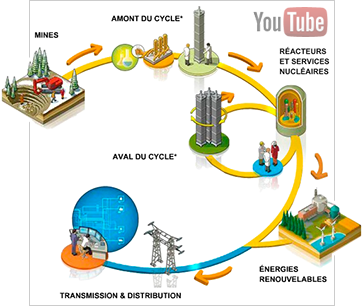
Areva is a French public multinational industrial conglomerate formed in September of 2001, and is the world’s largest supplier of nuclear energy. It is the only company with a presence in each industrial activity linked to nuclear energy: mining, chemistry, enrichment, combustibles, services, engineering, nuclear propulsion and reactors, treatment, recycling, stabilization, and dismantling. The corporate name Areva is inspired by the Trappist Santa Maria de la Real monastery in Arevalo in Spain.
Posted in Money, Technology, World |
Leave a Comment »
September 10, 2010

A rōnin [roh-nin] was a samurai with no lord or master during the feudal period (1185–1868) of Japan. A samurai became masterless from the death or fall of his master, or after the loss of his master’s favor or privilege. The word rōnin literally means ‘wave man.’ The term originally referred to a serf who had fled or deserted his master’s land, and later came to be used for a samurai who had lost his master. According to the Bushido Shoshinshu (the Code of the Samurai), a samurai was supposed to commit oibara seppuku (also ‘hara kiri’ – ritual suicide) upon the loss of his master. One who chose not to honor the code was ‘on his own’ and was meant to suffer great shame.
The term rōnin is also used in modern Japan for students who fail the entrance examination for the high school or university of their choice, and then decide to spend the next year studying to retake the exam.
Posted in Language, World |
Leave a Comment »
September 3, 2010
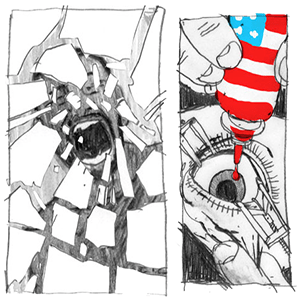
MKULTRA was the code name for a covert, illegal CIA human research program, run by the Office of Scientific Intelligence. This official U.S. government program began in the early 1950s, continuing at least through the late 1960s, and it used U.S. and Canadian citizens as its test subjects.
The published evidence indicates that Project MKULTRA involved the use of many methodologies to manipulate individual mental states and alter brain function, including the surreptitious administration of drugs and other chemicals, sensory deprivation, isolation, and verbal and sexual abuse. The CIA poured millions of dollars into studies examining methods of influencing and controlling the mind, and of enhancing their ability to extract information from resistant subjects during interrogation.
Posted in Politics, Science |
Leave a Comment »
September 3, 2010

Contact juggling is a form of object manipulation that focuses on the movement of objects such as balls in contact with the body. Although often used with ‘toss’ juggling, it typically involves the rolling of one or more balls on the hands and arms to create visual illusions without releasing the props into the air. It is divided into three main techniques: body rolling (manipulating one or more props around the hands, arms, and body), palm spinning (manipulating two or more balls in the open hand so that at least one ball is in motion), and isolation (manipulating a ball so that it appears to be suspended in place).
Some of the manipulations have been performed for centuries, but contact juggling in its modern form originated with a routine called ‘Light’ developed by Michael Moschen in the 1980s. He received high regard from the international circus community for his range of innovative new techniques, and was awarded the MacArthur genius grant in 1990.
Posted in Art, Games |
Leave a Comment »
September 3, 2010

The albedo [al-bee-doh] of an object is a measure of how strongly it reflects light from light sources such as the Sun. It is therefore a more specific form of the term reflectivity. Albedo is an important concept in climatology and astronomy, as well as in computer graphics.
Posted in Language, Science |
Leave a Comment »




 The Daily Omnivore