September 10, 2010

A rōnin [roh-nin] was a samurai with no lord or master during the feudal period (1185–1868) of Japan. A samurai became masterless from the death or fall of his master, or after the loss of his master’s favor or privilege. The word rōnin literally means ‘wave man.’ The term originally referred to a serf who had fled or deserted his master’s land, and later came to be used for a samurai who had lost his master. According to the Bushido Shoshinshu (the Code of the Samurai), a samurai was supposed to commit oibara seppuku (also ‘hara kiri’ – ritual suicide) upon the loss of his master. One who chose not to honor the code was ‘on his own’ and was meant to suffer great shame.
The term rōnin is also used in modern Japan for students who fail the entrance examination for the high school or university of their choice, and then decide to spend the next year studying to retake the exam.
Posted in Language, World |
Leave a Comment »
September 3, 2010
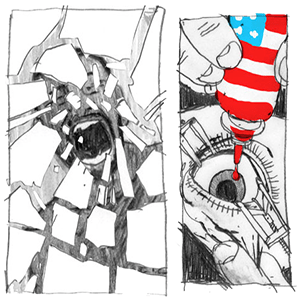
MKULTRA was the code name for a covert, illegal CIA human research program, run by the Office of Scientific Intelligence. This official U.S. government program began in the early 1950s, continuing at least through the late 1960s, and it used U.S. and Canadian citizens as its test subjects.
The published evidence indicates that Project MKULTRA involved the use of many methodologies to manipulate individual mental states and alter brain function, including the surreptitious administration of drugs and other chemicals, sensory deprivation, isolation, and verbal and sexual abuse. The CIA poured millions of dollars into studies examining methods of influencing and controlling the mind, and of enhancing their ability to extract information from resistant subjects during interrogation.
Posted in Politics, Science |
Leave a Comment »
September 3, 2010

Contact juggling is a form of object manipulation that focuses on the movement of objects such as balls in contact with the body. Although often used with ‘toss’ juggling, it typically involves the rolling of one or more balls on the hands and arms to create visual illusions without releasing the props into the air. It is divided into three main techniques: body rolling (manipulating one or more props around the hands, arms, and body), palm spinning (manipulating two or more balls in the open hand so that at least one ball is in motion), and isolation (manipulating a ball so that it appears to be suspended in place).
Some of the manipulations have been performed for centuries, but contact juggling in its modern form originated with a routine called ‘Light’ developed by Michael Moschen in the 1980s. He received high regard from the international circus community for his range of innovative new techniques, and was awarded the MacArthur genius grant in 1990.
Posted in Art, Games |
Leave a Comment »
September 3, 2010

The albedo [al-bee-doh] of an object is a measure of how strongly it reflects light from light sources such as the Sun. It is therefore a more specific form of the term reflectivity. Albedo is an important concept in climatology and astronomy, as well as in computer graphics.
Posted in Language, Science |
Leave a Comment »
September 3, 2010

A hype cycle is a graphic representation of the maturity, adoption and social application of specific technologies. The term was coined by information technology research and advisory firm Gartner.
Posted in Money, Technology |
Leave a Comment »
September 2, 2010
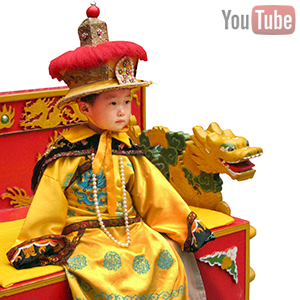
‘Little Emperors‘ is a name that refers to only children in the People’s Republic of China after the one-child policy was implemented. Attributed most frequently to increased spending power within the family unit and the parents’ desire for their child to experience the benefits they were denied, the syndrome results from the children’s sole command of the attention of their parents and grandparents. The Little Emperor effect is primarily an urban phenomenon. The one-child policy is not as rigorously enforced in the countryside as in the urban communities.
Posted in Politics, World |
1 Comment »
September 2, 2010


A hackerspace or hackspace (also referred to as a hacklab, makerspace or creative space) is a location where people with common interests, usually in computers, technology, or digital or electronic art can meet, socialise and/or collaborate. A hackerspace can be viewed as an open community labs incorporating elements of machine shops, workshops and/or studios where hackers can come together to share resources and knowledge to build and make things. Some hackspaces are freely available, and others charge dues for access to equipment and networks.
One notable hackerspace is the Hacker Dojo, a non-profit community center and hackerspace in Mountain View, California, inspired by nearby facilities like Noisebridge, TechShop, The Crucible, and Coworking locations like Citizen Space, Sandbox Suites, and The Hat Factory. The Dojo is a membership organization – nearly all funds come from $100/month membership subscriptions, though the organization has been sponsored by Google and Microsoft. Membership provides access to the 8180 square foot facility, equipped with computers, electronics, and a high speed network.
Posted in Money, Technology |
Leave a Comment »
September 1, 2010


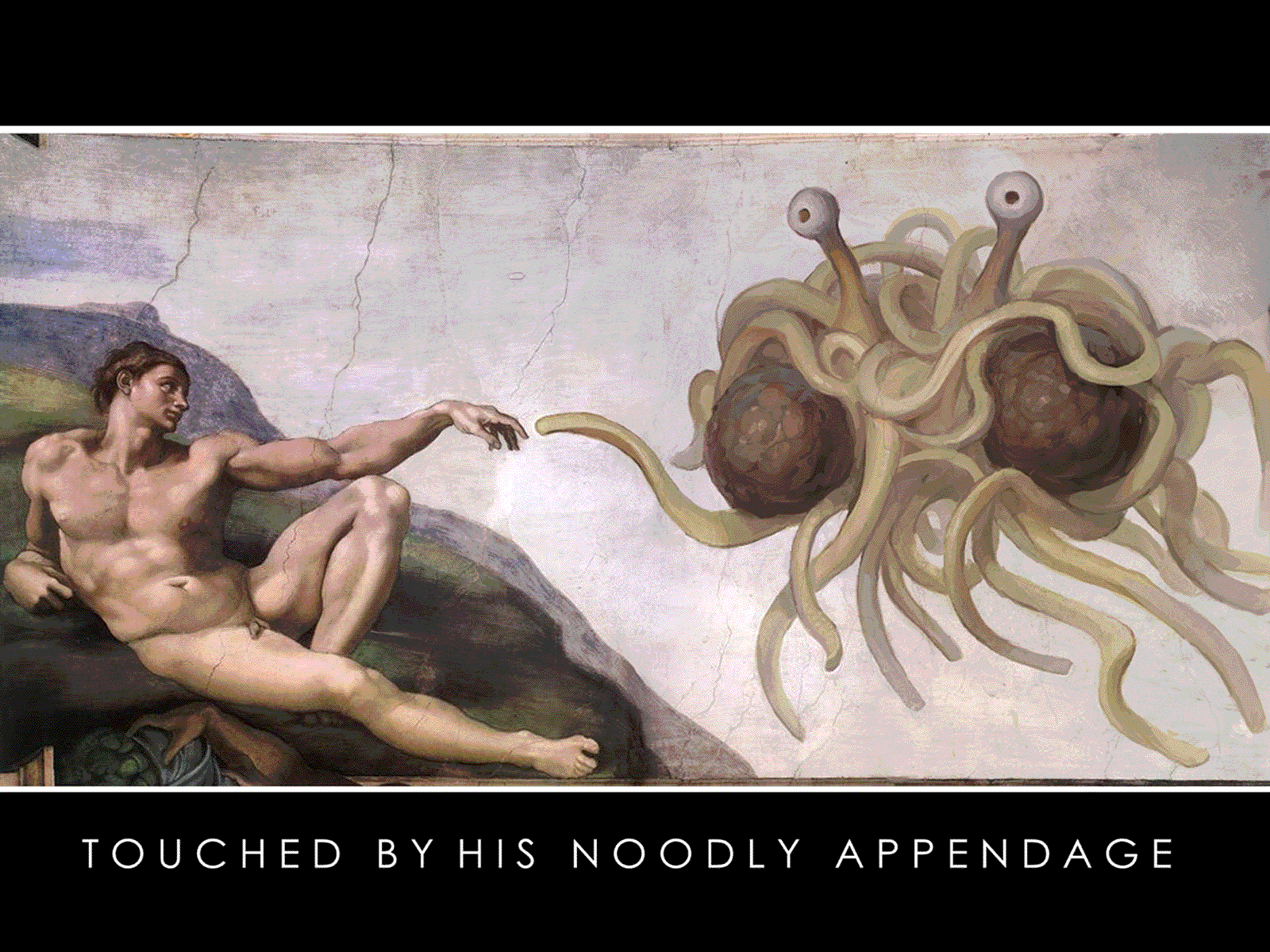
The Flying Spaghetti Monster (FSM) is the deity of the parody religion the Church of the Flying Spaghetti Monster or Pastafarianism, a satirical movement that promotes a light-hearted view of religion and opposes the teaching of intelligent design and creationism in public schools. Created in 2005 by Oregon State physics graduate Bobby Henderson, it was originally intended as a satirical protest against the decision by the Kansas State Board of Education to permit the teaching of intelligent design as an alternative to evolution in public schools. In an open letter, Henderson parodied the concept of intelligent design by professing belief in a supernatural creator which closely resembles spaghetti and meatballs. Henderson further called for his theory of creation to be allotted equal time in science classrooms alongside intelligent design and evolution.
In his letter he wrote, ‘I think we can all look forward to the time when these three theories are given equal time in our science classrooms across the country, and eventually the world; one third time for Intelligent Design, one third time for Flying Spaghetti Monsterism, and one third time for logical conjecture based on overwhelming observable evidence.’
Continue reading →
Posted in Education, Humor, Philosophy |
1 Comment »
September 1, 2010

The Church of the SubGenius is a religious organization often seen as a ‘parody religion,’ that satirizes religion, conspiracy theories, Ufology, and popular culture. Originally based in Dallas, Texas, the Church of the SubGenius gained prominence in the 1980s and 1990s subculture and maintains an active presence on the Internet. In 1996 the legal entity SubGenius Foundation was incorporated in Cleveland, Ohio. The Foundation’s president and founder is Ivan Stang. It’s mascot is ‘world’s greatest salesman’ J. R. ‘Bob’ Dobbs. ‘Bob’ is depicted as a cartoon of a Ward Cleaver-like man smoking a pipe. It’s symbol is the ‘Dobb’s Mark,’ a stylized cross with three bars and a pipe, placed in a pattern that matches the eyes, nose, mouth, and pipe of ‘Bob’s’ image.
The central belief in the Church is the pursuit of ‘Slack,’ which generally stands for the sense of freedom, independence, and original thinking that comes when you stop worrying about personal goals. In essence, slack is about finding satisfaction with what you have and who you are, as opposed for searching for satisfaction in accomplishment.
Posted in Humor, Philosophy |
1 Comment »
August 29, 2010
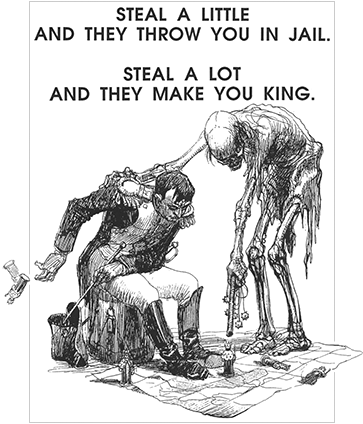
Mammon [mam-uhn] is a term, derived from the Christian Bible, used to describe material wealth or greed, most often personified as a deity.
Posted in Language, Money, Philosophy |
Leave a Comment »
August 25, 2010
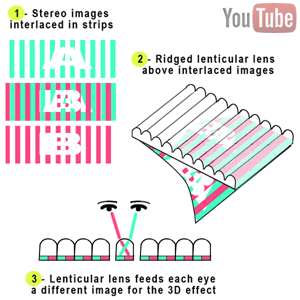

Lenticular [len-tik-yuh-ler] printing is a technology in which a lenticular lens (an array of magnifying lenses, designed so that when viewed from slightly different angles, different images are magnified) is used to produce images with an illusion of depth, or the ability to change or move as the image is viewed from different angles. This technology was created in the 1940s but has evolved in recent years to show more motion and increased depth.
Posted in Art, Technology |
Leave a Comment »
August 25, 2010
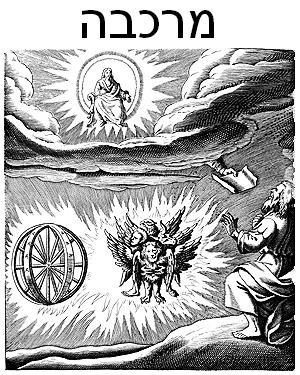
The Hebrew word Merkabah is used in Ezekiel (1:4-26) to refer to the throne-chariot of God, the four-wheeled vehicle driven by four ‘chayot’ (‘living creatures’), each of which has four rings and the four faces of a man, lion, ox, and eagle. Due to the concern of some Torah scholars that misunderstanding these passages as literal descriptions of God’s image might lead to blasphemy and/or idolatry, there was great opposition to studying this topic.
Jewish biblical commentaries emphasize that the imagery of the Merkaba is not meant to be taken literally; rather the chariot and its accompanying angels are analogies for the various ways that God reveals Himself in this world. Hasidic philosophy and Kabbalah discuss at length what each aspect of this vision represents in this world, and how the vision does not imply that God is made up of these forms. Jews customarily read the Biblical passages concerning the Merkaba in their synagogues every year on the holiday of Shavuot, which commemorates the receiving of the Ten Commandments.
Posted in Language, Philosophy |
1 Comment »