March 31, 2025
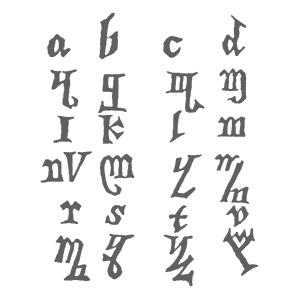
Steganography [steg-uh-nog-ruh-fee] is the practice of representing information within another message or physical object, in such a manner that the presence of the concealed information would not be evident to an unsuspecting person’s examination.
The word steganography comes from Greek words steganós (‘covered or concealed’) and graphia (‘writing’). The first recorded use of the term was in 1499 by German Benedictine abbot Johannes Trithemius in his Steganographia, a treatise on cryptography and steganography, disguised as a book on magic. Continue reading →
Posted in Politics, Science, Technology |
Leave a Comment »
March 21, 2025
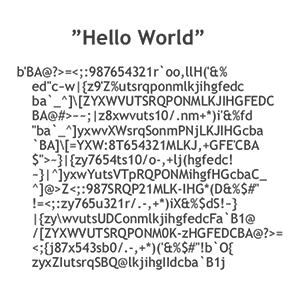
Malbolge [mahl-bol-jeh] is a public domain esoteric programming language invented by Ben Olmstead in 1998, named after the eighth circle of hell in Dante’s Inferno, the Malebolge. It was specifically designed to be almost impossible to use, via a counter-intuitive ‘crazy operation,’ base-three arithmetic, and self-altering code. It builds on the difficulty of earlier challenging esoteric languages (such as Brainfuck and Befunge) but exaggerates this aspect to an extreme degree, playing on the entangled histories of computer science and encryption. Despite this design, it is possible to write useful Malbolge programs, though the author himself has never written one.
The first program was not written by a human being; it was generated by a beam search algorithm designed by Andrew Cooke and implemented in Lisp. Later, Lou Scheffer posted a cryptanalysis of Malbolge and provided a program to copy its input to its output. He also saved the original interpreter and specification after the original site stopped functioning and offered a general strategy of writing programs in Malbolge as well as some thoughts on its Turing completeness.
Posted in Humor, Technology |
Leave a Comment »
March 19, 2025
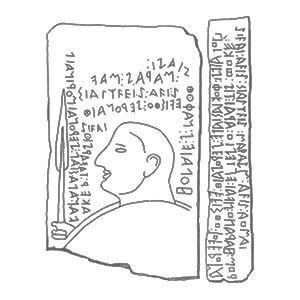
A stele [stee-lee] or stela [stee-lah] is a stone or wooden slab, generally taller than it is wide, erected in the ancient world as a monument. The surface of the stele often has text, ornamentation, or both. These may be inscribed, carved in relief, or painted.
Steles have also been used to publish laws and decrees, to record a ruler’s exploits and honors, to mark sacred territories or mortgaged properties, as territorial markers, as the boundary steles of Akhenaton at Amarna, or to commemorate military victories. They were widely used in the ancient Near East, Mesopotamia, Greece, Egypt, Somalia, Eritrea, Ethiopia, and, most likely independently, in China and elsewhere in the Far East, and, independently, by Mesoamerican civilizations, notably the Olmec and Maya.
Continue reading →
Posted in Philosophy, Politics, World |
Leave a Comment »
March 8, 2025

In mathematics, Hilbert’s program, formulated by German mathematician David Hilbert in the early 1920s, was a proposed solution to the foundational crisis of mathematics, when early attempts to clarify the foundations of mathematics were found to suffer from paradoxes and inconsistencies. Hilbert wanted to ground all existing theories to a finite, complete set of axioms, and provide a proof that these axioms were consistent. He proposed that the consistency of more complicated systems, such as real analysis, could be proven in terms of simpler systems.
Gödel’s incompleteness theorems, published in 1931, showed that Hilbert’s program was unattainable for key areas of mathematics. In his first theorem, Gödel showed that any consistent system with a computable set of axioms which is capable of expressing arithmetic can never be complete. In his second theorem, he showed that such a system could not prove its own consistency, so it certainly cannot be used to prove the consistency of anything stronger with certainty. This refuted Hilbert’s assumption that a finitistic system could be used to prove the consistency of itself, and therefore could not prove everything else. Many current lines of research in mathematical logic, such as proof theory and reverse mathematics, can be viewed as natural continuations of Hilbert’s original program.
Posted in Science, World |
Leave a Comment »
March 3, 2025
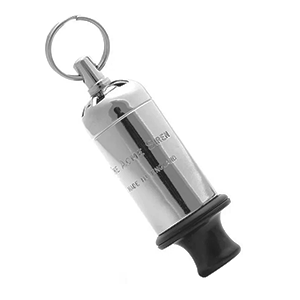
The Acme siren is a musical instrument used in concert bands for comic effect. Often used in cartoons, it produces the stylized sound of a police siren. It is one of the few aerophones in the percussion section of an orchestra. The instrument is typically made of metal and is cylindrical. Inside the cylinder is a type of fan-blade which, when the performer blows through one end, spins and creates the sound. The faster the performer blows, the faster the fan-blade moves and the higher the pitch the instrument creates. Conversely, the slower the performer blows, the lower the pitch.
Iannis Xenakis used it in the 1960s in his works Oresteia, Terretektorh, and Persephassa. A siren was used in Bob Dylan’s classic album, ‘Highway 61 Revisited.’ One is also heard in Stevie Wonder’s song ‘Sir Duke’ just before the second chorus. Dan Zanes also uses a siren in his version of ‘Washington at Valley Forge.’ Acme is the trade name of J Hudson & Co of Birmingham, England, who developed and patented the Acme siren in 1895. It was sometimes known as ‘the cyclist’s road clearer.’
Posted in Art, Humor |
Leave a Comment »
February 13, 2025

The Enhanced Games is a planned international sports event where the athletes will not be subject to drug testing. It is headed by Aron D’Souza, an Australian businessman. The event is meant to take place in 2025. Reactions from the sporting world have been generally negative, with commentators highlighting the safety risks of encouraging performance-enhancing drug use. Critics have dubbed it the Steroid Olympics. Some of the prominent investors in the Enhanced Games include Peter Thiel, Balaji Srinivasan, and Donald Trump Jr.
The event is intended to be annual and to include track and field, swimming, weightlifting, gymnastics, and combat sports. Continue reading →
Posted in Drugs, Games, Health |
1 Comment »
February 5, 2025

Pono [poh-noh] (Hawaiian for ‘proper’ or ‘righteousness’) was a portable digital media player and music download service for high-resolution audio. It was developed by musician Neil Young and his company PonoMusic, which raised money for development and initial production through a crowd-funding campaign on Kickstarter. Production and shipments to backers started in 2014, and shipments to the general public began in the first quarter of 2015.
Pono’s stated goal to present songs ‘as they first sound during studio recording sessions,’ using ‘high-resolution’ 24-bit 192kHz audio instead of ‘the compressed audio inferiority that MP3s offer’ received mixed reactions, with some describing Pono as a competitor to similar music services such as HDtracks, but others doubting its potential for success. Pono was discontinued in 2017, and alternative plans were later abandoned. Continue reading →
Posted in Art, Money, Technology |
Leave a Comment »
February 3, 2025
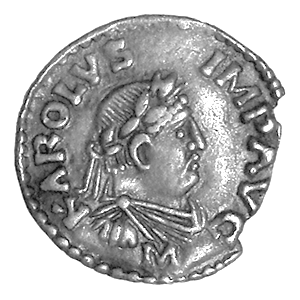
The phantom time conspiracy theory is a pseudohistorical conspiracy theory first asserted by Heribert Illig in 1991. It hypothesizes a conspiracy by the Holy Roman Emperor Otto III, Pope Sylvester II, and possibly the Byzantine Emperor Constantine VII, to fabricate the Anno Domini dating system retroactively, in order to place them at the special year of AD 1000, and to rewrite history to legitimize Otto’s claim to the Holy Roman Empire.
Illig suggested this was achieved through the alteration, misrepresentation and forgery of documentary and physical evidence. According to this scenario, the entire Carolingian period, including the figure of Charlemagne, is a fabrication, with a ‘phantom time’ of 297 years (614–911) added to the Early Middle Ages. Substantial evidence contradicts the hypothesis and it failed to gain the support of historians, and calendars in other European countries, most of Asia and parts of pre-Columbian America contradict this. Continue reading →
Posted in Politics |
Leave a Comment »
January 30, 2025

“Storm Area 51, They Can’t Stop All of Us” event began as a satirical Facebook post by Matty Roberts in June 2019, which jokingly proposed raiding the classified military base in search of aliens and garnered over 2 million RSVPs. Roberts later stated his intentions for the event had been purely comedic, and disavowed responsibility for any casualties had there been any actual attempt to raid the military base.
On the day of the event, only about 150 people were reported to have shown up at the two entrances to Area 51, with none succeeding in entering the site. Two music festivals were planned to coincide with the event: Alienstock in Rachel, Nevada, and Storm Area 51 Basecamp in Hiko, Nevada. An estimated 1,500 people attended these festivals, according to state and local law enforcement. Air Force spokeswoman Grace Manock stated government officials were briefed on the event and discouraged people from attempting to enter military property. Nevada law enforcement also warned potential participants against trespassing. Continue reading →
Posted in Humor, War |
Leave a Comment »
January 26, 2025

Deep learning super sampling (DLSS) is a family of real-time deep learning image enhancement and upscaling technologies developed by Nvidia that are available in a number of video games. The goal of these technologies is to allow the majority of the graphics pipeline to run at a lower resolution for increased performance, and then infer a higher resolution image from this that approximates the same level of detail as if the image had been rendered at this higher resolution. This allows for higher graphical settings and/or frame rates for a given output resolution, depending on user preference.
All generations of DLSS are available on all RTX-branded cards from Nvidia in supported titles. However, the frame generation feature is only supported on 40 series GPUs or newer and multi-frame generation is only available on 50 series GPUs. Nvidia has also introduced Deep learning dynamic super resolution (DLDSR), a related and opposite technology where the graphics are rendered at a higher resolution, then downsampled to the native display resolution using an artificial intelligence-assisted downsampling algorithm to achieve higher image quality than rendering at native resolution. Continue reading →
Posted in Games, Technology |
Leave a Comment »
January 7, 2025

The Outrage Industrial Complex (OIC) is a combination of forces including media outlets, social media influencers, political fundraising messaging, and individuals in media, political leadership or advocacy that in the late 20th and early 21st centuries exploited differences of opinion and what was termed a culture of contempt drawn along political and social lines, increasing distrust of institutions and society, to advance their own desires for fame, wealth, higher office, or for geopolitical reasons.
The OIC creates and distributes outrage media, digital or print content specifically intended to provoke anger or outrage among its consumers to increase engagement. The complex includes media outlets, social media influencers, political fundraising messaging, and individuals in media, political leadership or advocacy who call out ‘outrages,’ hoping to generate what Richard Thompson Ford, writing for ‘The American Interest,’ calls a sense of ‘righteous indignation’ and rage borne of frustration in their readers or listeners, often for their own purposes of attracting advertisers or fame or to intentionally cause social disruption in a country or region. Continue reading →
Posted in Money, Politics |
1 Comment »
December 29, 2024

A meme coin is a cryptocurrency that originated from an Internet meme or has some other humorous characteristic. It is often used interchangeably with the term shitcoin, which typically refers to a cryptocurrency with little to no value, authenticity, or utility.
It may be used in the broadest sense as a critique of the cryptocurrency market in its entirety—those based on particular memes such as ‘doge coins,’ celebrities like Coinye, and pump-and-dump schemes such as BitConnect—or it may be used to make cryptocurrency more accessible. The term is often dismissive, comparing the value or performances of those cryptocurrencies to that of mainstream ones. Supporters, on the other hand, observe that some memecoins have acquired social currency and high market capitalizations. Continue reading →
Posted in Drugs, Humor, Money, Technology |
Leave a Comment »


 The Daily Omnivore