August 9, 2010

Kefir [kuh-feer] is a fermented milk drink that originated with shepherds of the Caucasus region, who discovered that fresh milk carried in leather pouches would occasionally ferment into an effervescent beverage.
It is prepared by inoculating cow, goat, or sheep’s milk with kefir grains (a combination of bacteria and yeasts in a matrix of proteins, lipids, and sugars). Traditional kefir was made in skin bags that were hung near a doorway; the bag would be knocked by anyone passing through the doorway to help keep the milk and kefir grains well mixed. Dairy-free alternatives are available, such as coconut milk kefir and soy milk kefir.
Posted in Food, World |
Leave a Comment »
August 9, 2010

A cow magnet is a preventive veterinary medical device for cattle. A rancher or dairy farmer feeds a magnet to each calf at branding time; the magnet settles in the rumen or reticulum and remains there for the life of the animal. When the cow grazes, it often consumes and swallows what is called tramp iron: baling and barbed wire, staples, nails, and other metallic objects.
These objects are indigestible and would lodge in the reticulum and cause inflammation resulting in lower milk production (for dairy cattle) or lower weight gain (for feeder stock). This condition is called hardware disease. The cow magnet attracts such objects and prevents them from becoming lodged in the animal’s tissue. While the resultant mass of iron remains in the cow’s rumen as a sort of bezoar, it does not cause the severe problems of hardware disease.
Posted in Food, Technology |
1 Comment »
August 9, 2010
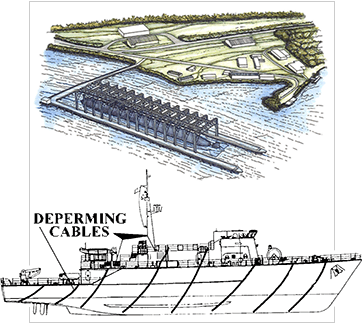
Deperming [dee-purm-ing] is a procedure for erasing the permanent magnetism from ships and submarines to camouflage them against magnetic detection vessels and enemy marine mines. A sea-going metal-hulled ship or submarine, by its very nature, develops a magnetic signature as it travels due to a magneto-mechanical interaction with the Earth’s magnetic field. This signature can be exploited by magnetic mines, or facilitate the detection of a submarine by ships or aircraft with magnetic anomaly detection (MAD) equipment.
Specialized deperming facilities, such as the United States Navy’s Lambert’s Point Deperming Station are used to perform the procedure. Heavy gauge copper cables are wrapped around the hull and superstructure of the vessel, and very high electrical currents (as high as 4000 amps) are pulsed through the cables. This has the effect of ‘resetting’ the ship’s magnetic signature. It is also possible to assign a specific signature that is best suited to the particular area of the world in which the ship will operate. Over time the deperm will begin to degrade and the procedure must be redone periodically to maintain the desired effect.
Posted in Technology, War |
Leave a Comment »
August 9, 2010
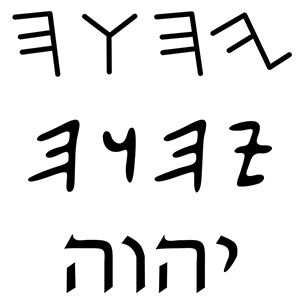
Ineffability [in-ef-fuh-bil-uh-tee] is concerned with ideas that cannot or should not be expressed in spoken words (or language in general), often being in the form of a taboo or incomprehensible term. Illogical statements, principles, reasons, and arguments are intrinsically ineffable along with impossibilities, contradictions, and paradoxes.
Terminology describing the nature of experience cannot be properly conveyed in symbolic language; it is believed that this knowledge is only held by the individual from which it originates. Obscene profanity and vulgarisms, however, can easily (and clearly) be stated – but they simply should not be and so are still considered ineffable.
Posted in Language, Philosophy |
Leave a Comment »
August 9, 2010

The Montessori [mon-tuh-sawr-ee] method is an approach to educating children based on the research of Italian physician and educator Maria Montessori (1870–1952). The focus of the method is on providing the student freedom to manage their own education. The role of the teacher (sometimes called director, directress, or guide) is to watch over the learning environment to remove any obstacles that would interfere with the student’s natural development.
The method is primarily applied with young children (2–6), due to the young child’s unique instincts and sensitivity to conditions in the environment. However, it is sometimes conducted with elementary age (6–12) children and occasionally with infants and toddlers, as well as at the middle and high school level.
Posted in Education, Philosophy |
Leave a Comment »
August 9, 2010
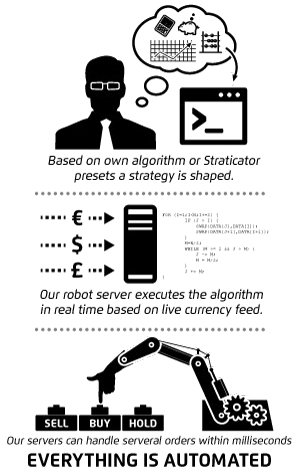
In electronic financial markets, algorithmic trading or automated trading, also known as algo trading, black-box trading or robo trading, is the use of computer programs for entering trading orders with the computer algorithm deciding on aspects of the order such as the timing, price, or quantity of the order, or in many cases initiating the order without human intervention. Investment decisions and implementation may be augmented at any stage with algorithmic support or may operate completely automatically (‘on auto-pilot’).
Algorithmic Trading is widely used by pension funds, mutual funds, and other buy side (investor driven) institutional traders, to divide large trades into several smaller trades in order to manage market impact, and risk. Sell side traders, such as market makers and some hedge funds, provide liquidity to the market, generating and executing orders automatically. A special class of algorithmic trading is ‘high-frequency trading’ (HFT), in which computers make elaborate decisions to initiate orders based on information that is received electronically, before human traders are capable of processing the information.
Posted in Money, Technology |
1 Comment »
August 9, 2010

Zen is a school of Mahāyāna Buddhism (the larger of the two major traditions of Buddhism existing today, the other being Theravāda). The Japanese word zen is derived from the Chinese word chán, which in turn is derived from the Sanskrit word dhyāna, which means ‘meditation’ or ‘meditative state.’ Zen aims at enlightenment by direct intuition through meditation.
The emergence of Zen as a distinct school of Buddhism was first documented in China in the 7th century CE. From China, Zen spread south to Vietnam, and east to Korea and Japan. As a matter of tradition, the establishment of Zen is credited to the South Indian prince-turned-monk Bodhidharma, who came to China to teach a ‘special transmission outside scriptures, not founded on words or letters.’
Posted in Philosophy, World |
Leave a Comment »
August 9, 2010
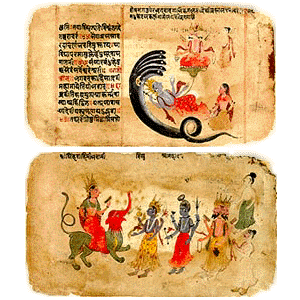
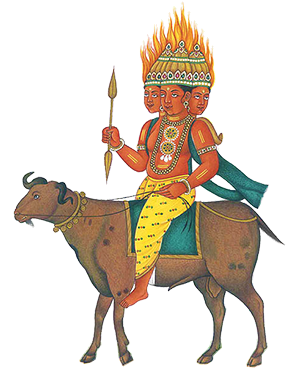
The Vedas [vey-duhs] (Sanskrit for ‘knowledge’) are a large body of texts originating in ancient India, which constitute the oldest Sanskrit literature (1500–1000 BCE) and the oldest scriptures of Hinduism. The texts are aggregated around the four canonical Vedas:.Rig Veda, Sama Veda, Yajur Veda, and Atharva Veda. Together they make up a sacred collection of hymns, incantations, and liturgical rites. The Atharva Veda is less predominant than other Vedas and is little used in solemn ritual. According to Hindu tradition, the Vedas are, ‘not of human agency.’ The individual verses contained in these compilations are known as mantras. Some selected Vedic mantras are still recited at prayers, religious functions and other auspicious occasions in contemporary Hinduism.
The various Indian philosophies and sects have taken differing positions on the Vedas. Schools of Indian philosophy which cite them as their scriptural authority are classified as orthodox. Other traditions, notably Buddhism, Sikhism, and Jainism, which did not regard the Vedas as authorities are referred to by traditional Hindu texts as heterodox schools.
Posted in Language, Philosophy, World |
Leave a Comment »
August 7, 2010
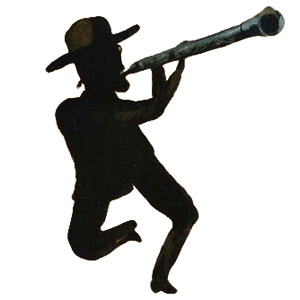
Klezmer [klez-mer] is a musical tradition of the Ashkenazic Jews of Eastern Europe. Played by professional musicians called klezmorim, the genre consists largely of dance tunes and instrumental display pieces for weddings and other celebrations. Although the genre has its origins in Eastern Europe, the particular form now known as klezmer developed in the United States in the milieu of Yiddish-speaking Jewish immigrants who arrived between 1880 and 1924.
Of all the musical styles which influenced the traditional Klezmer musicians, the Romanian influence seems to be the strongest and most enduring. Traditional Romanian music was heard, adopted and adapted by Klezmer musicians. This fact is reflected in the dance forms found throughout the entire surviving Klezmer music repertoire (e.g., Horas).
Posted in Art, World |
Leave a Comment »
August 7, 2010

Zydeco [zahy-di-koh] is a form of American roots or folk music. It evolved in southwest Louisiana in the early 19th century from forms of Creole music. The rural black Creoles of southwest Louisiana and southeast Texas still sing in Louisiana Creole French. The word is derived from the French word le zaricot, which means ‘green beans’ or ‘snap beans.’
Usually fast tempo and dominated by accordion and a form of a washboard known as a ‘rub-board’ or frottoir, zydeco music was originally created at house dances, where families and friends gathered for socializing. Sometimes the music moved to the Catholic Church community center, as Creoles were mostly Catholic. Later it moved to rural dance halls and nightclubs. As a result, the music integrated waltzes, shuffles, two-steps, blues, rock and roll, and most dance music forms of the era. Today, the tradition of change and evolution in the music continues. It stays current while integrating even more genres such as R&B, soul, brass band, reggae, urban hip, ska, rock, Afro-Caribbean and other styles, in addition to the traditional forms.
Posted in Art |
Leave a Comment »
August 7, 2010

Playing for Change is a multimedia music project created by the American producer and sound engineer Mark Johnson with his Timeless Media Group, that seeks to bring together musicians from around the world. Playing For Change also created a separate non-profit organization called the Playing For Change Foundation which builds music schools for children around the world.
The creators of the project, Mark Johnson and Enzo Buono, traveled around the world to places such as New Orleans, Barcelona, South Africa, India, Nepal, the Middle East and Ireland. Using a mobile recording equipment, the duo recorded local musicians performing the same song, interpreted into their own style.
Posted in Art, World |
Leave a Comment »
August 6, 2010
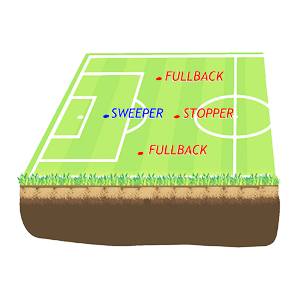
The sweeper is a position on a soccer team. It is versatile type of defender who ‘sweeps up’ the ball if an opponent manages to breach the defensive line. He is more fluid than other defenders who man-mark their designated opponents. Because of this, the position is sometimes referred to as libero; from the Italian word meaning ‘free.’
Though the sweeper may be expected to build counter-attacking moves, and as such requires better ball control and passing ability than a typical back, his or her talents are often confined to the defensive realm. In modern football, its usage has been fairly restricted, with few clubs in the biggest leagues using the position.
Posted in Games |
Leave a Comment »




 The Daily Omnivore