June 25, 2010
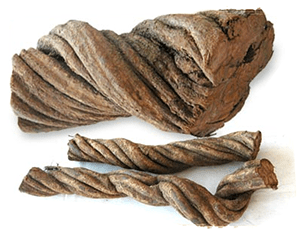

Ayahuasca [ah-yuh-wah-skuh] is any of various psychoactive infusions or decoctions prepared from the Banisteriopsis spp. vine, usually mixed with the leaves of dimethyltryptamine (DMT)-containing species of shrubs.
The brew, first described academically in the early 1950s by Harvard ethnobotanist Richard Evans Schultes, who found it employed for divinatory and healing purposes by Amerindians of Amazonian Colombia, is known by a number of different names.
Posted in Drugs, World |
2 Comments »
June 25, 2010

Mine Resistant Ambush Protected (MRAP) vehicles are a family of armored fighting vehicles designed to survive IED attacks and ambushes, which are replacing many High Mobility Multipurpose Wheeled Vehicles (HMMWVs) in Iraq and Afghanistan. There is no common MRAP vehicle design; there are several vendors, each with a competing entry.
Posted in Politics, Technology, War |
Leave a Comment »
June 25, 2010

Bill Brasky was the subject of a series of sketches on Saturday Night Live between 1996 and 1998. The sketches were written by cast member Will Ferrell and writer Adam McKay. The format of the sketches resembles the short-form improv game ‘Two Describe a Third.’ Three or four friends (known as the ‘Bill Brasky Buddies’) gather in a public place to drink Scotch, smoke cigars, and loudly reminisce about their mutual acquaintance Bill Brasky. While the friends refer to Brasky in both present and past tense on occasion, it appears that Brasky is still alive: some sketches end with Brasky’s appearance via a forced perspective shot that makes him look like a giant. One sketch, set at Brasky’s funeral, ends with Brasky breaking out of the coffin holding a glass of Scotch.
Most of the friends’ discussions focus on their admiration of Brasky’s superhuman accomplishments, usually focused on his huge size, virility, celebrity connections, amazing tolerance for drugs and alcohol, and reckless disregard for human life. The stories of Brasky’s life and seemingly legendary accomplishments are exaggerated to absurd levels in the American tradition of tall tales.
Posted in Art, Humor |
Leave a Comment »
June 24, 2010

Namahage is a Japanese ritual which is observed throughout Oga Peninsula, Akita Prefecture in northern Honshu, Japan. On New Year’s Eve, a group of young men dressed up as fierce demons or bogeymen, Namahage, visit each house in the village, shouting, ‘any misbehaving kids live here?’ They then scare children in the houses, telling them not to be lazy or cry, though little children often do burst into tears. Then the parents will assure the Namahage that there is no bad child in their house, and give food or traditional Japanese alcoholic beverages to the demons.
Posted in Philosophy, World |
Leave a Comment »
June 24, 2010

The English language makes a distinction between blue and green, but some languages do not. Of these, quite a number do not distinguish blue from black either. In languages that do not have separate terms for blue and green, one word applies to both (when the issue is discussed in linguistics, this cover term is sometimes called grue or bleen in English).
Posted in Language, World |
Leave a Comment »
June 24, 2010

The locality of Boron, California, produces a most unusual form of Ulexite. Gigantic hunks of this mineral are found in great amounts in the form of fibrous, compact veins. When polished, these specimens become the famous ‘Television Stone’ sold to amateur collectors. The optical effect exhibited by Television Stone is caused by each of its individual fibers acting as fiber-optic cables, transmitting light from one surface to the other. Since all the fibers are parallel and compacted together, any image at one surface is transmitted through each fiber to the other surface. Thus, any text or image at the bottom of a specimen appears as if it is on top.
Posted in Science |
Leave a Comment »
June 24, 2010

In disc golf or other disc-related sports, a hyzer [hahy-zer] is a throw which curves in the direction opposite of the arm used to throw. For a normal straight shot, you release the disc flat. To throw a hyzer, simply tilt the edge of the disc opposite your grip toward the ground. The more you tilt this edge toward the ground at release, the faster the disc will curve off in the hyzer direction. For an anhyzer, the edge is tilted up, and the disc curves in the same direction as the arm used to throw.
The terms are similar to hook and slice in golf. Hook shots curve in the direction opposite of the player’s handedness (i.e. right-handed players hook left), and slices do the opposite (i.e. right handed players slice right).
Posted in Games, Language |
Leave a Comment »




