June 29, 2010
In publishing and graphic design, lorem ipsum is the name given to commonly used placeholder text (filler text) to demonstrate the graphic elements of a document or visual presentation, such as font, typography, and layout. The lorem ipsum text, which is typically a nonsensical list of semi-Latin words, is an edited version of a Latin text by Cicero, with words/letters omitted and others inserted, but not proper Latin
Even though using ‘lorem ipsum’ often arouses curiosity because of its resemblance to classical Latin, it is not intended to have meaning. Where text is visible in a document, people tend to focus on the textual content rather than upon overall presentation, so publishers use lorem ipsum when displaying a typeface or design elements and page layout in order to direct the focus to the publication style and not the meaning of the text.
Posted in Language, Money |
Leave a Comment »
June 29, 2010

Sir Joseph Wilson Swan was a British physicist and chemist, most famous for the invention of the incandescent light bulb. Swan received a patent for his device in 1878, about a year before Thomas Edison. His house was the first in the world to be lit by a light bulb.
Posted in Science, Technology |
Leave a Comment »
June 29, 2010

Baader-Meinhof is the phenomenon where one happens upon some obscure piece of information– often an unfamiliar word or name– and soon afterwards encounters the same subject again, often repeatedly. The phenomenon bears some similarity to synchronicity, which is the experience of having a highly meaningful coincidence… such as having someone telephone you while you are thinking about them. How the phenomenon came to be known as ‘Baader-Meinhof’ is uncertain. It seems likely that some individual learned of the existence of the historic German urban guerrilla group which went by that name, and then heard the name again soon afterwards.
Posted in Language, Science |
Leave a Comment »
June 29, 2010

Kaya is a coconut jam made from coconut milk, eggs flavored by pandan leaf, and sugar. The spread originated in Southeast Asia, most likely Indonesia or Malaysia. Kaya is sweet and creamy, available as a golden brown or green colored spread depending on the amount of pandan and extent of caramelization of the sugar. As with other jams, kaya is typically spread on toast to make kaya toast and eaten in the morning but is enjoyed throughout the day.
Posted in Food, World |
Leave a Comment »
June 29, 2010

An impossible object (also known as an impossible figure or an undecidable figure) is a type of optical illusion consisting of a two-dimensional figure which is instantly and unconsciously interpreted by the visual system as representing a projection of a three-dimensional object although it is not actually possible for such an object to exist.
Posted in Art, Science |
Leave a Comment »
June 29, 2010

An effect whereby the perception of positive qualities in one thing or part gives rise to the perception of similar qualities in related things or in the whole. An example of the halo effect would be judging a good-looking person as more intelligent. The term is commonly used in human resources recruitment. It refers to the risk that an interviewer will notice a positive trait in an interviewee and, as a result, will overlook their negative traits.
Posted in Money, Science |
Leave a Comment »
June 28, 2010

Dazzle camouflage, also known as Razzle Dazzle or Dazzle painting, was a camouflage paint scheme used on ships, extensively during World War I and to a lesser extent in World War II. Credited to artist Norman Wilkinson, it consisted of a complex pattern of geometric shapes in contrasting colours, interrupting and intersecting each other.
Dazzle did not conceal the ship but made it difficult for the enemy to estimate its type, size, speed and heading. The idea was to disrupt the visual rangefinders used for naval artillery. Its purpose was confusion rather than concealment. An observer would find it difficult to know exactly whether the stern or the bow is in view; and it would be equally difficult to estimate whether the observed vessel is moving towards or away from the observer’s position.
Posted in Art, Technology, War |
Leave a Comment »
June 28, 2010
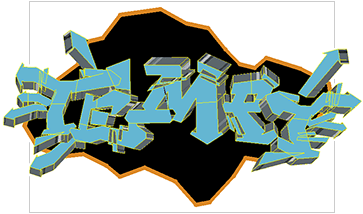

EyeWriter is a low-cost eyetracking system originally designed for paralyzed graffiti artist TEMPT1. The EyeWriter system uses inexpensive cameras and open-source computer vision software to track the wearer’s eye movements of their eye. EyeWriter was developed by artists and engineers from the Free Art & Technology Lab, Graffiti Research Lab and OpenFrameworks teams, including Zachary Lieberman, Evan Roth, James Powderly, Theo Watson and Chris Sugrue. The project received almost $18,000 as a kickstarter project, which surpassed its $15,000 goal. It also received funding support from The Ebeling Group and from Parsons School of Design.
The EyeWriter software consist of eye-tracking software, and a drawing software that allows a user to draw with the movement of their eye. The source code is open source with a Artistic/GPL License (a free use licence). The software for both parts has been developed using openframeworks, a cross platform c++ library for creative development. Eyewriter 2.0 led to the development of Livewriter to be used in the 2010 Cinekid festival: in addition to Eyewriter’s original parameters, a robot arm was integrated allowing the physical recording of visually created content.
Posted in Art, Health, Technology |
Leave a Comment »
June 28, 2010

Instant runoff voting (IRV), also known as the Alternative Vote (AV), is a form of preferential voting (ranked choice voting). Under the IRV voting system voters rank candidates in order of preference, most commonly in single-winner elections. If no candidate is the first preference of a majority of voters, the candidate with the fewest number of first preference rankings is eliminated and that candidate’s ballots are redistributed at full value to the remaining candidates according to the next preference on each ballot. This process is repeated until one candidate obtains a majority of votes among the remaining candidates.
Posted in Politics |
Leave a Comment »
June 28, 2010
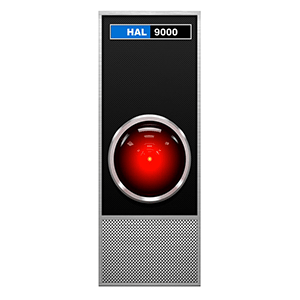
This is a list of films set in the future. It includes films with settings beyond the year in which they were released, even if that setting is now in the past. It also includes films which are set only partially in the future, in which case the only years of setting listed are those which are in the future.
Posted in Art |
Leave a Comment »
June 28, 2010
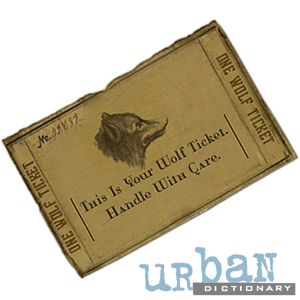
Wolf ticket (or woof ticket) is a slang term meaning a verbal threat, criticism, or insult used to intimidate an opponent. The term originates from ‘woofing,’ meaning aimless talk, an onomatopoeic reference to the sound of dogs barking. The term is usually used as a part of the phrase ‘to sell wolf tickets,’ meaning to bluff or threaten someone in a boastful way, or ‘to buy wolf tickets,’ meaning to call the bluff or accept the implied challenge.
Professor Emeritus Herbert L. Foster noted in the first edition of his book ‘Ribbin’, Jivin’, and Playin’ the Dozens: The Unrecognized Dilemma of Inner City Schools’ that his students, in New York City Public School 613, about 1964, started using the expression ‘woof’ or ‘wolf’ ticket interchangeably. Since he was teaching graphic arts, his students, at first, printed wolf tickets. As Foster became more astute about his students’ street culture, he created the woof ticket that was used on the street and discussed further in his book. Continue reading →
Posted in Language |
Leave a Comment »
June 28, 2010

Slash fiction, or slashfic, is a genre of fan fiction that focuses on the depiction of romantic or sexual relationships between fictional characters. While the term was originally restricted to stories in which male media characters were involved in an explicit adult relationship as a primary plot element, it is now often used to refer to any fan story containing a pairing between same-sex characters, although many fans distinguish the female-focused variety as a separate genre commonly referred to as ‘femslash.’
Posted in Language, Love, Sex |
Leave a Comment »