May 1, 2016
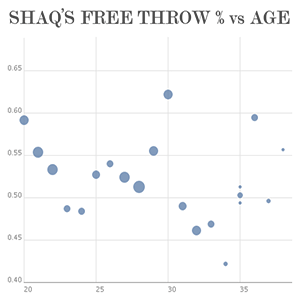
Hack-a-Shaq is a basketball strategy initially instituted in NBA by the Dallas Mavericks coach Don Nelson to hinder the scoring ability of the opposing team by continuously committing fouls against opposing players with weak free throw percentages.
Nelson initially devised the strategy for use against the Chicago Bulls, specifically power forward Dennis Rodman, who was a poor free throw shooter. However, it ultimately became better-known for its implementation against center Shaquille O’Neal. The name of the strategy is sometimes altered to reflect the player being fouled, for example ‘Hack-a-Howard’ for Dwight Howard. Continue reading →
Posted in Games |
1 Comment »
April 28, 2016
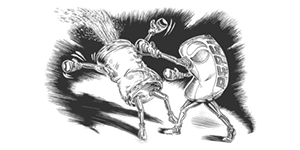

The Pepsi Challenge is an ongoing marketing promotion run by PepsiCo since 1975. It is also the name of a cross country ski race at Giant’s Ridge Ski Area in Biwabik, Minnesota, an event sponsored by Pepsi. The challenge originally took the form of a single blind taste test. At malls, shopping centers, and other public locations, a Pepsi representative set up a table with two white cups: one containing Pepsi and one with Coca-Cola. Shoppers were encouraged to taste both colas, and then select which drink they prefer. The results of the test leaned toward a consensus that Pepsi was preferred by more Americans.
The Pepsi Challenge taste test ad campaign is frequently credited for Coca-Cola’s decision to introduce New Coke in 1985. In his book ‘Blink: The Power of Thinking Without Thinking’ (2005), author Malcolm Gladwell presents evidence that suggests Pepsi’s success over Coca-Cola is a result of the flawed nature of the ‘sip test’ method. His research shows that tasters will generally prefer the sweeter of two beverages based on a single sip, even if they prefer a less sweet beverage over the course of an entire can. Additionally, many participants recalled a difference in temperature between the two drinks. According to these claims, Pepsi was served chilled, while Coca-Cola was served at room temperature, thus making the Pepsi more appealing.
Posted in Food, Money |
1 Comment »
April 27, 2016
‘Buyology: Truth and Lies About Why We Buy’ (2008) is a bestselling book by Danish marketing expert Martin Lindstrom, in which he analyzes buying decisions. The author attempts to identify the factors that influence buyers’ decisions in a world cluttered with messages such as advertisements, slogans, jingles, and celebrity endorsements. Lindstrom, through a study of the human psyche, examines the subconscious mind and its role in deciding what the buyer will buy. He debunks some myths about advertising and promotion.
‘Buyology’ is claimed to be a result of the author’s three year neuromarketing study on 2,081 people to identify the effect of brands, logos, commercials, advertisements and products on them. Neuromarketing investigates the sensorimotor, cognitive, and affective response to marketing stimuli. The study was funded by seven corporations, including GlaxoSmithKline, Hakuhodo, Fremantle – and Lindstrom himself. The study evaluates the effectiveness of logos, product placement and subliminal advertising, the influence of our senses and the correlation between religion and branding.
Posted in Language, Money |
Leave a Comment »
April 26, 2016

A go-fast boat is a small, fast boat designed with a long narrow platform and a planing hull to enable it to reach high speeds. During the era of Prohibition, these boats joined the ranks of ‘rum-runners’ transferring illegal liquor from larger vessels waiting outside territorial waters to the mainland. The high speed of such craft enabled them to avoid interception by the Coast Guard. More recently the term ‘cigarette boat’ has become common.
The present era of cigarette boats, dating from the 1960s, owes much of their design to boats designed for offshore powerboat racing, particularly by designer and builder Donald Aronow. During this period, these boats were used by drug smugglers to transfer drugs across the Caribbean to the United States. Continue reading →
Posted in Drugs, Politics, Technology |
Leave a Comment »
April 25, 2016

Prince Rogers Nelson (1958 – 2016), known as Prince, was an American singer, songwriter, multi-instrumentalist, record producer, and actor. He was a musical innovator and known for his eclectic work, flamboyant stage presence, extravagant dress and makeup, and wide vocal range. His music integrates a wide variety of styles, including funk, rock, R&B, soul, psychedelia, and pop.
Prince was born in Minneapolis and developed an interest in music as a young child. He secured a recording contract with Warner Bros at the age of 18, and released his album ‘For You’ in 1978. His 1979 album ‘Prince’ went platinum, and his next three records—’Dirty Mind’ (1980), ‘Controversy’ (1981), and ‘1999’ (1982)—continued his success, showcasing Prince’s trademark of prominently sexual lyrics and blending of funk, dance, and rock music. In 1984, he began referring to his backup band as ‘The Revolution’ and released ‘Purple Rain,’ which served as the soundtrack to his film debut of the same name and was met with widespread acclaim. Continue reading →
Posted in Art |
Leave a Comment »
April 20, 2016
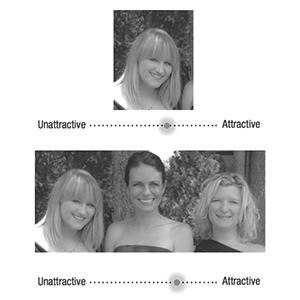
The cheerleader effect, also known as the group attractiveness effect, is the cognitive bias which causes people to think individuals are more attractive when they are in a group. The concept has been backed up by clinical research by psychologists Drew Walker and Edward Vul. The effect occurs because of the brain’s tendency to calculate the average properties of an object when viewing a group.
Walker and Vul proposed that this effect arises due to the interplay of three cognitive phenomena: the human visual system takes ‘ensemble representations’ of faces in a group; perception of individuals is biased towards this average; average faces are more attractive, perhaps due to ‘averaging out of unattractive idiosyncrasies.’ Continue reading →
Posted in Science, Sex |
Leave a Comment »
April 19, 2016
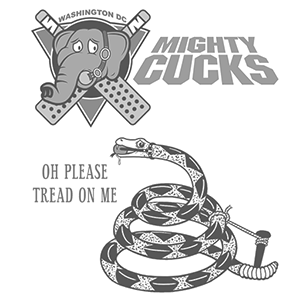
The alt-right is a segment of far-right ideologies in the US presented as an alternative to mainstream conservatism in its national politics. The alt-right has been described as a movement unified by support for Republican Presidential candidate Donald Trump, opposition to multiculturalism and immigration, opposition to feminism, and anti-democratic thought. Although there is no official ideology associated with the alt-right, various sources say it includes beliefs such as Dark Enlightenment (reactionary movement that broadly rejects egalitarianism), monarchism, nativism, right-wing populism, business nationalism, identitarianism, white nationalism, antisemitism, racialism, white supremacy, and American secessionism.
Ian Tuttle writing in ‘National Review’ states that ‘The Alt-Right has evangelized over the last several months primarily via a racist and anti-Semitic online presence. But for Bokhari and Yiannopoulos, the Alt-Right consists of fun-loving provocateurs, valiant defenders of Western civilization, daring intellectuals—and a handful of neo-Nazis keen on a Final Solution 2.0, but there are only a few of them, and nobody likes them anyways.’
Posted in Politics |
Leave a Comment »
April 15, 2016
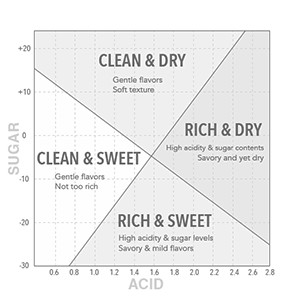
Apéritifs and digestifs are drinks, typically alcoholic, served before (apéritif) or after (digestif) a meal. An apéritif is served to stimulate the appetite, and is therefore usually dry rather than sweet. A digestif is intended to aid digestion. When served after a coffee course, it may be called ‘pousse-café.’ Digestifs are usually taken straight and typically contain carminative herbs, which are thought to aid digestion. ‘Apéritif’ is a French word derived from the Latin verb ‘aperire,’ which means ‘to open.’ The French slang word for ‘apéritif’ is ‘apéro,’ although in France an ‘apéro’ is also light food eaten in the late afternoon/early evening.
Common apéritif choices include dry vermouth, champagne, pastis (an anise-flavored spirit from France), gin, and dry sherry (e.g. fino and amontillado). ‘Apéritif’ may also refer to a snack that precedes a meal. This includes an amuse-bouche (a single, bite-sized hors d’oeuvre), such as crackers, cheese, pâté or olives. Common kinds of digestif include: Brandy, Cream Sherry, Sweet Vermouth, Port, Grand Marnier, Jagermeister, Kahlua, limoncello, ouzo, and tequila. In certain areas, it is not uncommon for a digestif to be taken before a main course. One example is le trou Normand, a glass of Calvados taken before the main course of a meal. Continue reading →
Posted in Food |
Leave a Comment »
April 14, 2016

Fuerdai is a Chinese term that means ‘the second generation of the rich.’ This term is used to describe social and moral problems that are associated with modern China’s recent economic ascendency. Fuerdai are sons and daughters of the Chinese nouveau riche of the early years of China’s reform era (from the late 1970s onward). During the new era, in which private initiative could be rewarded by wealth, many new rich Chinese emerged in the former-socialist society. Their children often enjoy a comfortable lifestyle and have a much easier and obstacle-free life path.
Most wealthy Chinese send their children abroad to get a better education. This especially true in the US and Canada where it is common to see well-off Chinese students attending driving cars that are out of reach for the vast majority of American students. Universities look favorably to this kind of international student as they generate more revenue and tend to pay more fees. Places like Los Angeles, San Francisco, Seattle, Vancouver, West Lafayette, Indiana (home to Purdue University), Toronto, Boston, New York, and Dallas tend to have high numbers of Fuerdai, who will often attend university for four years and sell their cars right after graduation.
Posted in Money, Politics, World |
1 Comment »
April 11, 2016

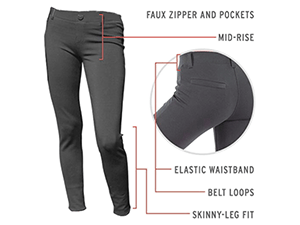
Athleisure is a trend in fashion in which clothing designed for athletic workouts (sometimes termed ‘activewear) is worn outside of the gym to go to the office or shopping or other social occasions. Athleisure outfits are ‘yoga pants, tights and leggings’ that ‘look like athletic wear’ characterized as ‘fashionable, dressed up sweats and exercise clothing.’ The idea is that ‘gym clothes are making their way out of the gym and becoming a larger part of people’s everyday wardrobes.’
One account suggests that the trend came about because people could wear them for multiple occasions without having to change, which meant greater convenience, since people did not have to carry an extra gym outfit on the way to the office, for example. Reports in the Wall Street Journal describe the athleisure market as growing, displacing typical workwear styles, and cutting into sales of jeans. While the trend was started by women, men are increasingly turning to athleisure wear as well. For men’s fashion, athleisure wear began with luxury sweatpants (‘joggers’) and then moved to the upper torso region with ‘dressy/sporty versions of men’s blazers, varsity jackets, pea coats and sweaters.’
Posted in Games, Money |
Leave a Comment »
April 10, 2016

In sporting terminology, to telegraph is to unintentionally alert an opponent to one’s immediate situation or intentions. The sporting use of the term telegraph draws a direct comparison with the communication device of the same name. ‘Telegraphing’ always refers to a reflexive physical action rather than a protracted or intellectual give-away. For example, a boxer rotating his shoulders to throw a hook would be telegraphing. A rugby team betraying its line-out plays by using an easily decoded line-out code is not.
While telegraphing is a hazard for any sporting event, it is particularly risky at upper levels of competition where talented players are better able to anticipate and react to telegraphed actions. The ability to suppress telegraphing is often the hallmark of elite athletes. Continue reading →
Posted in Games |
1 Comment »
April 8, 2016
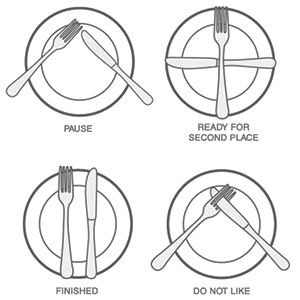
The silent service code is a way for a diner to ‘talk’ to servers during a meal without saying a word, mainly to tell them that the diner is finished. This will prevent any embarrassing situations where the server would take a meal prematurely.
To tell a server you have finished place your napkin to the left of your plate, and place all your utensils together in a ‘4-o’clock’ position on your plate. Utensils crossed on a plate signify that a diner is still eating. If you must leave during the meal, you should place the napkin on your chair to avoid any confusion. The code is almost always taught during business dining etiquette classes.
Posted in Food, Language |
Leave a Comment »


 The Daily Omnivore