March 4, 2016


Affective forecasting (also known as the ‘hedonic forecasting mechanism’) is the prediction of one’s affect (emotional state) in the future. As a process that influences preferences, decisions, and behavior, affective forecasting is studied by both psychologists and economists, with broad applications.
Psychologist Daniel Kahneman and business school professor Jackie Snell began research on hedonic forecasts in the early 1990s, examining its impact on decision making. The term ‘affective forecasting’ was later coined by psychologists Timothy Wilson and Daniel Gilbert. Early research focused solely on measuring emotional forecasts, while subsequent studies examined accuracy, revealing that people are surprisingly poor judges of their future emotional states. For example, in predicting how events like winning the lottery might affect their happiness, people are likely to overestimate future positive feelings, ignoring the numerous other factors that might contribute to their emotional state outside of the single lottery event. Continue reading →
Posted in Health, Money |
Leave a Comment »
March 3, 2016
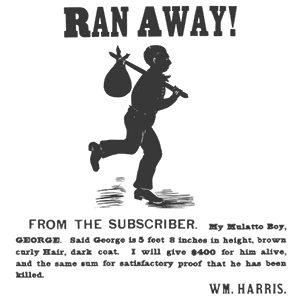
Drapetomania [drah-pay-too-mey-nee-uh] was a supposed mental illness described by American physician Samuel A. Cartwright in 1851 that caused black slaves to flee captivity. Today, drapetomania is considered an example of pseudoscience and part of the edifice of scientific racism. The term derives from the Greek ‘drapetes’ (‘runaway [slave]’) and ‘mania’ (‘madness, frenzy’). In ‘Diseases and Peculiarities of the Negro Race,’ Cartwright points out that the Bible calls for a slave to be submissive to his master, and by doing so, the slave will have no desire to run away.
Cartwright described the disorder – which, he said, was ‘unknown to our medical authorities, although its diagnostic symptom, the absconding from service, is well known to our planters and overseers’– in a paper delivered before the Medical Association of Louisiana that was widely reprinted. He stated that the malady was a consequence of masters who ‘made themselves too familiar with [slaves], treating them as equals.’ Continue reading →
Posted in Health, Politics |
1 Comment »
March 2, 2016

A sneakerhead is a person who collects, trades or admires sneakers as a hobby. The birth of sneakerhead culture in the United States came in the 1980s and can be attributed to two major sources: basketball, specifically the emergence of Michael Jordan and his eponymous Air Jordan line of shoes released in 1985, and the growth of hip hop music. The boom of signature basketball shoes during this era provided the sheer variety necessary for a collecting subculture, while the Hip-Hop movement gave the sneakers their street credibility as status symbols.
Several popular brands and styles of sneakers have emerged as collectors items in the sneakerhead subculture, including Air Jordans, Air Force Ones, Nike Dunks, Nike Skateboarding (SB), Nike Foamposites, Nike Air Max, and in the past few years, the Nike Air Yeezy. Shoes that have the most value are usually exclusive or limited editions. Also certain color schemes may be rarer relative to others in the same sneaker, inflating desirability and value. Recently, sneaker customs, or one-of-a-kind sneakers that have been hand-painted, have become popular as well.
Posted in Art, Games, Money |
Leave a Comment »
March 1, 2016


The bandwagon effect is a phenomenon whereby the rate of uptake of beliefs, ideas, fads and trends increases the more that they have already been adopted by others. As more people come to believe in something, others also ‘hop on the bandwagon’ regardless of the underlying evidence.
The tendency to follow the actions or beliefs of others can occur because individuals directly prefer to conform to social pressure, or because individuals derive information from others. The former has been used to explain Asch’s conformity experiments, a series of studies directed by Polish American social psychologist Solomon Asch studying if and how individuals yield to or defy a majority group and the effect of such influences on beliefs and opinions. Continue reading →
Posted in Health, Money, Philosophy |
1 Comment »
February 29, 2016


Political parties in the US hold conventions to select the party’s nominee for President, as well as to adopt a statement of party principles and goals known as the ‘platform.’ Since the 1970s, voting has for the most part been perfunctory; the selection of the major parties’ nominees have rarely been in doubt, so a single ballot has always been sufficient.
If there is no single candidate receiving a majority of delegates at the end of the primary season, a scenario called a brokered convention results, where a candidate is selected either at or near the convention, through political horse-trading and lesser candidates compelling their delegates to vote for one of the front runners. The closest to a brokered convention in recent years was at the 1976 Republican National Convention, when neither Gerald Ford nor Ronald Reagan received enough votes in the primary to lock up the nomination. Since then, candidates have received enough momentum to reach a majority through pledged and bound delegates before the date of the convention. Continue reading →
Posted in Politics |
1 Comment »
February 28, 2016

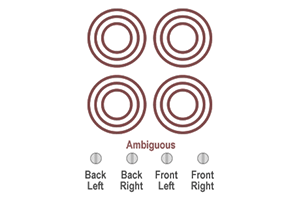
‘The Design of Everyday Things‘ is a 1988 book by cognitive scientist and usability engineer Donald Norman on design’s role in enabling communication been objects and their users, and how to optimize that conduit to make the experience more effective. One of the main premises of the book is that although people are often keen to blame themselves when objects appear to malfunction, it is not the fault of the user but rather the lack of intuitive guidance that should be present in the design. In the book, Norman introduced the term ‘affordance’ as it applied to design, defining it as things that afford the opportunity for an organism to perform an action.
For example, a knob affords twisting, and perhaps pushing, while a cord affords pulling. 20th century American psychologist James J. Gibson originally coined the term ‘affordance’ to describe changes made to one’s environment to make them more usable, such as carving stairs into a steep hill. Norman also popularized the term ‘user-centered design’ to describe design based on the needs of the user, leaving aside what he deemed secondary issues like aesthetics. User-centered design involves simplifying the structure of tasks, making things visible, getting the mapping right, exploiting the powers of constraint, designing for error, and explaining affordances.
Posted in Language, Technology |
Leave a Comment »
February 27, 2016

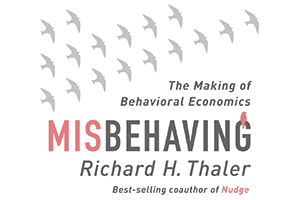
Psychological pricing (also known as ‘price ending’ and ‘charm pricing’) is a pricing/marketing strategy based on the theory that certain prices have a psychological impact. Consumers tend to perceive ‘odd prices’ as being significantly lower than they actually are, mentally rounding to the next lowest monetary unit. Thus, prices such as $1.99 are associated with spending $1 rather than $2. Now that many customers are used to odd pricing, some restaurants and high-end retailers psychologically-price in even numbers in an attempt to reinforce their brand image of quality and sophistication.
In a traditional cash transaction, fractional pricing imposes tangible costs on the vendor (printing fractional prices), the cashier (producing awkward change) and the customer (stowing the change). These factors have become less relevant with the increased use of checks, credit and debit cards and other forms of currency-free exchange; also, the addition of sales tax makes the pre-tax price less relevant to the amount of change (although in Europe the sales tax is generally included in the shelf price). Continue reading →
Posted in Money |
Leave a Comment »
February 26, 2016


A reduced-gravity aircraft is a type of fixed-wing aircraft that provides brief near-weightless environments for training astronauts, conducting research and making gravity-free movie shots. Versions of such airplanes, officially nicknamed ‘Weightless Wonders,’ were operated by the NASA Reduced Gravity Research Program.
The aircraft gives its occupants the sensation of weightlessness by following an elliptic flight path relative to the center of the Earth. While following this path, the aircraft and its payload are in free fall at certain points of its flight path. The aircraft is used in this way to demonstrate to astronauts what it is like to orbit the Earth. There are 25 seconds of weightlessness out of 65 seconds of flight in each parabola. The airplane typically flies about 40–60 parabolic maneuvers. In about two thirds of the passengers, these flights produce nausea due to airsickness, giving the plane its nickname ‘vomit comet.
Posted in Humor, Technology |
Leave a Comment »
February 25, 2016

Swatting is the act of deceiving an emergency service into dispatching a police response based on the false report of an ongoing critical incident. The term derives from SWAT (Special Weapons and Tactics), a heavily armored police unit. Swatting has been associated with online harassment campaigns, and episodes range from the deployment of bomb squads and evacuations of schools and businesses, to a single fabricated police report meant to discredit an individual as a prank or personal vendetta.
The action of swatting – linked to the action of ‘doxxing’ (obtaining the address and details of an individual) – has been described as terrorism due to its potential to cause disruption, waste the time of emergency services, divert attention from real emergencies and possibly cause injuries and psychological harm to persons targeted. The act of making false reports to emergency services is punishable by prison sentences in the US and is a crime in many other countries. Continue reading →
Posted in Politics, Technology |
1 Comment »
February 24, 2016
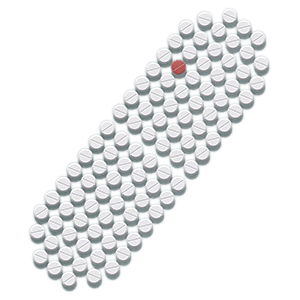
Microdosing is a technique for studying the behavior of drugs in humans through the administration of doses so low (‘sub-therapeutic’) they are unlikely to produce whole-body effects, but high enough to allow the cellular response to be studied. This allows the observation of a drug’s pharmacokinetics with a low risk of side effects. This is called a ‘Phase 0 study’ and is usually conducted before clinical Phase I to predict whether a drug is viable for the next phase of testing. Human microdosing aims to reduce the resources spent on non-viable drugs and the amount of testing done on animals.
Psychedelic drugs are also sometimes used at sub-therapeutic doses for non-hallucinogenic effects. For example, LSD at one tenth the normal dose has been reported to have antidepressant properties and is said to aid in problem solving.
Posted in Drugs, Health |
1 Comment »
February 23, 2016

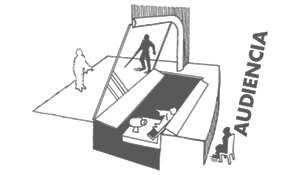
Pepper’s ghost is an illusion technique used in theater, amusement parks, museums, television, and concerts. It is named after John Henry Pepper, a scientist who popularized the effect in a famed demonstration in 1862. It has a long history, dating into the 16th century, and remains widely performed today.
Notable examples of the illusion are the ‘Girl-to-Gorilla’ trick found in old carnival sideshows and the appearance of ‘ghosts’ at the ‘Haunted Mansion’ at Disneyland. Teleprompters are a modern implementation of Pepper’s ghost. They reflect a speech or script and are commonly used for live broadcasts such as news programs. Examples of concert illusions based on Pepper’s ghost are the appearance of Tupac Shakur onstage with Dr. Dre and Snoop Dogg at the 2012 Coachella Music and Arts Festival and Michael Jackson at the 2014 Billboard Music Awards. Continue reading →
Posted in Art, Technology |
Leave a Comment »
February 21, 2016

In scholastic philosophy, quiddity [kwid-i-tee] was another term for the essence of an object, literally ‘what it is’ or its ‘whatness.’ The term derives from the Latin word ‘quidditas,’ meaning ‘what it was to be (a given thing),’ which was used by the medieval scholastics as a literal translation of the equivalent term in Aristotle’s Greek. It describes properties that a particular substance (e.g. a person) shares with others of its kind. The question ‘what (quid) is it?’ asks for a general description by way of commonality.
Quiddity was often contrasted by the scholastic philosophers with the ‘haecceity’ or ‘thisness’ of an item, which was supposed to be a positive characteristic of an individual that caused them to be this individual, and no other. It is used in this sense in British poet George Herbert’s eponymous poem, ‘Quiddity.’ In law, the term is used to refer to a quibble or academic point. An example can be seen in Hamlet’s graveside speech: ‘Where be his quiddities now, his quillets, his cases, his tenures’ says Hamlet, referring to a lawyer’s quiddities.
Posted in Language, Philosophy |
1 Comment »


 The Daily Omnivore