September 9, 2015


The Overton window is the range of ideas the public will accept. It is used by media pundits and particularly favored in conservative and libertarian discourse.
The term derives from its originator, Joseph P. Overton (1960–2003), of the Mackinac Center for Public Policy, a free market think tank. Overton described six degrees acceptance of an idea: Unthinkable, Radical, Acceptable, Sensible, Popular, and Policy. Continue reading →
Posted in Language, Money, Politics |
Leave a Comment »
September 8, 2015

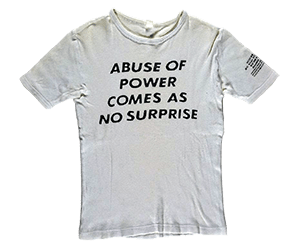
A predictable surprise describes a situation or circumstance in which avoidable crises are marginalized in order to satisfy economic and social policies. The term was popularized by Harvard Business School professors Max H. Bazerman and Michael D. Watkins who defined ‘predictable surprises’ as problems that: at least some people are aware of, are getting worse over time, and are likely to explode into a crisis eventually, but are not prioritized by key decision-makers or have not elicited a response fast enough to prevent severe damage.
These problems tend to require a significant investment in the near term that will not pay off until later. This could involve changes to established organization culture and/or changes that competing interests do not benefit from. Frequently cited examples include the Iraq War, Enron, the subprime mortgage crisis, the Hurricane Katrina response, global warming, and the Catholic sex abuse scandal.
Posted in Language, Money, Politics |
1 Comment »
September 7, 2015
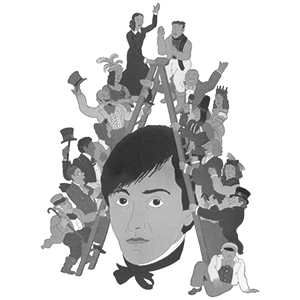
Nicholas Nickleby is a novel by Charles Dickens. Originally published as a monthly serial from 1838 to 1839, it was Dickens’ third novel. The book centers on the life and adventures of Nicholas Nickleby, a young man who must support his mother and sister after his father dies. Dickens began writing ‘Nickleby’ while still working on ‘Oliver Twist’ and while the mood is considerably lighter, his depiction of the Yorkshire school run by Wackford Squeers is as moving and influential as those of the workhouse and criminal underclass in ‘Twist.’
Like most of Dickens’ early works, the novel has a contemporary setting. Much of the action takes place in London, with several chapters taking place in Dickens’ birthplace of Portsmouth, as well as settings in Yorkshire and Devon. The tone of the work is that of ironic social satire, with Dickens taking aim at what he perceives to be the class injustices of Victorian England. Many memorable characters are introduced, including Nicholas’ malevolent Uncle Ralph, and the villainous Wackford Squeers, who operates an abusive all-boys boarding school at which Nicholas temporarily serves as a tutor. Continue reading →
Posted in Art, Language |
Leave a Comment »
September 6, 2015
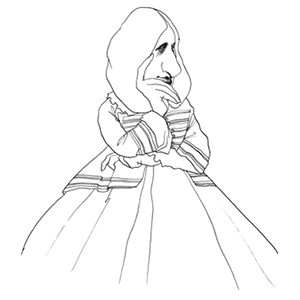
‘Silas Marner: The Weaver of Raveloe’ is the third novel by George Eliot, pen name of English novelist Mary Ann Evans. Published in 1861, it is an outwardly simple tale of a linen weaver, it is notable for its strong realism and its sophisticated treatment of a variety of issues ranging from religion to industrialization to community. Eliot’s novels often presented the cases of social outsiders and small-town persecution.
The novel is set in the early years of the 19th century. Silas Marner, a weaver, is a member of a small Calvinist congregation in Lantern Yard, a slum street in an unnamed city in Northern England. He is falsely accused of stealing the congregation’s funds while watching over the very ill deacon. Continue reading →
Posted in Art, Language |
1 Comment »
September 5, 2015
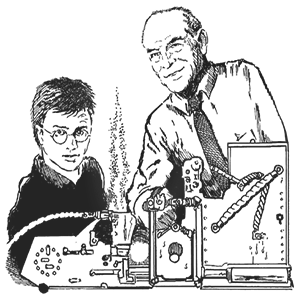
Don Herbert (1917 – 2007) was the creator and host of educational television programs for children devoted to science and technology, notably ‘Watch Mr. Wizard’ (1951–65, 1971–72) and ‘Mr. Wizard’s World’ (1983–90). He also produced many short video programs about science and authored several popular books about science for children. Marcel LaFollette of the Smithsonian notes that no fictional hero was able to rival the popularity and longevity of ‘the friendly, neighborly scientist.’
In Herbert’s obituary, Bill Nye wrote, ‘Herbert’s techniques and performances helped create the United States’ first generation of homegrown rocket scientists just in time to respond to Sputnik. He sent us to the moon. He changed the world.’ Herbert is credited with turning ‘a generation of youth’ in the 1950s and early 1960s onto ‘the promise and perils of science.’
Continue reading →
Posted in Art, Education, Science |
2 Comments »
August 29, 2015


Stewart Brand (b. 1938) is an American writer, best known as editor of the ‘Whole Earth Catalog,’ a counterculture magazine and mail order catalog. He founded a number of organizations, including The WELL (one of the oldest virtual communities in continuous operation), the Global Business Network (a scenario planner and forecaster for companies, NGOs, and governments), and the Long Now Foundation (a nonprofit that promotes very long-term projects, e.g. a 10,000 year clock). He is the author of several books, most recently ‘Whole Earth Discipline: An Ecopragmatist Manifesto.’
Brand attended Phillips Exeter Academy. He studied biology at Stanford University, graduating in 1960. His first marriage was to Lois Jennings, an Ottawa Native American and mathematician. As a soldier in the Army, he was a parachutist and taught infantry skills; he later expressed the view that his experience in the military had fostered his competence in organizing. A civilian again in 1962, he studied design at San Francisco Art Institute, photography at San Francisco State College, and participated in a legitimate scientific study of then-legal LSD, in Menlo Park, California. Continue reading →
Posted in Language, Politics, Technology |
Leave a Comment »
August 26, 2015
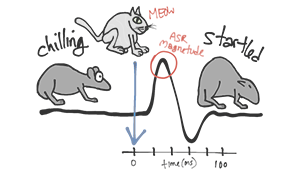

The startle response is a brainstem reflectory reaction (reflex) that serves to protect the back of the neck (whole-body startle) and the eyes (eyeblink) and facilitates escape from sudden stimuli. It is found across the lifespan of many species. An individual’s emotional state may lead to a variety of responses. The acoustic startle reflex is thought to be caused by an auditory stimulus greater than 80 decibels.
The anterior cingulate cortex in the brain is largely thought to be the main area associated with emotional response and awareness, which can contribute to the way an individual reacts to a startle inducing stimuli. Along with the anterior cingulate cortex, the amygdala and the hippocampus are known to have implications in this reflex. The amygdala is known to have a role in the ‘fight or flight’ response, and the hippocampus functions to form memories of the stimulus and the emotions associated with it.
Posted in Health, Science |
4 Comments »
August 22, 2015

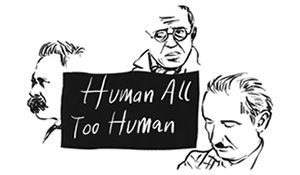
The moral credential effect is a bias that occurs when a person’s track record as a good egalitarian establishes in them an unconscious ethical certification, endorsement, or license that increases the likelihood of less egalitarian decisions later. This effect occurs even when the audience or moral peer group is unaware of the affected person’s previously established moral credential. For example, individuals who had the opportunity to recruit a woman or African American in one setting were more likely to say later, in a different setting, that a job would be better suited for a man or a Caucasian.
Moral credentials can also be obtained vicariously (i.e., a person may behave as if they themselves have moral credentials after observing someone from a group they identify with making an egalitarian decision). In research that draws on social identity theory it was also found that group membership moderates the effectiveness of moral credentials in mitigating perceptions of prejudice (e.g., displays of moral credentials have more effect between people who share in-group status). In 1878, philosopher Friedrich Nietzsche wrote of ‘innocent corruption’ in ‘Human, All Too Human’: ‘In all institutions that do not feel the sharp wind of public criticism (as, for example, in scholarly organizations and senates), an innocent corruption grows up, like a mushroom.’
Posted in Health, Philosophy, Politics |
Leave a Comment »
August 20, 2015

Baker-Miller Pink is a tone of pink that was originally created by mixing one gallon of pure white indoor latex paint with one pint of red trim semi-gloss outdoor paint. It is named for the two US Navy officers who first experimented with its use in the Naval Correctional Facility in Seattle, Washington at the behest of researcher Alexander Schauss. The color is also known as Schauss pink, after Alexander Schauss’s extensive research into the effects of the color on emotions and hormones, as well as P-618 and ‘Drunk-Tank Pink’ (so named because jails cells are painted this color because it is believed to calm inmates).
Contemporary research has shown conflicting results on the effects of Baker-Miller pink. While the initial results at the Naval Correctional facility in Seattle were positive, calming those exposed, inmates at the Santa Clara county jail were trying to scratch the paint from the walls with their fingernails when exposed for more than fifteen minutes. At Johns Hopkins, appetite suppression was observed and studied. Continue reading →
Posted in Health, Science, War |
1 Comment »
August 11, 2015
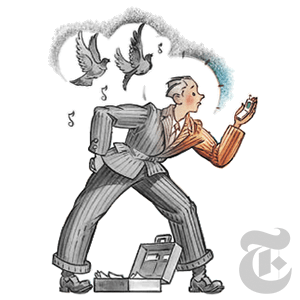
Phantom vibration syndrome or ‘phantom ringing’ is the mistaken feeling that one’s mobile phone is vibrating or ringing. Other terms for this concept include ringxiety (a portmanteau of ‘ring’ and ‘anxiety’) and ‘fauxcellarm’ (a play on ‘false alarm’). It is a form of pareidolia, a psychological phenomenon involving a stimulus (such as an image or a sound) wherein the mind perceives a familiar pattern where none actually exists. Phantom ringing may be experienced while taking a shower, watching television, or using a noisy device. Humans are particularly sensitive to auditory tones between 1,000 and 6,000 hertz, and basic mobile phone ringers often fall within this range.
In the comic strip ‘Dilbert,’ cartoonist Scott Adams referenced such a sensation in 1996 as ‘phantom-pager syndrome.’ The earliest published use of the term dates to a 2003 article in the ‘New Pittsburgh Courier,’ written by Robert D. Jones. In the conclusion of the article, Jones writes, ‘…should we be concerned about what our mind or body may be trying to tell us by the aggravating imaginary emanations from belts, pockets and even purses? Whether PVS is the result of physical nerve damage, a mental health issue, or both, this growing phenomenon seems to indicate that we may have crossed a line in this ‘always on’ society.’
Posted in Health, Science, Technology |
Leave a Comment »
August 10, 2015

Hawaiian pizza is made up of a dough crust, tomato sauce, Canadian bacon, and pineapple rings or chunks. Often versions will have ham, mixed peppers, mushrooms and bacon.
Pineapple as a pizza topping divides public opinion. Hawaiian was the most popular pizza in Australia in 1999, accounting for 15% of pizza sales, and a 2015 review of independent UK pizzerias found the Hawaiian pizza to be the most commonly available. However, a 2016 survey of US adults had pineapple in the top three least favorite pizza toppings, behind anchovies and mushrooms. Continue reading →
Posted in Food, World |
Leave a Comment »
August 8, 2015


Extraterrestrial real estate is land on other planets or natural satellites or parts of space that is offered for sale. No such sale has ever been recognized by any authority. Nevertheless, some private individuals and organizations have claimed ownership of celestial bodies, such as the Moon, and are actively involved in ‘selling’ parts of them through certificates of ownership termed ‘Lunar deeds,’ ‘Martian deeds,’ or similar sham legal documents.
The topic of real estate on celestial objects has been present since the 1890s. In 1936, A. Dean Lindsay made claims for all extraterrestrial objects. He sent a letter to the Pittsburgh Notary Public along with a deed and money for establishment of the property. The public sent offers to buy objects from him as well. The UN sponsored 1967 ‘Outer Space Treaty’ established all of outer space as an international commons by describing it as the ‘province of all mankind’ and forbidding all the nations from claiming territorial sovereignty. Continue reading →
Posted in Money, Politics, World |
Leave a Comment »


 The Daily Omnivore