July 13, 2015

‘The Truth Machine‘ is a 1996 science fiction novel by James L. Halperin about an infallible lie detector. Soon, every citizen must pass a thorough test under a Truth Machine to get a job or receive any sort of license. Eventually, people begin wearing them all the time, thus eliminating dishonesty in all parts of human interaction, including most crime, terrorism and a great deal of general social problems.
The novel focuses on the life story of the machine’s inventor, Pete Armstrong, a child prodigy whose life has been defined by the tragic murder of his younger brother, Leonard, by an ex-convict who was believed to be capable of committing violent crimes again, but who could not be incarcerated on mere suspicions. Armstrong claimed that as long as it was employed universally (and not just by government officials), the ‘truth machine’ could revolutionize humanity and take it to that next evolutionary step. However, the protagonist places a back door in the device, allowing him to avoid detection when he repeats fragments of Walt Whitman’s poem ‘O Captain! My Captain!’ in his mind.
Posted in Language, Politics, Technology |
Leave a Comment »
July 12, 2015

Priming is an implicit memory effect in which exposure to one stimulus influences the response to another stimulus. Studies show that people are faster in deciding that a string of letters is a word when it follows an associatively or semantically related word. For example, ‘nurse’ is recognized more quickly following ‘doctor’ than ‘bread.’ As another example, if the original concept is ‘red’ and the word ‘vehicles’ is primed, people are much more likely to say ‘fire engine’ instead of something unrelated to vehicles, such as ‘cherries.’ If instead ‘fruits’ was primed, they would likely name ‘cherries.’
Priming can also be visual, rather than semantic; if people see an incomplete sketch they are unable to identify and they are shown more of the sketch until they recognize the picture, later they will identify the sketch at an earlier stage than was possible for them the first time. The effects of priming can be very salient and long lasting, even more so than simple recognition memory. Unconscious priming can affect word choice long after the primes have been consciously forgotten. Priming works best when the two stimuli are in the same modality. For example visual priming works best with visual cues and verbal priming works best with verbal cues. But priming also occurs between modalities. Continue reading →
Posted in Health |
Leave a Comment »
July 9, 2015
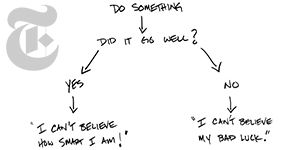

Explanatory style is a psychological attribute that indicates how people explain to themselves why they experience a particular event, either positive or negative. There are three main components: Personal (internal vs. external), Permanent (stable vs. unstable), and Pervasive (global vs. local/specific).
‘Personalization’ refers to how one explains the cause of an event. People experiencing events may see themselves as the cause; that is, they have internalized the cause for the event (e.g. ‘I always forget to make that turn,’ as opposed to, ‘That turn can sure sneak up on you’). ‘Permanenence’ describes how one explains the extent of the cause. People may see a situation as unchangeable (e.g., ‘I always lose my keys’ or ‘I never forget a face’). ‘Pervasiveness’ measures how one explains the extent of the effects. People may see a situation as affecting all aspects of life (e.g., ‘I can’t do anything right’ or ‘Everything I touch seems to turn to gold’). Continue reading →
Posted in Health, Language, Science |
1 Comment »
June 29, 2015

‘Character Strengths and Virtues‘ (CSV) is a 2004 book by psychologists Christopher Peterson and Martin Seligman that presents humanist ideals of virtue in an empirical, rigorously scientific manner. Seligman describes it as a ‘positive’ counterpart to the Diagnostic and Statistical Manual of Mental Disorders (DSM). While the DSM focuses on what can go wrong, CSV is designed to look at what can go right.
In their research they looked across cultures and time to distill a manageable list of virtues that have been highly valued from ancient China and India, through Greece and Rome, to contemporary Western cultures. Their list includes six character strengths: wisdom/knowledge, courage, humanity, justice, temperance, and transcendence. Each of these has three to five sub-entries; for instance, temperance includes forgiveness, humility, prudence, and self-regulation. The authors do not believe that there is a hierarchy for the six virtues; no one is more fundamental than or a precursor to the others. Continue reading →
Posted in Health, Language, Science |
Leave a Comment »
June 23, 2015
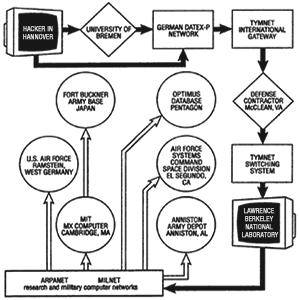
‘The Cuckoo’s Egg: Tracking a Spy Through the Maze of Computer Espionage’ is a 1989 book written by Clifford Stoll, an astronomer turned systems administrator of the computer center of the Lawrence Berkeley Laboratory (LBL) in California. It is his first-person account of the hunt for a computer hacker who broke into a computer at the lab.
In August of 1986 his supervisor asked him to resolve a US$0.75 accounting error in the computer usage accounts. He traced the error to an unauthorized user who had apparently used up nine seconds of computer time and not paid for it, and eventually realized that the unauthorized user was a hacker who had acquired root (high-level) access to the LBL system by exploiting a vulnerability in the movemail function of the original GNU Emacs (an open-source computer program that moves a user’s mail to another file). Continue reading →
Posted in Language, Technology, War |
Leave a Comment »
June 22, 2015

Vimāna [vi-mah-nuh] is a mythological flying palace or chariot described in Hindu texts and Sanskrit epics. The Pushpaka Vimana of the demon king Ravana is the most quoted example. Vimanas are also found in Jain texts. The word literally means ‘measuring out, traversing.’
Oxford Sanskrit scholar Monier Monier-Williams defined it as ‘a car or a chariot of the gods, any mythical self-moving aerial car (sometimes serving as a seat or throne, sometimes self-moving and carrying its occupant through the air; other descriptions make the Vimana more like a house or palace, and one kind is said to be seven stories high).’ It may denote any car or vehicle, especially a bier (a wheeled altar for transporting coffins), or a ship as well as a palace of an emperor, especially with seven stories. Continue reading →
Posted in Philosophy, Technology, World |
Leave a Comment »
June 19, 2015
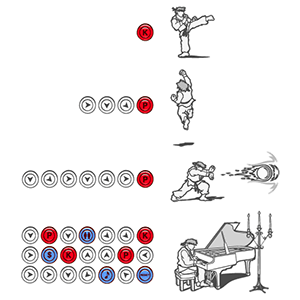
A learning curve graphically represents the amount of experience it takes to learn a given task. Skills with a steep learning curve are difficult to learn quickly, but progress comes rapidly once past the initial hurdle. Activities with a shallow learning curve, by contrast, are said to be ‘easy to learn, hard to master’ (Bushnell’s Law of video game design).
The term can refer to individual tasks repeated in a series of trials or a body of knowledge is learned over time. It was first described by German psychologist Hermann Ebbinghaus in 1885. His tests involved memorizing series of nonsense syllables, and recording the success over a number of trials. The translation does not use the term learning curve—but he presents diagrams of learning against trial number. He also notes that the score can decrease, or even oscillate. Continue reading →
Posted in Education, Games, Money |
1 Comment »
June 18, 2015
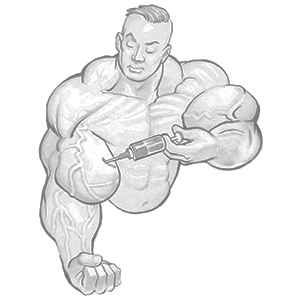
Some bodybuilders, particularly at professional level, inject substances such as ‘site enhancement oil,’ commonly known as synthol [sin-thawl], to mimic the appearance of developed muscle where it may otherwise be disproportionate or lagging. This is practice is referred to as ‘fluffing.’ (Synthol is also the name of an all natural mouthwash available in France since 1920 that is also packaged as a gel and spray for the treatment of muscular pain.)
Site enhancement oil is 85% oil, 7.5% lidocaine (a local anesthetic), and 7.5% alcohol. It is not restricted, as it is ostensibly sold for topical use only, and many brands are available on the internet. The use of injected oil to enhance muscle appearance was abandoned in the late 20th century as it can cause pulmonary embolisms (blood clots in the lungs), nerve damage, infections, skin lesions, stroke, and the formation of oil-filled cysts in the muscle. Sesame oil is often used, which can cause allergic reactions such as vasculitis (inflamed blood vessels). An aesthetic issue is drooping of muscle under gravity.
Posted in Drugs, Games, Health |
Leave a Comment »
June 17, 2015
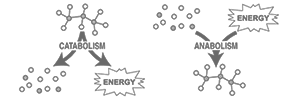
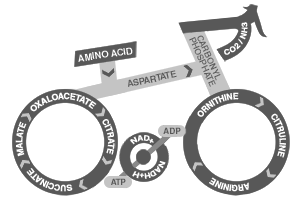
Metabolism [muh-tab-uh-liz-uhm] is the name given to the chemical reactions which keep an organism alive. A chemical reaction is the transformation of one set of chemical substances to another. Organisms require myriad reactions to grow, reproduce, maintain their structures, and respond to their environments. These reactions are catalyzed by enzymes (aided by reusable proteins that change the rate of chemical reactions).
Most of the structures that make up animals, plants, and microbes are made from three basic classes of molecule: amino acids (the building blocks of proteins), carbohydrates (sugars), and lipids (fats). As these molecules are vital for life, metabolic reactions either focus on making these molecules during the construction of cells and tissues (anabolism), or by breaking them down and using them as a source of energy, by their digestion (catabolism). Continue reading →
Posted in Health, Science |
1 Comment »
June 16, 2015

The Lowline, formally known as the Delancey Underground, is a proposal for the world’s first underground park. The subterranean public space would be located under the eastbound roadway of Delancey Street on the Lower East Side of Manhattan (adjacent to the Essex Street station).
Co-founders James Ramsey and Dan Barasch have suggested natural light would be directed below ground using fiber optics—described in the proposed plan as ‘remote skylights’—to provide an area in which trees and grass could be grown beneath the city streets. Continue reading →
Posted in Technology, World |
Leave a Comment »
June 13, 2015

Tokenism [toh-kuh-niz-uhm] is the policy and practice of making a perfunctory gesture towards the inclusion of members of minority groups. The effort of including a token employee to a workforce usually is intended to create the appearance of social inclusiveness and diversity (racial, religious, sexual, etc.), and so deflect accusations of discrimination.
Employment tokenism misrepresents the person possessing inferior intellect, job skills, and work capacity, relative to the other workers of the group, as well as a superficial personality that is sufficiently bland and inoffensive to not affront the sensibility of superiority inherent to white privilege. Alternatively, the differences of the token person might be over-emphasized and made either exotic or glamorous, or both, which are extraordinary conditions that maintain the Otherness that isolates the token worker from the group. Continue reading →
Posted in Money, Politics, World |
Leave a Comment »
June 12, 2015


Ambiguity Tolerance is a psychological construct which describes the relationship that individuals have with ambiguous stimuli or events (situations where familiar cues are either lacking, overwhelming, or misleading). Individuals view these stimuli in a neutral and open way or as a threat.
Psychologist Stanley Budner defined ambiguity intolerance as ‘the tendency to perceive (i.e. interpret) ambiguous situations as sources of threat…’ and its counterpart, tolerance of ambiguity, as ‘the tendency to perceive ambiguous situations as desirable.’ Continue reading →
Posted in Health |
Leave a Comment »


 The Daily Omnivore