June 11, 2015

Greedy reductionism [ri-duhk-shuh-niz-uhm] is a term coined by cognitive scientist Daniel Dennett, in his 1995 book ‘Darwin’s Dangerous Idea,’ to refer to a kind of erroneous reductionism. Whereas ‘good’ reductionism means explaining a thing in terms of what it reduces to (for example, its parts and their interactions), greedy reductionism occurs when ‘in their eagerness for a bargain, in their zeal to explain too much too fast, scientists and philosophers … underestimate the complexities, trying to skip whole layers or levels of theory in their rush to fasten everything securely and neatly to the foundation.’
Using the terminology of ‘cranes’ (legitimate, mechanistic explanations) and ‘skyhooks’ (essentially, fake—e.g. supernaturalistic—explanations), Dennett states: ‘Good reductionists suppose that all Design can be explained without skyhooks; greedy reductionists suppose it can all be explained without cranes.’ Continue reading →
Posted in Philosophy, Science |
Leave a Comment »
June 10, 2015


Benevolent prejudice is a superficially positive type of prejudice, opinions formed before becoming aware of relevant facts, (e.g. ‘Asians are good at math,’ ‘African Americans are athletic,’ ‘Jews are good with money’).
Though this type of prejudice associates supposedly good things with certain groups, it still has the result of keeping the group members in inferior positions in society. Benevolent prejudices can help justify any hostile prejudices a person has toward a particular group and act as a wedge keeping outsiders from assimilating into the mainstream. Continue reading →
Posted in Politics, World |
Leave a Comment »
June 9, 2015

Illusory [ih-loo-suh-ree] correlation [kawr-uh-ley-shuhn] is the phenomenon of perceiving a relationship between variables (typically people, events, or behaviors) even when no such relationship exists. A common example of this phenomenon would be when people form false associations between membership in a statistical minority group and rare (typically negative) behaviors as variables that are novel or salient tend to capture the attention. This is one way stereotypes form and endure, which can lead people to expect certain groups and traits to fit together, and then to overestimate the frequency with which these correlations actually occur.
The term ‘Illusory correlation’ was originally coined in 1967 by psychologists Loren Chapman and Jean Chapman to describe people’s tendencies to overestimate relationships between two groups when distinctive and unusual information is presented. The concept was used to question claims about objective knowledge in clinical psychology through the Chapmans’ refutation of many clinicians’ widely used Wheeler signs for homosexuality in Rorschach tests. Continue reading →
Posted in Health, Science |
Leave a Comment »
June 8, 2015
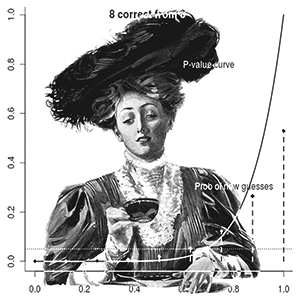
In the design of experiments in statistics, the lady tasting tea is a famous randomized experiment devised by English statisticia Ronald A. Fisher and reported in his book ‘The Design of Experiments’ (1935). The experiment is the original exposition of Fisher’s notion of a ‘null hypothesis’ (what you expect to happen before you run an experiment, i.e. nothing). Fisher’s description is less than ten pages in length and is notable for its simplicity and completeness regarding terminology, calculations, and design of the experiment. The example is loosely based on an event from his life. The lady in question was biologist Muriel Bristol.
Bristol claimed to be able to tell whether the tea or the milk was added first to her daily cup of tea. Fisher proposed to give her eight cups, four of each variety, in random order. One could then ask what the probability was for her getting the number she got correct, but just by chance. She got all eight cups correct. In popular science, David Salsburg published a book entitled ‘The Lady Tasting Tea,’ which describes Fisher’s experiment and ideas on randomization.
Posted in Food, Science |
Leave a Comment »
June 3, 2015

Grit in psychology is a positive, non-cognitive trait based on an individual’s passion for a particular long-term goal or endstate, coupled with a powerful motivation to achieve their respective objective. This perseverance of effort promotes the overcoming of obstacles or challenges that lie within a gritty individual’s path to accomplishment, and serves as a driving force in achievement realization. Commonly associated concepts within the field of psychology include ‘perseverance,’ ‘hardiness,’ ‘resilience,’ ‘ambition,’ ‘need for achievement,’ and ‘conscientiousness.’ These constructs can be conceptualized as individual differences related to the accomplishment of work rather than latent ability.
This distinction was brought into focus in 1907 when American psychologist William James challenged the field to further investigate how certain individuals are capable of accessing richer trait reservoirs enabling them to accomplish more than the average person, but the construct dates back at least to Victorian polymath Francis Galton, and the ideals of persistence and tenacity have been understood as a virtue at least since Aristotle. Although the last decade has seen a noticeable increase in research focused on achievement-oriented traits, there continues to be difficulty in aligning specific traits and outcomes. Continue reading →
Posted in Education, Health, Science |
Leave a Comment »
June 1, 2015

NeuroRacer is a video game designed by a team of researchers at the University of California, San Francisco led by cognitive neuroscientist Adam Gazzaley as a way to help with mental cognition.
It was designed as an intervention for ‘top-down modulation deficits in older adults.’ A study on 60-85 year olds showed that the multitasking nature of the game caused improvements in tasks outside of the game involving working memory and sustained attention.
Posted in Education, Games, Health |
Leave a Comment »
May 30, 2015
‘The Magic of Reality: How We Know What’s Really True’ is a 2011 book by British biologist Richard Dawkins, with illustrations by Dave McKean. It is a science book aimed primarily at children and young adults. He addresses topics that range from his most familiar territory, evolutionary biology and speciation (how the tree of life creates new branches), to physical phenomena such as atomic theory, optics, planetary motion, gravitation, stellar evolution (the life cycle of stars), spectroscopy (the study of the interactions of matter and electromagnetic radiation), and plate tectonics, as well as speculation on exobiology (alien life).
Most chapters begin with quick retellings of historical creation myths that emerged as attempts to explain the origin of particular observed phenomena. These myths are chosen from all across the world including Babylonian, Judeo-Christian, Aztec, Maori, Ancient Egyptian, Australian Aboriginal, Nordic, Hellenic, Chinese, Japanese, and other traditions, including contemporary alien abduction mythology. Continue reading →
Posted in Education, Language, Philosophy |
Leave a Comment »
May 27, 2015
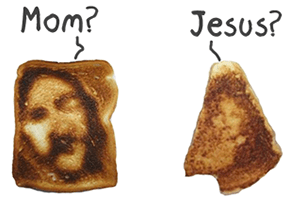
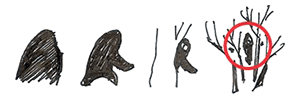
The term Lourdes [loordz] effect was coined by Belgian philosopher and skeptic Etienne Vermeersch to describe the observation that supernatural powers never manifest themselves in a completely unambiguous fashion. According to Vermeersch, should the miraculous power of Lourdes actually exist there would be no reason to think that it would be more difficult for the Virgin Mary or God to reattach a severed arm than to cure paralysis or blindness.
The accounts and photos of, for instance, the Loch Ness Monster and the Yeti lack reliability and clarity due to a similar effect. Vermeersch uses this term to mock what he calls the selective and uncritical approach to miracles, or the frivolous attribution of supernatural gifts to human beings.
Posted in Humor, Philosophy, Science |
1 Comment »
May 26, 2015

A burl is a tree growth in which the grain has grown in a deformed manner. It is commonly found in the form of a rounded outgrowth on a tree trunk or branch that is filled with small knots from dormant buds. Insect infestation and certain types of molds are the most common causes of this condition, although other stresses can also promote burl formation, such as physical injury, or viral or fungal infection.
Most burls grow beneath the ground, attached to the roots as a type of malignancy that is generally not discovered until the tree dies or falls over. Such burls sometimes appear as groups of bulbous protrusions connected by a system of rope-like roots. Almost all burl wood is covered by bark, even if it is underground. In some tree species, burls can grow to great size. The largest, at 26 feet, occur in redwoods and can encircle the entire trunk. Burls yield a very peculiar and highly figured wood, prized for its beauty, strength, and rarity. It is sought after by furniture makers, artists, and wood sculptors. Continue reading →
Posted in Art, Money |
1 Comment »
May 21, 2015
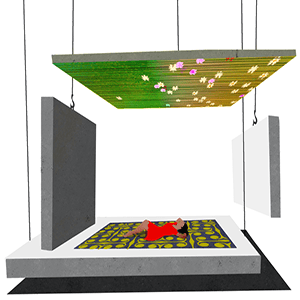
The tiny house movement is a popular description for the architectural and social movement that advocates living simply in small homes. In the US the average size of new single family homes grew from 1,780 square feet in 1978 to 2,479 in 2007, despite a decrease in the size of the average family. Reasons for this include increased material wealth and prestige. The small house movement is a return to houses less than 1,000 square feet, some as small as 80 square feet.
Sarah Susanka has been credited with starting the recent countermovement toward smaller houses when she published ‘The Not So Big House’ in 1997. Earlier pioneers include Lloyd Kahn, author of ‘Shelter’ in 1973.’ Tiny houses on wheels were popularized by Jay Shafer who designed and lived in a 96 sq ft house and later went on to offer the first plans for tiny houses on wheels, initially founding ‘Tumbleweed Tiny House Company,’ and then ‘Four Lights Tiny House Company’ in 2012. Continue reading →
Posted in Money, Technology, World |
1 Comment »
May 20, 2015


‘How to Lie with Statistics‘ is a book written by Darrell Huff in 1954 presenting an introduction to statistics for the general reader. Huff was a journalist who wrote many ‘how to’ articles as a freelancer, but was not a statistician. The book is a brief, breezy, illustrated volume outlining errors when it comes to the interpretation of statistics, and how these errors lead to incorrect conclusions. In the 1960s and ’70s it became a standard textbook introduction to the subject of statistics for many college students. It has become one of the best-selling statistics books in history, with over one and a half million copies sold in the English-language edition, and has also been widely translated.
Themes of the book include ‘Correlation does not imply causation’ and ‘Using random sampling.’ It also shows how statistical graphs can be used to distort reality, for example by truncating the bottom of a line or bar chart, so that differences seem larger than they are, or by representing one-dimensional quantities on a pictogram by two- or three-dimensional objects to compare their sizes, so that the reader forgets that the images do not scale the same way the quantities do. The original edition contained humorous illustrations by artist Irving Geis. In a UK edition these were replaced with cartoons by Mel Calman.
Posted in Language, Science |
1 Comment »
May 18, 2015
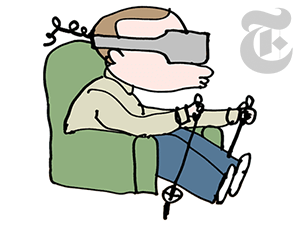
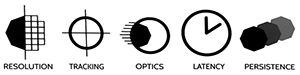
Presence is the illusion that a virtual experience is real. Today, it often considers the effect that people experience when they interact with a computer-mediated or computer-generated environment. This use of the term derives from the word ‘telepresence,’ coined by MIT professor Marvin Minsky in 1980, which he described as the manipulation of objects in the real world through remote access technology. For example, a surgeon may use a computer to control robotic arms to perform minute procedures on a patient in another room. Or a NASA technician may use a computer to control a rover to collect rock samples on Mars.
As technologies progressed, the need for an expanded term arose. Thomas Sheridan (also of MIT, and a pioneer of robotics and remote control technology) extrapolated Minsky’s original definition. Using the shorter ‘presence,’ Sheridan explained that the term refers to the effect felt when controlling real world objects remotely as well as the effect people feel when they interact with and immerse themselves in virtual reality or virtual environments. Continue reading →
Posted in Games, Language, Technology |
Leave a Comment »


 The Daily Omnivore