May 17, 2015

Grim Fandango is a dark comedy neo-noir adventure game released by LucasArts in 1998 for Windows, with game designer Tim Schafer as project leader. It is the first adventure game by LucasArts to use 3D computer graphics overlaid on pre-rendered, static backgrounds. As with other LucasArts adventure games, the player must converse with other characters and examine, collect, and use objects correctly to solve puzzles in order to progress.
Grim Fandango ’s world combines elements of the Aztec belief of afterlife with style aspects of film noir, including ‘The Maltese Falcon,’ ‘On the Waterfront, ‘and ‘Casablanca,’ to create the Land of the Dead, through which recently departed souls, represented in the game as calaca-like figures, must travel before they reach their final destination, the Ninth Underworld. The story follows travel agent Manuel ‘Manny’ Calavera as he attempts to save Mercedes ‘Meche’ Colomar, a newly arrived but virtuous soul, during her long journey. Continue reading →
Posted in Art, Games, Humor |
Leave a Comment »
May 16, 2015

Flip-flops (also called thongs, jandals, pluggers, go-aheads, slaps, slides, step-ins, chankla or a variety of other names throughout the world) are a type of open-toed sandal typically worn in casual situations. They consist of a flat sole held loosely on the foot by a Y-shaped strap that passes between the first and second toes and around either side of the foot. They may also be held to the foot with a single strap over the top of the foot rather than a thong. The name is an onomatopoeia for the sound that is made when the sole slaps the ground while walking in flip-flops.
This style of footwear has been worn by the people of many cultures throughout the world, originating as early as the ancient Egyptians. The modern flip-flop descends from the Japanese zōri, which were popularized in the US after WWII by soldiers returning from the Pacific theater. They are common summer footwear for both genders, and some varieties have even found their way into more formal attire, despite criticism. Continue reading →
Posted in Health, Technology, World |
Leave a Comment »
May 14, 2015


The Third Wave was an experimental social movement created by high school history teacher Ron Jones to demonstrate the appeal of fascism and explain how the German populace could accept the actions of the Nazi regime. Over the course of five days, Jones conducted a series of exercises in his classroom emphasizing discipline and community, intended to model certain characteristics of the Nazi movement.
As the movement grew outside his class and began to number in the hundreds, Jones began to feel that the experiment had spiraled out of control. He convinced the students to attend a rally where he claimed the announcement of a Third Wave presidential candidate would be televised. Upon their arrival, the students were presented with a blank channel and told the true nature of the movement, and shown a short film discussing the actions of Nazi Germany. The psychology involved has been extensively studied in terms of youth gang behavior and peer pressure, of which this experiment was a variant. Continue reading →
Posted in Health, Politics, War |
Leave a Comment »
May 13, 2015

Pappy Van Winkle’s Family Reserve is the flagship brand of bourbon whiskey owned by the ‘Old Rip Van Winkle Distillery’ company (which does not actually own or operate a distillery, but rather has it produced under a contract with another company). It is distilled and bottled by the Sazerac Company at its Buffalo Trace Distillery in Frankfort, Kentucky. It is often regarded as one of the finest bourbons in the world, and is rare to find on the market due to its very low production and high demand. The product has a cult-like following. Famous chefs such as Anthony Bourdain and David Chang have favored the product.
‘Food Republic’ reported that Chef John Currence said: ‘There’s Pappy Van Winkle, then there’s everything else.’ Bourbon aficionados have shown up in droves to get a small chance in a lottery to purchase some. It has been called ‘the bourbon everyone wants but no one can get.’ A writer for ‘The Wall Street Journal’ said ‘You could call it bourbon, or you could call it a $5,000 bottle of liquified, barrel-aged unobtanium.’ Jen Doll wrote in ‘The Wire,’ ‘It’s an age-old dilemma (supply and demand) leading to an age-old marketing dream (a product that can’t be kept on the shelves … money in the pockets … bourbon in the bourbon snifters).’
Continue reading →
Posted in Drugs, Food, Money |
Leave a Comment »
May 12, 2015

Recursive [ri-kur-siv] self-improvement is the speculative ability of a strong artificial intelligence computer program to program its own software continuously. This is sometimes also referred to as ‘Seed AI’ because if an AI were created with engineering capabilities that matched those of its human creators, it would have the potential to autonomously improve the design of its constituent software and hardware. Having undergone these improvements, it would then be better able to find ways of optimizing its structure and improving its abilities further. It is speculated that over many iterations, such an AI would far surpass human cognitive abilities.
This notion of an ‘intelligence explosion’ was first described by British cryptographer I.J. Good in 1965, who speculated on the effects of superhuman machines: ‘Let an ultraintelligent machine be defined as a machine that can far surpass all the intellectual activities of any man however clever. Since the design of machines is one of these intellectual activities, an ultraintelligent machine could design even better machines; there would then unquestionably be an ‘intelligence explosion,’ and the intelligence of man would be left far behind. Thus the first ultraintelligent machine is the last invention that man need ever make.’ Continue reading →
Posted in Technology |
1 Comment »
May 11, 2015

Small talk is an informal type of discourse that does not cover any functional topics of conversation or any transactions that need to be addressed. Small talk is conversation for its own sake. The phenomenon of small talk was initially studied in 1923 by Polish anthropologist Bronislaw Malinowski, who coined the term ‘phatic communication’ to describe it. For example: ‘You’re welcome’ is not intended to convey the message that the hearer is welcome; it is a phatic response to being thanked, which in turn is a phatic whose function is to acknowledge the receipt of a benefit. The ability to conduct small talk is a social skill; hence, small talk is part of social communication.
While seeming to have little useful purpose, small talk is a bonding ritual and a strategy for managing interpersonal distance. It serves many functions in helping to define the relationships between friends, work colleagues, and new acquaintances. In particular, it helps new acquaintances to explore and categorize each other’s social position. Small talk is closely related to the need for people to maintain positive face — to feel approved-of by those who are listening to them. It lubricates social interactions in a very flexible way, although the desired function is often dependent on the point in the conversation at which the small talk occurs (e.g. conversation openers are very different than closers). Continue reading →
Posted in Language, World |
1 Comment »
May 9, 2015
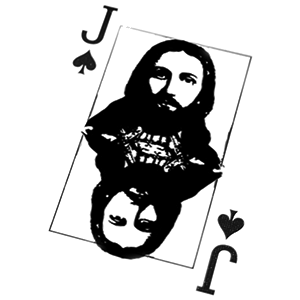
Holy Roller is a derogatory term for some Christian churchgoers of the Methodist, Holiness, and Pentecostal traditions. The term is sometimes used derisively by those outside these denominations, as if to describe people literally rolling on the floor in an uncontrolled manner. However, those within these Wesleyan traditions have reclaimed it as a badge of honor; for example William Branham wrote: ‘And what the world calls today holy-roller, that’s the way I worship Jesus Christ.’ Gospel singer Andrae Crouch stated, ‘They call us holy rollers, and what they say is true. But if they knew what we were rollin’ about, they’d be rollin’ too.’
Merriam-Webster traces the word to 1841. The Oxford English Dictionary cites an 1893 memoir by American humorist Charles Godfrey Leland, in which he says ‘When the Holy Spirit seized them … the Holy Rollers … rolled over and over on the floor.’ Similar disparaging terms directed at outspoken Christians but later embraced by them include ‘Jesus freaks’ or, from former centuries, Methodists, Quakers, and Shakers.
Posted in Language, Philosophy |
Leave a Comment »
May 8, 2015

Card counting is a casino card game strategy used primarily in blackjack to determine whether the next hand is likely to give a probable advantage to the player or to the dealer. Card counters are a class of advantage players, who attempt to decrease the house edge by keeping a running tally of all high and low valued cards seen by the player.
Card counting allows players to bet more with less risk when the count gives an advantage as well as minimize losses during an unfavorable count. Card counting also provides the ability to alter playing decisions based on the composition of remaining cards. Card counting (sometimes called ‘card reading’) is also used in trick-taking games such as contract bridge or spades to optimize the winning of tricks (rounds of play). Continue reading →
Posted in Games, Money, Politics |
Leave a Comment »
May 6, 2015

A male bra (also known as a compression bra, compression vest, or gynecomastia vest) is a brassiere worn by a man. Adolescent boys and middle-aged men sometimes develop breasts (gynecomastia). Although there are options for treating gynecomastia, some elect surgery to reduce their breasts or wear a male bra, which typically flatten rather than lift. Other men wear bras for cross-dressing, for sexual purposes such as transvestic fetishism or feminization, or as a form of submission to their partner.
Additionally, some male athletes – more specifically runners – may choose to wear a sports bra under their shirts in order to prevent a common medical condition called jogger’s nipple, also known as nipple chafing. This condition is caused by excessive rubbing of wet sweat-soaked material over one’s nipples. In an episode ‘Seinfeld,’ titled ‘The Doorman,’ Kramer invented a male bra, which he called a ‘bro,’ for Frank Costanza, who was said to have very large breasts. Frank initially decided to market the invention, but disagreed on the name, instead wanting to call it a ‘Manssiere.’
Posted in Health, Humor, Sex |
Leave a Comment »
May 5, 2015
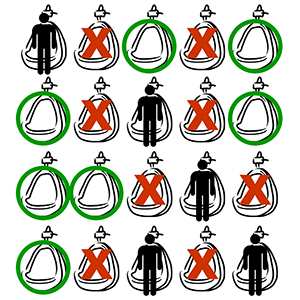
Male Restroom Etiquette is a 2006 American short subject created by humorist Phil R. Rice and produced by his company Zarathustra Studios. The film is a mockumentary about unwritten rules of behavior in male restrooms and is intended to be a parody of educational and social guidance films. The film was made using the machinima technique of recording video footage from computer games, namely ‘The Sims 2’ and ‘SimCity 4.’ In the short, the narrator states that increased cultural diversity has necessitated the exposition of previously unwritten rules regarding the use of malerestrooms.
According to these rules, males should use restrooms as quickly as possible, maximize physical separation from each other when using urinals, flush urinals when they contain concentrated urine, avoid stalls with unflushed toilets, and avoid eye contact and communication with others. The film depicts a scenario in which excess communication leads to a mess in the restroom and thus deficient hygiene and homeostasis, the latter of which is in the lowest tier in Maslow’s hierarchy of needs. As the scenario continues, the restroom occupants turn to violence, leading to police and biological hazard team involvement that closes the restroom. Forced to go elsewhere, other men repeat the scenario, eventually leading to complete societal breakdown.
Posted in Games, Humor |
1 Comment »
May 4, 2015

Scientism [sahy-uhn-tiz-uhm] is belief in the universal applicability of the scientific method and approach, and the view that empirical science constitutes the most authoritative worldview or most valuable part of human learning to the exclusion of other viewpoints. Philosopher Tom Sorell describes it as: ‘putting too high a value on natural science in comparison with other branches of learning or culture.’ It has been defined as ‘the view that the characteristic inductive methods of the natural sciences are the only source of genuine factual knowledge and, in particular, that they alone can yield true knowledge about man and society.’
The term scientism frequently implies a critique of the more extreme expressions of logical positivism (verificationism) and has been used by social scientists such as Friedrich Hayek, philosophers of science such as Karl Popper, and philosophers such as Hilary Putnam and Tzvetan Todorov to describe the dogmatic endorsement of scientific methodology and the reduction of all knowledge to only that which is measurable. Continue reading →
Posted in Philosophy, Science |
1 Comment »
May 1, 2015

Leaves of Grass is a collection of poetry by Walt Whitman praising sensuality, the material world, nature, and the experience of the senses. The book was published at Whitman’s own expense in 1855, a period where poetry focused on the soul and organized religion, and was a failure at first. Whitman spent most of his professional life writing and rewriting the book, revising it multiple times until his death. This resulted in vastly different editions over four decades—the first a small book of twelve poems and the last a compilation of over 400.
The collection is notable for its discussion of delight in carnal pleasures during a time when such candid displays were considered immoral. Where much previous poetry, especially English, relied on symbolism, allegory, and meditation on the religious and spiritual, ‘Leaves of Grass’ (particularly the first edition) exalted the physical form and ephemera. Influenced by Ralph Waldo Emerson and the Transcendentalist movement, itself an offshoot of Romanticism, Whitman’s poetry praises nature and the individual’s role in it. However, much like Emerson, Whitman does not diminish the role of the mind or the spirit; rather, he elevates the human form and mind, deeming both worthy of poetic praise.
Continue reading →
Posted in Art, Language, Philosophy |
Leave a Comment »


 The Daily Omnivore