June 11, 2025

You Will was an AT&T marketing campaign that launched in 1993, consisting of commercials directed by David Fincher. Each ad presented a futuristic scenario beginning with “Have you ever…” and ending with “…you will. And the company that will bring it to you: AT&T.” The ads were narrated by Tom Selleck. One of the first web banner ads ever sold was part of an AT&T campaign that ran on HotWired starting October 27, 1994, asking “Have you ever clicked your mouse right HERE? You Will.”
In 2016, technology writer Timothy B. Lee commented that ‘overall, the ads were remarkably accurate in predicting the cutting-edge technologies of the coming decades. But the ads were mostly wrong about one thing: the company that brought these technologies to the world was not AT&T. At least not on its own. AT&T does provide some of the infrastructure on which the world’s communications flow. But the gadgets and software that brought these futuristic capabilities to consumers were created by a new generation of Silicon Valley companies that mostly didn’t exist when these ads were made.’ Continue reading →
Posted in Money, Technology |
Leave a Comment »
May 27, 2025
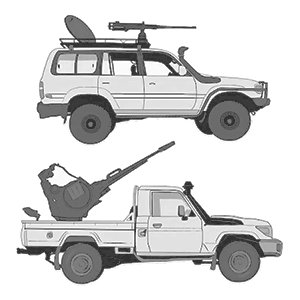
The Toyota War of 1987 was the last phase of the Chadian–Libyan War. It takes its name from the Toyota pickup trucks, primarily the Toyota Hilux and the Toyota Land Cruiser, used to provide mobility for the Chadian troops as they fought against the Libyans, and as technicals, non-standard tactical vehicles (NSTV) modified to carry heavy weapons for combat use.
The 1987 war resulted in a heavy defeat for Libya, which, according to American sources, lost one tenth of its army, with 7,500 men killed and US$1.5 billion worth of military equipment destroyed or captured. Chadian forces suffered 1,000 deaths. Continue reading →
Posted in Money, War, World |
Leave a Comment »
May 13, 2025

Zersetzung [zer-set-zung] (German for ‘decomposition’ and ‘disruption’) was a psychological warfare technique used by the Ministry for State Security (Stasi) to repress political opponents in East Germany during the 1970s and 1980s. Zersetzung served to combat alleged and actual dissidents through covert means, using secret methods of abusive control and psychological manipulation to prevent anti-government activities.
Among the defining features of it was the widespread use of offensive counterespionage methods as a means of repression. People were commonly targeted on a preemptive and preventive basis, to limit or stop activities of political dissent and cultural incorrectness that they may have gone on to perform, and not on the basis of crimes they had actually committed. Zersetzung methods were designed to break down, undermine, and paralyze people behind ‘a facade of social normality’ in a form of ‘silent repression.’ Continue reading →
Posted in Politics, World |
1 Comment »
April 28, 2025
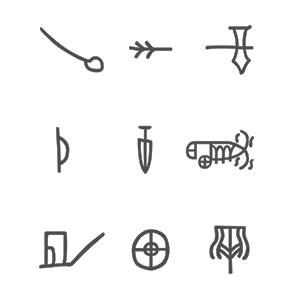
Linear B is the earliest known form of written Greek. It is a Mycenaean syllabic script that predates the Greek alphabet by several centuries, the earliest known examples dating to around 1450 BCE. It is adapted from the earlier Linear A, an undeciphered script perhaps used for writing the Minoan language. Linear B, found mainly in the palace archives at Knossos, Kydonia, Pylos, Thebes, and Mycenae, disappeared with the fall of Mycenaean civilization (1750-1050 BCE) during the Late Bronze Age collapse. The succeeding period, known as the Greek Dark Ages, provides no evidence of the use of writing.
Linear B was deciphered in 1952 by English architect and self-taught linguist Michael Ventris based on the research of American classicist Alice Kober. It is the only Bronze Age Aegean script to have been deciphered, with Linear A, Cypro-Minoan, and Cretan hieroglyphic remaining unreadable. Continue reading →
Posted in Language, World |
Leave a Comment »
April 21, 2025
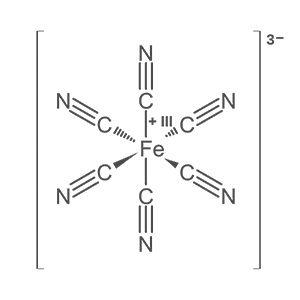
Prussian blue (also known as Berlin blue, Brandenburg blue, Parisian and Paris blue) is a dark blue pigment produced by oxidation of ferrous ferrocyanide salts. Turnbull’s blue is essentially identical chemically, excepting that it has different impurities and particle sizes—because it is made from different reagents—and thus it has a slightly different color.
Prussian blue was created in the early 18th century and is the first modern synthetic pigment. It is prepared as a very fine colloidal dispersion, because the compound is not soluble in water. It contains variable amounts of other ions and its appearance depends sensitively on the size of the colloidal particles. The pigment is used in paints, it became prominent in 19th-century aizuri-e Japanese woodblock prints, and it is the traditional ‘blue’ in technical blueprints. Continue reading →
Posted in Art, Science |
Leave a Comment »
April 13, 2025
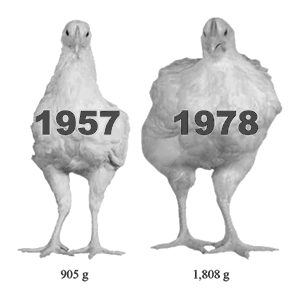
Woody breast is an abnormal muscle condition that impacts the texture and usability of chicken breast meat. The affected meat is described as tough, chewy, and gummy due to stiff or hardened muscle fibers that spread through the filet. The specific cause is not known but may be related to factors associated with rapid growth rates.
Companies often use a three-point scale to grade the woodiness of a particular breast. Although distasteful to many, meat that exhibits woody breast is not known to be harmful to humans who consume it. When detected by suppliers, product shown to have the condition present may be discounted or processed as ground chicken. Continue reading →
Posted in Food, Money |
Leave a Comment »
April 7, 2025

Belphegor’s prime is the palindromic prime number 1000000000000066600000000000001 (1030 + 666 × 1014 + 1), a number which reads the same both backwards and forwards and is only divisible by itself and one. It first discovered by Harvey Dubner, a mathematician known for his discoveries of many large prime numbers and prime number forms. For Belphegor’s prime in particular, he discovered the prime while determining a sequence of primes it belongs to.
The name “Belphegor’s prime” was coined by author Clifford A. Pickover in 2012. Belphegor is one of the Seven Princes of Hell; specifically, ‘the demon of inventiveness.’ The number itself contains superstitious elements that have given it its name: the number 666 at the heart of Belphegor’s prime is widely associated as being the number of the beast, used in symbolism to represent one of the creatures in the apocalypse or, more commonly, the devil. This number is surrounded on either side by thirteen zeroes and is 31 digits in length (thirteen reversed), with thirteen itself long regarded superstitiously as an unlucky number in Western culture.
Posted in Science |
Leave a Comment »
March 31, 2025
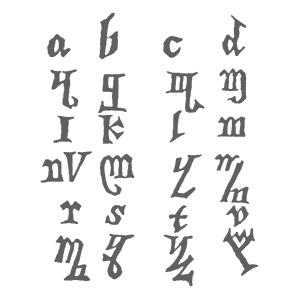
Steganography [steg-uh-nog-ruh-fee] is the practice of representing information within another message or physical object, in such a manner that the presence of the concealed information would not be evident to an unsuspecting person’s examination.
The word steganography comes from Greek words steganós (‘covered or concealed’) and graphia (‘writing’). The first recorded use of the term was in 1499 by German Benedictine abbot Johannes Trithemius in his Steganographia, a treatise on cryptography and steganography, disguised as a book on magic. Continue reading →
Posted in Politics, Science, Technology |
Leave a Comment »
March 21, 2025
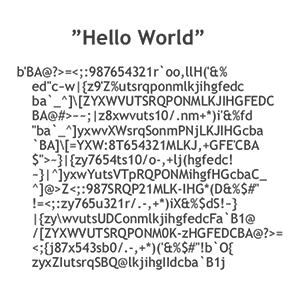
Malbolge [mahl-bol-jeh] is a public domain esoteric programming language invented by Ben Olmstead in 1998, named after the eighth circle of hell in Dante’s Inferno, the Malebolge. It was specifically designed to be almost impossible to use, via a counter-intuitive ‘crazy operation,’ base-three arithmetic, and self-altering code. It builds on the difficulty of earlier challenging esoteric languages (such as Brainfuck and Befunge) but exaggerates this aspect to an extreme degree, playing on the entangled histories of computer science and encryption. Despite this design, it is possible to write useful Malbolge programs, though the author himself has never written one.
The first program was not written by a human being; it was generated by a beam search algorithm designed by Andrew Cooke and implemented in Lisp. Later, Lou Scheffer posted a cryptanalysis of Malbolge and provided a program to copy its input to its output. He also saved the original interpreter and specification after the original site stopped functioning and offered a general strategy of writing programs in Malbolge as well as some thoughts on its Turing completeness.
Posted in Humor, Technology |
Leave a Comment »
March 19, 2025
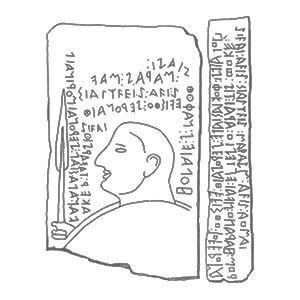
A stele [stee-lee] or stela [stee-lah] is a stone or wooden slab, generally taller than it is wide, erected in the ancient world as a monument. The surface of the stele often has text, ornamentation, or both. These may be inscribed, carved in relief, or painted.
Steles have also been used to publish laws and decrees, to record a ruler’s exploits and honors, to mark sacred territories or mortgaged properties, as territorial markers, as the boundary steles of Akhenaton at Amarna, or to commemorate military victories. They were widely used in the ancient Near East, Mesopotamia, Greece, Egypt, Somalia, Eritrea, Ethiopia, and, most likely independently, in China and elsewhere in the Far East, and, independently, by Mesoamerican civilizations, notably the Olmec and Maya.
Continue reading →
Posted in Philosophy, Politics, World |
Leave a Comment »
March 8, 2025
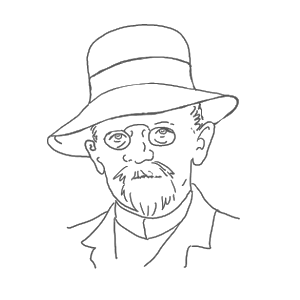
In mathematics, Hilbert’s program, formulated by German mathematician David Hilbert in the early 1920s, was a proposed solution to the foundational crisis of mathematics, when early attempts to clarify the foundations of mathematics were found to suffer from paradoxes and inconsistencies. Hilbert wanted to ground all existing theories to a finite, complete set of axioms, and provide a proof that these axioms were consistent. He proposed that the consistency of more complicated systems, such as real analysis, could be proven in terms of simpler systems.
Gödel’s incompleteness theorems, published in 1931, showed that Hilbert’s program was unattainable for key areas of mathematics. In his first theorem, Gödel showed that any consistent system with a computable set of axioms which is capable of expressing arithmetic can never be complete. In his second theorem, he showed that such a system could not prove its own consistency, so it certainly cannot be used to prove the consistency of anything stronger with certainty. This refuted Hilbert’s assumption that a finitistic system could be used to prove the consistency of itself, and therefore could not prove everything else. Many current lines of research in mathematical logic, such as proof theory and reverse mathematics, can be viewed as natural continuations of Hilbert’s original program.
Posted in Science, World |
Leave a Comment »
March 3, 2025
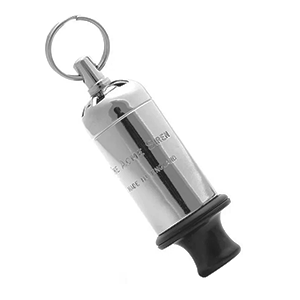
The Acme siren is a musical instrument used in concert bands for comic effect. Often used in cartoons, it produces the stylized sound of a police siren. It is one of the few aerophones in the percussion section of an orchestra. The instrument is typically made of metal and is cylindrical. Inside the cylinder is a type of fan-blade which, when the performer blows through one end, spins and creates the sound. The faster the performer blows, the faster the fan-blade moves and the higher the pitch the instrument creates. Conversely, the slower the performer blows, the lower the pitch.
Iannis Xenakis used it in the 1960s in his works Oresteia, Terretektorh, and Persephassa. A siren was used in Bob Dylan’s classic album, ‘Highway 61 Revisited.’ One is also heard in Stevie Wonder’s song ‘Sir Duke’ just before the second chorus. Dan Zanes also uses a siren in his version of ‘Washington at Valley Forge.’ Acme is the trade name of J Hudson & Co of Birmingham, England, who developed and patented the Acme siren in 1895. It was sometimes known as ‘the cyclist’s road clearer.’
Posted in Art, Humor |
Leave a Comment »



