April 28, 2014
A wealth tax is a levy based on the aggregate value of all household assets (e.g. owner-occupied housing; cash, bank deposits, money funds, and savings in insurance and pension plans; investment in real estate and unincorporated businesses; and corporate stock, financial securities, and personal trusts). A wealth tax is a tax on the accumulated stock of purchasing power, in contrast to income tax, which is a tax on the flow of assets (a change in stock).
Some governments require declaration of the taxpayer’s balance sheet (assets and liabilities), and from that ask for a tax on net worth (assets minus liabilities), as a percentage of the net worth, or a percentage of the net worth exceeding a certain level. The tax is in place for both natural persons and, in some cases, legal persons such as corporations. In France, the net worth tax on natural persons is called the ‘solidarity tax on wealth.’ In other places, the tax may be called a ‘capital tax,’ an ‘equity tax,’ a ‘net worth tax,’ a ‘net wealth tax,’ or just a ‘wealth tax.’ Continue reading →
Posted in Money, Politics, World |
Leave a Comment »
April 24, 2014

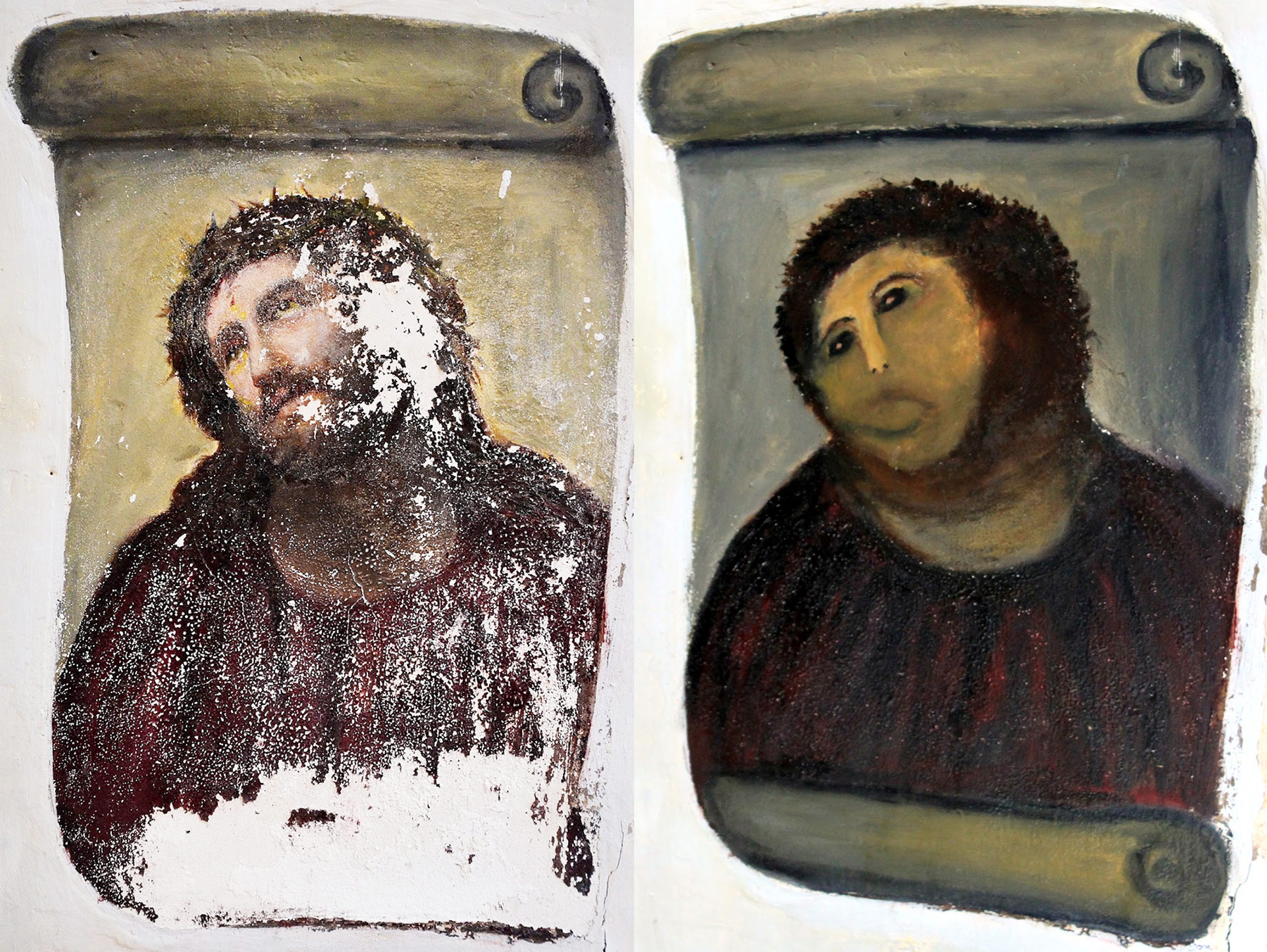
The ‘Ecce Homo‘ [ech-ey hoh-moh] (‘Behold the Man’) in the Sanctuary of Mercy church of Borja, Zaragoza is a fresco of about 1930 by the Spanish painter Elías García Martínez depicting Jesus crowned with thorns. Both the subject and style are typical of traditional Catholic art.
Press accounts agree that the original painting was of little artistic importance, and its fame derives from a botched attempt at restoration. Continue reading →
Posted in Art, Humor, Philosophy |
Leave a Comment »
April 23, 2014
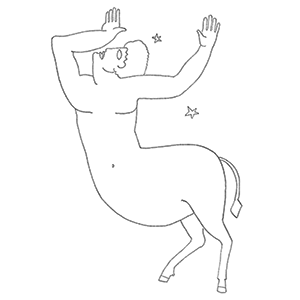
‘The Metamorphoses’ by Apuleius (Lucius Apuleius Madaurensis, a Roman writer) which St. Augustine referred to as ‘The Golden Ass‘ (Asinus aureus), is the only Ancient Roman novel in Latin to survive in its entirety. The protagonist of the novel is called Lucius, like the author. At the end of the novel, he is revealed to be from Madaurus (present day Algeria), the hometown of Apuleius himself.
The plot revolves around the protagonist’s curiosity (curiositas) and insatiable desire to see and practice magic. While trying to perform a spell to transform into a bird, he is accidentally transformed into an ass. This leads to a long journey, literal and metaphorical, filled with inset tales (short stories told by characters encountered by the protagonist; some act as independent narratives, while others interlock with plot developments). He finally finds salvation through the intervention of the goddess Isis, whose cult he joins. Continue reading →
Posted in Art, Language |
Leave a Comment »
April 22, 2014
Religious satire is a form of satire (humor that points out the shortcomings of institutions of power) targeted at religious beliefs. From the earliest times, at least since the plays of Aristophanes in the fourth century BCE, religion has been one of the three primary topics of literary satire, along with politics and sex.
Satire which targets the clergy is a type of political satire, while religious satire is that which targets religious beliefs. It can be the result of agnosticism or atheism, but it can also have its roots in belief itself. According to religious theorist Robert Kantra, in religious satire, man attempts to violate the divine—it is an effort to play God, in whole or in part—whether under the banner of religion or of humanity. Religious satire surfaced during the Renaissance, with works by Chaucer, Erasmus, and Durer. Continue reading →
Posted in Art, Humor, Philosophy |
Leave a Comment »
April 22, 2014

Neil Gaiman (b. 1960) is an English author of short fiction, novels, comic books, graphic novels, audio theatre and films. His notable works include the comic book series ‘The Sandman’ and novels ‘Stardust,’ ‘American Gods,’ ‘Coraline,’ and ‘The Graveyard Book.’
Though his work is frequently seen as exemplifying the monomyth structure laid out by mythologist Joseph Campbell, Gaiman says that he started reading Campbell’s book on the common structure of myths but refused to finish it: ‘I think I got about halfway through ‘The Hero with a Thousand Faces’ and found myself thinking if this is true – I don’t want to know. I really would rather not know this stuff. I’d rather do it because it’s true and because I accidentally wind up creating something that falls into this pattern than be told what the pattern is.’ Continue reading →
Posted in Art, Language |
1 Comment »
April 21, 2014
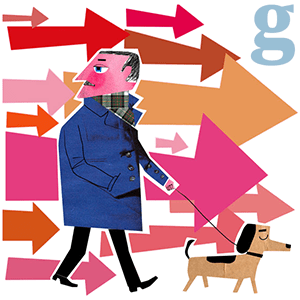
The end-of-history illusion is a ubiquitous psychological illusion in which teenagers and adults of all ages believe that they have consistently experienced significant personal growth and changes in tastes until now, but will somehow not continue to grow and mature in the future. That is, despite knowing how much they have changed in the last ten years, they believe that ten years from now, they will think and feel the same as they do today. It is thought that the illusion is related to a failure of imagination or an inflated sense of how wonderful they are at the moment.
Because they compare their current maturity against their immature childhood selves and see progress, teenagers believe that they are mature. When those same people look back at their teenage selves from middle age, they are amused or chagrined to think that they once thought their teenage selves so mature—but they make the same error of assuming that their middle-aged selves are fully development. As seniors, they look back at their middle-aged selves with the same amusement, and yet they repeat the mistake once again, by assuming that no significant growth or change is possible for the future.
Posted in Health |
Leave a Comment »
April 20, 2014


The ketchup as a vegetable controversy refers to proposed United States Department of Agriculture (USDA) Food and Nutrition Service (FNS) regulations, early in the presidency of Ronald Reagan, that intended to provide more flexibility in meal planning to local school lunch administrators coping with National School Lunch Plan subsidy cuts enacted by the Omnibus Regulation Acts of 1980 and 1981.
The regulations allowed administrators the opportunity to credit items not explicitly listed that met nutritional requirements. While ketchup was not mentioned in the original regulations, pickle relish was used as an example of an item that could count as a vegetable. Reagan withdrew the proposal after an almost immediate public outcry. Continue reading →
Posted in Food, Health |
Leave a Comment »
April 18, 2014
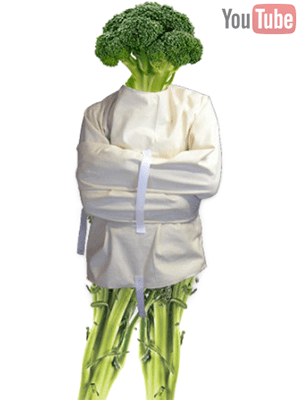
Orthorexia [awr-thuh-rek-see-uh] nervosa [nur-voh-suh] is a proposed eating disorder characterized by an excessive preoccupation with avoiding foods perceived to be unhealthy. The term ‘orthorexia’ derives from the Greek ‘ortho’ (‘right’ or ‘correct’), and ‘orexis’ (‘appetite’), literally meaning ‘correct appetite.’ It was introduced in 1997 by primary care physician Steven Bratman, who claims that in extreme cases, it can lead to severe malnutrition or even death. Even in less severe cases, the attempt to follow a diet that cannot provide adequate nourishment is said to lower self-esteem as the orthorexics blame themselves rather than their diets for their constant hunger and the resulting cravings for forbidden foods.
In 2009, Ursula Philpot, chair of the British Dietetic Association and senior lecturer at Leeds Metropolitan University, described people with orthorexia nervosa to ‘The Guardian’ as being ‘solely concerned with the quality of the food they put in their bodies, refining and restricting their diets according to their personal understanding of which foods are truly ‘pure.” This differs from other eating disorders, such as anorexia nervosa and bulimia nervosa, whereby people focus on the quantity of food eaten. Continue reading →
Posted in Food, Health |
Leave a Comment »
April 17, 2014

Narcissistic supply is a concept in some psychoanalytic theories which describes a type of admiration, interpersonal support, or sustenance drawn by an individual from his or her environment (especially from careers, codependents and others). The term is typically used in a negative sense, describing a pathological or excessive need for attention or admiration that does not take into account the feelings, opinions or preferences of other people.
The term ‘narcissistic supply’ was used by psychoanalyst Otto Fenichel in 1938 in describing the way in which a narcissistic individual ‘requires a ‘narcissistic supply’ from the environment in the same way as the infant requires an external supply of food.’ Building on Freud’s concept of ‘narcissistic satisfaction’ and on psychoanalyst Karl Abraham’s work in ‘Short Study of the Development of the Libido,’ Fenichel highlighted the ‘narcissistic need’ in early development. He noted that ‘it has been stated repeatedly that small children need some kind of narcissistic supplies for maintaining their equilibrium.’ Continue reading →
Posted in Health, Philosophy |
Leave a Comment »
April 16, 2014

In decision theory and general systems theory, a mindset is a set of assumptions, methods, or notations held by one or more people or groups of people that is so established that it creates a powerful incentive within these people or groups to continue to adopt or accept prior behaviors, choices, or tools. This phenomenon is also sometimes described as mental inertia, ‘groupthink,’ or a ‘paradigm,’ and it is often difficult to counteract its effects upon analysis and decision making processes.
A mindset can also be seen as incident of a person’s Weltanschauung or philosophy of life. For example there has been quite some interest in the typical mindset of both individual entrepreneurs and their organizations. An institution with an entrepreneurial philosophy will set entrepreneurial goals and strategies as a whole, but maybe even more importantly, it will foster an entrepreneurial milieu, allowing each entity to pursue emergent opportunities. In short, a philosophical stance codified in the mind, hence as mindset, lead to a climate that in turn causes values that lead to practice. Continue reading →
Posted in Education, Health, Philosophy |
1 Comment »
April 14, 2014

The concept of ego reduction is predicated on the use of Sigmund Freud’s concept of the ego to describe the conscious adult self; and broadly describes the deflating of an over-inflated or egotistical sense of oneself – a curtailment of what Irish philosopher Iris Murdoch called ‘the anxious avaricious tentacles of the self.’
Among other contexts, ego reduction has been seen as a goal in Alcoholics Anonymous; as a part of BDSM play, providing a means of entering ‘subspace’ (a state of submissiveness); and as a way of attaining religious humility and freedom from desire in Buddhism. Continue reading →
Posted in Health, Philosophy |
Leave a Comment »
April 12, 2014

FriendsWithYou (FWY) is an art collaborative based in LA, founded in Miami in 2002, by Samuel Albert Borkson (b.1979) and Arturo Sandoval III (b. 1976), which seeks to redesign spirituality, rituals, and religious acts for modern day usage and connectivity. Their mission coincides with their motto: ‘Magic, Luck, and Friendship.’
The collaborative began by creating soft sculptures as a means to spread more accessible art like plush and wood toys, as well as immersive art installations, fine art works including sculpture and painting, and are best known for their public art spectacles such as large-scale installations, playgrounds, and performance pieces. They have described the creation of their art as a healing process intended to increase relatability and connection to each other and the world around them.
Posted in Art |
Leave a Comment »


 The Daily Omnivore