December 3, 2013

Electric is the twelfth studio album by English synthpop duo Pet Shop Boys, released in 2013. Stuart Price produced the album. He stated that his goal was for every track to have a ‘euphoric, fresh feel to it.’ The more dance-influenced nature of ‘Electric’ was a response to the ‘reflective mood’ of their previous album, ‘Elysium.’
In support of the album, the duo embarked on the ‘Electric’ tour in March 2013 at the Cumbre Tajín festival in Veracruz, Mexico, where they debuted two songs from the album: ‘Axis’ and a cover of Bruce Springsteen’s 2007 song ‘The Last to Die.’ The tour’s first official date took place at the Movistar Arena in Santiago, Chile two months later.
Posted in Art |
Leave a Comment »
December 2, 2013

The tongue map or taste map is a common misconception that different sections of the tongue are exclusively responsible for different basic tastes. Although widely taught in schools, this was scientifically disproven by later research; all taste sensations come from all regions of the tongue, although parts may be more sensitive to certain flavors. The theory behind this map originated from a paper written by Harvard psychologist Edwin G. Boring, which was a translation of a 1901 German paper.
The paper showed minute differences in threshold detection levels across the tongue. These small differences were later taken out of context by textbooks in declaring discrete taste regions. So, while some parts of the tongue may be able to detect a taste before the others do, all parts are equally good at conveying the qualia of all tastes. Threshold sensitivity may differ across the tongue, but intensity of sensation does not.
Posted in Food, Health |
Leave a Comment »
December 1, 2013

The Queen of Versailles is a 2012 American documentary film by Lauren Greenfield, depicting Jackie Siegel and her husband David, founder and CEO of Westgate Resorts (a timeshare company based out of Florida), and their family as they build the Versailles house, the largest and most expensive single-family house in the United States, and the crisis they face as the US economy declines.
‘Washington Post’ columnist Ezra Klein called it, ‘perhaps the single best film on the Great Recession,’ writing that one scene, in which Siegel recounts a series of transactions that allowed him to purchase at a fraction of its original value a loan on which he owes money, ‘might stand as the single most complete vignette on the mechanics of the financial crisis and the subsequent slow recovery.’
Posted in Humor, Money |
Leave a Comment »
November 29, 2013

Super AIDS is an informal name for multidrug resistant strains of HIV-1, first found in NYC in 2005. The strain is vulnerable to enfuvirtide (a drug from a novel class of antiretrovirals). In 2006, provisional data indicated that 15% of new infections were resistant to one antiretroviral drug, and 3.2% to two such drugs. As a result the Department of Health and Human Services changed its guidelines to recommend testing for drug resistance before beginning antiretroviral treatment in new patients.
Typically, the ‘wild’ type of HIV (the strain of HIV found in individuals not treated with antiretroviral drugs) is much more effective at attacking the human immune system than the types that evolve in the presence of antiretroviral drugs. Thus, by changing the selection pressure (from being infection driven to being drug-avoidance driven) retroviral drug treatment causes HIV to evolve to a more innocuous form, less efficient at infecting T-cells. Super AIDS strains, however, are not only resistant to anti-retroviral drugs, but more effective than ‘wild’ HIV at infecting T-cells.
Posted in Health |
Leave a Comment »
November 28, 2013
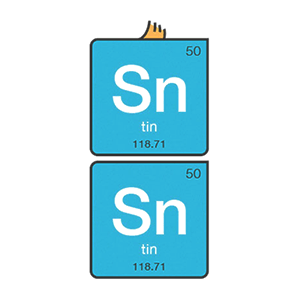
A visual pun is a pun involving an image or images (in addition to or instead of language). Visual puns in which the image is at odds with the inscription are common in cartoons such as ‘Lost Consonants’ or ‘The Far Side’ as well as in Dutch gable stones (decorative building markings).
For instance the ‘Batenburg’ stone from Amsterdam depicts silver coins entering a castle and gold golds exiting, which puns on the words ‘baten’ (‘to profit’) and ‘burg’ (‘castle’), the name of a village near Nijmegen. European heraldry contains the technique of canting arms, which can be considered punning.
Posted in Humor, Language |
Leave a Comment »
November 27, 2013
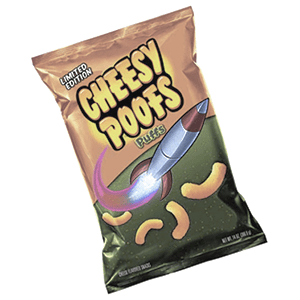
So-called ‘reverse product placement‘ is the creation of products in real life to match those seen in a fictional setting. In 2007, 7-Eleven rebranded 11 of its American stores and one Canadian store as ‘Kwik-E-Marts,’ selling some real-life versions of products seen in episodes of the ‘The Simpsons,’ such as Buzz Cola and Krusty-O’s cereal. In 1997, Acme Communications was created as a chain of real television stations; the firm is named for the fictional Acme Corporation of Warner Brothers fame.
The fictional Willy Wonka from ‘Willy Wonka & the Chocolate Factory’ (1971) was licensed to name a real candy company soon after the film’s release; the brand is now controlled by Nestlé. In the 1984 cult film ‘Repo Man,’ a reverse form of product placement is used, with an exaggerated form of 1980s era generic packaging used on products prominently shown on-screen (these include ‘Beer,’ ‘Drink,’ ‘Dry Gin,’ and ‘Food – Meat Flavored’).
Posted in Art, Humor, Money |
1 Comment »
November 27, 2013

Fictional brands are used in artistic works to imitate or satirize corporate brands, and/or to avoid trademark or copyright infringement.
Such a device may be required where real corporations are unwilling to license their brand names for use in the fictional work, particularly where the work holds the product in a negative light.
Continue reading →
Posted in Art, Money, Politics |
Leave a Comment »
November 26, 2013
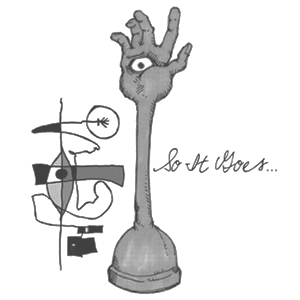
The Tralfamadorians are a fictional alien race mentioned in several novels by Kurt Vonnegut. Tralfamadore is their home planet. Details on the inhabitants of the planet vary from novel to novel.
In ‘Slaughterhouse-Five,’ Tralfamadore is the home to beings who exist in all times simultaneously, and are thus privy to knowledge of future events, including the destruction of the universe at the hands of a Tralfamadorian test pilot. They kidnap Billy Pilgrim, the protagonist of the novel, and place him in a zoo on Tralfamadore with Montana Wildhack, a Hollywood starlet.
Continue reading →
Posted in Art, Humor |
Leave a Comment »
November 26, 2013
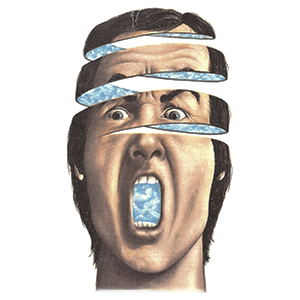
‘The Sirens of Titan‘ is a 1959 book by Kurt Vonnegut, Jr. His second novel, it involves issues of free will, omniscience, and the overall purpose of human history. Much of the story revolves around a Martian invasion of Earth. The protagonist is Malachi Constant, the richest man in 22nd-century America. He possesses extraordinary luck that he attributes to divine favor which he has used to build upon his father’s fortune.
He becomes the centerpoint of a journey that takes him from Earth to Mars in preparation for an interplanetary war, to Mercury with another Martian survivor of that war, back to Earth to be pilloried as a sign of Man’s displeasure with his arrogance, and finally to Titan where he again meets the man ostensibly responsible for the turn of events that have befallen him, Winston Niles Rumfoord.
Continue reading →
Posted in Humor, Language |
Leave a Comment »
November 25, 2013
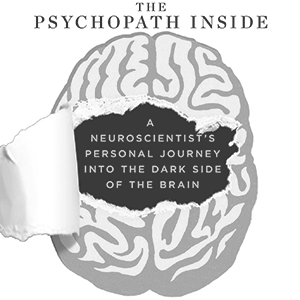
James Fallon (b. 1947) is a neuroscientist studying brain imaging as a professor of psychiatry and human behavior in the School of Medicine at the UC, Irvine. He prominently featured in the BBC production ‘Are You Good or Evil?’, where he is revealed to have discovered that he, himself, has the neurological and genetic correlates of psychopathy. Fallon stated that he is not concerned by the findings and believes that his positive experiences in childhood negated any potential genetic vulnerabilities to violence and emotional issues. He categorizes himself as a ‘pro-social psychopath.’
Fallon sits on several corporate boards and national think tanks for science, biotechnology, the arts, and the US military. He is a Subject Matter Expert in the field of ‘cognition and war’ to the Pentagon’s Joint Command. He has made significant scientific contributions in several areas, including discoveries of TGF alpha and epidermal growth factor, and he was the first experimenter to attempt large-scale stimulation of an injured brain with growth factors. He has also made contributions in the fields of schizophrenia, Parkinson’s disease, Alzheimer’s disease, and the roles of hostility and gender in nicotine and cocaine addiction.
Posted in Science |
Leave a Comment »
November 24, 2013

Sungazing refers to staring at the Sun for nourishment or as a spiritual practice.
Proponents claim increased energy levels and decreased appetite, but there is no scientific evidence that sungazing provides health benefits. Looking directly at the Sun for even brief periods of time may cause blindness or severe damage to the eye.
Posted in Health |
Leave a Comment »
November 23, 2013

Soju (lit. ‘burned liquor’) is a distilled beverage native to Korea, typically 20% alcohol by volume. Jinro and Lotte soju are the first and third top selling alcohol brands in the world. It is usually consumed neat. It is traditionally made from rice, wheat, barley, but modern producers of soju use supplements or even replace rice with other starches, such as potatoes, sweet potatoes, or tapioca.
Alcohol etiquette is tied to South Korea’s strict culture of respect, particular for elders. When accepting a glass from an older person, the recipient must hold the glass with two hands (left palm on the bottom, right hand holding the side) and bow the head slightly. When drinking the younger person must turn away from the elder and cover their mouth and glass with their hands. There are a few rules unique to Soju: never pour your own glass, and don’t refill your glass until it’s empty.
Posted in Drugs, Food, World |
Leave a Comment »


 The Daily Omnivore