July 25, 2011
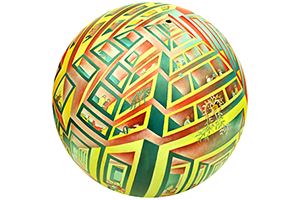
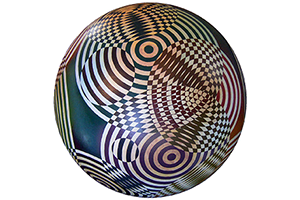
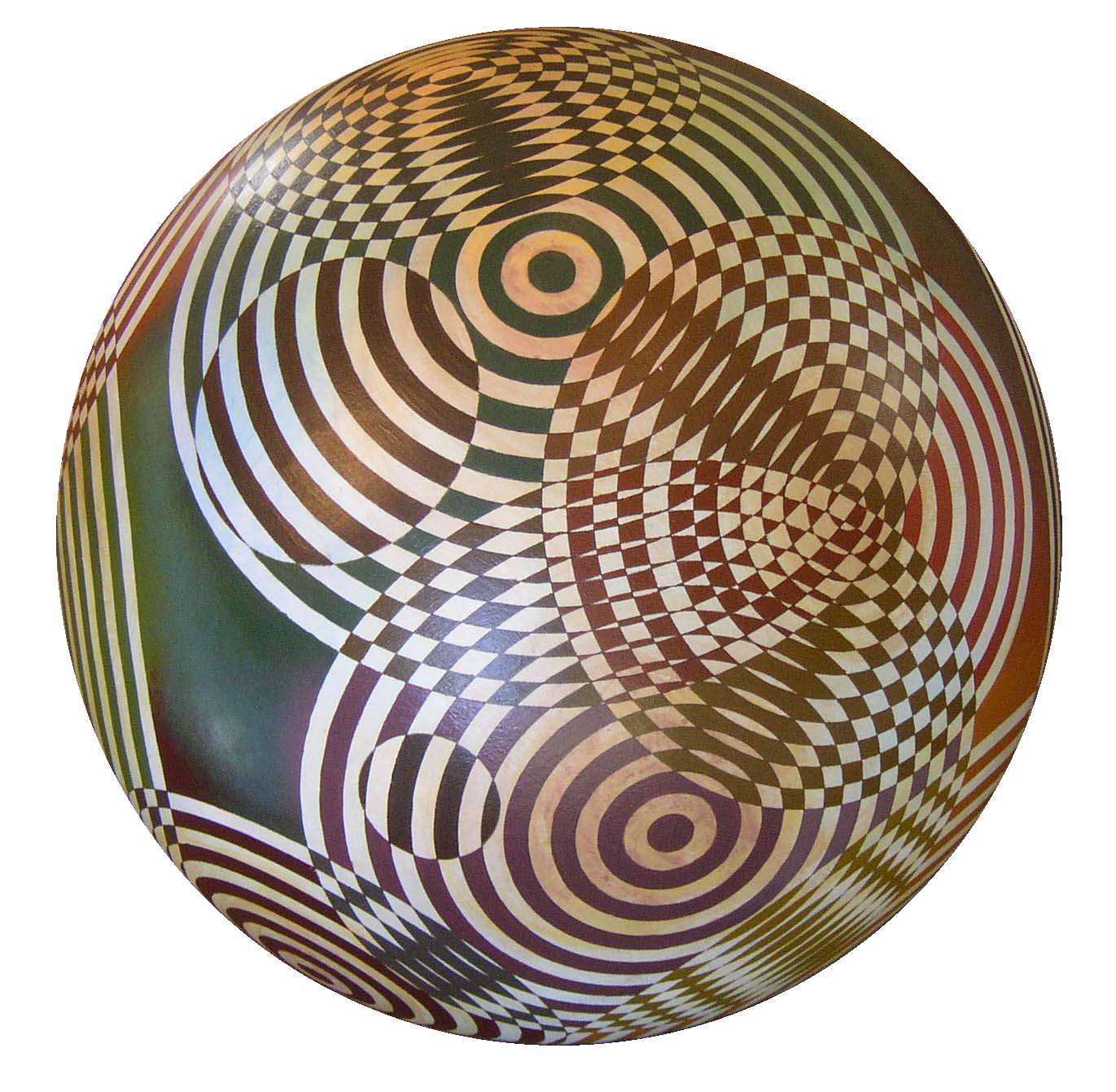
Dick Termes is an innovative American artist who uses a six point perspective system that he devised to create unique paintings on large spheres called Termespheres. They are paintings on spherical canvases that capture an entire environment (Up, Down, Left, Right, Front & Back). Termespheres are typically hung by small chains and rotated with electric ceiling motors to reveal a complete world as the spheres slowly rotate. Optical illusions tend to appear as the spheres rotate.
Although the image is painted on the outside of the convex sphere, the vantage point continuously changes. The rotation also may appear to reverse direction, giving the sensation that the viewer is inside the painting viewing the concave surface of the inside of the rotating sphere. Although the six point perspective appears very non-linear and distorted when viewed on a two-dimensional plane, when the design is superimposed on the sphere, the perspective appears corrected. Termes acknowledges strong influences from M.C. Escher and Buckminster Fuller in developing his technique.
Posted in Art |
Leave a Comment »
June 30, 2011

Mati Klarwein (1932 – 2002) was a painter best known for his works used on the covers of music albums. Klarwein was born in Hamburg, Germany. His family was of Jewish origin and fled to the British Mandate of Palestine when he was two years old, after the rise of Nazi Germany.
In 1948 when the territory became Israel, his family traveled to Paris. There Mati studied with French painter, Fernand Léger. Later, he traveled south to Saint-Tropez and met Austrian artist, Ernst Fuchs, who would have a profound influence on him. Leaving France in the 1950s, Klarwein traveled widely and lived in many different countries, including Tibet, India, Bali, North Africa, Turkey, Europe and the Americas. He settled in New York City in the early 1960s.
read more »
Posted in Art, Drugs |
Leave a Comment »
June 1, 2011
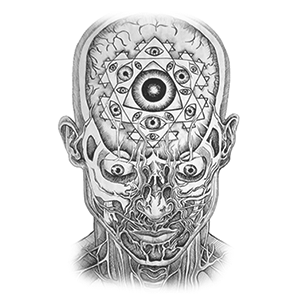
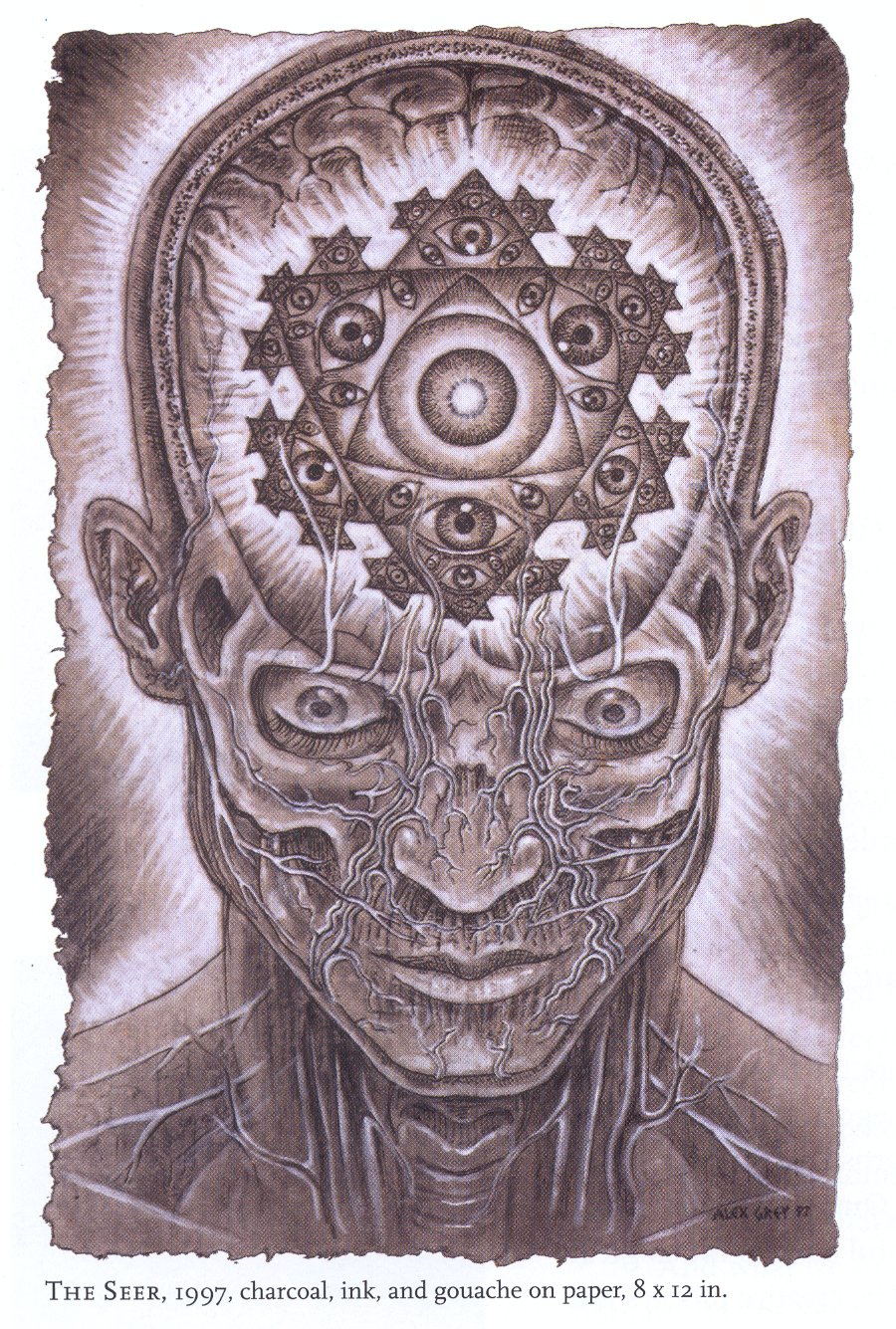
Alex Grey (b. 1953) is an American artist specializing in spiritual and psychedelic art (or visionary art) that is sometimes associated with the New Age movement. Grey is a Vajrayana practitioner, one the three main sects of Buddhism. His body of work spans a variety of forms including performance art, process art, installation art, sculpture, and painting. He and his wife Allyson Grey are the co-founders of the Chapel of Sacred Mirrors, a non-profit institution supporting Visionary Culture in New York City.
Grey’s paintings can be described as a blend of sacred, visionary art and postmodern art. He is best known for his paintings of glowing anatomical human bodies, images that ‘x-ray’ the multiple layers of reality. His art is a complex integration of body, mind, and spirit. ‘The Sacred Mirrors,’ a life-sized series of 21 paintings, took 10 years to complete, and examines in detail the physical and metaphysical anatomy of the individual.
read more »
Posted in Art, Philosophy, Science |
1 Comment »
April 23, 2011
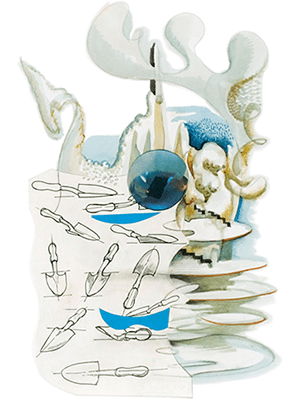
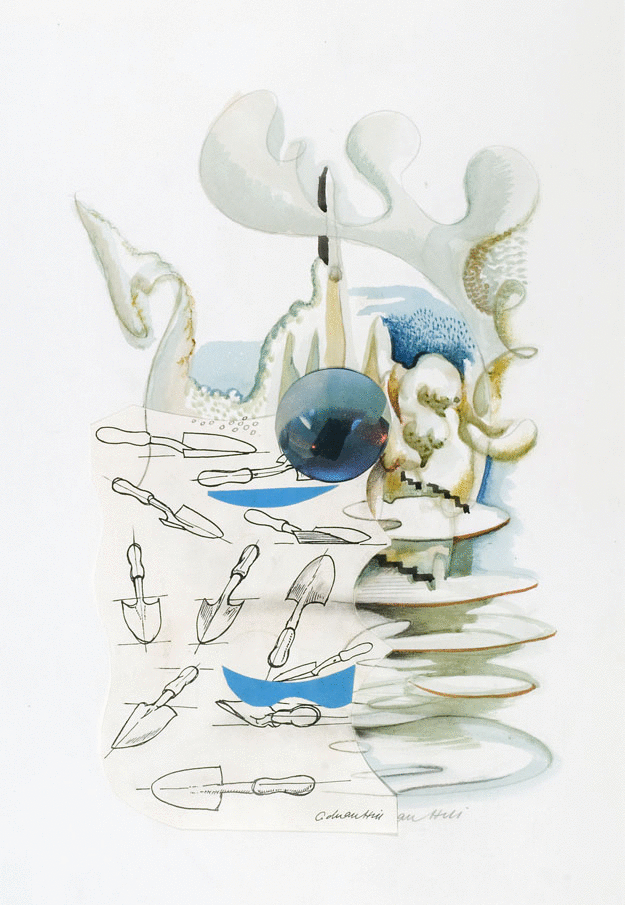
Adrian Hill (1895–1977) was a British artist and pioneering Art Therapist. He wrote many best-selling books about painting and drawing, and in the 1950s and early 1960s presented a BBC children’s television program called ‘Sketch Club.’
His own work combined elements of impressionism and surrealism as well as more conventional representations, and was widely displayed at major art galleries during his lifetime, both in Britain and abroad.
read more »
Posted in Art, Health, Science |
Leave a Comment »
March 29, 2011

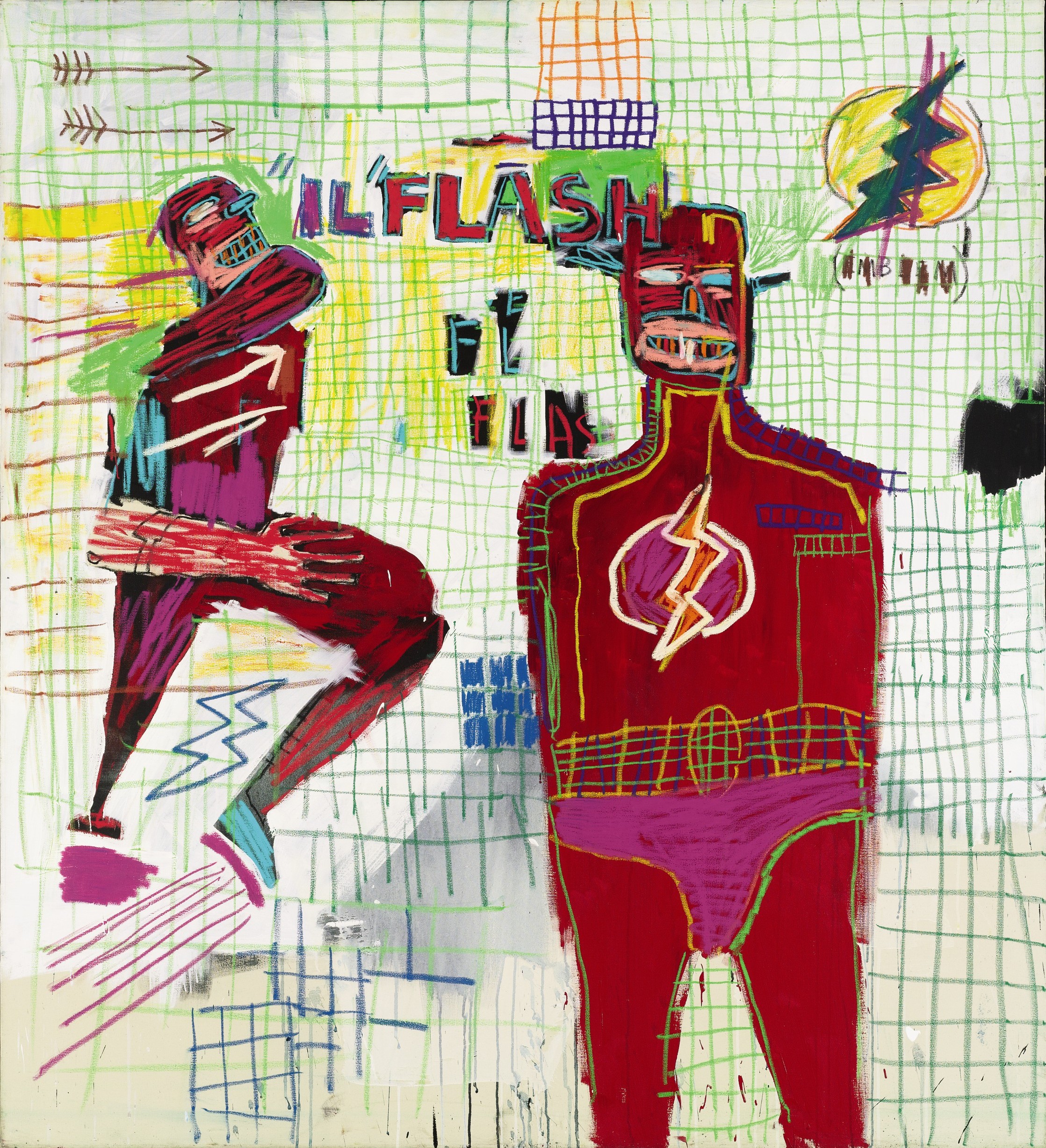
Jean-Michel Basquiat [bah-skee-ott] (1960 – 1988) was a Neo-expressionist painter who got his start as a graffiti artist in NYC in the late 1970s. He died of a heroin overdose at the age of 27. In 1976, Basquiat and friend Al Diaz began spray-painting political-poetical graffiti on buildings in Lower Manhattan, working under the pseudonym SAMO. In 1979, he formed the noise rock band Gray with Vincent Gallo. In 1983-84 he was a frequent collaborator with Andy Warhol. The record price for a Basquiat painting is $14.6 million, paid in 2007 for an untitled 1981 piece. In keeping with his street art roots, Basquiat often incorporated words into his paintings.
He would often draw on random objects and surfaces. A major reference source throughout his career was ‘Gray’s Anatomy,’ which his mother gave to him while in the hospital at age seven. It remained influential in his depictions of internal human anatomy, and in its mixture of image and text. Other reference sources were Henry Dreyfuss’ ‘Symbol Sourcebook,’ Da Vinci’s notebooks, and Brentjes’ ‘African Rock Art.’ Basquiat doodled often, and some of his later pieces, done mostly with colored pencils on paper, exhibit this, often with a loose, spontaneous, and dirty style much like his paintings.
Posted in Art, Money |
Leave a Comment »
March 28, 2011


Keith Haring [hah-ring] (1958 – 1990) was an artist and social activist whose work responded to the New York City street culture of the 1980s. Born in Reading, Pennsylvania, at age 19 he moved to NYC, where he was inspired by graffiti art, and studied at the School of Visual Arts. Haring achieved his first public attention with chalk drawings in the subways. The exhibitions were filmed by the photographer Tseng Kwong Chi. Around this time, ‘The Radiant baby’ became his symbol. His bold lines, vivid colors, and active figures carry strong messages of life and unity. Starting in 1980, he organized exhibitions in Club 57, a performance venue.
He participated in the Times Square Exhibition and drew, for the first time, animals and human faces. In 1981 he sketched his first chalk drawings on black paper and painted plastic, metal and found objects. Haring died of AIDS-related complications. By expressing concepts of birth, death, love, sex and war, his imagery has become a widely recognized visual language of the 20th century. His work was featured in several of the Red Hot Organization’s efforts to raise money for AIDS and AIDS awareness. Specifically, its first two albums, ‘Red Hot + Blue’ and ‘Red Hot + Dance’ — the latter of which used Haring’s work on its cover.
Posted in Art, Politics |
Leave a Comment »
March 26, 2011
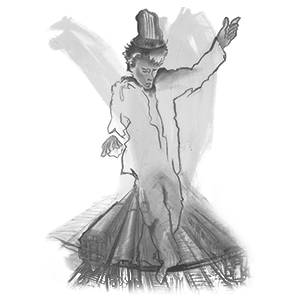
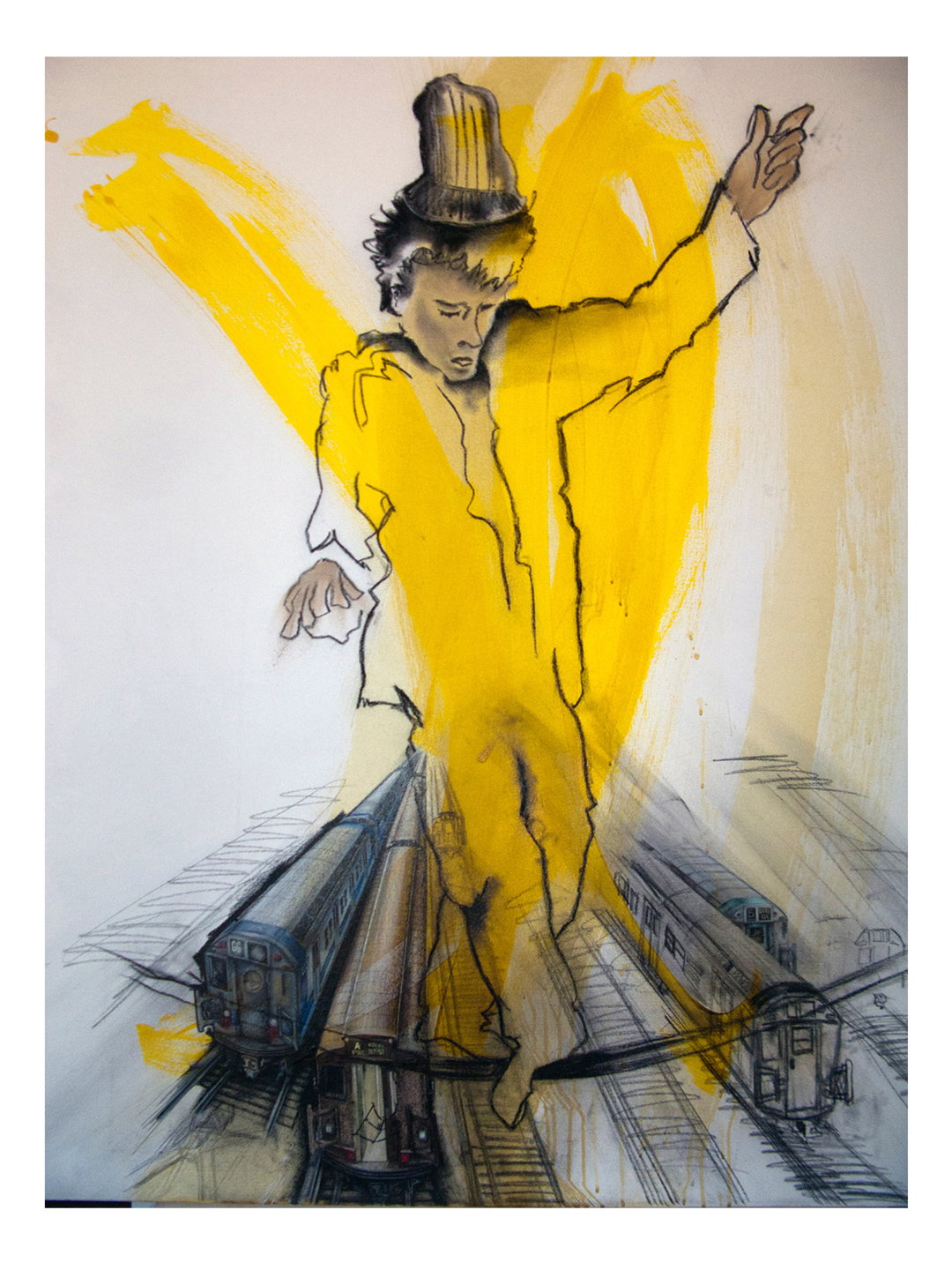
Lee Quiñones [kwi-nohn] (b. 1960) is one of several artists rising from the NYC subway graffiti movement. Born in Puerto Rico and raised in Lower East Side Manhattan, Lee was constantly drawing since the age of five and started with graffiti in 1974. By 1976, Lee was a legend, working in the shadow, leaving huge pieces of art across the subway system. His style is rooted in popular culture, often with political messages. Along with Keith Haring and Jean-Michel Basquiat, Lee Quiñones was one of the innovators of New York’s street-art movement and is considered the single most influential artist to emerge from the graffiti era.
As a subway graffiti artist, Lee almost exclusively painted whole cars (all together about 125), and he was a major contributor to the first-ever whole-train. In November 1976, ten subway cars were painted with a range of colorful murals and set a new benchmark for the scale of graffiti works. Quiñones often added poetic messages in his pieces such as: ‘Graffiti is art and if art is a crime, please God, forgive me.’ He was one of the first street artists to transition fine art. The 1979 exhibition of his canvases at Claudio Bruni’s Galleria Medusa in Rome introduced street art to the rest of the world.
Posted in Art, Money, Politics |
Leave a Comment »
March 25, 2011

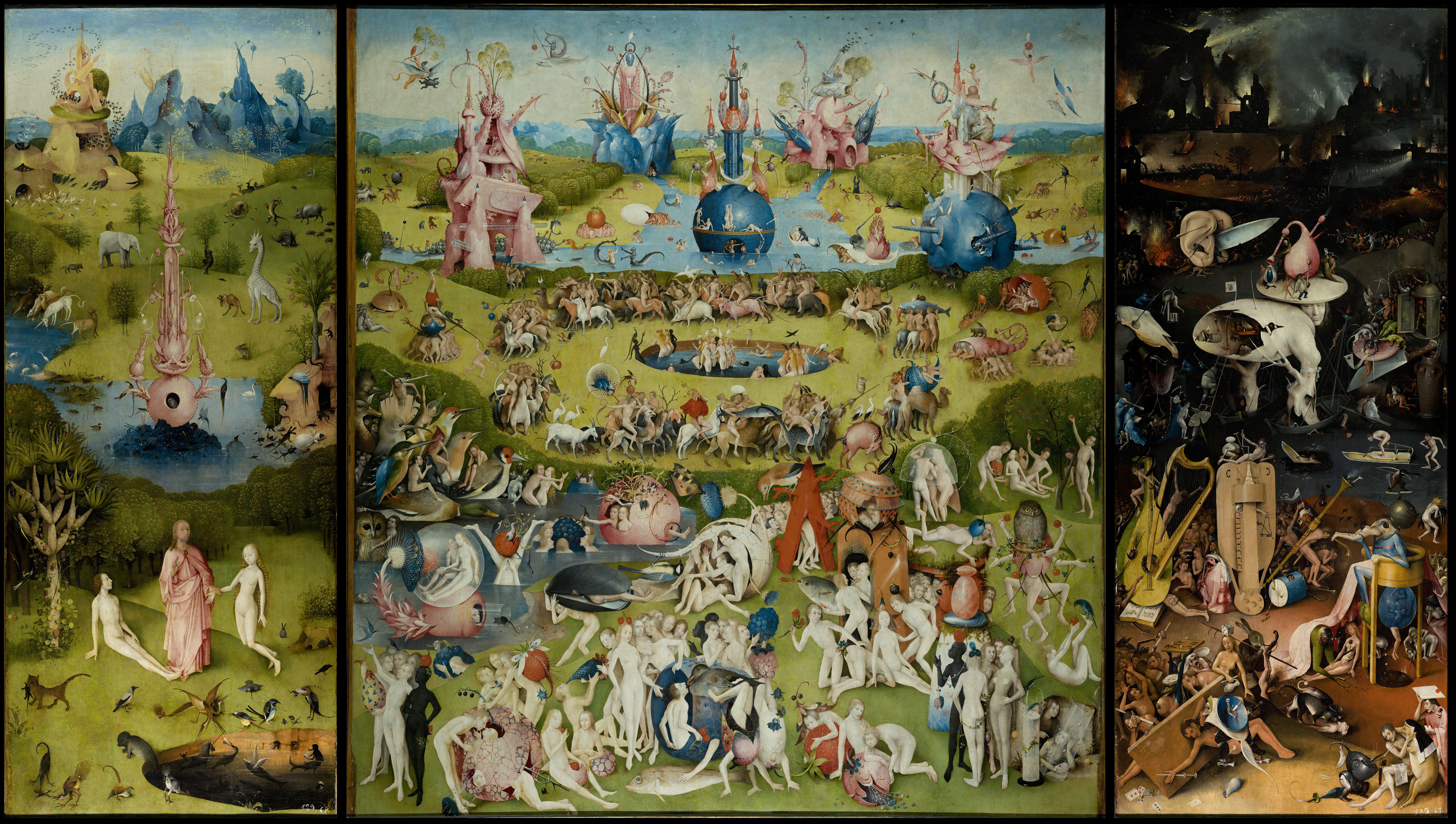
Hieronymus Bosch (c. 1450 – 1516) was an Early Netherlandish painter. His work is known for its use of fantastic imagery to illustrate moral and religious concepts and narratives. Little is known of his life or training. He left behind no letters or diaries, and nothing is known of his personality or his thoughts on the meaning of his art. Bosch produced several triptychs, panel paintings which are divided into three sections, which are hinged together and folded.
Among his most famous is ‘The Garden of Earthly Delights,’ which depicts paradise with Adam and Eve and many wondrous animals on the left panel, the earthly delights with numerous nude figures and tremendous fruit and birds on the middle panel, and hell with depictions of fantastic punishments of the various types of sinners on the right panel. When the exterior panels are closed the viewer can see, painted in grisaille (shades of grey), God creating the Earth.
Posted in Art, Philosophy |
Leave a Comment »
March 16, 2011

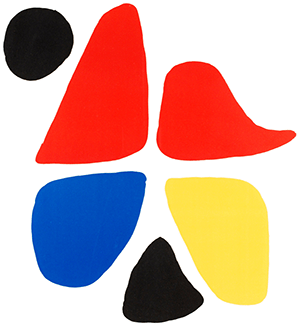
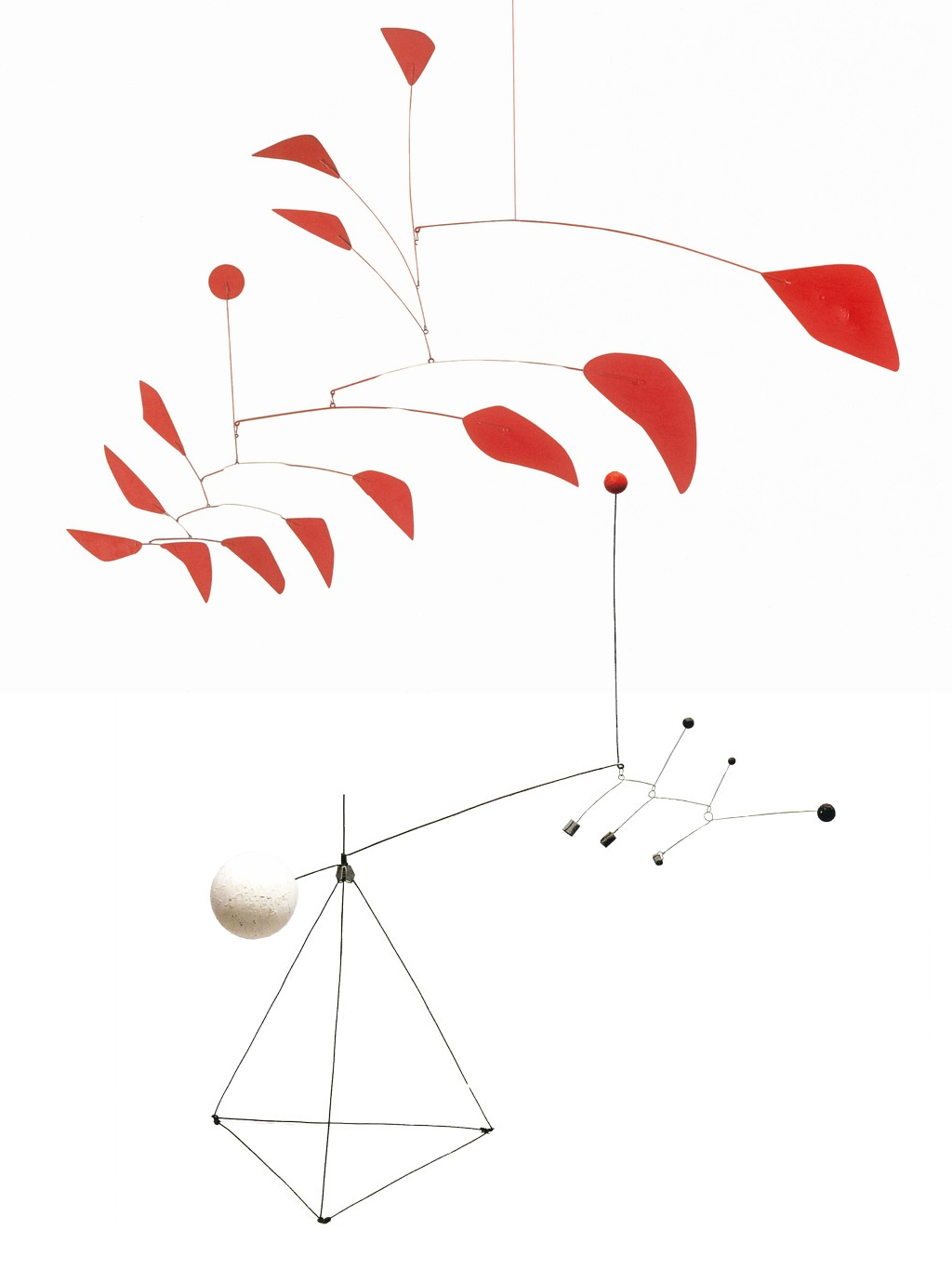
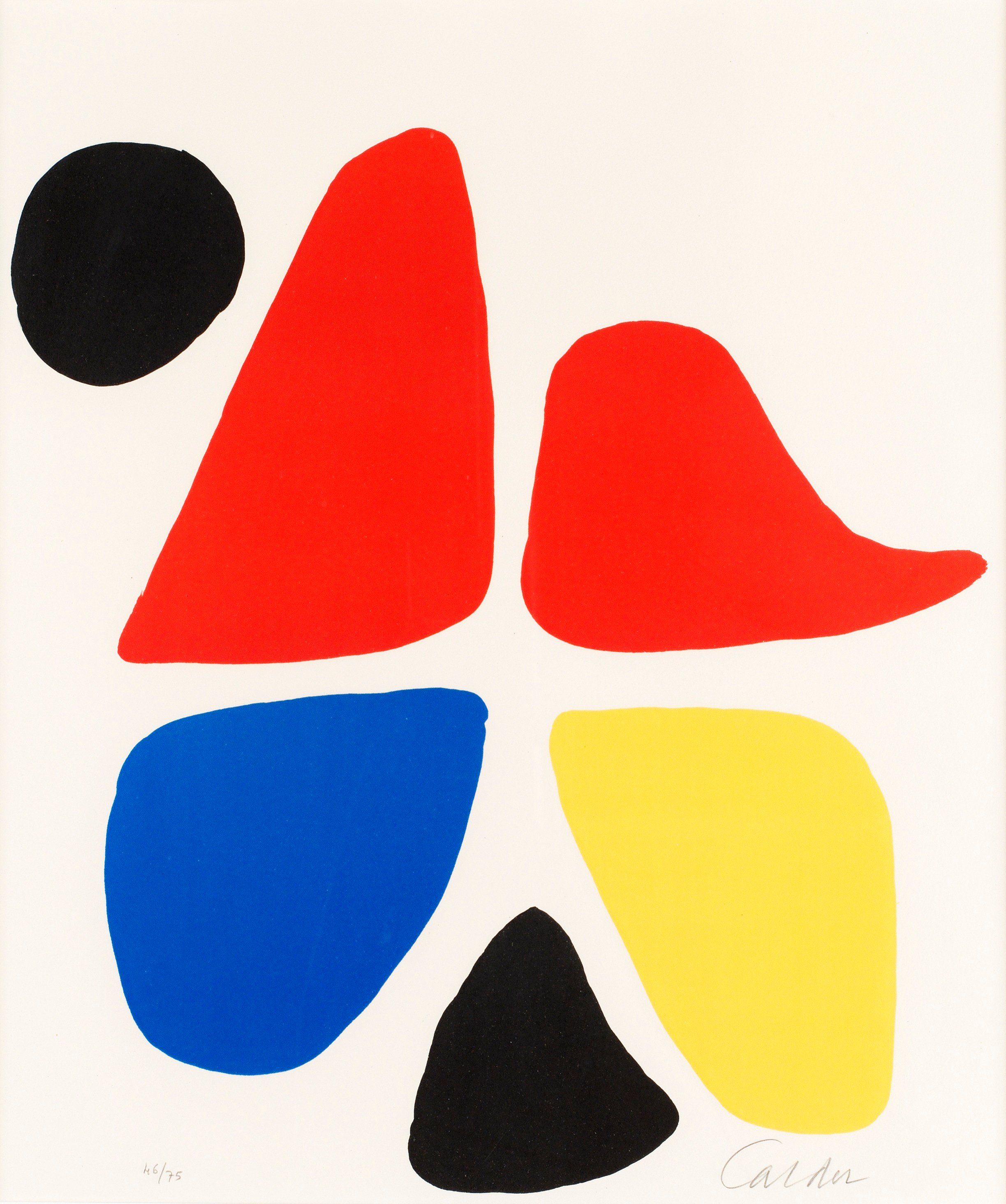
Alexander Calder [kawl-der] (1898 – 1976) was an American sculptor and artist most famous for inventing the mobile.
In addition to mobile and stabile sculpture, Alexander Calder also created paintings, lithographs, toys, tapestry, jewelry and household objects.
read more »
Posted in Art, Money, Technology |
Leave a Comment »
March 7, 2011

Alfons Mucha [moo-kah] (1860 – 1939) was a Czech Art Nouveau painter and decorative artist, best known for his distinct style and his images of women. He produced many paintings, illustrations, advertisements, and postcards. At the time of his death, Mucha’s style was considered outdated. Only recently has a Mucha museum appeared in Prague, run by his grandson, John Mucha.
Mucha’s work has continued to experience periodic revivals of interest for illustrators and artists. Interest in Mucha’s distinctive style experienced a strong revival in the 1960s (with a general interest in Art Nouveau) and is particularly evident in the psychedelic posters of ‘Hapshash and the Coloured Coat,’ the collective name for two British artists, Michael English and Nigel Waymouth.
Posted in Art |
5 Comments »
March 3, 2011

Bridget Riley (b. 1931) is an English painter who is one of the foremost proponents of op art. She was born in London and studied at the Royal College of Art, where her fellow students included artists Peter Blake and Frank Auerbach. Her early work was figurative with a semi-impressionist style. Around 1960 she began to develop her signature style consisting of black and white geometric patterns that explore the dynamism of sight and produce a disorienting effect on the eye.
They present a great variety of geometric forms that produce sensations of movement or color. Visually, these works relate to many concerns of the period: a perceived need for audience participation (this relates them to the ‘Happenings,’ for which the period is famous), challenges to the notion of the mind-body duality which led some people to experiment with hallucinogenic drugs; concerns with a tension between a scientific future which might be very beneficial or might lead to a nuclear war; and fears about the loss of genuine individual experience in a Brave New World.
Posted in Art |
Leave a Comment »
March 2, 2011

Piet [peet] Mondrian [mawn-dree-ahn] (1872 – 1944), was a Dutch painter, and an important contributor to the De Stijl art movement (Dutch for ‘The Style,’ which advocated pure abstraction and universality by a reduction to the essentials of form and color; they simplified visual compositions to the vertical and horizontal directions, and used only primary colors along with black and white).
He evolved a non-representational form which he termed Neo-Plasticism. This consisted of white ground, upon which was painted a grid of vertical and horizontal black lines and the three primary colors.
Posted in Art, World |
Leave a Comment »




 The Daily Omnivore