April 1, 2011

Jingle truck is US Military slang for colorfully decorated trucks, typically in central Asia. It is a slang term for the customised trucks and buses common throughout the region, including Afghanistan, Pakistan, and India. The name refers to a’ jingling’ sound made by chains hanging from the bumpers of the vehicles.
Posted in Art, Language, World |
1 Comment »
March 28, 2011
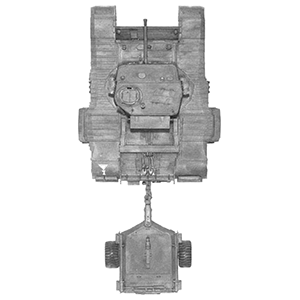
The Churchill Crocodile was a British flame-throwing tank of late Second World War. It was introduced as one of the specialized armored vehicles developed under Major-General Percy Hobart and known as one of ‘Hobart’s Funnies.’ It was produced from October 1943, in time for the Normandy invasion.
400 imperial gallons of fuel and the compressed nitrogen propellant, enough for eighty one-second bursts, were stored in a 6½ ton detachable armored trailer towed by the Crocodile. The trailer, connected to the tank by a three way armored coupling, could be jettisoned from within the tank if necessary. The thrower had a range of up to 120 yards.
read more »
Posted in Technology, War |
Leave a Comment »
March 28, 2011
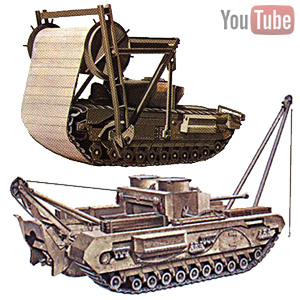
Hobart’s Funnies were a number of unusually modified tanks operated during World War II by the United Kingdom’s 79th Armored Division or by specialists from the Royal Engineers. They were designed in light of problems that more standard tanks experienced during the Allied attack on the German-occupied port of Dieppe on the northern coast of France in 1942.
These tanks played a major part on the Commonwealth beaches during the landings at Normandy. They may be considered the forerunners of the modern Combat engineering vehicle. They were named after their commander, British Military engineer Percy Hobart.
read more »
Posted in Technology, War |
Leave a Comment »
March 23, 2011
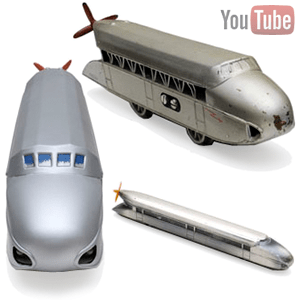
The Schienenzeppelin (‘rail zeppelin’) was an experimental railcar which resembles a zeppelin airship. It was designed and developed by the German aircraft engineer Franz Kruckenberg in 1929. Propulsion was by means of a propeller located at the rear, it accelerated the railcar to 230 km/h (140 mph) setting the land speed record for a petrol powered rail vehicles. Only a single example was ever built, which due to safety concerns remained out of service and was finally dismantled in 1939.
Anticipating the design of the Schienenzeppelin, the earlier Aerowagon, an experimental Russian high-speed railcar, was also equipped with an aircraft engine and a propeller. The chassis of Schienenzeppelin was designed aerodynamically having some resemblance to the era’s popular Zeppelin airships and it was built of aluminum in aircraft style to reduce weight. The interior of the railcar was spartan and designed in Bauhaus-style.
Posted in Technology, World |
Leave a Comment »
March 22, 2011
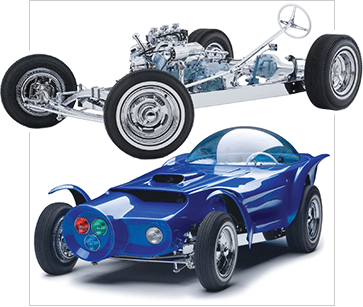
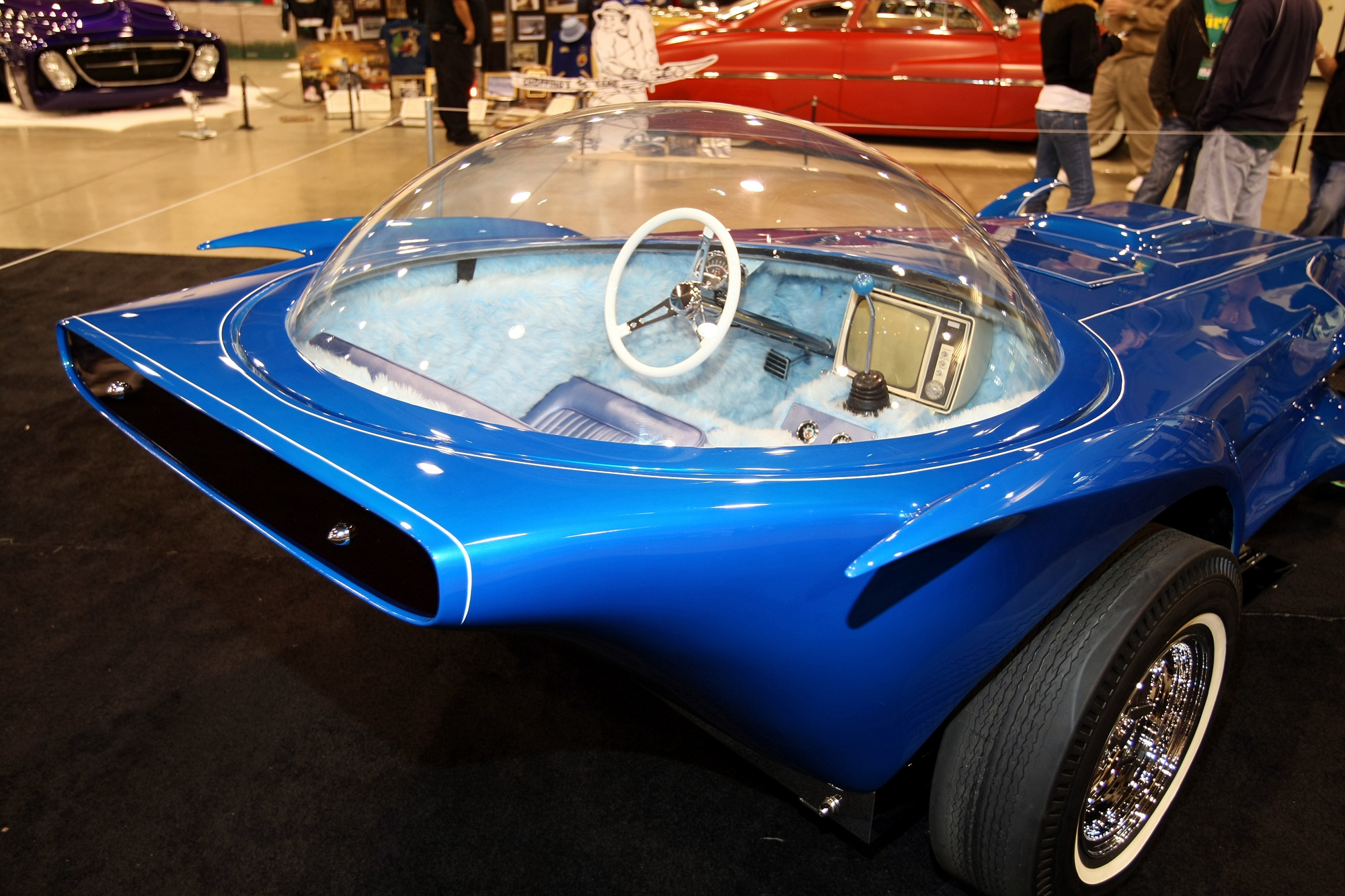
The Orbitron is a custom car built by Ed Roth and feared lost until its rediscovery in Mexico in 2007. Built in 1964, the vehicle was powered by a 1955 or 1956 Chevrolet V8 and was backed by a Powerglide automatic transmission. The body was hand-laid fiberglass which actually hid Roth’s extensive chrome work to the chassis.
The cockpit, set at the extreme rear of the vehicle in the manner of a dragster, was lined with fake fur and featured a General Electric portable television inserted in the console. Topping the cockpit was a custom-made, hydraulically operated plexiglass bubble top. One of a series of ordinary doorbell switches atop the hood activated the top from the outside.
read more »
Posted in Art, Money, Technology |
Leave a Comment »
March 2, 2011
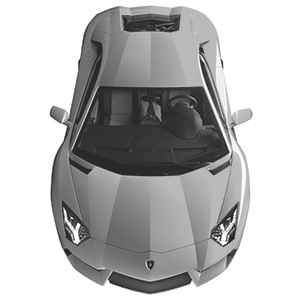
Lamborghini Aventador LP700-4 is the name of the high-performance two-door, two-seat sports car that replaces the Murciélago in the Italian automaker’s lineup. It was launched at the 2011 Geneva Motor Show. It features a brand new 6.5 litre V12 engine, producing 700 hp. It was designed by Filippo Perini of Lamborghini Centro Stile under the direction of Lamborghini chief of design Manfred Fitzgerald.
The etymology of the name comes from Lamborghini’s traditional fascination with the world of bullfighting. In this case, the Aventador was named for a Spanish fighting bull, that bore the number 32 singed on his hide, from the breeding stables of the sons of Don Celestino Cuadri Vides. Aventador gained fame in 1993 in the town of Zaragoza, Spain after a notably spirited, bloody and violent battle with a torero that led to the bull’s death.
Posted in Money, Technology |
Leave a Comment »
February 22, 2011
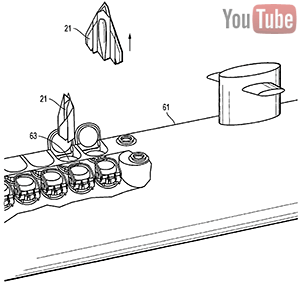

A flying submarine or submersible aircraft is a craft able both to fly or travel under water. The Soviet Union made an unsuccessful attempt at developing a flying submarine during World War II. In 1961 American engineer, Donald Reid designed and built a single-seat craft (32.83 ft length) capable of flight and underwater movement, the Reid Flying Submarine 1 (RSF-1). The first full-cycle flight [underwater at 6.5 feet (2 m) depth, airborne at 33 ft (10 m) altitude] was demonstrated on 9 June 1964.
The US Navy is looking at the Lockheed Martin Cormorant, a drone aircraft launched from a submarine. On launching it floats to the surface and after flight it is retrieved from the water surface; it cannot travel directly underwater. In 2008, DARPA announced that it was preparing to issue contracts for a submersible aircraft.
Posted in Technology, War |
Leave a Comment »
January 21, 2011

A ekranoplan, or ground effect vehicle (GEV), is a craft that attains level flight near the surface of the Earth, made possible by a cushion of high-pressure air created by the aerodynamic interaction between the wings and the surface known as ground effect. Also known as a wing-in-ground-effect (WIG) vehicle, flarecraft, sea skimmer, SkimMachine, or wing-in-surface-effect ship, a GEV can be seen as a transition between a hovercraft and an aircraft. However, the International Maritime Organization has classified the GEV as a ship.
Posted in Technology |
Leave a Comment »
January 18, 2011

The YikeBike mini-farthing is a folding electric bicycle. It weighs 9.8 kilograms (22 lb) and when folded, it is small enough to fit in a backpack. The YikeBike was invented by Grant Ryan and designed by a team in New Zealand over 5 years. It is the smallest and lightest electric folding bicycle in the world and retails for $3595 US.
The vehicle has no chain pedal, gear box, mechanical brake, cables or levers. These functions are provided by a 1.2 kW electric motor and controller. The YikeBike has electronic anti-skid brakes. There are also built-in lights, indicators and brake lights for safety. Top speed is 15 miles per hour, and the bike can travel about six miles per charge.
Posted in Money, Technology, World |
Leave a Comment »
January 17, 2011
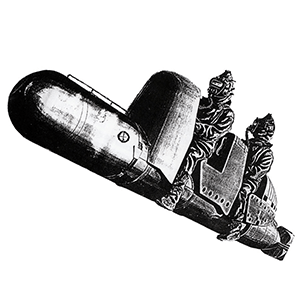
Human torpedoes or manned torpedoes are a type of rideable submarine used as secret naval weapons in World War II. The basic design is still in use today for recreational sport diving. The name is most commonly used to refer to the weapons that Italy, and later Britain, deployed in the Mediterranean and used to attack ships in enemy harbors.
The first human torpedo (the Italian Maiale) was electrically propelled, with two crewmen in diving suits riding astride. They steered the torpedo at slow speed to the enemy ship. The detachable warhead was then used as a limpet mine. They then rode the torpedo away. In operation, the Maiale torpedo was carried by another vessel (usually a normal submarine), and launched near the target. Most manned torpedo operations were at night and during the new moon to cut down the risk of being seen.
Posted in Technology, War |
Leave a Comment »
January 6, 2011

The MGB is a sports car launched by MG Cars in 1962 to replace the MGA and manufactured until 1980. The MGB was a relatively modern design at the time of its introduction. It utilized a monocoque structure that reduced both weight and manufacturing costs as well as adding chassis strength. This was a considerable improvement on traditional body-on-frame construction. The MGB’s performance was brisk for the period, with a 0–60 mph time of just over 11 seconds, aided by the relatively light weight of the car. Handling was one of the MGB’s strong points. The 3-bearing 1798 cc B-Series engine produced 95 hp (71 kW) at 5,400 rpm.
In 1974, as US air pollution emission standards became more rigorous, US-market MGBs were de-tuned for compliance. As well as a marked reduction in performance, the MGB gained an inch in ride height and the distinctive rubber bumpers which came to replace the chrome for all markets. Nearly half million MGBs were produced and about a third of them remain today (on the roads and garages of their owners). With plenty of cars available and a large supply of reasonably priced parts, MGBs are very inexpensive cars. Prices fluctuate depending of year and condition, early chrome-bumper cars and MGB GTs carrying a premium.
Posted in Money, Technology |
1 Comment »
December 13, 2010

The Tata Nano is a low-cost, rear-engined, four-passenger city car built by the Indian company Tata Motors, which began selling its ‘one-lakh’ (100,000 Rupees or $2,200) car in 2009. The price has risen somewhat since its introduction due to increasing materials costs. It features a 623cc, 2 cylinder engine with a top speed of 43 mph. It is an example of ‘Gandhian engineering,’ a concept involving deep frugality and a willingness to challenge conventional wisdom.
The Nano’s design implements many cost-reducing innovations: the trunk is only accessible from inside the car, as the rear hatch does not open; one windscreen wiper instead of the usual pair; no power steering, unnecessary due to its light weight; three lug nuts on the wheels instead of the usual four; only one side-view mirror; no radio, no air-conditioning, and no airbags.
Posted in Money, Technology, World |
Leave a Comment »





 The Daily Omnivore