June 10, 2011

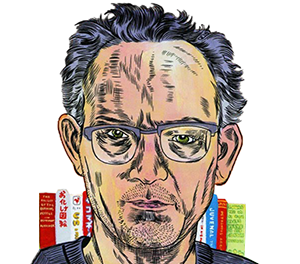
Gary Panter (b. 1950) is an illustrator, designer, and part-time musician. Panter’s work is representative of the post-underground, new wave comics movement that began with the end of one periodical, ‘Arcade: The Comics Revue’ and the initiation of another, RAW, one of the second generation in American underground comix. Panter attended Texas A&M University where he studied under commercial illustrator, Jack Unruh.
He has published his work in various magazines and newspapers, including ‘Raw,’ ‘Time,’ and ‘Rolling Stone.’ He has exhibited widely, and won three Emmy awards for his set designs for ‘Pee-Wee’s Playhouse.’ Prior to Panter’s work, kid shows had a more lulling aesthetic: everything was round, ‘cute,’ simplified, and pastel. His set design was the antithesis of pablum-art: it was dense as a jungle and jam-packed with surprises, often loud and abrasive ones.
read more »
Posted in Art, Humor |
Leave a Comment »
June 8, 2011

Ralph McQuarrie (1929 – 2012) is a conceptual designer and illustrator who designed ‘Star Wars’ (all of the original trilogy), the original ‘Battlestar Galactica,’ ‘E.T. the Extra-Terrestrial,’ and ‘Cocoon.’
Initially he worked as a technical illustrator for Boeing, as well designing film posters and animating CBS News’s coverage of the Apollo space program at the three-man company Reel Three. Impressed with his work, director George Lucas met with him to discuss his plans for a space-fantasy film. Several years later, in 1975, Lucas commissioned McQuarrie to illustrate several scenes from the script of the film, ‘Star Wars.’
read more »
Posted in Art |
Leave a Comment »
June 3, 2011
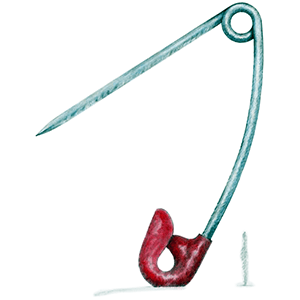
Claes Oldenburg (b. 1929) is a Swedish sculptor, best known for his public art installations typically featuring very large replicas of everyday objects. Another theme in his work is soft sculpture versions of everyday objects. He first opened his own studio in 1953, and became a naturalized citizen of the United States that year as well.
Many of Oldenburg’s large-scale sculptures of mundane objects elicited public ridicule before being embraced as whimsical, insightful, and fun additions to public outdoor art. In the 1960s he became associated with the Pop Art movement and created many so-called happenings, which were performance art related productions of that time. The name he gave to his own productions was ‘Ray Gun Theater.’
read more »
Posted in Art, Humor |
Leave a Comment »
June 1, 2011
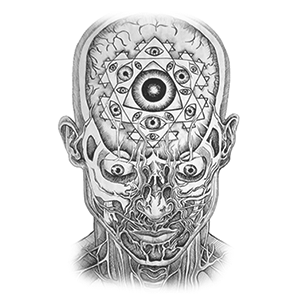
Alex Grey (b. 1953) is an American artist specializing in spiritual and psychedelic art (or visionary art) that is sometimes associated with the New Age movement. Grey is a Vajrayana practitioner, one the three main sects of Buddhism. His body of work spans a variety of forms including performance art, process art, installation art, sculpture, and painting. He and his wife Allyson Grey are the co-founders of the Chapel of Sacred Mirrors, a non-profit institution supporting Visionary Culture in New York City.
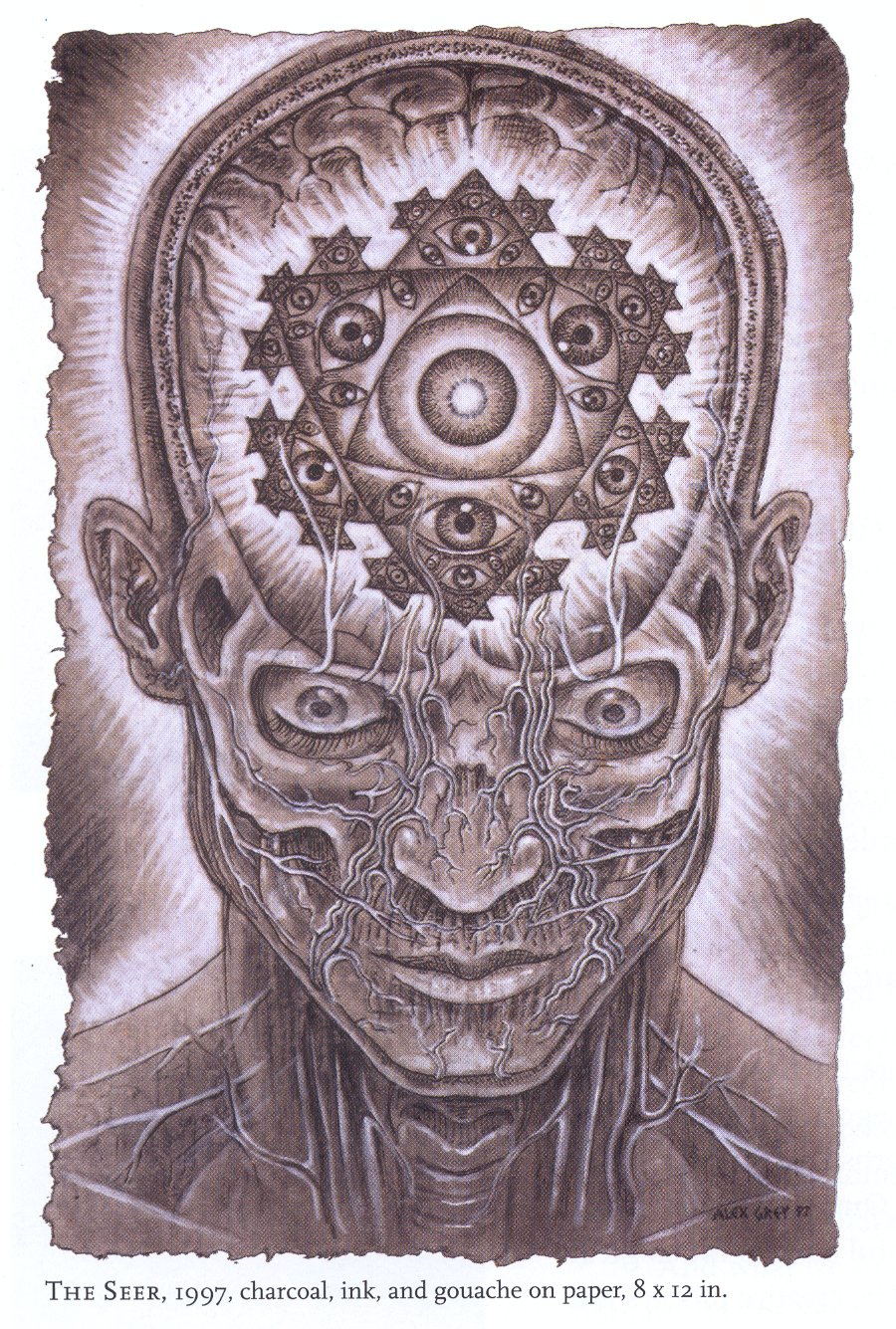
Grey’s paintings can be described as a blend of sacred, visionary art and postmodern art. He is best known for his paintings of glowing anatomical human bodies, images that ‘x-ray’ the multiple layers of reality. His art is a complex integration of body, mind, and spirit. ‘The Sacred Mirrors,’ a life-sized series of 21 paintings, took 10 years to complete, and examines in detail the physical and metaphysical anatomy of the individual.
read more »
Posted in Art, Philosophy, Science |
1 Comment »
May 26, 2011

Todd Schorr (b. 1954) is an American artist and one of the most prominent members of the ‘Lowbrow’ art movement or pop surrealism. His work combines a cartoon visual vocabulary with painting methods of the Old Masters with large canvases (+80″), and is darkly satirical.
His piece, ‘Clash of Holidays,’ aroused controversy when it was exhibited in 2002. It depicts Santa Claus and the Easter Bunny locked in mortal combat. Santa’s wielding an axe, and the rabbit has a knife. Rudolph the Red-Nosed Reindeer and Baby Jesus, who’s munching on an ear from a chocolate rabbit, stand by. Schorr was accused of blasphemy by civic leaders in South Florida. ‘It was just a joke, really, like lot of my paintings that poke fun at things,’ comments Schorr, who completed the piece in 2000, then sold it to Courteney Cox.
read more »
Posted in Art, Humor, Money |
Leave a Comment »
May 25, 2011

Alex Pardee (b. 1976) is a freelance artist and writer born in California. He runs the website EyeSuck Ink. Through his art he has admitted to overcoming depression and anxiety disorders along with emotional struggles.
He uses pens, ink, watercolors, dye, acrylics, oils, and latex. Pardee’s influences include 1980s horror movies, pop art, graffiti and gangster rap.
Posted in Art, Humor |
Leave a Comment »
May 23, 2011

Lazar Markovich Lissitzky (1890 – 1941), better known as El Lissitzky was a Russian artist. He was an important figure of the Russian avant garde, helping develop suprematism with his mentor, Kazimir Malevich, and designing numerous exhibition displays and propaganda works for the former Soviet Union.
His work greatly influenced the Bauhaus and constructivist movements, and he experimented with production techniques and stylistic devices that would go on to dominate 20th-century graphic design.
read more »
Posted in Art |
Leave a Comment »
May 20, 2011

Wallace Wood (1927 – 1981) was an American comic book writer, artist and independent publisher, best known for his work in EC Comics and Mad. He was one of Mad’s founding cartoonists in 1952. Although much of his early professional artwork is signed Wallace Wood, he became known as Wally Wood, a name he claimed to dislike.
EC publisher William Gaines once stated, ‘Wally may have been our most troubled artist… I’m not suggesting any connection, but he may have been our most brilliant.’
read more »
Posted in Art, Money, Sex |
Leave a Comment »
May 20, 2011

Olafur Eliasson (b. 1967) is a Danish-Icelandic artist known for sculptures and large-scale installation art employing elemental materials such as light, water, and air temperature to enhance the viewer’s experience.
In 1996, Eliasson started working with Einar Thorsteinn, an architect and geometry expert 25 years his senior as well as a former friend of Buckminster Fuller’s. Thorsteinn’s knowledge of geometry and space has been integrated into Eliasson’s artistic production, often seen in his geometric lamp works as well as his pavilions, tunnels and camera obscura projects.
read more »
Posted in Art |
Leave a Comment »
May 3, 2011

Anton Stankowski (1906 – 1998) was a German graphic designer, photographer and painter. Typical Stankowski designs attempt to illustrate processes or behaviors rather than objects. Such experiments resulted in the use of fractal-like structures long before their popularization by Benoît Mandelbrot in 1975. Despite producing many unique examples of concrete art and photographics, Stankowski is best known for designing the simple trademark of the Deutsche Bank.
His work is noted for straddling the camps of fine and applied arts by synthesising information and creative impulse. He was inspired by the abstract paintings of Mondrian, van Doesburg, and Kandinsky. Stankowski advocated graphic design as a field of pictorial creation that requires collaboration with free artists and scientists.
Posted in Art, Money, Technology |
Leave a Comment »
April 29, 2011

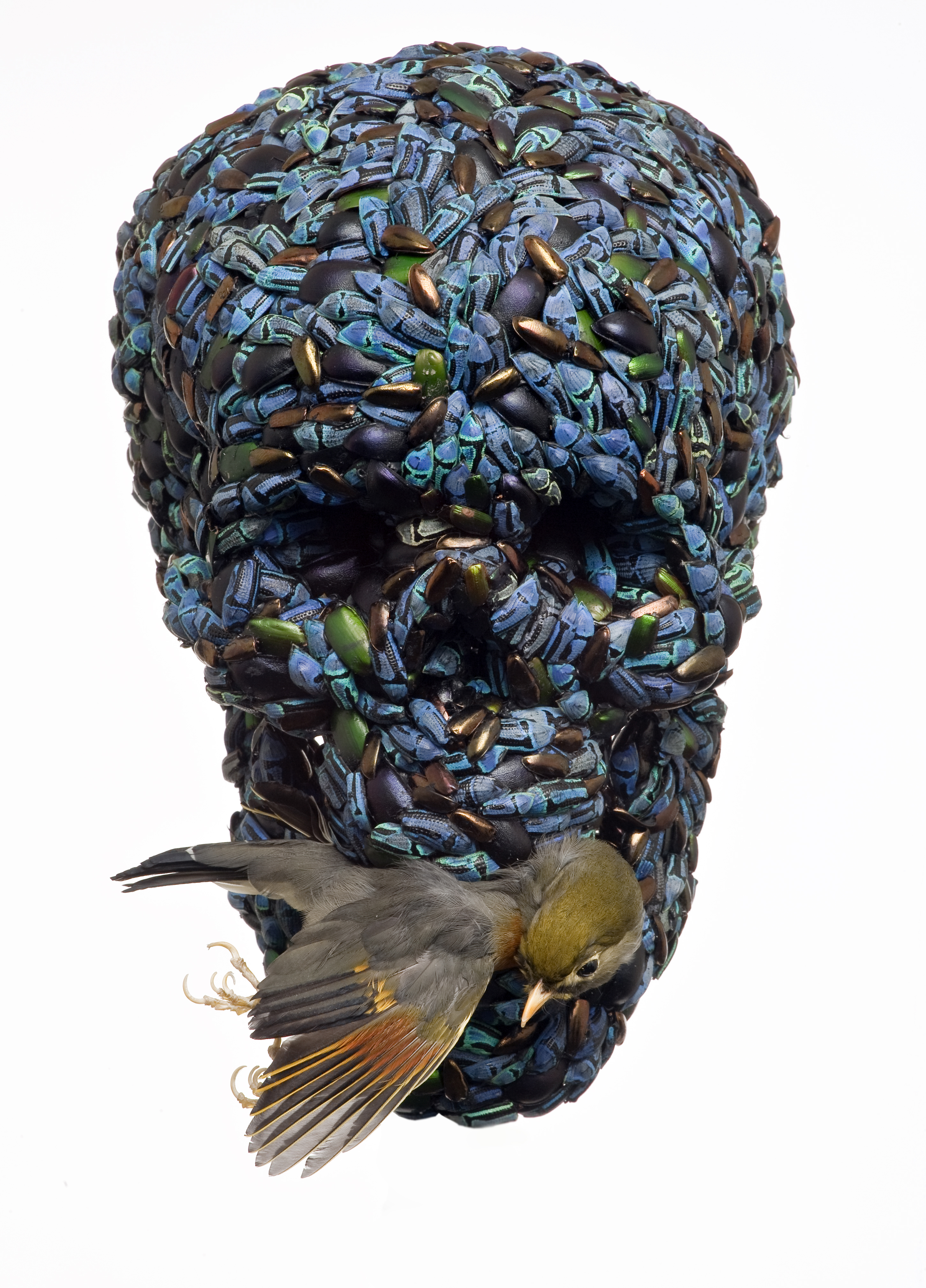
Jan Fabre [fah-ber] (b. 1958) is a Belgian multidisciplinary artist, playwright, stage director, choreographer and designer. Fabre is famous for his Bic-art (ballpoint drawings). In 1990, he covered an entire building with ballpoint drawings.
His decoration of the ceiling of the Royal Palace in Brussels ‘Heaven of Delight’ (made out of one million six hundred thousand jewel-scarab wing cases) is widely praised. In 2004 he erected Totem, a giant bug stuck on a 70 foot steel needle in Leuven, Belgium.
Posted in Art |
2 Comments »
April 25, 2011

Spencer Tunick (b. 1967) is an American artist. He is best known for his installations that feature large numbers of nude people posed in artistic formations. In his own words, ‘A body is a living entity. It represents life, freedom, sensuality, and it is a mechanism to carry out our thoughts. A body is always beautiful to me.’ These installations are often situated in urban locations throughout the world, although he has also done some woodland and beach installations and still does individuals and small groups occasionally. His models are unpaid volunteers who receive a limited edition photo as compensation.
In May 2007, approximately 18,000 people posed for Tunick in Mexico City’s principal square, the Zócalo, setting a new record, and more than doubling his previous high, 7,000 in Barcelona in 2003. Male and female volunteers of different ages stood and saluted, laid down on the ground, crouched in the fetal position, and otherwise posed for Tunick’s lens in the city’s massive central plaza, the Plaza de la Constitución.
Posted in Art, Sex |
7 Comments »





 The Daily Omnivore