March 25, 2011
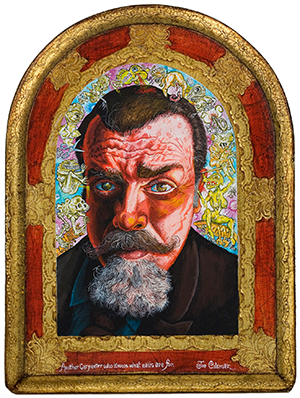
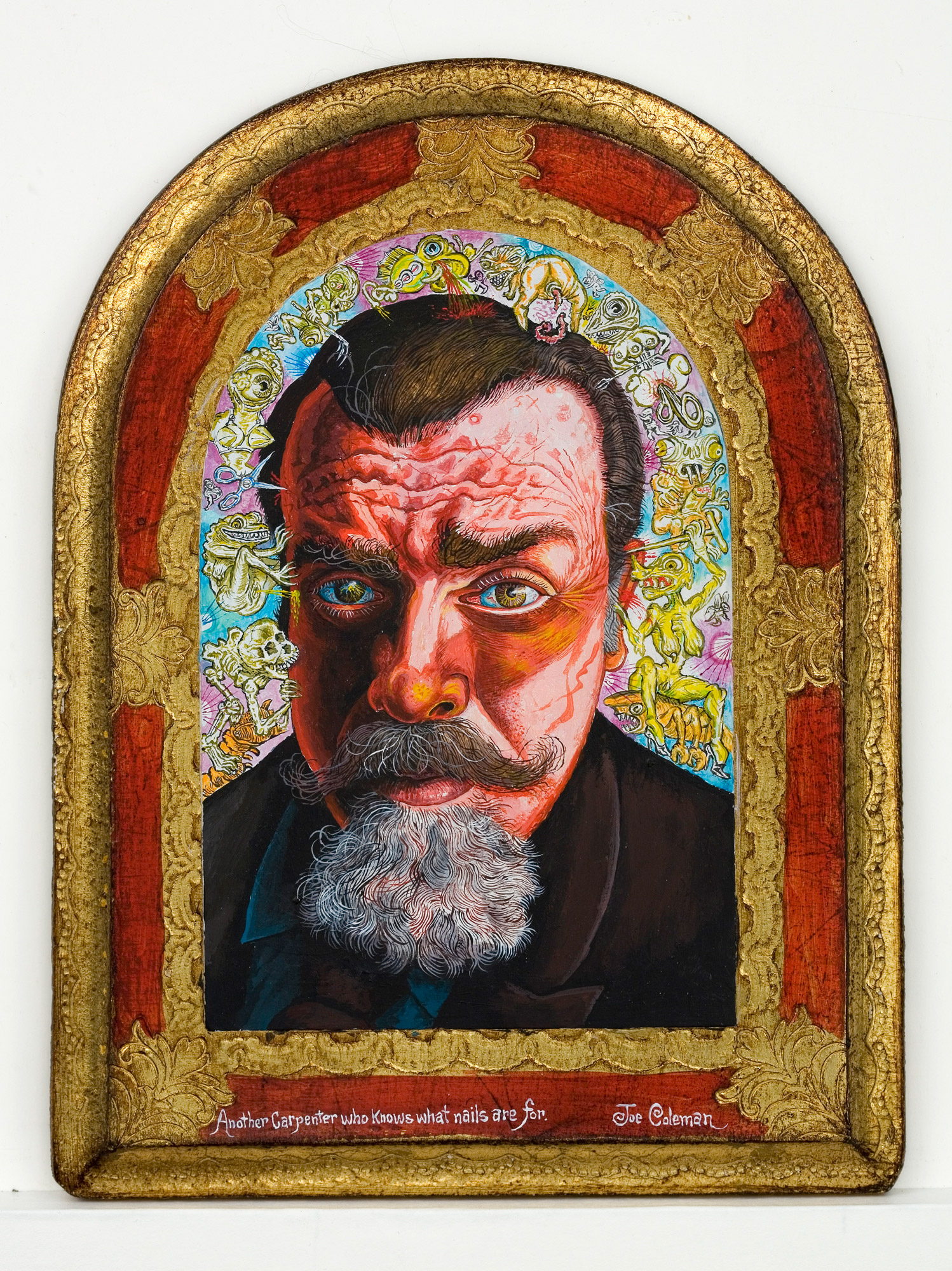
Joe Coleman (born November 22, 1955) is an American painter, illustrator and performance artist. He is best known for intricately detailed portraits of subjects both famous and infamous: artists, outlaws, serial killers, movies stars, friends, and family. He paints with a single-hair brush and uses a jewelers loupe; much of the detail is not visible to the naked eye.
The majority of his portraits portray the central subject in the center of the canvas, while biographical scenes and details from the subject’s life ring the central image. His work draws as much from Coleman’s beginnings as a comic book artist as from historical precedents. His paintings are most often compared to those of Hieronymus Bosch, and his work has been exhibited alongside canvases by the Dutch master.
Posted in Art |
Leave a Comment »
March 24, 2011
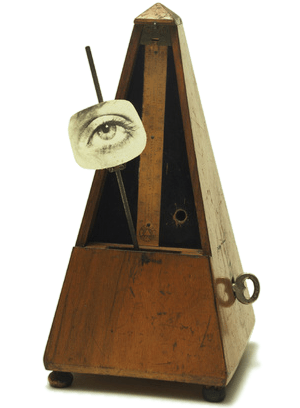
Man Ray (1890 – 1976), born Emmanuel Radnitzky, was an American artist who spent most of his career in Paris, France. Perhaps best described simply as a modernist, he was a significant contributor to both the Dada and Surrealist movements, although his ties to each were informal.
Best known in the art world for his avant-garde photography, Man Ray produced major works in a variety of media and considered himself a painter above all. He was also a renowned fashion and portrait photographer. He is noted for his photograms (images made without a camera by placing objects directly onto photographic paper, which he renamed ‘rayographs’ after himself.
read more »
Posted in Art, Money |
Leave a Comment »
March 24, 2011
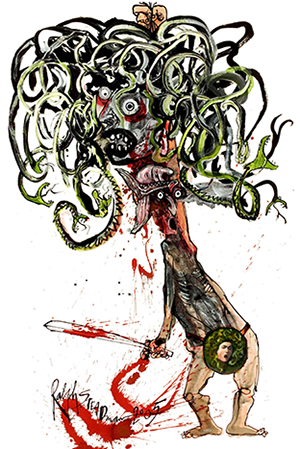
Ralph Steadman (b. 1936) is a British cartoonist and caricaturist who is perhaps best known for his work with American author Hunter S., drawing pictures for several of his articles and books. He accompanied Thompson to the Kentucky Derby for an article for ‘Scanlan’s,’ to the Honolulu Marathon for the ‘Running,’ and illustrated both ‘Fear and Loathing in Las Vegas’ and ‘Fear and Loathing on the Campaign Trail ’72.’
read more »
Posted in Art, Money |
1 Comment »
March 22, 2011


Kenneth Robert Howard (1929 – 1992), also known as Von Dutch, was a motorcycle mechanic, artist, pinstriper, metal fabricator, knifemaker and gunsmith. His father, Wally Howard, was a Los Angeles sign painter, and by the age of ten Kenny was able to paint and letter at a professional level. Some of his famous works include the flying eyeball and a custom Kenford truck.
Among many custom car and motorcycle enthusiasts, he is thought of as one of the fathers of Kustom Kulture (an aesthetic born out of the hot rod culture of Southern California of the 1960s). Dutch’s lifelong alcoholism led to major medical issues later in life, and he died from alcohol related complications. His daughters sold the ‘Von Dutch’ name to Michael Cassel and Robert Vaughn, who used it to form a clothing brand.
Posted in Art, Money, Technology |
Leave a Comment »
March 22, 2011

‘Big Daddy‘ Ed Roth (1932 – 2001) was an artist and cartoonist who created the hot-rod icon ‘Rat Fink.’ As a custom car builder, Roth was a key figure in Southern California’s Kustom Kulture and hot-rod movement of the 1960s. He grew up in Bell, California, attending Bell High School, where his classes included auto shop and art. Roth is best known for his grotesque caricatures — typified by Rat Fink — depicting imaginative, out-sized monstrosities driving representations of the hot rods that he and his contemporaries built.
Although Detroit native Stanley Mouse is credited with creating the so-called ‘Monster Hot Rod’ art form, Roth is the individual who popularized it. Roth is also well known for his innovative work in turning hot rodding from crude backyard engineering, where performance was the bottom line, into a refined art form where aesthetics were equally important, breaking new ground with fiberglass bodywork.
Posted in Art, Humor, Money |
Leave a Comment »
March 17, 2011

Charley Harper (1922 – 2007) was a Cincinnati-based American Modernist artist. He was best known for his highly stylized wildlife prints, posters and book illustrations. During his career, Charley Harper illustrated numerous books, notably ‘The Golden Book of Biology,’ magazines such as ‘Ford Times,’ as well as many prints, posters, and other works.
As his subjects are mainly natural, with birds prominently featured, Charley often created works for many nature-based organizations, among them the National Park Service and the Cincinnati Zoo.
Posted in Art, Science |
Leave a Comment »
March 16, 2011

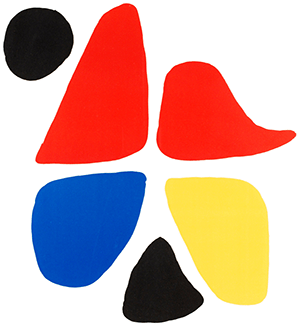
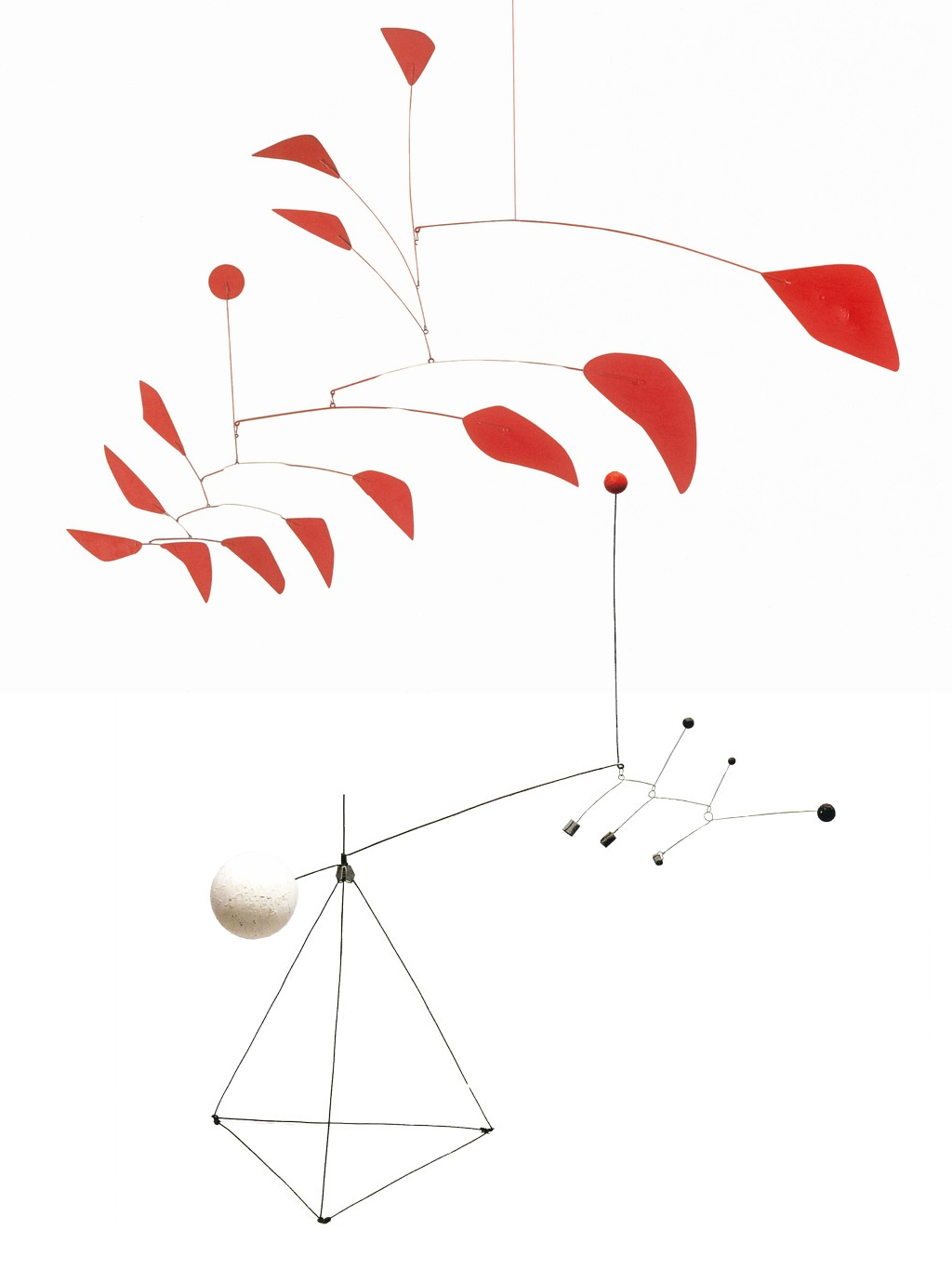
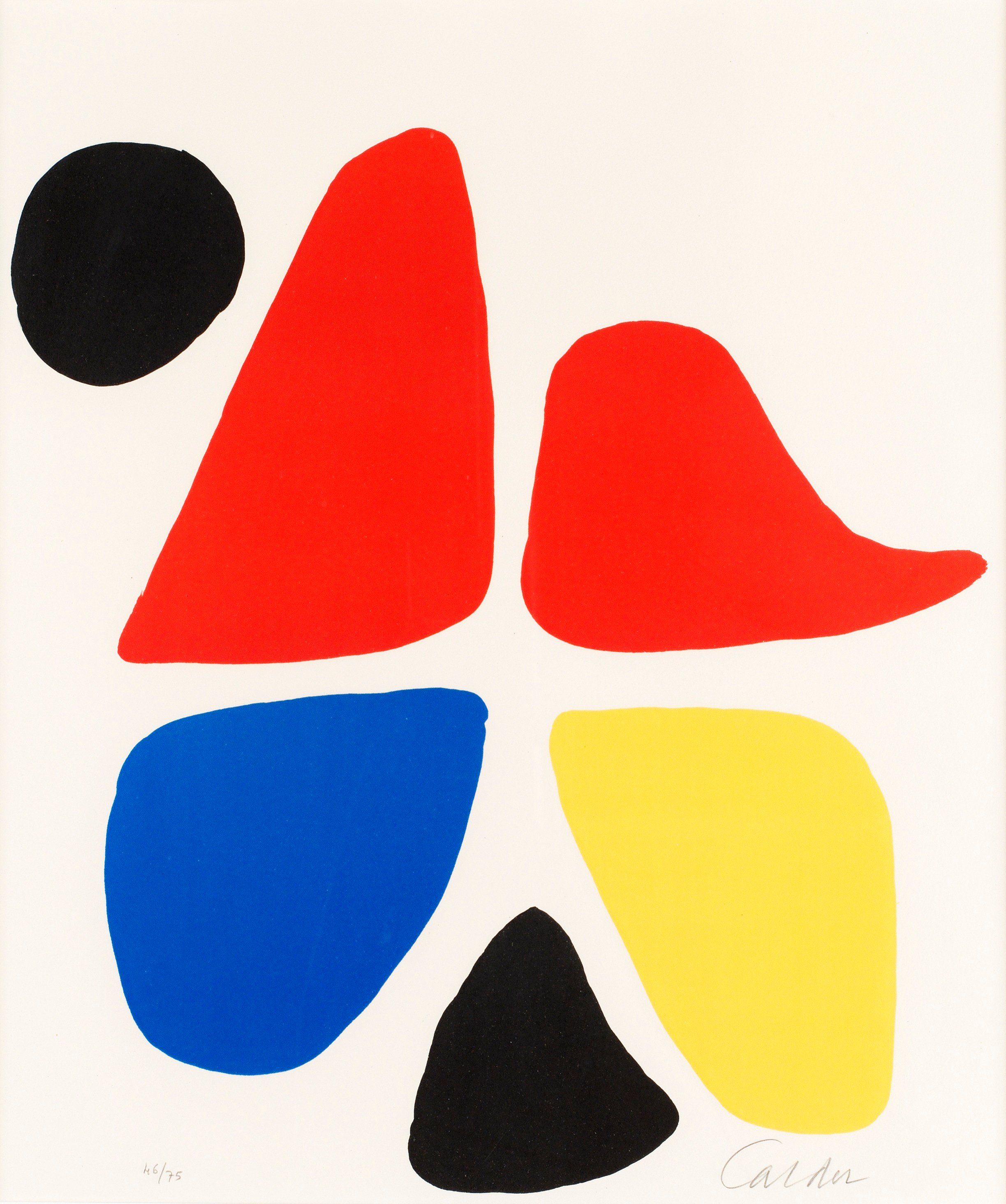
Alexander Calder [kawl-der] (1898 – 1976) was an American sculptor and artist most famous for inventing the mobile.
In addition to mobile and stabile sculpture, Alexander Calder also created paintings, lithographs, toys, tapestry, jewelry and household objects.
read more »
Posted in Art, Money, Technology |
Leave a Comment »
March 10, 2011
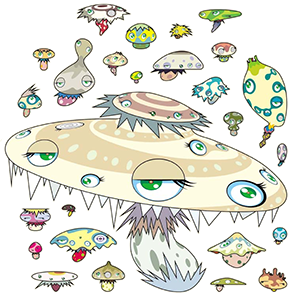
Takashi Murakami is a prolific contemporary Japanese artist who works in both fine arts media—such as painting—as well as digital and commercial media. He blurs the boundaries between high and low art by appropriating popular themes from mass media and pop culture, and turning them into thirty-foot sculptures, ‘Superflat’ paintings, or marketable commercial goods such as figurines or phone caddies.
read more »
Posted in Art, Money, World |
Leave a Comment »
March 8, 2011

Alex Ross (b. 1970) is an American comic book artist. He is praised for his realistic, human depictions of classic comic book characters. Since the 1990s he has done work for Marvel Comics and DC Comics (e.g. Marvels and Kingdom Come, respectively), as well as being involved in creating independent works featuring superheroes (e.g. Astro City and Project Superpowers).
Because his painting style is time-consuming, he primarily serves as a plotter and/or cover artist. Ross’ rendering style, his attention to detail, and the perceived tendency of his characters to be depicted staring off into the distance has been satirized in Mad magazine.
read more »
Posted in Art, Money |
Leave a Comment »
March 7, 2011

Alfons Mucha [moo-kah] (1860 – 1939) was a Czech Art Nouveau painter and decorative artist, best known for his distinct style and his images of women. He produced many paintings, illustrations, advertisements, and postcards. At the time of his death, Mucha’s style was considered outdated. Only recently has a Mucha museum appeared in Prague, run by his grandson, John Mucha.
Mucha’s work has continued to experience periodic revivals of interest for illustrators and artists. Interest in Mucha’s distinctive style experienced a strong revival in the 1960s (with a general interest in Art Nouveau) and is particularly evident in the psychedelic posters of ‘Hapshash and the Coloured Coat,’ the collective name for two British artists, Michael English and Nigel Waymouth.
Posted in Art |
5 Comments »
March 3, 2011

Bridget Riley (b. 1931) is an English painter who is one of the foremost proponents of op art. She was born in London and studied at the Royal College of Art, where her fellow students included artists Peter Blake and Frank Auerbach. Her early work was figurative with a semi-impressionist style. Around 1960 she began to develop her signature style consisting of black and white geometric patterns that explore the dynamism of sight and produce a disorienting effect on the eye.
They present a great variety of geometric forms that produce sensations of movement or color. Visually, these works relate to many concerns of the period: a perceived need for audience participation (this relates them to the ‘Happenings,’ for which the period is famous), challenges to the notion of the mind-body duality which led some people to experiment with hallucinogenic drugs; concerns with a tension between a scientific future which might be very beneficial or might lead to a nuclear war; and fears about the loss of genuine individual experience in a Brave New World.
Posted in Art |
Leave a Comment »
March 3, 2011

C. Allan Gilbert (1873 – 1929) was a prominent American illustrator. He is especially remembered for a widely published drawing (a memento mori) titled ‘All Is Vanity.’ The drawing employs a double image (or visual pun) in which the scene of a woman admiring herself in a mirror, when viewed from a distance, appears to be a human skull.
It is less widely known that Gilbert was an early contributor to animation, and a camouflage artist (or camoufleur) for the U.S. Shipping Board during World War I.
Posted in Art, World |
Leave a Comment »





 The Daily Omnivore