February 7, 2026

The Hedgehog and the Fox is an essay by philosopher Isaiah Berlin that was published as a book in 1953. It was one of his most popular essays with the public. However, Berlin said, ‘I meant it as a kind of enjoyable intellectual game, but it was taken seriously. Every classification throws light on something.’ It has been compared to ‘an intellectual’s cocktail-party game.’
The title is a reference to a fragment attributed to the Ancient Greek poet Archilochus: ‘a fox knows many things, but a hedgehog knows one big thing.’ The fable of ‘The Fox and the Cat’ embodies the a related idea: having one simple, reliable skill is better than boasting many clever but useless plans.
read more »
Posted in Language, Philosophy |
Leave a Comment »
November 8, 2025
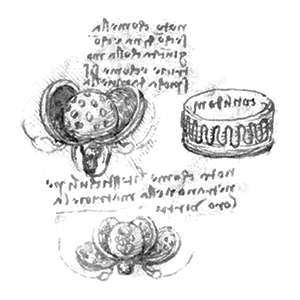
Commonplace books (or commonplaces) are personal notebooks used to compile any information the owner finds interesting or useful. They can variously contain notes, proverbs, adages, aphorisms, maxims, recipes, quotes, letters, poems, tables of weights and measures, prayers, legal formulas, and other professional references. They have been kept from antiquity, and were kept particularly during the Renaissance and in the nineteenth century.
Entries are most often organized under systematic subject headings and differ functionally from journals or diaries, which are chronological and introspective.
read more »
Posted in Language, Philosophy, Science |
Leave a Comment »
March 12, 2024
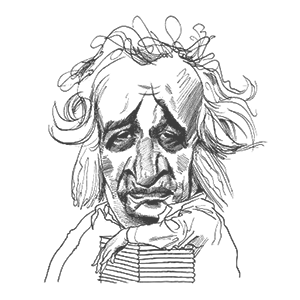
‘The Anxiety of Influence: A Theory of Poetry’ is a 1973 book by Harold Bloom, literary critic and Sterling Professor of humanities at Yale. It was the first in a series of books that advanced a new ‘revisionary’ or antithetical approach to literary criticism. Bloom’s central thesis is that poets are hindered in their creative process by the ambiguous relationship they necessarily maintain with precursor poets.
He argues that ‘the poet in a poet’ is inspired to write by reading another poet’s poetry and will tend to produce work that is in danger of being derivative of existing poetry, and, therefore, weak. Because poets historically emphasize an original poetic vision in order to guarantee their survival into posterity, the influence of precursor poets inspires a sense of anxiety in living poets. Thus Bloom attempts to work out the process by which the small minority of ‘strong’ poets manage to create original work in spite of the pressure of influence.
read more »
Posted in Art, Language |
1 Comment »
July 25, 2021

‘The Diamond Age: Or, A Young Lady’s Illustrated Primer’ is a 1995 science fiction novel by American writer Neal Stephenson. It is to some extent a Bildungsroman or coming-of-age story, focused on a young girl named Nell, set in a future world in which nanotechnology affects all aspects of life. The novel deals with themes of education, social class, ethnicity, and the nature of artificial intelligence.
The book contains descriptions of various exotic technologies, such as the chevaline (a mechanical horse that can fold up and is light enough to be carried one-handed), and forecasts the use of technologies that are in development today, such as smart paper that can show personalized news headlines. Major cities have immune systems made up of aerostatic defensive micromachines, and public matter compilers provide basic food, blankets, and water for free to anyone who requests them.
read more »
Posted in Art, Language, Technology |
Leave a Comment »
January 7, 2021

‘The Foundations of Geopolitics: The Geopolitical Future of Russia’ is a 1997 geopolitical book by Aleksandr Dugin, a Russian political analyst and strategist known for his fascist views. His book has had influence within the Russian military, police, and foreign policy elites and has been used as a textbook in the Academy of the General Staff of the Russian military.
Its publication was well received in Russia. Powerful Russian political figures subsequently took an interest in Dugin, a Russian eurasianist, fascist, and nationalist who has developed a close relationship with Russia’s military academies.
read more »
Posted in Politics, War, World |
1 Comment »
August 20, 2020

‘Zen and the Art of Motorcycle Maintenance: An Inquiry into Values’ (ZAMM) is a book by Robert M. Pirsig first published in 1974. It is a work of fictionalized autobiography, and is the first of Pirsig’s texts in which he explores his “Metaphysics of Quality”.
The title is an apparent play on the title of the 1948 book Zen in the Art of Archery by Eugen Herrigel. In its introduction, Pirsig explains that, despite its title, “it should in no way be associated with that great body of factual information relating to orthodox Zen Buddhist practice. It’s not very factual on motorcycles, either.”
read more »
Posted in Language, Philosophy |
Leave a Comment »
May 14, 2019

Stand on Zanzibar [zan-zuh-bahr] is a dystopian New Wave science fiction novel written by John Brunner and first published in 1968. The book won a Hugo Award for Best Novel in 1969.
The story is set in 2010, mostly in the United States. A number of plots and many vignettes are played out in this future world, based on Brunner’s extrapolation of social, economic, and technological trends, such as an enormous population and its impact: social stresses, eugenic legislation, widening social divisions, future shock and extremism.
read more »
Posted in Art, Language, World |
Leave a Comment »
December 30, 2018

The Negro Motorist Green Book was an annual guidebook for African-American roadtrippers. It was originated and published by New York City mailman Victor Hugo Green from 1936 to 1966, during the era of Jim Crow laws, when open and often legally prescribed discrimination against non-whites was widespread.
Although pervasive racial discrimination and poverty limited black car ownership, the emerging African-American middle class bought automobiles as soon as they could, but faced a variety of dangers and inconveniences along the road, from refusal of food and lodging to arbitrary arrest. In response, Green wrote his guide to services and places relatively friendly to African-Americans, eventually expanding its coverage from the New York area to much of North America, as well as founding a travel agency.
read more »
Posted in Language, Money, Politics |
Leave a Comment »
May 4, 2016

‘The Demolished Man,’ by Alfred Bester, is an American science fiction novel and inverted detective story, that was the first Hugo Award winner in 1953. The story is a police procedural set in a future where telepathy is common, although much of its effectiveness is derived from one individual having greater telepathic skill than another. In the 24th century, telepaths—’Espers’ (short for Extrasensory perception), colloquially known as ‘peepers’—are completely integrated into all levels of a class-based society.
Class 3 Espers, the most common, can detect only conscious thoughts at the time they are formed and are often employed as secretaries or administrators; Class 2 Espers can dig more deeply, to the pre-conscious level, detecting subliminal patterns, epiphanies and tenuous associations, and they are employed in the professional middle class—lawyers, managers, psychologists, etc. Class 1 Espers can detect all of the foregoing plus sub-conscious primitive urges, and they occupy only the highest levels of power in fields such as the police, government and medicine (such as psychiatry).
Posted in Art, Philosophy, Technology |
Leave a Comment »
April 27, 2016

‘Buyology: Truth and Lies About Why We Buy’ (2008) is a bestselling book by Danish marketing expert Martin Lindstrom, in which he analyzes buying decisions. The author attempts to identify the factors that influence buyers’ decisions in a world cluttered with messages such as advertisements, slogans, jingles, and celebrity endorsements. Lindstrom, through a study of the human psyche, examines the subconscious mind and its role in deciding what the buyer will buy. He debunks some myths about advertising and promotion.
‘Buyology’ is claimed to be a result of the author’s three year neuromarketing study on 2,081 people to identify the effect of brands, logos, commercials, advertisements and products on them. Neuromarketing investigates the sensorimotor, cognitive, and affective response to marketing stimuli. The study was funded by seven corporations, including GlaxoSmithKline, Hakuhodo, Fremantle – and Lindstrom himself. The study evaluates the effectiveness of logos, product placement and subliminal advertising, the influence of our senses and the correlation between religion and branding.
Posted in Language, Money |
Leave a Comment »
March 13, 2016

How to Photograph an Atomic Bomb is a book written by Peter Kuran and published in 2006 by VCE. It documents the stories of the men who photographed US nuclear weapons tests between 1945–1963 and the techniques they used to capture nuclear blasts on film. The book contains 250 photos and 12 technical diagrams, some of which were previously classified.
Research on the book began while Kuran was working as an animator for ‘Star Wars.’ He was able to interview and collect material from photographers who witnessed the blasts, whom he calls unrecognized patriots. A traveling exhibit based on the book was purchased by the Atomic Testing Museum and put on display in 2007. In 2010, the ‘New York Times’ featured a 23-image slideshow on its website with photos taken from the book accompanied by an audio recording of George Yoshitake, then one of the few surviving cameramen.
Posted in Language, Technology, War |
Leave a Comment »
March 11, 2016

Liar’s Poker is a non-fiction, semi-autobiographical book by Michael Lewis describing the author’s experiences as a bond salesman on Wall Street during the late 1980s. Two important figures in that history feature prominently in the text, the head of Salomon Brothers’ mortgage department Lewis Ranieri and the firm’s CEO John Gutfreund. The book’s name is taken from a high-stakes gambling game popular with bond traders.
First published in 1989, it is considered one of the books that defined Wall Street in that era, along with Bryan Burrough and John Helyar’s ‘Barbarians at the Gate: The Fall of RJR Nabisco,’ and the fictional ‘The Bonfire of the Vanities by Tom Wolfe.’ The book captures an important period in the history of New York’s financial markets.
read more »
Posted in Games, Language, Money |
Leave a Comment »


 The Daily Omnivore