March 19, 2012

Molvanîa (subtitled ‘A Land Untouched by Modern Dentistry’) is a book parodying travel guidebooks. The guide describes the fictional country Molvanîa, in Eastern Europe, a nation described as ‘the birthplace of the whooping cough’ and ‘owner of Europe’s oldest nuclear reactor.’
It was created by Australians Tom Gleisner, Santo Cilauro and Rob Sitch (of ‘The D-Generation,’ a popular and influential Australian TV sketch comedy show). The book became a surprise success after its initial publication in Australia, sparking a bidding war for the international publication rights. Qantas has even run the half-hour video segment produced in association with the book on its international flights.
read more »
Posted in Humor, Politics, World |
Leave a Comment »
March 18, 2012

A Princess of Mars (1917) is a science fantasy novel by Edgar Rice Burroughs, the first of his Barsoom series. Full of swordplay and daring feats, the novel is considered a classic example of 20th century pulp fiction. It is also a seminal instance of the planetary romance, a sub-genre of science fantasy that became highly popular in the decades following its publication. Its early chapters also contain elements of the Western. The story is set on Mars, imagined as a dying planet with a harsh desert environment. This vision of Mars was based on the work of the astronomer Percival Lowell, whose ideas were widely popularized in the late 19th and early 20th centuries.
The Barsoom series inspired a number of well-known 20th century science fiction writers, including Ray Bradbury, Arthur C. Clarke, Robert A. Heinlein, and John Norman, and was also inspirational for many scientists in the fields of space exploration and the search for extraterrestrial life, including Carl Sagan, who read ‘A Princess of Mars’ when he was a child.
read more »
Posted in Art, Language |
Leave a Comment »
March 11, 2012
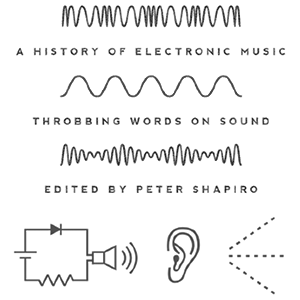
Modulations is a multi-media exploration into the history of electronic music, consisting of a documentary film, its soundtrack album, and a book. The project was directed by Iara Lee, the maker of the documentary film ‘Synthetic Pleasures’ (which explored the implications of virtual reality, biotechnology, plastic surgery, and mood-altering drugs). People interviewed in the film include Robert Moog, DJ Funk, and Frankie Knuckles.
The book was edited by Peter Shapiro and features: Rob Young on the pioneers of electronic music, Simon Reynolds on krautrock, Peter Shapiro on disco & post-punk, Kodwo Eshun on house, David Toop on hip hop, Mike Rubin on techno, Chris Sharp on jungle, Tony Marcus on ambient, Kurt Reighley on downtempo, and Michael Berk on the technology of electronic music. Also interviewed is industrial music founder Genesis P-Orridge.
Posted in Art, Technology, World |
Leave a Comment »
March 9, 2012

Don’t Make Me Think is a book by Steve Krug about human-computer interaction and web usability. The book’s premise is that a good software program or web site should let users accomplish their intended tasks as easily and directly as possible. Krug points out that people are good at satisficing, or taking the first available solution to their problem, so design should take advantage of this.
He frequently cites Amazon.com as an example of a well-designed web site that manages to allow high-quality interaction, even though the site gets bigger and more complex every day. The book itself is intended to be an example of concision (brevity) and well-focused writing. The goal, according to the book’s introduction, was to make a text that could be read by an executive on a two-hour flight of an airplane.
Posted in Language, Technology |
Leave a Comment »
March 8, 2012

The Intelligent Investor by Benjamin Graham, first published in 1949, is a widely acclaimed book on value investing, an investment approach Graham began teaching at Columbia Business School in 1928 and subsequently refined with David Dodd. Value investing generally refers to buying securities whose shares appear underpriced. Graham’s favorite allegory is that of Mr. Market, an obliging fellow who turns up every day at the shareholder’s door offering to buy or sell his shares at a different price. Often, the price quoted by Mr. Market seems plausible, but sometimes it is ridiculous.
The investor is free to either agree with his quoted price and trade with him, or ignore him completely. Mr. Market doesn’t mind this, and will be back the following day to quote another price. The point of this anecdote is that the investor should not regard the whims of Mr. Market as a determining factor in the value of the shares the investor owns. He should profit from market folly rather than participate in it. The investor is advised to concentrate on the real life performance of his companies and receiving dividends, rather than be too concerned with Mr. Market’s often irrational behavior.
Posted in Language, Money |
Leave a Comment »
March 6, 2012

‘Asshole: How I Got Rich and Happy by Not Giving a Shit About You’ is a 2008 spoof self-help book and memoir by American author Martin Kihn. The first line of the book, is ‘I was the nicest guy in the world and it was killing me.’ Kihn, who worked for a marketing company, was told by his boss that unless he started ‘playing hardball,’ they were going to demote him and upgrade a colleague Kihn calls ‘The Nemesis’ to a window office. So to save his career, Kihn decided to turn himself into an asshole, and in telling his story, he describes exactly how the reader can can follow his lead.
To become an asshole, Kihn builds a team, consisting of an acting coach, life coach and both personal and dog trainer – to help ‘master the art of assholism.’ Kihn then creates a ten-step “assholism’ program which involves ‘ignoring other peoples’ feelings, never saying sorry, dressing in black silk and only eating red meat.’ Other tasks saw Kihn signing up to the National Rifle Association, learning kickboxing, screaming at colleagues and eating garlic bagels on public transport. Additionally, Kihn takes inspiration from famous figures whom he considers ‘assholes’ such as: Donald Trump, Rudy Giuliani, Martha Stewart, David Letterman, Nicole Kidman, Machiavelli, Scarface and Paris Hilton. He also takes inspiration from Ayn Rand’s ‘The Fountainhead’ and ‘The Virtue of Selfishness.’
Posted in Humor, Language, Money |
1 Comment »
February 29, 2012
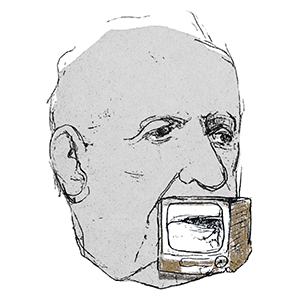
Propaganda is a 1928 book by public relations pioneer Edward Bernays. It argued that the scientific manipulation of public opinion was necessary to overcome chaos and conflict in society: ‘The conscious and intelligent manipulation of the organized habits and opinions of the masses is an important element in democratic society. Those who manipulate this unseen mechanism of society constitute an invisible government which is the true ruling power of our country. We are governed, our minds are molded, our tastes formed, our ideas suggested, largely by men we have never heard of.’
‘This is a logical result of the way in which our democratic society is organized. Vast numbers of human beings must cooperate in this manner if they are to live together as a smoothly functioning society. […] In almost every act of our daily lives, whether in the sphere of politics or business, in our social conduct or our ethical thinking, we are dominated by the relatively small number of persons […] who understand the mental processes and social patterns of the masses. It is they who pull the wires which control the public mind.’
Posted in Language, Money, Politics |
Leave a Comment »
February 28, 2012

When Prophecy Fails is a 1956 classic book in social psychology by Leon Festinger, Henry Riecken, and Stanley Schachter about a UFO religion that believes the end of the world is at hand. Festinger’s theory of cognitive dissonance (holding conflicting thoughts or feelings at the same time causes distress) can account for the psychological consequences of disconfirmed expectations.
Festinger and his associates read an interesting item in their local newspaper headlined ‘Prophecy from planet Clarion call to city: flee that flood.’ A housewife given the name ‘Marian Keech’ (real name Dorothy Martin, later known as Sister Thedra), had mysteriously been given messages in her house in the form of ‘automatic writing’ from alien beings. These messages revealed that the world would end in a great flood before dawn on December 21, 1954.
read more »
Posted in Health, Language, Philosophy |
1 Comment »
February 26, 2012
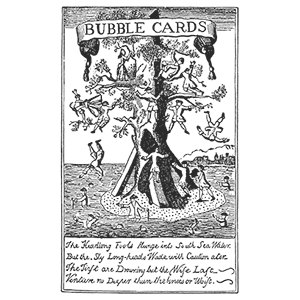
Extraordinary Popular Delusions and the Madness of Crowds is a history of popular folly by Scottish journalist Charles Mackay, first published in 1841. The book chronicles its subjects in three parts: National Delusions, Peculiar Follies, and Philosophical Delusions.
Despite its journalistic and rather sensational style, the book has gathered a body of academic support as a work of considerable importance in the history of social psychology and psychopathology. The subjects of Mackay’s debunking include economic bubbles, alchemy, crusades, witch-hunts, prophecies, fortune-telling, haunted houses, popular follies of great cities, and popular admiration of great thieves.
read more »
Posted in Language, Money, Philosophy |
Leave a Comment »
February 26, 2012


The Wisdom of Crowds is a 2004 book written by American journalist James Surowiecki about the aggregation of information in groups, resulting in decisions that, he argues, are often better than could have been made by any single member of the group. The book presents numerous case studies and anecdotes to illustrate its argument, and touches on several fields, primarily economics and psychology.
The opening anecdote relates Francis Galton’s surprise that the crowd at a county fair accurately guessed the weight of an ox when their individual guesses were averaged (the average was closer to the ox’s true butchered weight than the estimates of most crowd members, and also closer than any of the separate estimates made by cattle experts). The book relates to diverse collections of independently-deciding individuals, rather than crowd psychology as traditionally understood, however its title is an allusion to Charles Mackay’s ‘Extraordinary Popular Delusions and the Madness of Crowds,’ published in 1841 (which chronicled economic bubbles, witch-hunts, crusades, and similar phenomena).
read more »
Posted in Money, Science, War |
Leave a Comment »
February 25, 2012
‘One-Dimensional Man: Studies in the Ideology of Advanced Industrial Society’ is a 1964 book by philosopher Herbert Marcuse. The work offers a wide-ranging critique of both contemporary capitalism and the society in the Soviet Union, documenting the parallel rise of new forms of social repression in both these societies, as well as the decline of revolutionary potential in the West.
Marcuse argues that ‘advanced industrial society’ created false needs, which integrated individuals into the existing system of production and consumption via mass media, advertising, industrial management, and contemporary modes of thought.
read more »
Posted in Language, Money, Politics |
Leave a Comment »
February 21, 2012

The Beginning of Infinity is a popular science book by physicist David Deutsch that was published in 2011. Deutsch views the enlightenment of the 18th century as near the beginning of an infinite sequence of purposeful knowledge creation. Knowledge here consists of information with good explanatory function that is resistant to falsifiability. Any real process physically possible is able to be performed provided the knowledge to do so has been acquired.
The enlightenment set up the conditions for knowledge creation which disrupted the static societies that previously existed. These conditions are the valuing of creativity and the free and open debate that exposed ideas to criticism to reveal those good explanatory ideas that naturally resist being falsified due to their having basis in reality. Deutsch points to previous moments in history, such as Renaissance Florence and Plato’s Academy in Golden age Athens, where this process almost got underway before succumbing to their static societies’ resistance to change.
read more »
Posted in Language, Science, Technology |
1 Comment »



 The Daily Omnivore